
Om (Aum)
10 articles
Om, also written Aum, is the most sacred sound and symbol in Hindu tradition. The Upanishads describe it as the sound of Brahman, the ultimate reality, and the Mandukya Upanishad explains its three parts, A, U and M, together with the silence that follows, as representing the states of waking, dreaming, deep sleep and the pure consciousness beyond them.
Om opens and closes most Vedic mantras and prayers, appears on temple doors and household shrines, and is chanted on its own in meditation and yoga practice. Many people find that simply chanting Om slowly, with attention to the breath, brings a sense of calm, and it is often the first spiritual practice parents teach children. The symbol also has a place in Jain, Buddhist and Sikh traditions.
HinduTone articles on this page explain the meaning of Om in scripture, its symbolism and written form, how it is used in mantras, and simple guidance for chanting at home. Related pages include Mantras, Japa and Mantra Chanting and Hindu Symbols.
Start Here
Latest Articles
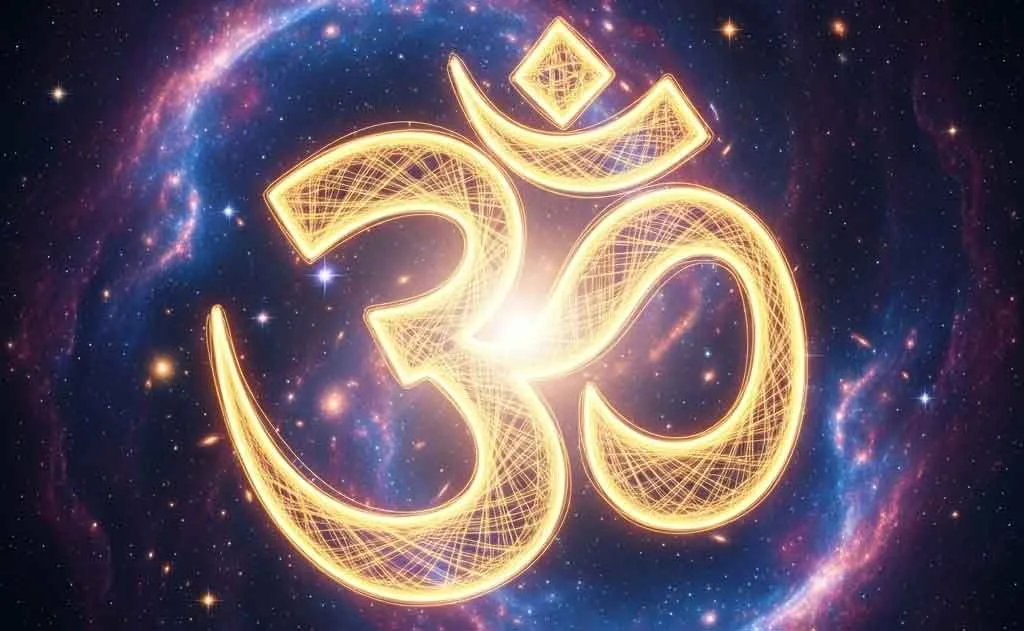
Om (Aum) Meaning: The Symbol, the Mandukya Upanishad's A-U-M, the Gita and How to Chant It
Om (Aum) is the most sacred sound in Hinduism. The Mandukya Upanishad explains its three sounds, A, U and M, as…
Om Namo Narayanaya
Dear seekers of truth, beloved souls walking the path of light, In the quiet hush of dawn or the gentle close of day…
The Sacred Power of AUM (OM): Understanding the Cosmic Energy of Hinduism's Most Sacred Mantra
Introduction: The Primordial Sound of the Universe AUM (ॐ), often written as OM, stands as the most sacred sound and…

Ajey: The Untold Story of a Yogi Movie Review
Anant Joshi’s Powerful Portrayal Celebrates a Spiritual Leader’s Rise Released on August 1, 2025, Ajey: The Untold…
FAQs
What is the meaning of Om?
Om, also called Pranava or Omkara, is regarded as the most sacred sound in Hinduism, a symbol of the ultimate reality, Brahman. The Upanishads explain it as made of three sounds, A, U and M, linked with waking, dreaming and deep sleep, followed by a silence beyond them.
Why is Om chanted at the beginning of mantras?
Om is traditionally placed at the start, and often the end, of mantras, prayers and Vedic recitation as an invocation that sanctifies what follows. Devotees regard it as the seed sound from which other sacred sounds arise.
How should Om be chanted?
Many teachers suggest sitting comfortably with a straight back, breathing in deeply and chanting Om slowly on the out-breath, letting the sound move from A through U to a humming M, then resting in silence. Learning from an experienced teacher helps with posture and pace.