
Japa and Mantra Chanting
Japa is the repeated, attentive chanting of a mantra or divine name, whether aloud, in a whisper or silently in the mind. It is among the simplest and most widely practised forms of Hindu sadhana, open to householders and monks alike, and is often done with a mala of rudraksha, tulsi or sandalwood beads to keep count and steady attention.
Traditions describe japa as a way to quiet the mind and turn it toward the divine. Many devotees choose a mantra connected with their ishta devata, sometimes received from a guru, and set aside a regular time each day. Others simply chant the name of Rama, Krishna or Shiva while going about their work.
On this page HinduTone collects articles on how japa is traditionally practised, choosing and pronouncing a mantra, using a japa mala, chanting Om, building a daily routine and the link between japa and meditation. Related pages cover Mantras, Yoga and Meditation and Om (Aum).
Latest Articles

Japa Mala Guide: Why 108 Beads, Types of Mala and How to Use One
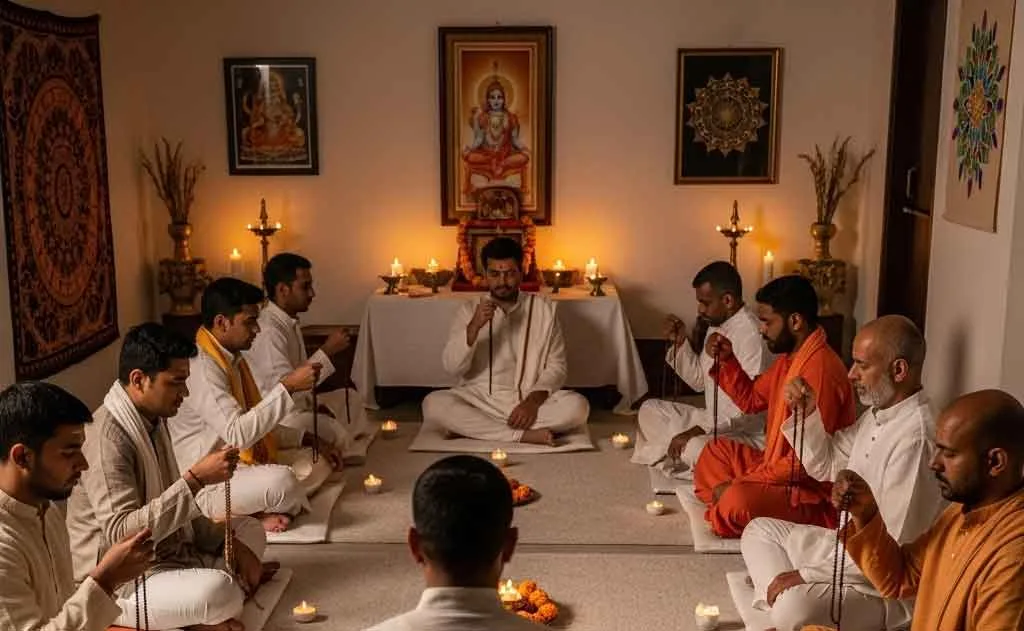
The Five Sacred Types of Japa: Unlocking Hidden Spiritual Power Through Lord Shiva's Ancient Teachings

FAQs
What is japa?
Japa is the repeated chanting of a mantra or divine name, aloud, softly or mentally, often counted on a mala of 108 beads. It is a core devotional and meditative practice across Hindu traditions, used to steady the mind and keep attention on the divine.
How do I start japa at home?
Choose a mantra you feel connected to, ideally one received from a teacher, or a simple name like Rama, Krishna or Om Namah Shivaya. Sit in a quiet, clean place at the same time daily, keep your back straight and chant slowly with attention. Start with a few minutes and build gradually.
How do you use a japa mala?
Hold the mala in the right hand, usually draping it over the middle finger, and move one bead per repetition with the thumb. Traditionally the index finger is not used, and the larger meru bead is not crossed; at the end you turn the mala and continue back.
Is mental japa better than chanting aloud?
Traditions describe three ways: aloud (vachika), whispered (upamshu) and mental (manasika), with mental japa often considered the subtlest. Beginners usually find chanting softly easier for focus. Choose the method that keeps your attention steady.