
Tulsi (Holy Basil)
Tulsi, the holy basil, holds a unique place in Hindu homes. She is worshipped as Tulasi Devi, regarded as dear to Lord Vishnu and Lord Krishna, and a Tulsi plant in the courtyard or on the balcony is, for many families, the heart of daily devotion. Leaves of Tulsi are traditionally offered in Vishnu worship, and a Tulsi mala is worn by many Vaishnava devotees.
Morning water offerings, an evening lamp and a quiet circumambulation of the Tulsi plant are practices that grandmothers often pass on to children. Devotion intensifies in Karthika month, and the ceremonial Tulsi Vivah connects the plant to the wedding of the Goddess with Vishnu. Families abroad often keep a potted Tulsi indoors through the winter, a small but meaningful link to home.
HinduTone articles on this page include Tulsi mantras and prayers, the stories of Vrinda and Tulasi Devi, simple guides to daily Tulsi worship and the plant's place in festivals. Related pages cover Tulsi Puja, Tulsi Vivah, Karthika Masam and Sacred Trees and Plants.
Latest Articles

Tulasi Ashtottara Shatanamavali: the 108 Names of Tulasi Devi with Meaning
Tulasi Stotram (Jagaddhatri Namastubhyam): Full Text with Meaning, for Kartik and Tulsi Vivah

Ksheerabdi Dwadashi and Tulasi Vivah 2026 in Singapore: Sunday 22 November, a Day After India, and Tulasi in the Monsoon
Ksheerabdi Dwadashi and Tulasi Vivah 2026 in Canada: Saturday 21 November, Evening Lamps Coast to Coast and an Indoor Tulasi
Ksheerabdi Dwadashi and Tulasi Vivah 2026 in the UK: Saturday 21 November, a 4 PM Sunset and a Windowsill Tulasi
Ksheerabdi Dwadashi and Tulasi Vivah 2026 in the USA: Saturday 21 November, Home Puja and Keeping Tulasi Alive Indoors

Kati Bihu 2026: Date (18 October), Kongali Bihu Rituals, Tulsi, Saki Lamps and Akash Banti

Gayatrirahito Vipro Na Sprushet Tulasi Dalam – Meaning and Importance of Gayatri Mantra Japa
Karthika Masam Mantras 2026: Shiva, Vishnu, Damodara and Tulasi Chants, with When to Chant Each

Ksheerabdi Dwadasi 2026: Date (Saturday 21 November), Tulasi-Damodara Kalyanam with Usiri, Deepalu and Dates Abroad

Gita Jayanti 2026 Prasad Recipes — Tulsi-Honoring Sweets, Krishna's Favourites & December 20 Bhog Plate
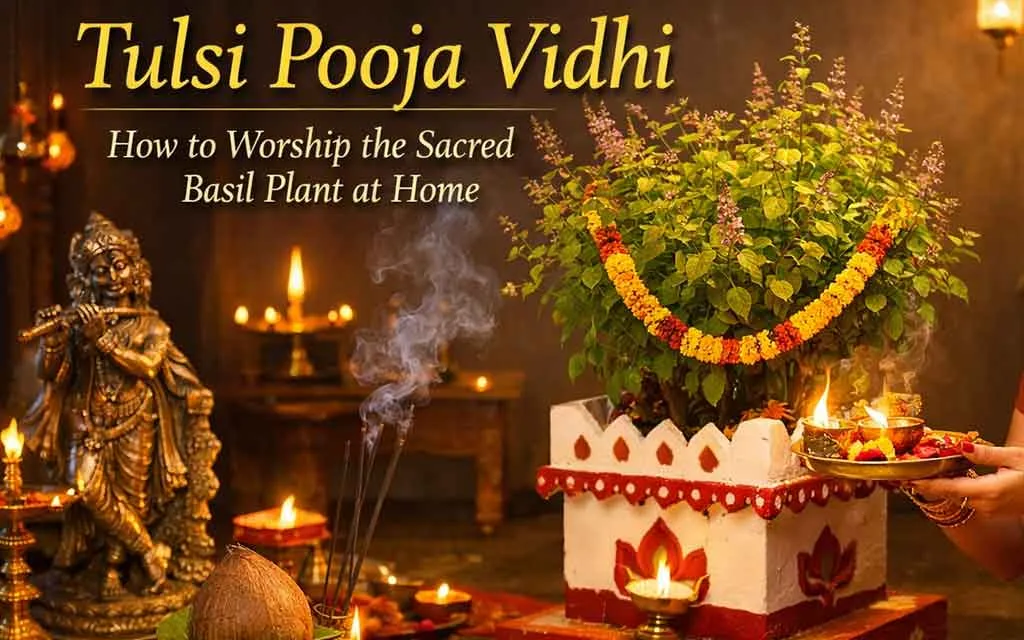
Tulsi Pooja Vidhi – How to Worship the Sacred Basil Plant at Home

Vaishakha Snan Puja Vidhi: Complete Step-by-Step Ritual with Tulsi & Surya Arghya

Planting Tulasi in the USA: A NRI's Sacred Connection to Home

The Role of Tulsi Plant in Diwali Pooja: Sacred Purifier of the Festival of Lights

Tulsi Devi: The Sacred Transformation of Vrinda Devi
FAQs
Why is the tulsi plant worshipped in Hindu homes?
Tulsi, or holy basil, is revered as a goddess and as dear to Lord Vishnu and Krishna. Many households keep a tulsi plant in a raised planter in the courtyard, water it each morning and light a lamp beside it in the evening, believing it brings sanctity to the home.
Are there rules for plucking tulsi leaves?
Traditions vary, but many families avoid plucking tulsi leaves after sunset, on Ekadashi and on certain other days, and pluck gently after a bath with a short prayer. Leaves are offered to Vishnu and Krishna, but customarily not to Ganesha.
Which tulsi is better for worship, Rama or Krishna tulsi?
Both green-leaved Rama tulsi and dark-leaved Krishna tulsi are considered sacred and suitable for puja. Families usually keep whichever grows well in their climate. What matters more in tradition is keeping the plant healthy and the space around it clean.