Bhadrakali Temple
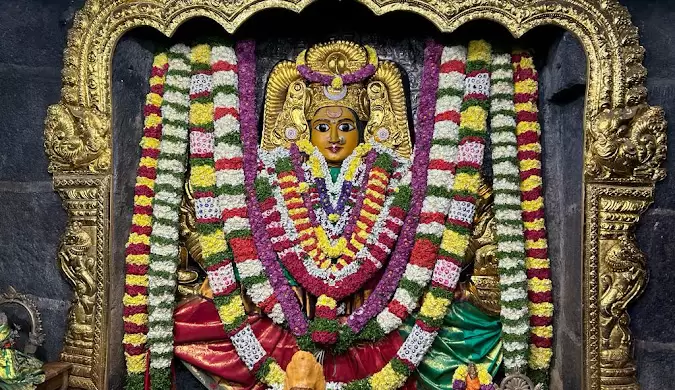
Bhadrakali Temple history and Significance. Bhadrakali Temple in Warangal is one of the oldest temples in India that is dedicated to Goddess Bhadrakali.
Bhadrakali Temple history and Significance. Bhadrakali Temple in Warangal is one of the oldest temples in India that is dedicated to Goddess Bhadrakali.
Bhadrakali Temple history and Significance.
Bhadrakali Temple in Warangal is one of the oldest temples in India that is dedicated to Goddess Bhadrakali. Located at the top of a hill, between the city of Warangal and Hanamkonda.
Bhadrakali temple gained its significance after it was renovated in the year 1950s by Sri Ganapathi Sasthri. Although now it has only a few traces of its magnificent past, this temple is one of the most popular temples and is visited by lakhs of devotees every year to get blessed.
Let us know the majestic history of Bhadrakali Temple.
This temple is built in the style of Chalukyan architecture, the Bhadrakali temple is an ancient temple that was built to signify their conquest of the Vengi region. The Ekanda Shila statue and the pillars in the temple give us a glimpse of Chalukyan reign and ruling, while the carvings on the pillars represent the brilliant artwork of Kakatiya's reign.
Kakatiya Kings have believed in Goddess Bhadrakali as their ancestral deity hence had contributed their part to the temple as well. And also during the Kakatiya reign, the Bhadrakali Lake was built. Another lake connecting this temple was also constructed during their rule. After the fall of the Kakatiya rule, the importance of the Warangal Bhadrakali temple also got lessened.
After many years, in the 1950s Bhadrakali temple was again got into a flashlight. The temple work was initiated by Sri Ganapathi Sastri who was a devotee of Goddess Maha Kali, who had got migrated from Karnataka to Warangal in the early days of the 1940s.
Upon seeing the remains of the Bhadrakali temple, he had decided to settle next to the premises of the temple. He has taken the task of renovating the temple which got into ruins, with the help of other local people such as “Sri Mudumbai Ramanujacharya” and “Sri Maganlal Sameja”. Many other people such as Vangala Guravaiah, Adluri Seetharama Shastry, Tankasala Narasimha Rao, and Maha Tapaswini Mangalambika also contributed to the renovation of this royal temple.
After the renovations were done to the temple, animal sacrifices were stopped in the Bhadrakali Temple. Even the idol of the Goddess was slightly modified. It is said that the deity had a ferocious form originally which was later softened by a few changes. Goddess’s face was turned into a smiling and pleasing face. Holy chants were written of deity’s tongue at the time of renovations.
The famous rituals performed here are during Shravana Masam, which is the months of August and September, this temple celebrates many prominent festivals such as Vasanta Navaratri, Shakambari Utsavam. Bathukamma Festival is the most prominent festival celebrated with great fervor here when women and girls with beautifully arranged flowers flower patterns, visit the Bhadrakali Lake to offer prayers and perform rituals.
This article deals with the history and significance of the Bhadrakali Temple. Along with historical prominence and religious significance, natural rock formations around the temple also make this temple a must-visit place in India for all devotees and tourists.
Who is Bhadrakali and what does her name signify?
Bhadrakali is a fierce yet auspicious form of the Goddess, whose name combines two Sanskrit roots: 'Bhadra,' meaning prosperity, welfare, and grace, and 'Kali,' referring to the dark, time-transcending power that destroys evil. She is thus understood as the Goddess who grants blessings even while wielding the force of destruction — a combination celebrated in both the Devi Mahatmya of the Markandeya Purana and the Devi Bhagavata Purana.
In Shaiva Agamic tradition, Bhadrakali is counted among the Sapta Matrikas and also appears as a companion of Lord Shiva in his devastating aspect. In the Telugu-speaking regions, she is especially venerated as a Grama Devata — a protector of towns and communities — and her worship carries deep roots in tribal and agrarian traditions that predate formal temple construction.
Iconographically, the Bhadrakali at Warangal is depicted as an Ekanda Shila murti — a single-stone image — with multiple arms holding weapons such as the trishula, khadga, and shield, while her expression combines fierce resolve with a benevolent gaze. This dual quality visually embodies the Sanskrit theological concept of Ugra-Saumya, the fierce-gentle paradox that defines Shakti worship.
What is the Chalukyan architectural legacy embedded in the temple?
The Bhadrakali Temple at Warangal was originally constructed in the Chalukyan style, specifically associated with the Eastern Chalukyas who ruled the Vengi region of present-day Andhra Pradesh and Telangana between roughly the 7th and 12th centuries CE. The Eastern Chalukyas built the temple as a mark of their conquest of the Vengi territory, and the structural grammar of the temple — its pillar design, sanctum proportions, and stone-dressing technique — belongs to the Vesara style, a hybrid of Nagara and Dravida architectural idioms favoured by Chalukyan patrons.
The surviving pillars display deeply carved medallions, scrolling foliage, and mithunas (paired figures) that are characteristic of Eastern Chalukyan workmanship seen also at the Bhimavaram group of temples in West Godavari district. Over time, as Kakatiya patronage increased, a second layer of artistic identity was grafted onto the temple: the Kakatiya style introduced the distinctive perforated stone screens (jaali work) and star-shaped platforms (Stellate plans) that became their hallmark.
The Ekanda Shila statue itself — carved from a single rock without joins — testifies to the exceptional skill of the Chalukyan-era sculptors who understood stone's load-bearing limits and worked within them to create monumental single-piece icons. Such single-stone carvings are relatively rare in peninsular India and give the Warangal Bhadrakali murti a special place in the history of Indian sculpture.
How did the Kakatiya dynasty deepen the temple's religious importance?
The Kakatiya rulers, who established their capital at Warangal (then called Orugallu) and reached the height of their power between the 12th and 14th centuries CE, venerated Bhadrakali as their Kula Devata — the ancestral tutelary goddess of their royal lineage. Inscriptions from the Kakatiya period record royal gifts of land (devadana grants), oil lamps, and ceremonial jewellery to the temple, reinforcing its status as a state-sponsored shrine.
King Ganapati Deva (r. 1199–1262 CE) and Queen Rudrama Devi (r. 1263–1289 CE) are particularly associated with the patronage of Shakti temples across the Warangal region. The Bhadrakali Lake, excavated during Kakatiya rule, served both as a ritual tank for the temple's ceremonial bathing rites (Tirtha Snanam) and as an irrigation resource for the surrounding agriculture — a practical-sacred integration typical of Kakatiya hydraulic engineering.
After the sack of Warangal by the Delhi Sultanate forces of Malik Kafur in 1310 CE and the final defeat of Pratapa Rudra in 1323 CE, Kakatiya patronage ceased abruptly. The temple fell into neglect, its endowments disrupted and its ritual continuity broken — a historical rupture that explains why the mid-20th-century renovation by Sri Ganapathi Sastri was so significant in restoring living worship to the site.
What festivals and rituals are observed at the Warangal Bhadrakali Temple?
The most important annual festival at the Bhadrakali Temple is Bhadrakali Jatara, celebrated with great enthusiasm during the month of Kartika (October–November) as well as during Navratri, the nine-night festival dedicated to the Goddess. During Navratri, the temple witnesses elaborate Alankara Sevas — daily decorative presentations of the Goddess in different forms such as Durga, Lakshmi, and Saraswati — drawing pilgrims from across Telangana and neighbouring states.
Weekly worship follows a structured Agamic pattern: Tuesdays and Fridays are considered especially auspicious for Devi worship in Telugu tradition, and on these days the temple conducts Kumkuma Puja, Sahasranama Archana (recitation of the Goddess's thousand names), and Deepa Aradhana (lamp offerings). Special Abhisheka rituals using panchamrita — milk, curd, honey, ghee, and sugarcane juice — are performed on new-moon and full-moon days.
A distinctive local practice is the offering of Bangles (Gajulu) and turmeric (Pasupu) to the Goddess, reflecting the Telugu Shakta tradition in which Bhadrakali is worshipped not only as a warrior deity but also as a Sumangali — an auspicious married woman who bestows marital happiness and protection on devotees.
How does the hilltop setting shape the spiritual experience of the pilgrimage?
The temple's position atop a rocky hill between Warangal and Hanamkonda is not incidental but theologically meaningful. In Shakta tradition, hills and mountains are considered natural Shakti Peethas — seats of the Goddess's energy — where the earth's upward thrust symbolises her immanent, rising power. Several Devi temples across South India, such as the Chamundeshwari Temple on Chamundi Hill in Mysuru and the Kanaka Durga Temple on Indrakeeladri Hill in Vijayawada, share this hilltop paradigm.
The climb to the temple — whether by the stepped pathway or the road — is itself understood as a form of Kaya Klesha, a mild physical austerity that prepares the devotee's mind for darshan. Devotees traditionally observe silence or recite the Devi Stotras during the ascent, marking the transition from the profane space of the city below to the sacred space of the Goddess above.
From the hilltop, the Bhadrakali Lake visible in the distance serves as a visual anchor connecting the temple to its Kakatiya-era history, reminding pilgrims that the sacred geography of Warangal is layered — natural hill, man-made lake, and sculpted stone forming a unified landscape of devotion.
What is the regional significance of Bhadrakali as a Shakti Peetha tradition in Telangana?
Telangana has a dense network of Shakti shrines, and the Warangal Bhadrakali Temple occupies a premier position among them. While it is not officially listed among the eighteen Maha Shakti Peethas described in the Devi Bhagavata Purana, it is widely regarded by devotees of the region as a Swayambhu Kshetra — a self-manifested sacred site where the Goddess's presence is intrinsic to the land itself rather than established by human installation alone.
The temple's fame has inspired the construction of Bhadrakali shrines in other parts of Telangana and Andhra Pradesh, effectively making the Warangal murti a 'source form' (Mula Vigraha in local parlance) whose iconographic and ritual template has been replicated across the region. This process of sacred replication — where a celebrated temple becomes the prototype for daughter shrines — is a well-documented feature of South Indian temple culture.
In contemporary Telangana, the newly formed state government (post-2014) has recognised the Bhadrakali Temple as a major religious tourism site, and the Telangana State Tourism Development Corporation includes it in heritage circuits linking Warangal Fort, the Thousand Pillar Temple (Rudreshwara Temple at Hanamkonda), and the Ramappa Temple — a UNESCO World Heritage Site — all within a short distance, illustrating how Kakatiya-era sacred geography continues to shape modern pilgrimage and cultural identity.
Frequently Asked Questions
Where is Bhadrakali Temple located?
Bhadrakali Temple history and Significance. Bhadrakali Temple in Warangal is one of the oldest temples in India that is dedicated to Goddess Bhadrakali.
Who is the presiding deity of Bhadrakali Temple?
The presiding deity is Goddess Durga.
What are the timings and how do I reach Bhadrakali Temple?
Temples typically open early morning and evening; confirm current darshan timings before visiting. The nearest airport, railway station and road routes are covered in the guide above.
What is the best time to visit Bhadrakali Temple?
Major festival days and the cooler months are popular, though weekday mornings offer a calmer darshan. Plan around the temple's key festivals for the most vibrant experience.
You might also like
The Divine Love Story of Meenakshi Amman Temple, Madurai: The Temple of the Fish-Eyed Goddess and Her Cosmic Wedding
Durga Chalisa with Meaning — Complete Spiritual Guide | HinduTone
Kali Puja 2026 — West Bengal's Magnificent Diwali Celebration