Thirukoteeswarar Temple, Thirukodikaval
Shiva (as Thirukoteeswarar), with Vadivambigai temple · Thirukodikaval, Thanjavur, Tamil Nadu, India
The Thirukoteeswarar Temple (also written Tirukkotisvara) is a Shiva temple at Thirukodikaval, a village on the northern bank of the Kaveri in the Thiruvidaimarudur taluk of Thanjavur district, Tamil Nadu. Shiva is worshipped as Thirukoteeswarar and his consort Parvati as Vadivambigai.
The temple was sung by the Tevaram saints Appar and Sambandar. Its present stone sanctum is a work of the Chola queen Sembiyan Mahadevi, who rebuilt an older brick temple in stone in the late 10th century and had its earlier inscriptions copied onto the new walls. Records surviving from before her rebuilding take the temple's history back to the Pallava and Pandya period.
Faith & Tradition
Religious Significance of Thirukoteeswarar Temple, Thirukodikaval
Wikipedia records that the Saiva saints Appar and Sambandar praised the temple in their hymns, which places it among the Tevaram shrines, and that it is counted among the temples on the northern bank of the Kaveri. Wikipedia also records a visit by the scholar-saint Bhaskararaya of Bhaskararajapuram.
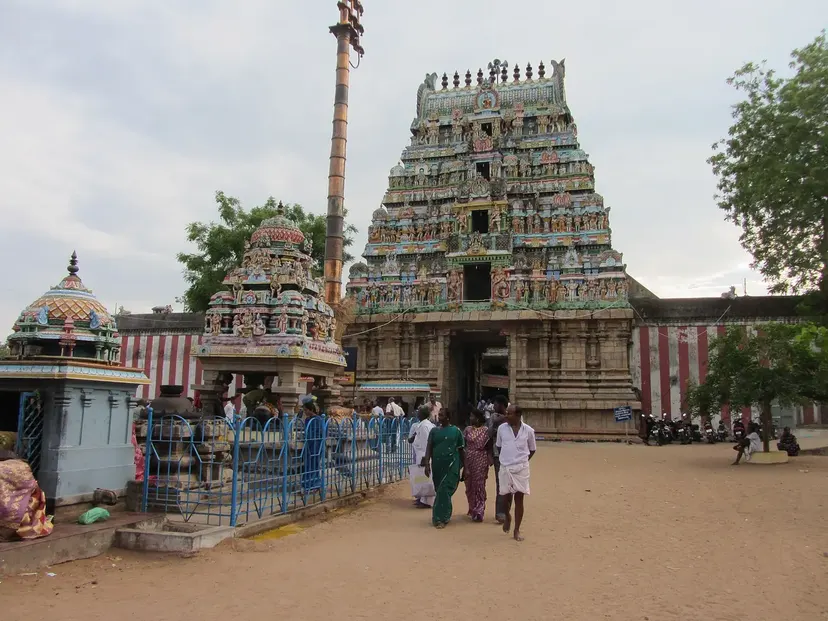
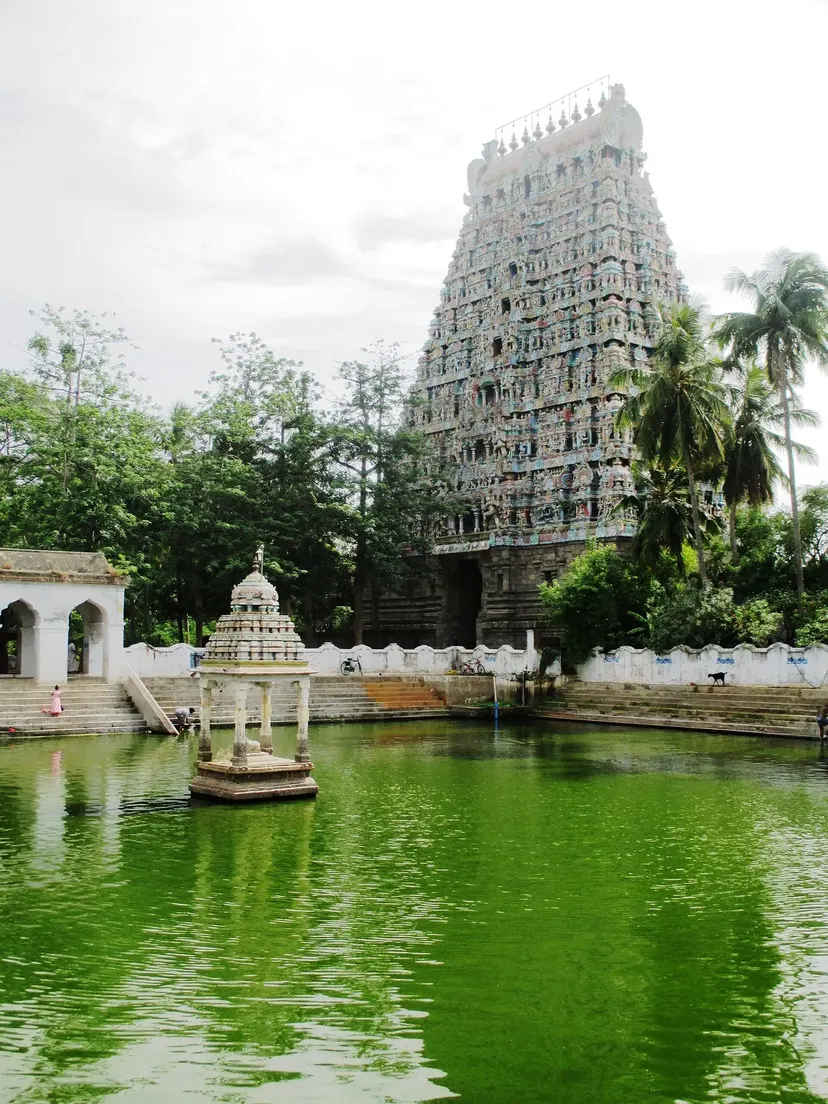
The temple is notable for the range of its subsidiary shrines. According to Wikipedia, there are separate shrines for Vinayaka, Murugan, Gajalakshmi, Bhairava, Surya, Chandra, Shani, Yama and Nataraja. Wikipedia lists the Sringa Theertham and the Kaveri as the temple's sacred waters and the pirambu (rattan cane) as its sacred tree.
Heritage
History of Thirukoteeswarar Temple, Thirukodikaval
According to the Virtual Museum of Images and Sounds of the American Institute of Indian Studies (AIIS), a brick temple existed here at least from the time of the chieftain Ko-Ilango Muttaraiyar. During the reign of her son Uttama Chola (971–988 CE), Sembiyan Mahadevi rebuilt it in stone and had all twenty-six of its older inscriptions re-engraved; the earliest of these, AIIS notes, belongs to the time of the Pallava king Nandipottaraiyar (Nandivarman III). Wikipedia dates the earliest inscriptions to around 750 CE and the present structure to about 979 CE.
One of the re-engraved records has been edited in South Indian Inscriptions, volume 32, part 2, no. 93, and is published online by the DHARMA epigraphy project. Engraved on the south wall of the central shrine in the eleventh regnal year of Uttama Chola (982 CE), it explains that Sembiyan Mahadevi rebuilt the brick shrine of the Mahadeva temple in stone and ordered the endowment records, which had been incised on loose slabs around the temple, to be copied onto its walls. The record itself is an older grant dated in the fourth year of the Pandya king Maran Sadaiyan: 120 kalanju of gold entrusted by Varaguna Maharaja to the assembly (sabha) of Mahendra-Kottur, whose interest was to keep a perpetual lamp burning for the god of Tirukkodikaval with a daily measure of ghee.
Wikipedia also cites an inscription of the reign of Gandaraditya Chola recording a gift of land by Masenan Madan of Sirukattur so that temple servants could bring five pots of Kaveri water to the temple every day.
Architecture and sacred features
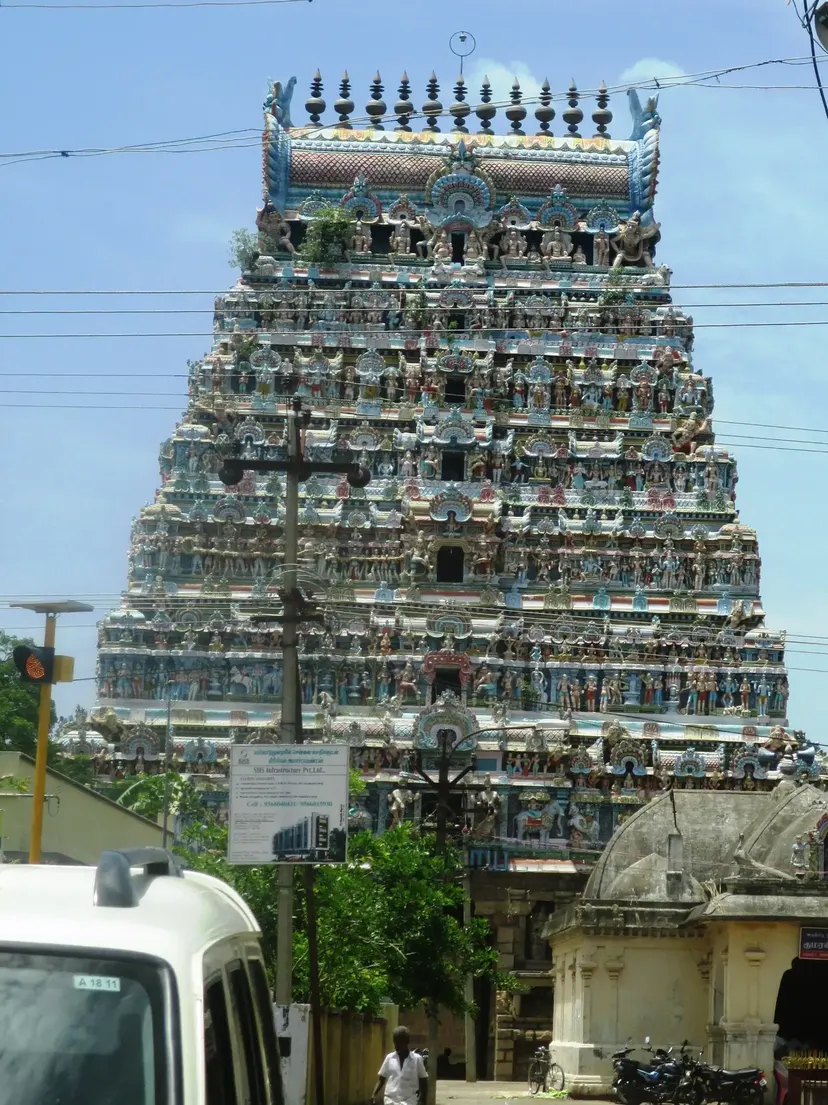
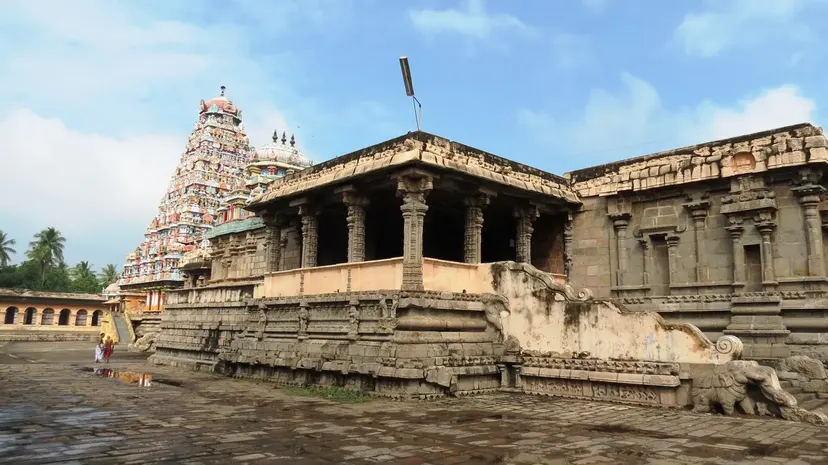
AIIS describes the main shrine as a single-storeyed vimana crowned by a rounded (bulbous) shikhara, with nine wall niches (devakoshtas) carrying sculpted figures in the manner typical of the temples built by Sembiyan Mahadevi. Its photographic record dates the sanctum and the ardhamandapa (front hall) walls to about 980 CE, and details of the entrance walls to about 1012–1044 CE. Wikipedia describes the temple as built in the Chola style.
Plan Your Visit
Darshan and Visitor Information
This is a working temple whose walls carry Chola-period inscriptions: dress modestly, leave footwear outside, do not touch or mark the inscriptions and sculptures, and ask before photographing inside the shrines. Confirm current darshan timings and festival dates with the temple office before travelling.
Timings and arrangements change with seasons and festivals. Confirm current details with the temple administration before travelling. Last reviewed 1 November 2026.
Location
How to Reach Thirukoteeswarar Temple, Thirukodikaval
Thirukodikaval lies on the northern bank of the Kaveri in Thiruvidaimarudur taluk, in the Kumbakonam area of Thanjavur district; the DHARMA edition, following older records, places the village in Kumbakonam taluk. No source opened for this page gives road distances, so check local directions from Kumbakonam or Thiruvidaimarudur before travelling.
Location: Thirukodikaval, Thanjavur, Tamil Nadu, India
More in Hindu temples in Tamil Nadu · Shiva (as Thirukoteeswarar), with Vadivambigai temples · Temples in Thiruvidaimarudur Taluk · Temples in Thanjavur District
Questions
Thirukoteeswarar Temple, Thirukodikaval: Frequently Asked Questions
Who built the Thirukoteeswarar Temple at Thirukodikaval?
The present stone shrine was built by the Chola queen Sembiyan Mahadevi during the reign of her son Uttama Chola (971–988 CE), replacing an older brick temple.
How old are the temple's inscriptions?
Sembiyan Mahadevi had 26 older inscriptions re-engraved; AIIS dates the earliest to the time of the Pallava king Nandipottaraiyar (Nandivarman III), and Wikipedia gives around 750 CE. One re-engraved record is a Pandya-period gift of gold for a perpetual lamp.
Is Thirukodikaval a Tevaram temple?
Yes. Wikipedia records that Appar and Sambandar sang its praises.
Which shrines are found in the temple?
Besides the main shrine and the goddess Vadivambigai, there are shrines for Vinayaka, Murugan, Gajalakshmi, Bhairava, Surya, Chandra, Shani, Yama and Nataraja.
What is special about the temple's architecture?
AIIS describes a single-storeyed vimana with a rounded shikhara and nine wall niches with sculptures, typical of Sembiyan Mahadevi's temples, with the sanctum dated to about 980 CE.
Where is Thirukodikaval?
It is a village on the northern bank of the Kaveri in the Thiruvidaimarudur taluk of Thanjavur district, in the Kumbakonam area.
Sources and attribution
- Wikipedia — Thirukoteeswarar Temple
- Virtual Museum of Images and Sounds, American Institute of Indian Studies — Tirukkotisvara complex, Tirukkodikovil, Tamil Nadu
- DHARMA project (ed. E. Francis, after S. Swaminathan, South Indian Inscriptions vol. 32 pt. 2, no. 93) — Tirukkodikaval inscription of Uttama Chola, year 11 (982 CE)
Further reading: Thirukoteeswarar Temple, Thirukodikaval on Wikipedia (CC BY-SA 4.0).
Spotted an error? Write to info@hindutone.com — see our editorial policy.