Prasadam vs. Naivedyam: Understanding the Sacred Connection Between Food and the Divine
In Hindu tradition, food is far more than physical nourishment—it is a sacred medium through which we connect with the divine.
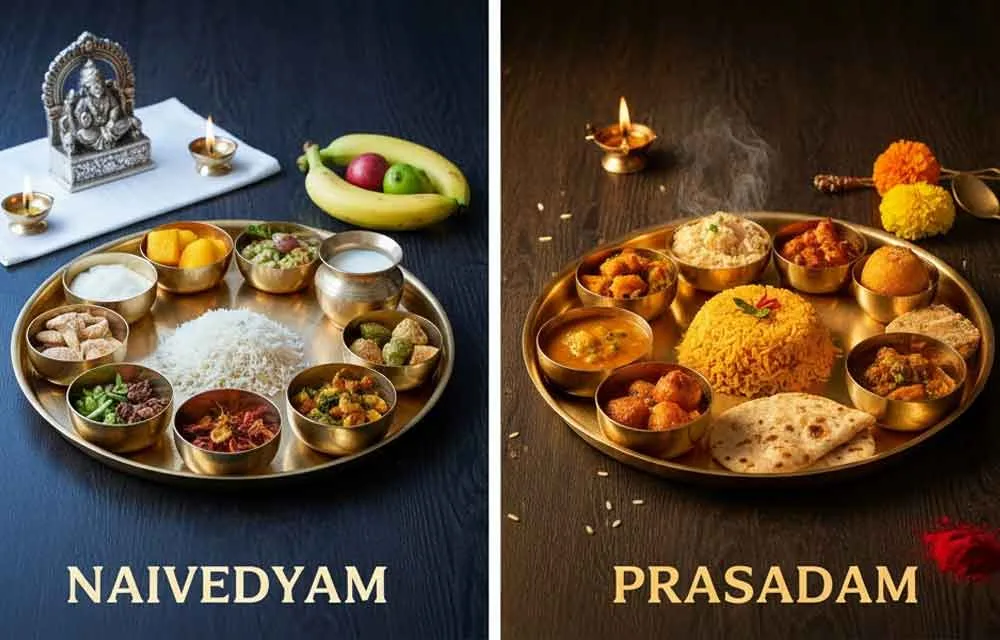
In Hindu tradition, food is far more than physical nourishment—it is a sacred medium through which we connect with the divine.
In Hindu tradition, food is far more than physical nourishment—it is a sacred medium through which we connect with the divine. Two terms that frequently appear in this spiritual context are "Naivedyam" and "Prasadam." While these words are often used interchangeably, they represent distinct yet interconnected stages in the beautiful journey of transforming ordinary food into divine grace. Understanding this transformation reveals profound insights into Hindu philosophy and the sacred relationship between humanity and the divine.
What Is Naivedyam? The Sacred Offering
The Meaning of Naivedyam
Naivedyam (Sanskrit: नैवेद्यम्) literally translates to "that which is offered" or "dedicated offering." It refers to food that has been specially prepared and is being offered to a deity with devotion and reverence. The term comes from the Sanskrit root "nivedana," meaning to present, dedicate, or offer humbly.
Naivedyam is the act and the food itself before it has been accepted by the divine. It represents our intention to share our best with God, acknowledging that everything we have—including the food we eat—ultimately comes from the divine source.
The Philosophy Behind Naivedyam
In Hindu philosophy, offering Naivedyam is rooted in several profound spiritual concepts:
Acknowledging Divine Providence: By offering food to God first, we recognize that the divine is the ultimate provider of all sustenance. This practice cultivates humility and gratitude.
Purifying Our Actions: The Bhagavad Gita teaches that actions performed as offerings to the divine become free from karmic bondage. When we offer food before consuming it, we transform the act of eating from a selfish pleasure to a sacred ritual.
Expressing Devotion: Naivedyam is an expression of bhakti (devotion). Just as we would serve the finest food to an honored guest, we offer the best to the divine, demonstrating our love and reverence.
Sanctifying Material Objects: Hindu philosophy views matter and spirit as interconnected. Through the offering ritual, material food becomes infused with spiritual energy, bridging the gap between the physical and metaphysical realms.
What Is Prasadam? The Divine Grace
The Meaning of Prasadam
Prasadam (Sanskrit: प्रसादम्) means "grace," "blessing," or "mercy of God." It refers to food that has been offered to a deity and is believed to have been accepted and blessed by that deity. Once Naivedyam is offered and the deity has symbolically "consumed" the offering, it transforms into Prasadam—food infused with divine grace.
The term comes from "prasāda," meaning clarity, brightness, or graciousness. Prasadam is not merely food; it is considered the mercy and blessing of the divine in material form.
The Transformative Power of Prasadam
Prasadam is believed to carry immense spiritual significance and benefits:
Purification of Consciousness: Consuming Prasadam is said to purify the mind and consciousness, removing negative thoughts and tendencies. The Bhagavad Gita (9.26) states that the Lord accepts offerings made with love and devotion, blessing both the offering and the devotee.
Spiritual Nourishment: While ordinary food nourishes only the body, Prasadam nourishes both body and soul. It is considered to carry the divine vibration and grace of the deity.
Liberation from Karma: Food consumed as Prasadam is believed to be free from karmic reactions. The Bhagavad Gita (3.13) declares that those who eat food first offered to the divine are released from all sins, while those who cook for themselves consume only sin.
Blessing for All: Prasadam can be consumed by anyone, regardless of caste, creed, or social status. It transcends social barriers and is a democratizing force in Hindu practice.
The Sacred Journey: From Naivedyam to Prasadam
Understanding the transformation from Naivedyam to Prasadam reveals the complete cycle of divine exchange:
- Preparation: Food is prepared with cleanliness, devotion, and positive thoughts
- Offering (Naivedyam): The food is formally offered to the deity with mantras and rituals
- Divine Acceptance: The deity symbolically accepts the offering
- Transformation: The food becomes Prasadam, infused with divine grace
- Distribution: Prasadam is shared with devotees and family members
- Consumption: Eating Prasadam with reverence completes the sacred cycle
This process transforms a simple meal into a profound spiritual practice, reminding us that all nourishment flows from the divine source.
How to Offer Food to God: The Complete Guide
Preparing Yourself and Your Space
Personal Purification: Before preparing food for offering, take a bath and wear clean clothes. Some traditions recommend avoiding onions, garlic, and other tamasic (energy-lowering) foods in temple offerings.
Mental Preparation: Approach the task with a calm, devotional mindset. Chant the deity's name or mantras while cooking to infuse positive vibrations into the food.
Kitchen Sanctity: Keep the cooking area clean and pure. Some devotees designate specific utensils exclusively for preparing offerings to God.
Avoid Tasting: Traditional practice suggests not tasting the food while cooking, as it should be offered to the deity first.
Preparing the Naivedyam
Choose Quality Ingredients: Select fresh, sattvic (pure) ingredients. The offering should represent your best.
Cook with Love: Prepare the food with devotion, focusing your mind on the deity. Many devotees chant mantras or sing devotional songs while cooking.
Prepare Traditional Items: Different deities have preferences, but common offerings include:
- Fruits (especially bananas, coconuts, and seasonal fruits)
- Sweets (ladoos, modaks, kheer, halwa)
- Cooked meals (rice, dal, vegetables, chapati)
- Milk-based items (butter, ghee, yogurt)
- Tulsi leaves (holy basil) for Vishnu
- Bilva leaves for Shiva
The Offering Ritual
Arrange the Altar: Place the deity's image or murti (statue) in a clean, elevated position. Decorate with flowers and light a lamp or incense.
Arrange the Food: Present the food attractively on clean plates or banana leaves. Traditional practice uses silver, copper, or earthen vessels.
Offer Water: Begin by offering water (achamana) for the deity to "wash" their hands and mouth.
Recite Mantras: Use appropriate mantras for the offering. A universal mantra is:
"Om Tat Sat Brahmārpaṇam Brahma Havir Brahmāgnau Brahmaṇā Hutam Brahmaiva Tena Gantavyam Brahma Karma Samādhinā"
Or simply: "Naivedyam Samarpayāmi" (I offer this food)
Ring a Bell: Ring a bell or clap to invite the deity's attention and ward off negative energies.
Meditation: Spend a few moments in silent meditation, visualizing the deity accepting and enjoying your offering.
Wave Light (Aarti): Perform a brief aarti by waving a lit camphor or ghee lamp in circular motions before the deity.
Final Prayer: Express gratitude and pray for the food to be accepted and transformed into Prasadam.
After the Offering
Wait Period: Allow a few minutes for the deity to symbolically accept the offering. This can range from a few minutes in home worship to longer periods in temple rituals.
Transfer to Prasadam: The food is now considered Prasadam and can be consumed or distributed.
Distribution: Share Prasadam with family members, guests, and those in need. Offering Prasadam to others is considered highly meritorious.
Respectful Consumption: Eat Prasadam with gratitude and awareness, never wasting even a small amount.
The Science Behind Sacred Food Offerings
Vibrational Energy
Hindu philosophy recognizes that everything in the universe vibrates at different frequencies. The mantras recited, the devotional atmosphere, and the focused intention during the offering ritual are believed to raise the vibrational frequency of the food, making it more conducive to spiritual well-being.
The Power of Intention
Modern scientific research on the impact of intention on matter supports ancient wisdom. Studies have shown that focused intention can affect water crystallization patterns. Similarly, food prepared and offered with devotional intention may carry different energetic properties than food prepared mechanically or with negative emotions.
Psychological Benefits
The ritual of offering food creates a psychological shift from mere consumption to conscious receiving. This mindfulness around eating promotes:
- Greater appreciation for food
- Reduced tendency toward overindulgence
- Stronger sense of connection to something greater
- Enhanced family bonding through shared spiritual practice
Prasadam in Different Hindu Traditions
Vaishnavism
In Vaishnava tradition, particularly in ISKCON temples, Prasadam holds supreme importance. Lord Krishna's acceptance of offerings is central to devotional practice. The Bhagavad Gita describes how Krishna accepts offerings made with love—even a leaf, flower, fruit, or water.
Popular Prasadam items include:
- Panchamrita (mixture of milk, yogurt, honey, sugar, and ghee)
- Butter (Krishna's favorite)
- Various sweets and savory preparations
Shaivism
In Shiva worship, offerings are often simpler, reflecting Shiva's ascetic nature. Common offerings include:
- Bilva leaves
- Milk
- Honey
- Fruits, especially bael fruit
- Cannabis preparations during specific festivals (like Mahashivaratri)
Shaktism
In Goddess worship, offerings vary based on the specific form of the Goddess:
- Durga: elaborate meals including rice, dal, vegetables
- Lakshmi: sweets, fruits, and prosperity-related items
- Kali: traditionally included non-vegetarian offerings in some regional practices
- Saraswati: sattvic foods, often yellow-colored items
Regional Variations
Different regions of India have unique Prasadam traditions:
- South India: Elaborate temple Prasadam like Tirupati ladoo, Guruvayur nivedyam
- Maharashtra: Modak for Ganesha, puran poli
- Bengal: Various sweets for Goddess Durga and Krishna
- Gujarat: Vegetarian dishes, especially during Janmashtami
- Punjab: Kada Prasad (wheat halwa) in Sikh Gurdwaras
The Bhagavad Gita on Food Offerings
The Bhagavad Gita provides profound insights into food offerings. In Chapter 9, Verse 26, Lord Krishna says:
"Patram pushpam phalam toyam yo me bhaktyā prayacchati Tad aham bhakty-upahritam ashnāmi prayatātmanah"
"If one offers Me with love and devotion a leaf, a flower, fruit, or water, I will accept it."
This verse emphasizes that the divine values the devotion behind the offering more than the material value of the offering itself. Even the simplest food, when offered with pure love, becomes acceptable to God.
Chapter 3, Verse 13 further explains:
"Yajña-śiṣṭāśinaḥ santo mucyante sarva-kilbiṣaiḥ Bhuñjate te tv aghaṁ pāpā ye pacanty ātma-kāraṇāt"
"The spiritually-minded, who eat food first offered as sacrifice, are released from all kinds of sin. Others, who prepare food for personal sense enjoyment, eat only sin."
Why Prasadam Is Considered Transformative
Spiritual Transformation
Purification of Karma: Eating Prasadam is believed to neutralize negative karma associated with food production and consumption. From growing crops to cooking, many actions involve some level of violence or exploitation. Offering food to God purifies these karmic traces.
Elevation of Consciousness: Regular consumption of Prasadam is said to gradually elevate consciousness, making one more receptive to spiritual teachings and experiences.
Protection from Negative Influences: Prasadam is believed to provide a protective shield against negative energies and influences.
Physical Benefits
Enhanced Digestion: Food consumed with gratitude and in a peaceful state of mind is better digested and assimilated.
Nutritional Consciousness: The practice of offering food encourages more mindful selection of ingredients, often leading to healthier dietary choices.
Reduced Overindulgence: Treating food as sacred naturally reduces the tendency to overeat or consume unwholesome foods.
Social Transformation
Breaking Barriers: Prasadam transcends social hierarchies. In temples, people from all backgrounds sit together to share Prasadam, promoting equality and unity.
Cultivating Generosity: The tradition of sharing Prasadam encourages generosity and community bonding.
Spreading Blessings: When devotees share Prasadam with others, they become vehicles for distributing divine grace throughout society.
Common Questions About Prasadam and Naivedyam
Can Non-Vegetarian Food Be Offered?
This varies by tradition. Most Hindu temples and households offer only vegetarian food, aligning with the principle of ahimsa (non-violence). However, some regional traditions and specific deity worship practices may include non-vegetarian offerings, particularly in Shakti worship in certain regions.
What If I Don't Have Time for Elaborate Rituals?
The essence of offering food lies in devotion, not complexity. Even a simple prayer acknowledging that food comes from the divine, followed by mentally offering it to God, can transform a meal. Krishna emphasizes in the Bhagavad Gita that He accepts offerings made with love, regardless of their simplicity.
Can Prasadam Be Wasted?
Wasting Prasadam is considered highly inauspicious. If Prasadam cannot be consumed, it should be respectfully disposed of—either by placing it in flowing water, offering it to animals or birds, or composting it. Never throw Prasadam in the trash.
How Long Does Food Remain Prasadam?
Traditional belief holds that once food is offered and accepted by the deity, it remains Prasadam indefinitely. However, practical considerations of freshness and safety apply. Respect for Prasadam means not allowing it to spoil or become unpalatable.
Can Prasadam Be Reheated?
Yes, Prasadam can be reheated for consumption. The spiritual sanctity remains, though some orthodox practitioners prefer to eat it at room temperature or as served.
Incorporating Prasadam Practice in Modern Life
Daily Home Practice
Morning Ritual: Offer your morning tea or breakfast to your deity before consuming it. This simple practice sets a devotional tone for the day.
Family Meals: Before dinner, take a small portion from each dish and offer it to your home shrine. This creates a sacred family tradition.
Mindful Eating: Even without a formal altar, pause before meals to express gratitude and mentally offer the food to the divine.
Festivals and Special Occasions
Prepare elaborate Prasadam during festivals like Diwali, Janmashtami, or Navaratri. Share it with neighbors and friends, spreading blessings throughout your community.
Teaching Children
Involve children in preparing and offering Prasadam. This instills values of gratitude, mindfulness, and devotion from an early age. Explain in simple terms that we share our food with God just as we share with family.
Temple Visits
When visiting temples, partake of the Prasadam offered there. Temple Prasadam carries the collective devotional energy of many worshippers and is particularly powerful.
The Universal Message of Prasadam
While Prasadam is rooted in Hindu tradition, its underlying message is universal: approaching life with gratitude, acknowledging a higher power, and recognizing the sacred in the ordinary. This philosophy can enrich anyone's relationship with food and nourishment, regardless of religious background.
The practice reminds us that we are not isolated individuals but interconnected parts of a greater whole. Every meal becomes an opportunity to practice humility, express gratitude, and experience the divine in daily life.
Conclusion: The Sacred Circle of Divine Nourishment
The journey from Naivedyam to Prasadam represents a complete spiritual cycle—from our grateful offering to the divine's gracious return of blessings. This ancient practice transforms the mundane act of eating into a profound spiritual communion.
Naivedyam is our expression of devotion, our acknowledgment that all we have comes from a higher source. Prasadam is the divine response, returning our offering infused with grace and blessings. Together, they create a sacred dialogue between the human and divine realms, reminding us that spirituality is not separate from daily life but woven into its very fabric.
In a world where food is often consumed mindlessly, the tradition of Prasadam offers a beautiful alternative: conscious, grateful, and sacred nourishment. Whether following elaborate temple rituals or simply pausing to offer a prayer before meals, we participate in an ancient practice that elevates both body and soul.
The next time you eat, consider the sacred potential in your food. Offer it first to the divine, transform it into Prasadam, and consume it as a blessing. In doing so, you'll discover that every meal can become a spiritual practice, every bite a communion with the divine, and every act of eating an opportunity for transformation.
May your food always be blessed, and may you recognize the divine grace in every meal. Hari Om Tat Sat.
Frequently Asked Questions
What is Prasadam vs. Naivedyam?
In Hindu tradition, food is far more than physical nourishment—it is a sacred medium through which we connect with the divine. Two terms that frequently appear in this spiritual context are "Naivedyam" and "Prasadam." While these words are often used interchangeably, they represent distinct yet interconnected stages in the beautiful journey of transforming o
What ingredients are needed for Prasadam vs. Naivedyam?
The traditional ingredients and step-by-step method are given in the recipe above; most are easily available at Indian grocery stores, including for NRI families abroad.
Can Prasadam vs. Naivedyam be offered as naivedya?
Yes — it is prepared sattvically (without onion or garlic) and offered to the deity first as naivedya, then distributed as prasad.
Can I make Prasadam vs. Naivedyam abroad?
Yes. All key ingredients are available at Indian grocery stores across the USA, UK, Canada and Australia, making it easy to prepare at home for the puja.
You might also like

Sacred Hindu Festivals & Temple News: Divine Week — May 2026

Shani Jayanti 2026: Date, Significance, Rituals & Powerful Mantras
Shani Deva Temples Worldwide & Must-Performed Rituals — Complete Devotee's Guide