Preta to Pitru Transformation: Spiritual Power of Pinda Offerings Explained
From Preta to Pitru: The Miraculous Journey Through Pinda Offerings – Garuda Purana's Compassionate Message of Ancestral Compassion The Garuda Purana, one of…
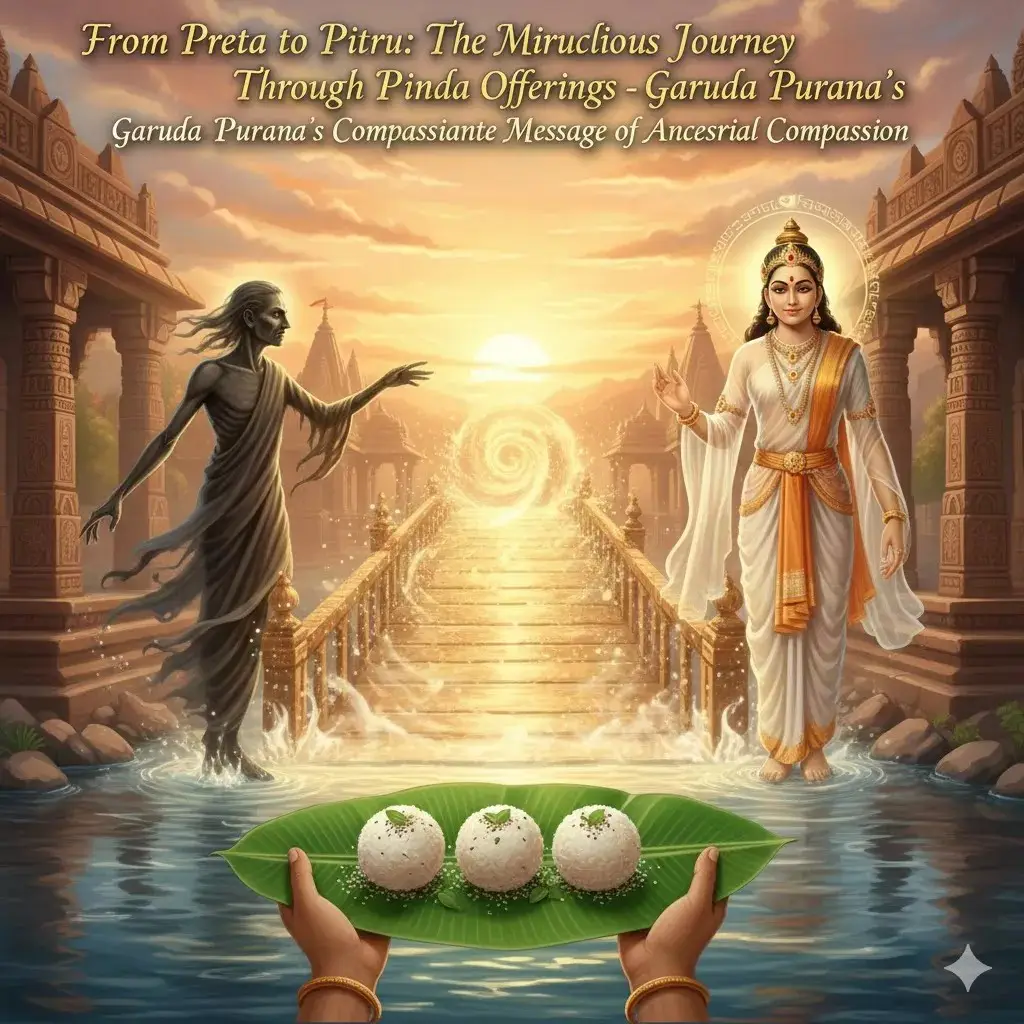
From Preta to Pitru: The Miraculous Journey Through Pinda Offerings – Garuda Purana's Compassionate Message of Ancestral Compassion The Garuda Purana, one of…
From Preta to Pitru: The Miraculous Journey Through Pinda Offerings – Garuda Purana's Compassionate Message of Ancestral Compassion
The Garuda Purana, one of Hinduism's eighteen Mahapuranas, contains profound wisdom about death, the afterlife, and the sacred duties of the living toward the departed. Among its most compassionate teachings is the transformative journey of the soul from a suffering Preta (wandering spirit) to an honored Pitru (ancestral being) through the sacred ritual of Pinda Dana—offerings that bridge the realms of the living and the dead with love, duty, and spiritual power.
The Transition: When Life Departs the Body
According to the Garuda Purana, when the physical body ceases to function and the vital breath (prana) departs, the soul begins a perilous journey. In those initial moments after death, the departed soul exists in a vulnerable, transitional state known as Preta. This is not merely a superstitious belief but a sophisticated understanding of the soul's journey through various planes of existence.
The Preta state is described as one of intense suffering. The soul, still attached to earthly desires and memories yet separated from the physical means to fulfill them, experiences profound hunger, thirst, and a burning sensation that no earthly fire can match. The Garuda Purana describes this as Preta Peeda—the affliction of the wandering spirit—a state where the soul desperately seeks relief but cannot find it through its own efforts.
The Burning Hunger: Understanding Preta Suffering
The scriptures paint a vivid picture of the Preta's anguish. Imagine the intensity of earthly hunger multiplied a thousandfold, with no possibility of satisfaction. The Preta experiences:
Ati Kshudha (Extreme Hunger): A gnawing emptiness that consumes the entire consciousness of the departed soul, far beyond any physical hunger known to the living.
Ati Trishna (Extreme Thirst): A parching dryness that burns through every aspect of the soul's subtle body, desperate for even a drop of relief.
Dahana (Burning Sensation): An all-consuming fire that torments the Preta, not from external flames but from unfulfilled karmic impressions and the inability to satisfy residual desires.
This suffering is not punishment but consequence—the natural result of the soul's continued attachment to the physical realm while lacking a physical body. The Preta wanders between worlds, seeing but unable to touch, desiring but unable to grasp, calling out but unable to communicate with the living who continue their daily lives, oblivious to this silent anguish.
The Sacred Bridge: Pinda Dana
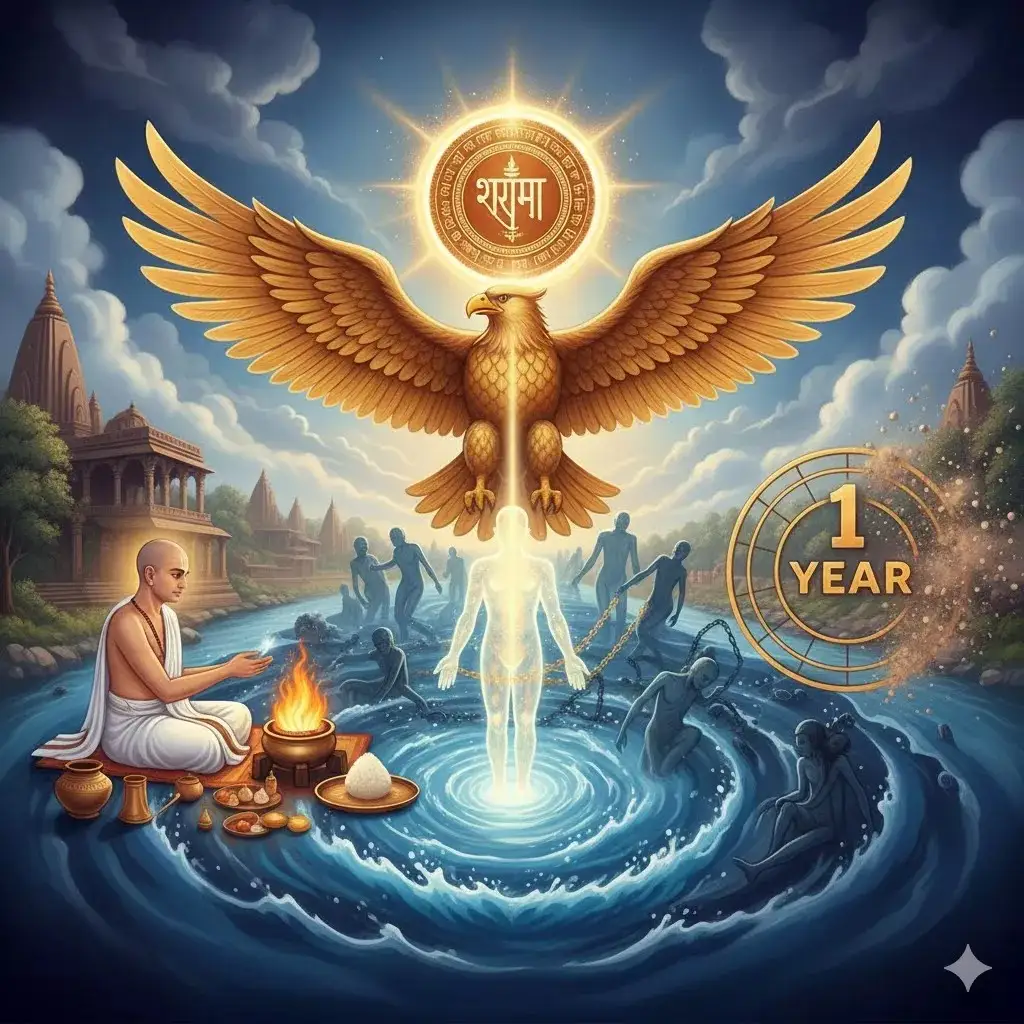
Into this darkness shines the light of Pinda Dana—the offering of sacred rice balls mixed with sesame seeds, barley, and holy water. This ancient practice, prescribed in the Garuda Purana, is far more than ritual; it is a mystical technology of compassion that spans the visible and invisible worlds.
The Pinda (rice ball) represents the subtle body that the soul requires during its journey. Each offering is a gift of sustenance, a transmission of energy from the material plane to the subtle realms where the Preta exists. The ingredients are not random but carefully chosen for their spiritual properties:
Rice symbolizes nourishment and the essence of life itself, providing the basic sustenance the Preta desperately needs.
Sesame seeds (Til) represent the countless karmic impressions and are believed to have the power to satisfy hunger across all realms.
Barley brings cooling properties, offering relief from the burning sensations that torment the departed.
Holy water from sacred rivers like the Ganges carries purifying vibrations that cleanse the subtle body and ease spiritual suffering.
When these Pindas are offered with sincere devotion and proper mantras, something miraculous occurs. The Garuda Purana describes how the offerings reach the Preta in the subtle realms, transforming into the exact nourishment the wandering soul requires. The burning subsides, the hunger is satisfied, and the unbearable thirst is quenched.
The Sixteen-Day Transformation
The Garuda Purana prescribes a sixteen-day period of Pinda offerings, each day serving a specific purpose in the soul's transformation:
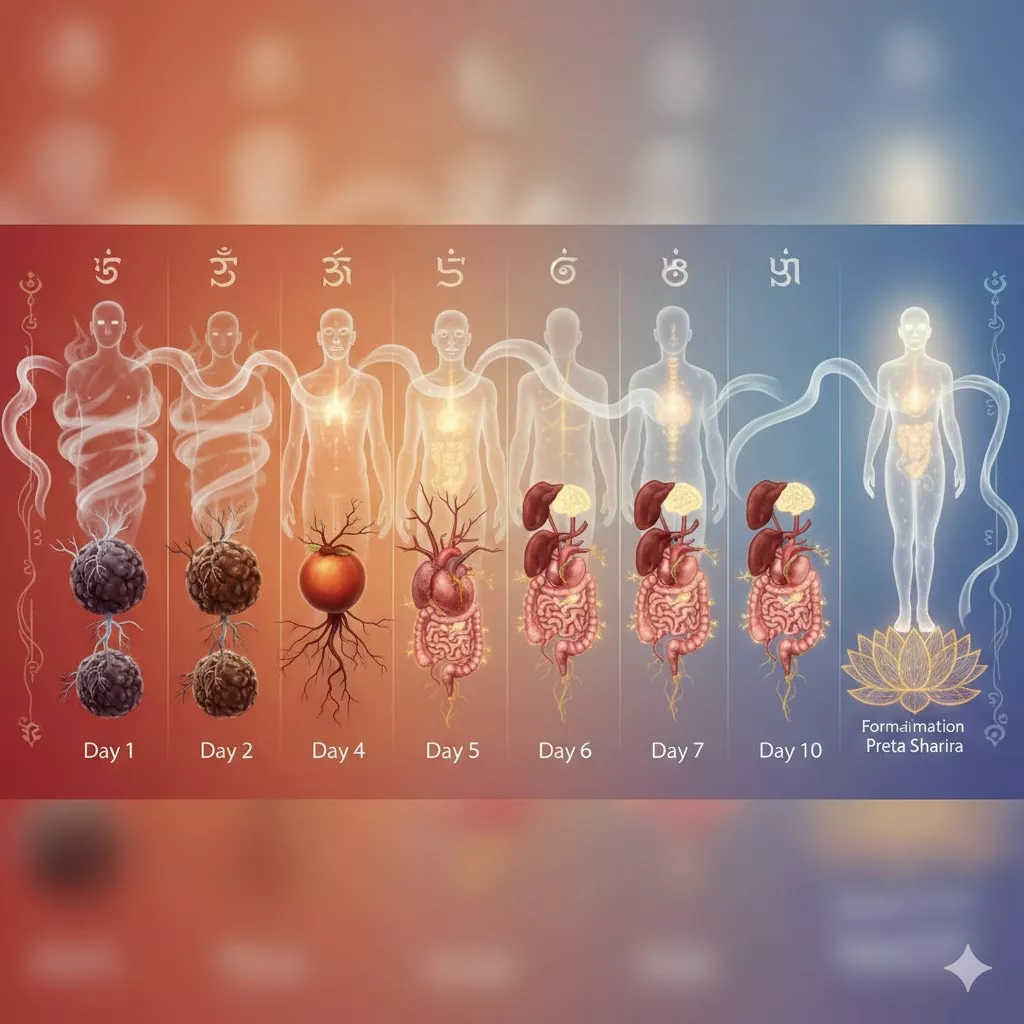
Days 1-10: Building the Subtle Body
During the first ten days after death, daily Pinda offerings help construct a new subtle body for the departed soul. Each Pinda corresponds to different aspects—on the first day, it forms the head; on the second, the neck and shoulders; and so on, gradually completing the entire subtle form the soul needs for its onward journey.
These offerings do more than construct; they comfort. Each Pinda brings temporary relief from hunger and burning, like cool water on parched lips. The Preta, sensing this nourishment coming from loved ones, feels less abandoned, less isolated in its suffering.
Days 11-12: Ekodishta Shraddha
On the eleventh and twelfth days, special offerings called Ekodishta Shraddha are performed. These are more elaborate ceremonies that significantly strengthen the subtle body and begin the crucial transition from Preta consciousness to Pitru consciousness. The soul starts to release its desperate grip on earthly existence and begins accepting its new state.
Days 13-16: Sapindakarana
The most transformative ritual occurs between the thirteenth and sixteenth days—the Sapindakarana ceremony, literally meaning "the uniting of the Pindas." In this profound ritual, the individual Pinda of the deceased is merged with the collective Pindas representing three generations of ancestors.
This is the moment of miraculous transformation. Through this ritual union, the Preta is formally accepted into the realm of the Pitrus (ancestors). The suffering wanderer becomes an honored ancestor. The hungry ghost becomes a beneficent presence. The isolation ends as the soul joins the great assembly of departed family members who have gone before.
The Science of Compassion
What makes these offerings work? The Garuda Purana reveals several layers of understanding:
Subtle Energy Transfer: The living possess abundant vital energy (prana), while the Preta lacks it. Through sincere offering and heartfelt intention, the living can transfer subtle energy to the departed, much like lighting one candle from another diminishes nothing from the first.
Power of Intention: The Sanskrit mantras and sincere devotion of the living create powerful vibrations that penetrate the subtle realms. The Preta, being in a subtle state, is highly sensitive to these vibrations and receives the intended nourishment.
Karmic Connection: The blood relationship between the living and the deceased creates a natural karmic bond, a subtle channel through which offerings can flow. This is why the scriptures emphasize that offerings from sons, grandsons, and direct descendants are most effective.
Collective Consciousness: The ritual doesn't work in isolation. It taps into the collective power of ancient tradition, the accumulated merit of countless generations who have performed these rites, and the blessings of the divine beings who oversee this cosmic process.
From Suffering to Serenity: The Pitru State
Once the transformation is complete, the former Preta emerges as a Pitru—an ancestral being dwelling in Pitru Loka, the realm of the ancestors. This is not heaven in the ultimate sense, but it is a place of peace, dignity, and honor.
As a Pitru, the soul no longer experiences the burning hunger and desperate thirst of the Preta state. Instead, the Pitru enjoys:
Tarpana (Satisfaction): Regular offerings from descendants continue to provide satisfaction and comfort, though no longer the desperate relief from suffering but rather the joy of being remembered and honored.
Dignity: The Pitru holds an honored position in the cosmic hierarchy, no longer a wandering beggar but a respected ancestor with the power to bless descendants.
Connection: Rather than the desperate, one-sided longing of the Preta state, the Pitru enjoys a harmonious connection with living descendants—able to receive offerings, witness family events, and provide subtle guidance and blessings.
Peace: The restless agitation of unfulfilled desires gives way to a state of relative peace as the soul awaits its next birth or progresses toward higher spiritual realms.
The Living's Sacred Duty
The Garuda Purana emphasizes that performing these rituals is not optional sentiment but sacred duty—Pitru Runa, the debt we owe our ancestors. Every person exists because of an unbroken chain of ancestors stretching back through countless generations. Each of us is the recipient of their sacrifices, their struggles, their love.
When we perform Pinda Dana and Shraddha ceremonies, we are:
Repaying a Debt: Acknowledging that our very existence is a gift from those who came before, and offering sustenance to them in their time of need, just as they once nourished us.
Expressing Gratitude: Demonstrating that we have not forgotten, that their lives mattered, that the love they showed us continues to resonate through the generations.
Maintaining Cosmic Order: Fulfilling our role in the great cycle of reciprocity that maintains balance in the universe—the living care for the dead, just as the dead once cared for the living.
Earning Blessings: Satisfied Pitrus become powerful benefactors, blessing descendants with health, prosperity, spiritual progress, and protection from obstacles.
The Deeper Spiritual Message
Beyond the literal mechanics of the ritual, the Garuda Purana's teaching on Pinda offerings carries profound spiritual wisdom:
Interconnectedness: We are never truly separate from those we love. Death may change the form of relationship, but it does not sever the fundamental connection. Our actions continue to affect our ancestors just as their karmic legacy affects us.
Power of Compassion: Love and compassion are not weak sentiments but actual forces that can bridge worlds and transform suffering into peace. The ritual proves that our caring intentions can reach across the veil of death to provide real relief.
Responsibility and Agency: Even in the face of death—the greatest mystery and the ultimate loss—we are not helpless. Through proper understanding and right action, we can actively help our loved ones, easing their journey and ensuring their welfare in realms we cannot see.
Continuity of Consciousness: The detailed descriptions of the Preta's experiences affirm that consciousness continues after death. The soul's journey is real, its experiences are vivid, and what happens to it matters profoundly.
Transformation is Possible: The very heart of this teaching is that transformation is always possible. The most suffering-filled state (Preta) can become peaceful and honored (Pitru) through the right conditions and actions. This is true not just for the dead but for the living—our current suffering can be transformed through proper understanding and action.
Practical Wisdom for Modern Times
In our contemporary world, where death is often sanitized, hidden, and discussed in euphemisms, the Garuda Purana's frank and detailed description of the afterlife journey may seem unusual. Yet its wisdom remains profoundly relevant:
For Those in Grief: Understanding the journey from Preta to Pitru can transform grief from helpless despair into purposeful action. Instead of feeling powerless in the face of loss, we can actively help our departed loved ones through proper rituals and offerings.
For the Spiritually Curious: These teachings offer a sophisticated map of subtle realities, describing states and processes that meditation practitioners and near-death experiencers have independently corroborated across cultures.
For Families: The ritual structure provides a meaningful way for families to come together during the difficult period after death, channeling their grief into constructive spiritual action that helps everyone heal.
For the Living: Contemplating the Preta state and our own inevitable death can inspire us to live more consciously, to reduce harmful attachments, and to cultivate the spiritual qualities we will need for our own journey beyond death.
The Ritual in Practice
While the full traditional ritual requires priestly expertise and extensive preparation, even simplified home practices can be meaningful:
Daily Water Offerings: For sixteen days after death, offering water (tarpana) with sesame seeds and prayers can provide relief to the departed.
Monthly Remembrance: On the monthly death anniversary, simple Pinda offerings can be made, especially during the first year.
Annual Shraddha: The annual death anniversary (tithi) is considered especially important, when more elaborate offerings should be made.
Pitru Paksha: The fortnight dedicated to ancestors (usually in September/October) is the most auspicious time for comprehensive ancestral offerings, when the veils between worlds are said to be thinnest.
Scientific and Psychological Perspectives
While rooted in spiritual tradition, these practices also have psychological and social dimensions worth considering:
Grief Processing: The structured sixteen-day ritual provides a framework for processing grief, with each day marking progress toward acceptance and peace.
Continuing Bonds: Modern psychology increasingly recognizes the value of maintaining continuing bonds with the deceased rather than completely "letting go." These rituals formalize and sanctify this ongoing relationship.
Meaning Making: The rituals help survivors make meaning from death, transforming an apparently meaningless tragedy into part of a larger cosmic process where their actions matter.
Family Cohesion: Coming together for these ceremonies strengthens family bonds, creates shared meaning, and ensures that family history and values are transmitted across generations.
The Eternal Cycle
The Garuda Purana reminds us that the Pitru state itself is not final. The soul continues its journey, eventually taking rebirth according to its karma and spiritual evolution. The offerings we make help not only in the immediate transition but in the soul's long-term spiritual progress:
Merit Accumulation: The peace and satisfaction the Pitru experiences through our offerings helps burn away negative karma and accumulate positive merit.
Favorable Rebirth: A well-cared-for Pitru who receives regular offerings is more likely to take rebirth in favorable circumstances, perhaps in the same family line.
Spiritual Evolution: Some souls, through the combined effect of their own spiritual practice and the offerings of descendants, may transcend the cycle of rebirth altogether, moving to higher spiritual realms.
Blessing Future Generations: Satisfied Pitrus often choose to be reborn in their own family lines, bringing their accumulated wisdom and spiritual merit as blessings to future generations.
Conclusion: A Message of Hope and Responsibility
The Garuda Purana's teaching on the journey from Preta to Pitru through Pinda offerings is ultimately a message of profound hope and sacred responsibility. It tells us that:
- Death is not the end but a transition
- Our loved ones continue beyond the veil of death
- They may suffer in that transition, but their suffering is not permanent
- We have the power to help them, to ease their pain, to honor their memory
- Love transcends death and becomes a bridge between worlds
- Our actions matter not just for ourselves but for generations past and future
- Compassion is a real force that can transform suffering into peace
In performing these ancient rituals, we participate in a cosmic dance of reciprocity and love that has sustained humanity for millennia. We honor the past, serve the present, and bless the future. We transform ourselves from isolated individuals into conscious links in the great chain of being that connects all generations.
The miraculous journey from Preta to Pitru, facilitated by humble rice balls offered with sincere devotion, reveals a universe far more interconnected and responsive to love than our materialistic age might suggest. It invites us to expand our understanding of what is possible, what is real, and what our responsibilities truly are—not just to the living but to all beings in all realms.
May this ancient wisdom illuminate our path, deepen our compassion, and inspire us to fulfill our sacred duties with understanding and love. May all Pretas find relief and transformation into honored Pitrus. May all Pitrus receive the offerings they need and bless all beings. May all souls progress on their journey toward ultimate liberation and peace.
Om Shanti, Shanti, Shanti
For more articles on Hindu spirituality, rituals, and ancient wisdom, visit www.hindutone.com
Frequently Asked Questions
What is Pinda Dana?
Pinda Dana is the offering of sacred rice balls mixed with sesame seeds, barley and holy water for a departed soul. As commonly taught from the Garuda Purana, it gives the soul sustenance and relief in the subtle realms.
What is the difference between a Preta and a Pitru?
A Preta is the wandering spirit in the transitional state after death, suffering extreme hunger, thirst and burning. A Pitru is an honored ancestral being in Pitru Loka, at peace and receiving offerings from descendants.
Why are sesame seeds, barley and rice used in Pinda offerings?
Rice symbolizes nourishment, sesame (til) satisfies hunger across realms, and barley cools the burning sensation. Holy water from rivers like the Ganges purifies the subtle body.
How many days do the Pinda offerings last?
The Garuda Purana prescribes sixteen days. Days 1–10 build the subtle body, days 11–12 are Ekodishta Shraddha, and days 13–16 bring the Sapindakarana ceremony.
What is Sapindakarana?
Sapindakarana means "the uniting of the Pindas." The deceased's Pinda is merged with the Pindas of three generations of ancestors, and the Preta is formally accepted among the Pitrus.
Who should perform Pinda Dana and Shraddha?
Offerings by sons, grandsons and direct descendants are said to be most effective because of the blood bond. Performing them is described as Pitru Runa, a sacred duty owed to ancestors.
You might also like
Vidyarambha Muhurat 2026 — Best Day to Begin Education
Hindu Dietary Restrictions: A Complete Guide to Food Rules, Practices & TraditionsDietaryHindu Dietary Restrictions: A Complete Guide to Food Rules, Practices & Traditions
Garuda Purana on Ekoddishta Shraddha: Special Rites for Recent Departed