Diwali 2026 State by State in India: How Every Region Celebrates, with Lakshmi Puja Muhurat by City
A state-by-state guide to Diwali 2026 in India: one table covering how each region celebrates, its most distinctive custom and the calculated Lakshmi Puja muhurat for a major city, followed by short regional guides for North, West, East, South and Central India, with links to every detailed state page.
A state-by-state guide to Diwali 2026 in India: one table covering how each region celebrates, its most distinctive custom and the calculated Lakshmi Puja muhurat for a major city, followed by short regional guides for North, West, East, South and Central India, with links to every detailed state page.
Quick answer: Diwali 2026 falls on Sunday 8 November across India (Drik Panchang), with Dhanteras on Friday 6 November, Govardhan Puja on Tuesday 10 November and Bhai Dooj on Wednesday 11 November. Every region gives the festival its own shape: lamps on the Saryu in Ayodhya, Bandi Chhor Divas at Amritsar, the Gujarati New Year, Narakasura effigies in Goa, Kali Puja in Bengal and Assam, the Naraka Chaturdashi oil bath in Tamil Nadu, Bali Padyami in Karnataka and, eleven days later, Igas Bagwal in Uttarakhand. The table below gives each state's distinctive custom and a calculated Lakshmi Puja muhurat for a major city.
Diwali 2026 dates in India
| Day | Date (India) | Also known as |
|---|---|---|
| Dhanteras | Fri 6 Nov | Dhanatrayodashi |
| Naraka Chaturdashi | Sun 8 Nov (morning) | Choti Diwali, Roop Chaudas, Tamil Deepavali |
| Diwali / Lakshmi Puja | Sun 8 Nov (evening) | Deepavali, Kali Puja, Chopda Puja, Sharda Puja |
| Govardhan Puja / Bali Pratipada | Tue 10 Nov | Annakut, Bali Padyami, Padwa, Gujarati New Year |
| Bhai Dooj | Wed 11 Nov | Bhau Beej, Bhai Phonta, Yama Dwitiya, Chitragupta Puja |
Source: Drik Panchang (India). Regional almanacs occasionally differ by a day; follow your family's panchang. A one-page view is in Diwali 2026: 5-day festival calendar at a glance.
Diwali 2026 state by state: the table
Muhurat times are the Lakshmi Puja window on Sunday 8 November 2026 in IST, calculated with the HinduTone calculator (Drik method: Pradosh Kaal with a fixed Vrishabha lagna). Confirm on Drik Panchang or with your priest. Where our calculator does not cover a city in the state, we say so.
| State / UT | How Diwali is celebrated | Distinctive custom | Lakshmi Puja muhurat (city, calculated) |
|---|---|---|---|
| Delhi | Lakshmi-Ganesh puja, lamps, sweets and gifts; markets busy for weeks | Exchanging sweets and dry fruits; strict local rules on crackers in many years | New Delhi: 5:55 PM to 7:50 PM |
| Uttar Pradesh | Rama's return remembered; Lakshmi-Ganesh puja; Annakut in Braj | Ayodhya Deepotsav on the Saryu ghats (state-organised) | Lucknow: 5:43 PM to 7:40 PM; Varanasi: 5:38 PM to 7:35 PM |
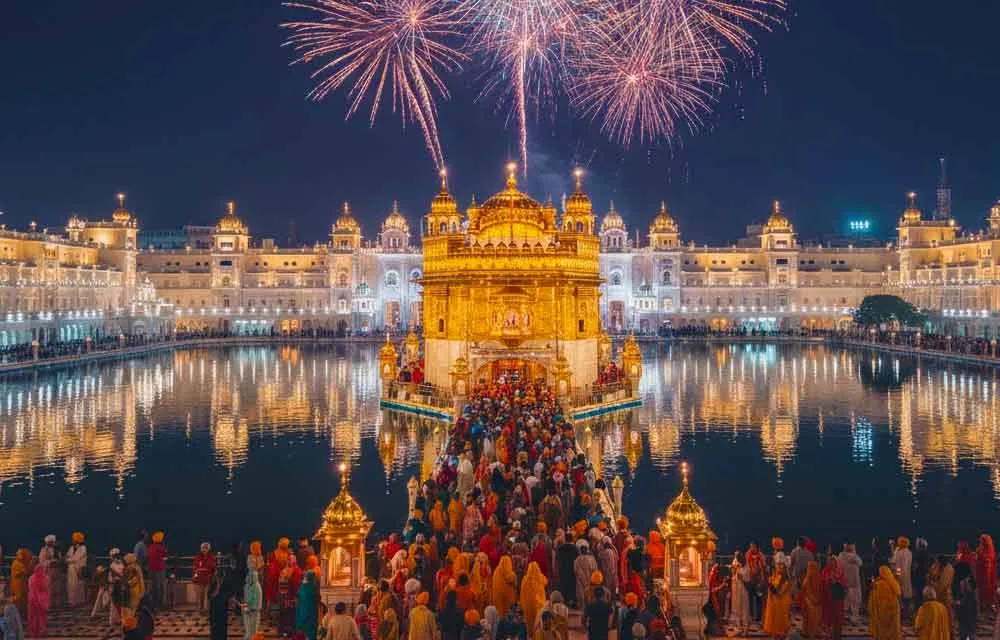
| Punjab | Hindu Lakshmi puja; Sikh Bandi Chhor Divas the same day | Illumination of Harmandir Sahib, Amritsar | Amritsar: 5:59 PM to 7:53 PM |
| Haryana / Chandigarh | Lakshmi-Ganesh puja, lamps; Govardhan Puja | Vishwakarma Day after Diwali in many workshops | Chandigarh: 5:53 PM to 7:48 PM |
| Rajasthan | Lit bazaars and havelis; Lakshmi puja | Marwari bahi-khata (new account books); mandana art | Jaipur: 6:03 PM to 8:00 PM |
| Himachal Pradesh | Lamps and Lakshmi puja | Budhi Diwali about a month later in some hill areas | Not in our calculated list; check Drik |
| Uttarakhand | Lakshmi puja; aipan art in Kumaon | Igas Bagwal on Fri 20 Nov with bhailo torches | Dehradun: 5:48 PM to 7:43 PM |
| Jammu and Kashmir | Lamps and Lakshmi puja in Hindu homes | Family customs vary between Jammu and Kashmiri Pandit households | Srinagar: 5:54 PM to 7:47 PM |
| Gujarat | Chopda Pujan; rangoli; Kali Chaudas | Gujarati New Year (Bestu Varas) on Tue 10 Nov | Ahmedabad: 6:23 PM to 8:21 PM; Surat: 6:25 PM to 8:24 PM |
| Maharashtra | Vasu Baras to Bhau Beej; faral sweets; akash kandil | Diwali Padwa and Bhau Beej; children's clay forts | Mumbai: 6:28 PM to 8:28 PM; Pune: 6:25 PM to 8:25 PM; Nagpur: 6:00 PM to 7:59 PM |
| Goa | Naraka Chaturdashi focus; Lakshmi puja | Narakasura effigies burned before dawn; kareet and fov | Panaji: 6:30 PM to 8:31 PM |
| West Bengal | Kali Puja at night; lamps | Bhoot Chaturdashi's fourteen lamps; Bhai Phonta | Kolkata: 5:20 PM to 7:19 PM |
| Assam and the Northeast | Earthen lamps; Kali Puja in Assam and Tripura | Tihar among Nepali-speaking communities in Sikkim | Guwahati: 5:02 PM to 6:58 PM |
| Odisha | Lamps, Lakshmi puja and Kali Puja | Kaunria kathi: jute-stick flames offered to ancestors | Bhubaneswar: 5:34 PM to 7:33 PM |
| Bihar | Lakshmi-Ganesh puja; Kali Puja in towns | Chitragupta Puja; lead-in to Chhath on Sun 15 Nov | Patna: 5:29 PM to 7:26 PM |
| Jharkhand | Lakshmi puja; Kali Puja in industrial towns | Sohrai cattle and harvest festival in tribal areas | Ranchi: 5:31 PM to 7:29 PM |
| Tamil Nadu | Morning festival: oil bath, new clothes, sweets, crackers | Pre-dawn oil bath on Naraka Chaturdashi; Kedara Gowri vratam | Chennai: 6:07 PM to 8:09 PM; Coimbatore: 6:24 PM to 8:24 PM |
| Karnataka | Naraka Chaturdashi bath, Lakshmi puja, lamps | Bali Padyami on Tue 10 Nov | Bengaluru: 6:18 PM to 8:20 PM |
| Kerala | Morning oil bath and new clothes; quieter in many homes | Thrikarthika lamps on Tue 24 Nov | Kochi: 6:28 PM to 8:27 PM; Thiruvananthapuram: 6:27 PM to 8:26 PM |
| Telangana | Naraka Chaturdashi bath; Lakshmi puja; pramidalu lamps | Satyabhama's story; Sadar festival in Hyderabad | Hyderabad: 6:08 PM to 8:09 PM |
| Andhra Pradesh | Naraka Chaturdashi bath; Lakshmi puja; crackers | Kedareswara vratam; start of Karthika Masam | Vijayawada: 6:01 PM to 8:02 PM; Visakhapatnam: 5:48 PM to 7:49 PM |
| Madhya Pradesh | Lakshmi-Ganesh puja; Govardhan Puja | Govardhan and cattle worship in rural areas | Bhopal: 6:03 PM to 8:01 PM; Indore: 6:10 PM to 8:09 PM |
| Chhattisgarh | Lakshmi puja; Govardhan Puja | Gaura-Gauri puja; cattle honoured on Govardhan | Raipur: 5:50 PM to 7:49 PM |
All muhurat times above are calculated (HinduTone, Drik method) and in IST. For a fuller city list, see Lakshmi Puja muhurat 2026 India city-wise and Diwali 2026 date and Lakshmi Puja muhurat.
North India
Delhi, Haryana and Chandigarh
Diwali in the capital region follows the classic North Indian pattern: weeks of cleaning and shopping, Lakshmi-Ganesh puja with kheel-batashe on Amavasya evening, diyas and lights, and the exchange of sweets and gifts with relatives and colleagues. Many workshops and factories honour their tools on Vishwakarma Day, the day after Diwali. Because early-November air quality is often poor, courts and the government have restricted firecrackers in many recent years; check the current rules.
Uttar Pradesh
Rama's return to Ayodhya is the heart of North Indian Diwali, and Ayodhya's state-organised Deepotsav lights the Saryu ghats around the festival; its 2026 programme is announced by the UP government. Braj celebrates Govardhan Puja and Annakut, and Varanasi follows Diwali with Dev Deepawali on Kartik Purnima, Tuesday 24 November. Full guide: Ayodhya Deepotsav and Diwali 2026 in Uttar Pradesh; see also Varanasi Dev Deepawali 2026.
Punjab
Hindu families perform Lakshmi puja while Sikhs commemorate Bandi Chhor Divas, remembering Guru Hargobind's release from Gwalior Fort, and Harmandir Sahib in Amritsar is lit up. See Diwali 2026 in Punjab and Bandi Chhor Divas.
Rajasthan
Jaipur's bazaars and havelis glow, Marwari traders open new account books at the Lakshmi puja, villages renew mandana art, and Krishna temples offer Annakut on Govardhan Puja. See Diwali 2026 in Rajasthan and Jaipur and Chopda Puja 2026.
Himachal Pradesh and Uttarakhand
The hill states celebrate the main Diwali with lamps and Lakshmi puja, and both also have 'late Diwalis'. In Uttarakhand, Igas Bagwal on Devutthana Ekadashi (Friday 20 November 2026) is marked with bhailo torches swung in circles, cattle worship and folk dances. Some hill areas of Himachal Pradesh observe Budhi (old) Diwali about a month after the main festival, with its own customs that vary from valley to valley. See Igas Bagwal 2026: Uttarakhand's Diwali and Kullu Dussehra 2026 for Himachal's autumn festival season.
West India
Gujarat
Gujarat's Diwali runs from Vagh Baras through Dhanteras and Kali Chaudas to Diwali night with Chopda Pujan, the worship of new account books, and the Gujarati New Year (Bestu Varas) on Tuesday 10 November 2026, when families visit relatives with 'Saal Mubarak' greetings. Labh Pancham, when many businesses reopen, follows on Saturday 14 November. See Kali Chaudas 2026 in Gujarat and Diwali in Gujarat: Kali Chaudas, Chopda Pujan and New Year.
Maharashtra
Maharashtrian Diwali begins with Vasu Baras (worship of the cow and calf; calculated for Thursday 5 November 2026, though some calendars list 6 November), continues with the abhyanga snan and faral on Naraka Chaturdashi, Lakshmi puja on Amavasya, Diwali Padwa (Bali Pratipada) on Tuesday 10 November, a special day for married couples, and Bhau Beej on Wednesday 11 November. Akash kandil lanterns hang outside homes, and in many towns children build small clay forts (killa) in the courtyard. Recipes: Maharashtrian Diwali faral: chakli, shankarpali and karanji.
Goa
Goa's Diwali centres on Narakasura: neighbourhood groups build large effigies, parade them at night and burn them before dawn on Naraka Chaturdashi (Sunday 8 November 2026), after which families take the oil bath, crush a bitter kareet and share fov. See Goa's Narakasura effigies 2026.
East India
West Bengal
In Bengal, the Amavasya night is Kali Puja, with community pandals and worship through the night, and homes lit with lamps and candles. Just before it comes Bhoot Chaturdashi, when many families light fourteen lamps and eat fourteen leafy greens to honour ancestors; because the Chaturdashi tithi begins on Saturday 7 November and runs into Sunday morning in 2026, follow your panjika for which day your family keeps it. Bhai Phonta follows on Wednesday 11 November. See Kali Puja 2026 and Bhai Phonta 2026.
Assam and the Northeast
Assamese homes light rows of earthen lamps, Kali Puja is widely celebrated in Assam and Tripura, and Nepali-speaking communities in Sikkim and the Darjeeling hills celebrate Tihar with Deusi-Bhailo songs and Bhai Tika. See Diwali 2026 in Assam and the Northeast.
Odisha
In Odisha, a widely known Diwali custom is kaunria kathi: family members light bundles of jute sticks and call on their ancestors, as traditionally understood, inviting them to come in the darkness and depart in the light. Lamps, Lakshmi puja and, in many towns, Kali Puja complete the night. See also Dussehra and Durga Puja 2026 in Odisha.
Bihar and Jharkhand
Bihar and Jharkhand celebrate Lakshmi-Ganesh puja and, in many towns, Kali Puja; tribal Jharkhand marks Sohrai with cattle worship and wall murals; Kayastha families observe Chitragupta Puja with Bhai Dooj; and within a week the region turns to Chhath (main evening arghya Sunday 15 November 2026). See Diwali 2026 in Bihar and Jharkhand and Chhath Puja 2026.
South India
Tamil Nadu
In Tamil Nadu, Deepavali is above all a morning festival. Families wake before dawn for the oil bath, often greeting each other by asking whether they have had their 'Ganga snanam', then wear new clothes, burst crackers and share sweets and savouries. Many families also observe the Kedara Gowri vratam on Amavasya. The season's great lamp festival, Karthigai Deepam, follows on Tuesday 24 November 2026. See Kedar Gauri vrat 2026: Deepavali nombu, Tamil Deepavali recipes and Karthigai Deepam 2026.
Karnataka
Karnataka keeps the Naraka Chaturdashi oil bath, Lakshmi puja on Amavasya and, distinctively, Bali Padyami on Tuesday 10 November 2026, when King Bali, sent to the netherworld by Vamana, is traditionally said to return to visit his people. In coastal Karnataka, Bali is worshipped in many homes with lamps and offerings. See Govardhan Puja and Bali Padyami 2026 and the legend of Bali Raja.
Kerala
Kerala celebrates Deepavali mainly on Naraka Chaturdashi morning, with an oil bath and new clothes, especially among Tamil Brahmin, Konkani and other communities; it is quieter in many Malayali homes than Onam or Vishu, and Kerala's own lamp festival, Thrikarthika, follows on Tuesday 24 November. See Deepavali 2026 in Kerala.
Andhra Pradesh and Telangana
Telugu homes begin with the Naraka Chaturdashi oil bath, remembering Satyabhama's part in Narakasura's defeat, and end with Lakshmi puja and rows of pramidalu. Many families observe Kedareswara vratam, and Karthika Masam begins right after Amavasya. See Telugu Deepavali 2026, Diwali 2026 in Hyderabad and Karthika Masam 2026.
Central India
Madhya Pradesh
Madhya Pradesh follows the North Indian sequence, with Lakshmi-Ganesh puja on Amavasya and Govardhan Puja on Tuesday 10 November, when cattle are decorated and worshipped in many villages. Customs vary between Malwa, Bundelkhand, Mahakoshal and the tribal regions.
Chhattisgarh
In Chhattisgarh, Diwali night is also associated with Gaura-Gauri puja, the worship of Shiva and Parvati (Gaura and Gauri) with songs and a night-long celebration in many villages, followed by Govardhan Puja with cattle honoured and fed. Yadav (Raut) communities are known for the Raut Nacha dance during this season. Customs vary by village and community. See Dussehra 2026 in Chhattisgarh for the state's autumn festivals.
What unites every region
- Light: from clay diyas and pramidalu to akash kandil and bhailo, every region marks the darkest night of Kartik with lamps.
- Prosperity: Lakshmi is worshipped almost everywhere, often with Ganesha; see Lakshmi Puja vidhi 2026.
- Victory of good: Rama's return, Krishna's defeat of Narakasura, Kali's protection or Bali's generosity, depending on the region.
- Family bonds: Bhai Dooj, Bhau Beej, Bhai Phonta and Bhagini Hasta Bhojanam all celebrate brothers and sisters on Wednesday 11 November 2026.
Fireworks and safety
Rules on firecrackers vary between states and cities and change every year, set by courts, state governments and district administrations. Follow the current orders where you are, keep water and sand handy, and keep children and pets safe. See Diwali cracker safety precautions and eco-friendly, cracker-free Diwali 2026.
For Indian families abroad
Indian muhurat times apply only in India. Abroad, use your own city's times, never a converted Indian time. Dates also differ in some countries: in the USA, Canada and the UK, Drik Panchang lists Naraka Chaturdashi on Saturday 7 November, Govardhan Puja on Monday 9 November and Bhai Dooj on Tuesday 10 November. See Diwali 2026 in the USA, Canada, the UK and Australia.
Frequently asked questions
When is Diwali 2026 in India?
Diwali (Lakshmi Puja) is on Sunday 8 November 2026, per Drik Panchang. Dhanteras is Friday 6 November, Naraka Chaturdashi falls on the same Sunday as Diwali, Govardhan Puja is Tuesday 10 November and Bhai Dooj Wednesday 11 November.
Why are Naraka Chaturdashi and Diwali on the same day in 2026?
The Chaturdashi tithi prevails at sunrise on Sunday 8 November and the Amavasya tithi prevails in the evening, so the Naraka Chaturdashi morning bath and the Lakshmi Puja both fall on Sunday 8 November in India. Monday 9 November is still Amavasya, which is why Govardhan Puja moves to Tuesday 10 November.
Is the Lakshmi Puja muhurat the same across India?
No. The muhurat depends on local sunset and the rising of the Vrishabha lagna, so it differs from city to city: our calculated windows run from 5:02 PM in Guwahati to 6:30 PM in Panaji (Goa) as start times. Use your own city's time.
Which states celebrate Kali Puja instead of Lakshmi Puja on Diwali night?
In West Bengal, Assam, Tripura, and in parts of Odisha, Jharkhand and Bihar, the Amavasya night is widely celebrated as Kali Puja, while many families there also light lamps and worship Lakshmi. In Bengal, the main Lakshmi puja for many households is on Kojagari Purnima, earlier in the season.
When is Igas Bagwal in Uttarakhand?
Igas Bagwal, Uttarakhand's 'old Diwali', is celebrated on Devutthana Ekadashi, which Drik Panchang lists on Friday 20 November 2026 in India.
Are firecrackers allowed on Diwali 2026?
It depends on where you are. Courts, state governments and district administrations set rules on permitted crackers, hours and noise, and these change from year to year, especially in cities with poor air quality. Check the current local orders.
Editor's note (9 October 2026)
Dates follow Drik Panchang for India. All city muhurat times are calculated with the HinduTone calculator (Drik method), validated against Drik Panchang to within a minute or two for reference cities, and should be confirmed locally; we give times only for cities our calculator covers. Regional customs are described in general terms as widely observed; they vary between districts, communities and families, and no single version is presented as the rule. We do not list event schedules, venues, prices or crowd figures.
Related guides
You might also like
Diwali 2026 for Women: Leading the Lakshmi Puja, Traditions and a Simple 5-Day Plan
Diwali 2026 in Punjab: Hindu Diwali Traditions and Bandi Chhor Divas in Amritsar
How to Celebrate Diwali at Home in 2026: A Day-by-Day Plan from Cleaning to Bhai Dooj