Hanuman Jayanti 2026 in Canada: Indian Diaspora Celebrates Lord Hanuman with Grand Devotion Across Provinces
April 3, 2026 – The Indian and Hindu community in Canada celebrated Hanuman Jayanti 2026 with deep faith, vibrant rituals, and strong community spirit on…
April 3, 2026 – The Indian and Hindu community in Canada celebrated Hanuman Jayanti 2026 with deep faith, vibrant rituals, and strong community spirit on…
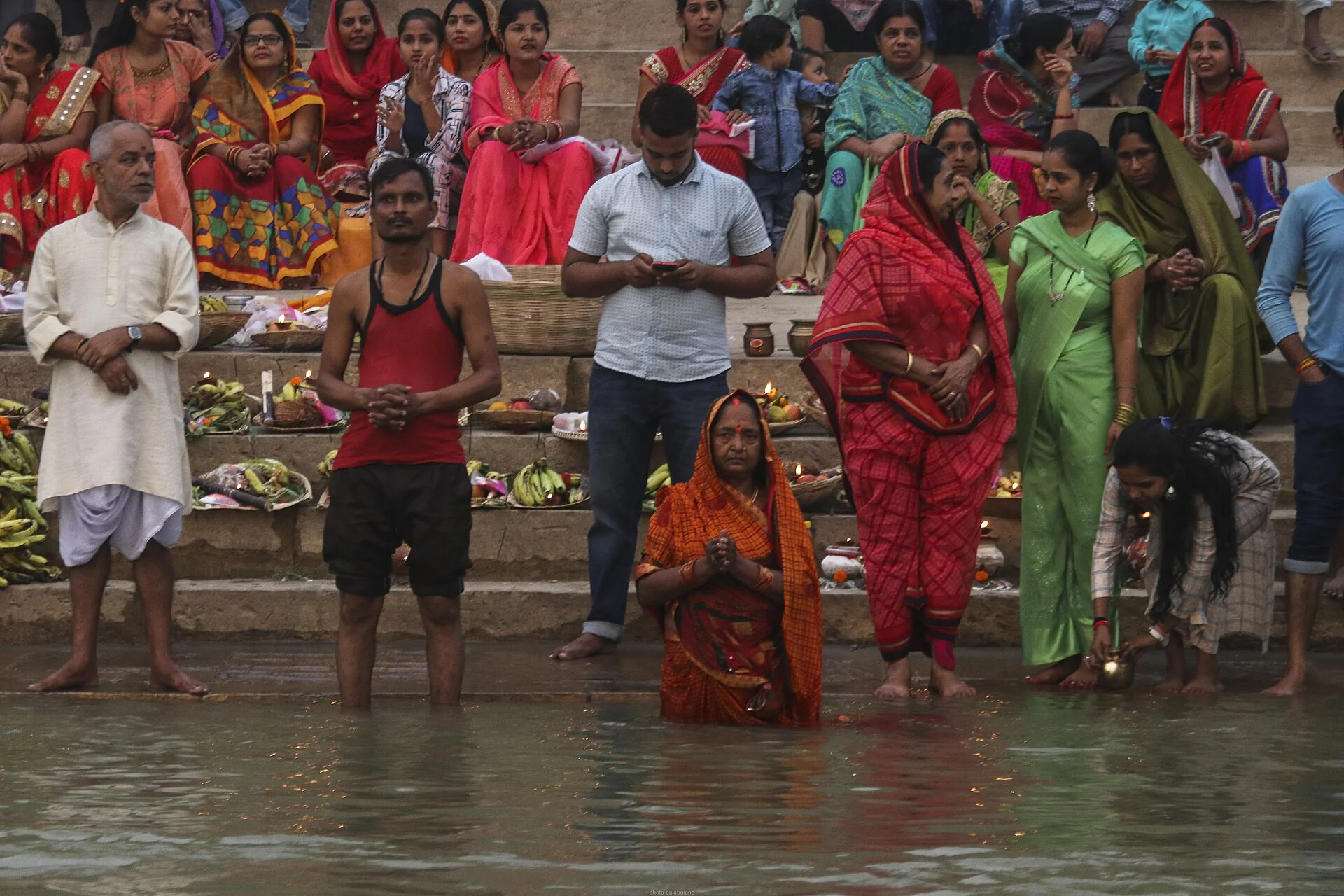
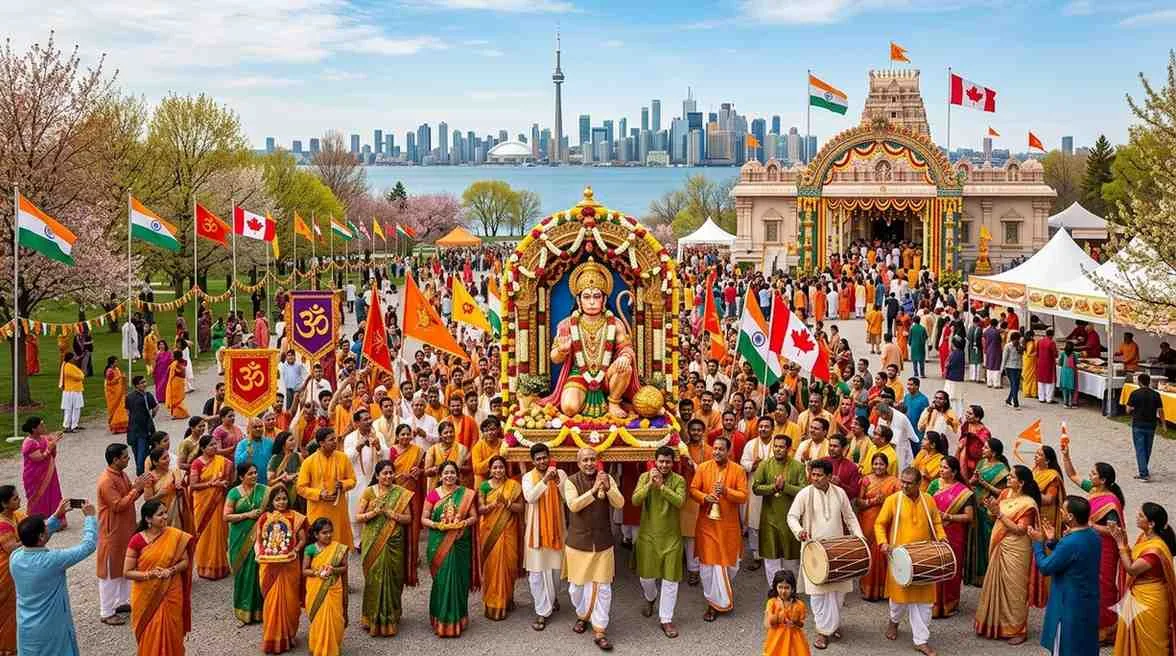
April 3, 2026 – The Indian and Hindu community in Canada celebrated Hanuman Jayanti 2026 with deep faith, vibrant rituals, and strong community spirit on Thursday, April 2, 2026. The auspicious occasion, marking the birth of Lord Hanuman — the divine symbol of strength, courage, unwavering devotion (bhakti), and selfless service — saw temples and community centres filled with devotees from early morning.
Falling on Chaitra Purnima, Hanuman Jayanti 2026 brought together thousands of devotees across major provinces including Ontario, British Columbia, Alberta, Quebec, and Manitoba.
Province-wise & City-wise Celebrations in Canada
Ontario
- Toronto: The largest celebrations took place at the BAPS Shri Swaminarayan Mandir and Hindu Mandir of Toronto. Special Hanuman Abhishek, continuous Hanuman Chalisa recitations, and grand aarti were organized throughout the day.
- Brampton: Durga Mandir and several community halls hosted vibrant programs including Sundar Kand Path, bhajans, and community bhandara (free prasad meal).
- Mississauga & Oakville: Multiple temples arranged special puja sessions and evening satsang dedicated to Lord Hanuman.
British Columbia
- Vancouver & Surrey: The Shree Ram Hindu Temple and Lakshmi Narayan Mandir in Surrey saw heavy footfall. Devotees participated in early morning aarti, group chanting of the Hanuman Chalisa, and devotional singing. Many families kept fasts and offered sindoor, flowers, and laddoos to Bajrangbali.
Alberta
- Calgary: Hindu Society of Calgary and local temples organized special Hanuman Jayanti events with Havan, aarti, and cultural programs.
- Edmonton: Devotees gathered at the Hindu Temple of Edmonton for collective prayers and community celebrations.
Quebec
- Montreal: The Hindu community in Montreal celebrated Hanuman Janmotsav at local temples and community centres with special pujas and bhajans, maintaining strong cultural connections despite being a smaller diaspora hub.
Other Provinces Temples and Indian associations in Winnipeg (Manitoba) and other smaller cities also conducted special prayers and community gatherings to mark the auspicious day.
Common Rituals Observed by the Canadian Indian Diaspora
- Early morning holy bath followed by special home and temple puja with sindoor, jasmine oil, red flowers, bananas, laddoos, and red cloth.
- Recitation of Hanuman Chalisa (11, 21, 51 or 108 times) for strength, protection, and removal of obstacles.
- Sundar Kand Path and powerful Hanuman mantras.
- Grand aarti, bhajans, and Havan ceremonies.
- Community langar/bhandara and acts of seva (selfless service) reflecting Lord Hanuman’s ideals.
- Many devotees observed a strict fast (vrat) and broke it only after evening prayers.
Spiritual Significance for the Diaspora in Canada
For the Indian community in Canada, Hanuman Jayanti is not just a religious festival — it is a powerful reminder of values like fearlessness, loyalty, humility, and inner strength. In a multicultural society like Canada, Lord Hanuman’s message inspires professionals, students, and families to face challenges with courage and positivity.
This year’s celebrations highlighted the growing vibrancy of Hindu traditions in Canada, where temples serve as important spiritual and cultural anchors for the next generation.
Jai Shri Ram! Jai Bajrangbali!
hindutone extends warm greetings to the entire Indian and Hindu community in Canada on this auspicious occasion. May Lord Hanuman bless you with good health, success in all endeavours, protection from obstacles, and boundless inner strength.
Stay connected with Hindutone for more stories on global Hindu festivals, temple celebrations, and the rich spiritual heritage of the Indian diaspora worldwide.
Who is Lord Hanuman? The Scriptural and Theological Foundations of Bajrangbali
Lord Hanuman is celebrated across the Valmiki Ramayana, the Tulsidas-composed Ramcharitmanas, and the Skanda Purana as the greatest among devotees — the ideal Bhakta whose every action is surrendered to Sri Rama. The Valmiki Ramayana describes him as the son of Kesari and Anjana, born by the grace of Vayu, the Wind God, earning him the name Vayuputra. His leaping across the ocean to Lanka, his carrying of the Sanjeevani herb to revive Lakshmana, and his burning of Ravana's city all stand as testimony to his incomparable shakti united with unshakeable bhakti.
In the Upasana tradition, Hanuman is regarded as a Chiranjeevi — an immortal being who continues to dwell wherever the name of Rama is sung. The Mundaka Upanishad's principle of Brahmacharya as the foundation of limitless energy finds its living expression in Hanuman, who is the supreme exemplar of brahmacharya among the divine heroes of the Itihasa. This is why akhadas and wrestling traditions across India have historically placed Hanuman as their presiding deity, honouring the union of physical strength and spiritual discipline.
Why Chaitra Purnima? The Astronomical and Ritual Significance of Hanuman Jayanti's Timing
Hanuman Jayanti is observed on the full moon day — Purnima — of the Chaitra month in the Hindu lunisolar calendar, a date that typically falls in March or April of the Gregorian calendar. The Purnima tithi carries special potency in Vedic thought because the moon is at its fullest luminosity, symbolising the complete expression of divine grace. Chaitra itself marks the beginning of the Hindu New Year in many regional traditions, making the celebration of Hanuman's birth at this time doubly auspicious — the cosmos, so to speak, is inaugurated with the memory of the greatest servant of Dharma.
It is worth noting that some southern states of India, particularly Andhra Pradesh and Telangana, observe Hanuman Jayanti on the Krishna Paksha Chaturdashi of the month of Margashirsha, based on a different Panchanga tradition. Both observances draw on the scriptural understanding that Hanuman's birth was accompanied by celestial phenomena, including auspicious planetary alignments described in certain Puranic accounts. For diaspora communities in Canada, the Chaitra Purnima date is the predominant observance, aligning with the North Indian and Gujarati Panchanga traditions that most Canadian Hindu temples follow.
The Hanuman Chalisa: Why This 40-Verse Hymn Anchors Every Jayanti Celebration
The Hanuman Chalisa, composed in the Awadhi language by the saint-poet Goswami Tulsidas in the sixteenth century, remains the single most recited Hanuman hymn across the global Hindu diaspora. The word 'Chalisa' means 'forty' in Hindi, referring to the forty chaupai verses that form the body of the hymn, framed by a doha at the opening and a concluding doha. Tulsidas himself is said to have composed it during a period of hardship, seeking Hanuman's protection — and the text opens by invoking Hanuman as 'Buddhi Heen Tanu Jaanike,' acknowledging human limitation before divine grace.
During Hanuman Jayanti, temples across Canadian cities organise akhand Hanuman Chalisa paath — uninterrupted, rotating recitation of the Chalisa over several hours or even the full 24 hours. Groups of devotees take turns so that the chanting never ceases, creating what is understood as a continuous field of protective sound — referred to in practice as a kavach, or shield, for the community. The 108-time recitation in a single sitting, known as Shatashringa paath in some traditions, is also a popular individual act of devotion performed by fasting devotees on this day.
Rituals of Hanuman Puja: What Abhishek, Sindoor Prashad, and Sundar Kand Path Mean
The ritual of Abhishek — bathing the deity's murti with water, milk, honey, and occasionally panchamrit (a blend of milk, curd, ghee, honey, and sugar) — is one of the central acts of Hanuman Jayanti worship. The Abhishek is accompanied by the chanting of Vedic mantras and specific Hanuman stotras, and it is understood as a symbolic purification of the devotee's own consciousness through the act of serving the Lord. After the Abhishek, the murti is anointed with sindoor, the bright vermillion that is Hanuman's characteristic mark, as described in the Ramcharitmanas where Hanuman is said to have smeared sindoor over his entire body out of love for Rama.
Sundar Kand Path refers to the recitation of the fifth chapter (Kanda) of the Valmiki Ramayana, which narrates Hanuman's journey to Lanka, his discovery of Sita Mata in the Ashoka Vatika, and his display of might and mercy. It is considered especially auspicious because this Kanda is wholly centred on Hanuman's deeds, and its recitation is believed to bring strength, resolve, and the removal of obstacles. Community bhandara — the free distribution of prasad meals — completes the celebration, translating the spiritual ideal of Hanuman's selfless service (nishkama seva) into a tangible act of community care.
How the Hindu Diaspora in Canada Keeps Hanuman Jayanti Culturally Alive Across Generations
Canada's Hindu community, estimated at over 800,000 people according to recent census data, represents one of the largest diaspora populations outside South Asia, with especially dense concentrations in the Greater Toronto Area and Metro Vancouver. Organisations such as the Hindu Federation of Canada, regional temple trusts, and cultural associations play a critical role in coordinating Hanuman Jayanti observances that reach not only first-generation immigrants but also Canadian-born youth. Youth programming — including competitions in Hanuman Chalisa recitation, storytelling of Ramayana episodes, and classical dance performances themed around Hanuman's leelas — ensure that children encounter the festival as a living tradition rather than a historical artifact.
The challenge of preserving Sanskrit and Hindi religious literacy in an English-dominant environment has led many temples to provide bilingual puja explanations, printed booklets with transliteration of key stotras, and increasingly, live-streamed aarti on social media platforms. This digital dimension expanded significantly after 2020 and has allowed Canadian Hindus in smaller cities — such as Halifax, Saskatoon, and Victoria — to participate in major temple celebrations from Toronto and Vancouver in real time, sustaining a sense of pan-Canadian community belonging centred on shared devotion to Hanuman.
Hanuman as a Symbol of Resilience: Why Diaspora Communities Connect Deeply with Bajrangbali
Theologians within the Vaishnava tradition describe Hanuman as the archetype of the ideal servant — not subservient, but supremely capable and voluntarily devoted. For immigrant communities navigating the demands of settlement in a new country, Hanuman's story resonates on a personal level: he crossed an ocean alone, operated in a foreign land, faced hostility with composure, and accomplished the impossible through a combination of inner strength and grace. The Ramcharitmanas verse 'Sankat kate mite sab peera, jo sumirai Hanumat Balbheera' — 'All crises are cut away, all suffering dissolved, for one who remembers mighty Hanuman' — is recited with particular feeling in diaspora contexts.
Scholars of diaspora religion observe that Hanuman temples tend to multiply rapidly in migrant communities worldwide, a pattern visible in Canada, the United States, the United Kingdom, and the Caribbean. This is partly because Hanuman worship requires no elaborate priestly apparatus — a devotee may recite the Hanuman Chalisa at home without formal initiation — making it accessible and portable across cultures and social conditions. The result is that Hanuman Jayanti in Canada is not merely a calendar event but a living expression of collective identity, reminding the community of its spiritual roots even as it builds its future in a new land.
Frequently Asked Questions
When is Hanuman Jayanti in Canada 2026?
Hanuman Jayanti in Canada 2026 falls on April 3, 2026.
What is the significance of Hanuman Jayanti in Canada?
April 3, 2026 – The Indian and Hindu community in Canada celebrated Hanuman Jayanti 2026 with deep faith, vibrant rituals, and strong community spirit on Thursday, April 2, 2026. The auspicious occasion, marking the birth of Lord Hanuman — the divine symbol of strength, courage, unwavering devotion (bhakti), and selfless service — saw temples and community c
How is Hanuman Jayanti in Canada celebrated?
Devotees observe it with puja, fasting or special offerings, visiting temples, chanting mantras, and gathering with family. Customs vary by region and tradition.
What should devotees do on Hanuman Jayanti in Canada?
Worship Lord Hanuman, perform the day's puja and offerings, observe the fast where prescribed, and chant the associated mantras with devotion.
You might also like

Gita Jayanti 2026 Prasad Recipes — Tulsi-Honoring Sweets, Krishna's Favourites & December 10 Bhog Plate
Maha Shivratri 2026 Vrat Recipes — Sabudana Khichdi, Singhada Halwa, Phalahara Foods Complete Fasting Guide
Shani Deva Temples Worldwide & Must-Performed Rituals — Complete Devotee's Guide