
Today's Sankalpam, 25 October 2026: Sandhyavandanam Sankalpam and Traditional Panchangam (Sunday)
The sandhyavandanam sankalpam for Sunday 25 October 2026 (Ashvayuja Shukla Chaturdashi, Parabhava samvatsara) as shared by Prabhala Viswanadham garu, in Telugu script, Devanagari and IAST with its meaning, his traditional panchangam for the day, and Drik Panchang times for Hyderabad for comparison.
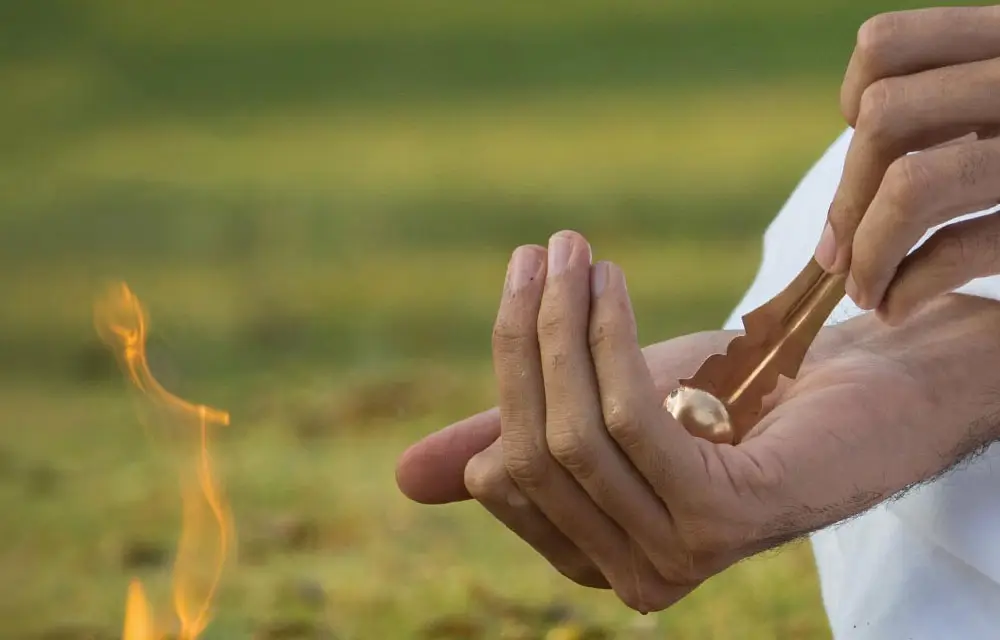
Quick answer: On Sunday 25 October 2026 (Bhanu vasara), the sandhyavandanam sankalpam names Sri Parabhava samvatsara, Dakshinayana, Sharad ritu, Ashvayuja masa, Shukla paksha, Chaturdashi tithi, because Chaturdashi prevails at sunrise. For other pujas today, the author says Purnima after Chaturdashi (caturdaśyaupari paurṇimāśyāṃ). Today is also Ashvayuja (Sharad) Purnima, the Kojagara Lakshmi Puja day. The full text is below in Telugu script, Devanagari and IAST, with its meaning.
Last updated: 25 October 2026
This is the daily sankalpam for sandhyavandanam and other pujas, with a panchangam prepared by the traditional (purva paddhati) method, shared with HinduTone by Prabhala Viswanadham garu. A sankalpa is the formal resolve said at the start of a rite: it names the cosmic time, the place, the year, season, month, fortnight, tithi and weekday, and then the person and the purpose. For a festival sankalpam in the same format, see our Ayudha Puja sankalpam with meaning.
Sunday 25 October 2026 at a glance
- Weekday: Sunday (Bhanu vasara, bhānu vāsare)
- Year and season: Sri Parabhava samvatsara, Dakshinayana, Sharad ritu, Ashvayuja masa, Shukla paksha
- Tithi in sandhyavandanam: Chaturdashi (the tithi at sunrise, said in all three sandhyas)
- Tithi for other pujas: Purnima after Chaturdashi (caturdaśyaupari paurṇimāśyāṃ)
- Festival: Ashvayuja (Sharad) Purnima and Kojagara Lakshmi Puja; per Drik Panchang for Hyderabad, Purnima tithi begins at 11:55 AM
- Punya tithi: Purnima
A note from the author
"The sankalpam I give here is a nishkama sankalpam that I learned from our elders and gurus. You may adapt it to the place where you are and to the way you learned it from your own guru." (Prabhala Viswanadham garu)
Sandhyavandanam sankalpam for 25 October 2026 in Telugu script
The text is shown as the author shared it, including his two notes in brackets, with one phrase shortened to HinduTone's editorial style: it reads "samasta devatā harihara guru caraṇa sannidhau" (in the presence of the feet of all the deities, Hari, Hara and the Guru).
శుభాభ్యుదయార్ధంచ, శుభే శోభనే ముహూర్తే శ్రీ మహావిష్ణు రాజ్నేయా ప్రవర్తమానస్య అద్యబ్రహ్మణః ద్వితీయ పరార్ధే శ్వేత వరాహ కల్పే వైవస్వత మన్వంతరే కలియుగే ప్రధమపాదే జంబూద్వీపే భరతవర్షే భరతఖండే మేరోః దక్షిణ దిగ్భాగే శ్రీ శైలస్య వాయువ్య దిగ్భాగే (హైదరాబాద్ లో వారికి మాత్రమే) గంగా కావేర్యోర్మధ్య ప్రదేశే శ్రీలక్ష్మీ నివాస గృహే సమస్త దేవతా హరిహర గురు చరణ సన్నిధౌ అస్మిన్ వర్తమాన వ్యావహారిక చాంద్రమానేన శ్రీ పరాభవ నామసంవత్సరే దక్షిణాయనే శరత్ ఋతౌ ఆశ్వయుజమాసే శుక్ల పక్షే చతుర్దశ్యాం
(సూర్యోదయానికి ఉన్న తిథే త్రికాల సంధ్యావందనాలలో చెప్పుకోవాలి)
భాను వాసరే శుభ నక్షత్రే శుభ యోగే, శుభకరణ, ఏవంగుణ విశేషణ విశిష్ఠాయాం శుభ తిధౌ శ్రీమాన్_______గోత్రః_____నామధేయః శ్రీమతః ______గోత్రస్య_______ నామధేయస్య మమ ఉపాత్త దురిత క్షయ ద్వారా శ్రీ పరమేశ్వర ముద్దిశ్య శ్రీ పరమేశ్వర ప్రీత్యర్థం ప్రాతః/మాధ్యాహ్నిక/సాయం సంధ్యాముపాసిష్యే.
సంధ్యా వందనం కొరకు మాత్రమే.
For other pujas today
For pujas other than sandhyavandanam, the author says to use this line for the year, season, month, fortnight, tithi and weekday:
శ్రీ పరాభవ నామ సంవత్సరే దక్షిణాయనే శరత్ ఋతౌ ఆశ్వయుజమాసే శుక్లపక్షే చతుర్దశ్యౌపరి పౌర్ణిమాశ్యాం భాను వాసరే
The same sankalpam in Devanagari
For readers of Hindi, Marathi or Sanskrit, here is the Sanskrit text in Devanagari, converted letter for letter from the Telugu script by a transliteration program. The author's two notes in brackets are in Telugu, not Sanskrit, so they are left out here and explained further below.
शुभाभ्युदयार्धंच, शुभे शोभने मुहूर्ते श्री महाविष्णु राज्नेया प्रवर्तमानस्य अद्यब्रह्मणः द्वितीय परार्धे श्वेत वराह कल्पे वैवस्वत मन्वंतरे कलियुगे प्रधमपादे जंबूद्वीपे भरतवर्षे भरतखंडे मेरोः दक्षिण दिग्भागे श्री शैलस्य वायुव्य दिग्भागे गंगा कावेर्योर्मध्य प्रदेशे श्रीलक्ष्मी निवास गृहे समस्त देवता हरिहर गुरु चरण सन्निधौ अस्मिन् वर्तमान व्यावहारिक चांद्रमानेन श्री पराभव नामसंवत्सरे दक्षिणायने शरत् ऋतौ आश्वयुजमासे शुक्ल पक्षे चतुर्दश्यां
भानु वासरे शुभ नक्षत्रे शुभ योगे, शुभकरण, एवंगुण विशेषण विशिष्ठायां शुभ तिधौ श्रीमान्_______गोत्रः_____नामधेयः श्रीमतः ______गोत्रस्य_______ नामधेयस्य मम उपात्त दुरित क्षय द्वारा श्री परमेश्वर मुद्दिश्य श्री परमेश्वर प्रीत्यर्थं प्रातः/माध्याह्निक/सायं संध्यामुपासिष्ये.
For other pujas:
श्री पराभव नाम संवत्सरे दक्षिणायने शरत् ऋतौ आश्वयुजमासे शुक्लपक्षे चतुर्दश्यौपरि पौर्णिमाश्यां भानु वासरे
The same sankalpam in IAST (Roman script)
This is the same Sanskrit text in IAST, the standard scholarly Roman transliteration, also converted letter for letter from the Telugu by program. The blanks are for your gotra and name.
śubhābhyudayārdhaṃca, śubhe śobhane muhūrte śrī mahāviṣṇu rājneyā pravartamānasya adyabrahmaṇaḥ dvitīya parārdhe śveta varāha kalpe vaivasvata manvaṃtare kaliyuge pradhamapāde jaṃbūdvīpe bharatavarṣe bharatakhaṃḍe meroḥ dakṣiṇa digbhāge śrī śailasya vāyuvya digbhāge gaṃgā kāveryormadhya pradeśe śrīlakṣmī nivāsa gṛhe samasta devatā harihara guru caraṇa sannidhau asmin vartamāna vyāvahārika cāṃdramānena śrī parābhava nāmasaṃvatsare dakṣiṇāyane śarat ṛtau āśvayujamāse śukla pakṣe caturdaśyāṃ
bhānu vāsare śubha nakṣatre śubha yoge, śubhakaraṇa, evaṃguṇa viśeṣaṇa viśiṣṭhāyāṃ śubha tidhau śrīmān_______gotraḥ_____nāmadheyaḥ śrīmataḥ ______gotrasya_______ nāmadheyasya mama upātta durita kṣaya dvārā śrī parameśvara muddiśya śrī parameśvara prītyarthaṃ prātaḥ/mādhyāhnika/sāyaṃ saṃdhyāmupāsiṣye.
For other pujas:
śrī parābhava nāma saṃvatsare dakṣiṇāyane śarat ṛtau āśvayujamāse śuklapakṣe caturdaśyaupari paurṇimāśyāṃ bhānu vāsare
How to say it: the blanks and the author's notes
- Place: "śrī śailasya vāyavya digbhāge" (in the region north-west of Srisailam) is marked by the author as for those in Hyderabad only. Elsewhere, name your own location as your elders or guru taught.
- Tithi: say the tithi that prevails at sunrise in all three sandhyavandanams of the day; on 25 October 2026 that is Chaturdashi.
- Gotra and name: the text has two sets of blanks: "śrīmān ___ gotraḥ ___ nāmadheyaḥ" (I, of ___ gotra, named ___) and "śrīmataḥ ___ gotrasya ___ nāmadheyasya" (of ___ of ___ gotra, named ___). How they are filled differs between families, so ask your elders or guru.
- Time of day: say "prātaḥ" in the morning, "mādhyāhnika" at midday and "sāyaṃ" in the evening sandhya.
- Only for sandhyavandanam: the text above, ending in "sandhyām upāsiṣye", is for sandhyavandanam; for other pujas use the line given for other pujas.
Meaning of the sankalpam
The meaning below is HinduTone's own plain rendering. It follows the Sanskrit closely and is a guide to understanding, not a replacement for your guru's teaching.
Part 1: time and place
For auspicious welfare; at this auspicious and splendid moment; in the time set in motion by the command of Sri Mahavishnu, in the second half (parardha) of the present Brahma's life, in the Shveta Varaha kalpa, in the Vaivasvata manvantara, in the first quarter of the Kali yuga; in Jambudvipa, in Bharatavarsha, in Bharatakhanda, in the region south of Mount Meru, in the region north-west of Srisailam, in the land between the Ganga and the Kaveri; in this home, the abode of Sri Lakshmi; in the presence of the feet of all the deities, Hari, Hara and the Guru; in the current practical lunar reckoning, in the year named Sri Parabhava, in Dakshinayana, in Sharad ritu, in the month of Ashvayuja, in the bright fortnight, on Chaturdashi,
Part 2: the person and the resolve
on Sunday, under an auspicious nakshatra, an auspicious yoga and an auspicious karana, on this auspicious tithi marked by these qualities, I, of ___ gotra, named ___ (and, as the text continues, of ___ of ___ gotra, named ___), for the removal of the faults I have accumulated, dedicating this to Sri Parameshvara and for the pleasure of Sri Parameshvara, I shall perform the morning / midday / evening sandhya worship.
The line for other pujas
In the year named Sri Parabhava, in Dakshinayana, in Sharad ritu, in the month of Ashvayuja, in the bright fortnight, on the Purnima that follows Chaturdashi, on Sunday. After this, the purpose of the particular puja is stated as usual.
Purva paddhati panchangam (traditional calculation), as given by Prabhala Viswanadham garu
These values are the author's, shown as he gave them. They follow a traditional method of calculation, so they differ from drik-ganita panchangs; see the comparison below.
| Item | As given by the author |
|---|---|
| Sunrise | 5.59 |
| Sunset | 5.31 |
| Samvatsara | Sri Parabhava |
| Ayana | Dakshinayana punyakalam |
| Ritu | Sharad |
| Masa | Ashvayuja |
| Paksha | Shukla (Shuddha) |
| Tithi | Chaturdashi until 10.54 a.m. |
| Weekday | Sunday |
| Nakshatra | Revati until 7.42 p.m. |
| Yoga | Harshana until 6.31 p.m. |
| Karana | Vanija until 10.54 a.m. |
| Karana | Bhadra until 10.21 p.m. |
| Varjyam | 7.46 a.m. to 9.22 a.m. |
| Durmuhurtam | 3.58 p.m. to 4.44 p.m. |
| Amritam | 5.19 p.m. to 6.54 p.m. |
| Punya tithi | Purnima |
Rahu kalam, Gulika and Yamaganda (on a 6.00 sunrise basis)
The author gives these periods for a sunrise at 6.00. Where sunrise is earlier or later, the periods shift with it.
| Period | Time (sunrise at 6.00) |
|---|---|
| Rahu kalam | 4.30 p.m. to 6.00 p.m. |
| Gulika kalam | 3.00 p.m. to 4.30 p.m. |
| Yamaganda kalam | 12.00 noon to 1.30 p.m. |
Era years given by the author
- Shalivahana Shaka: year 1948
- Vikrama era: year 2083
- Shankaracharya era (Shankaracharyabda): 2098
- Madhvacharya era (Madhvacharyabda): 910
- Kali era (Kalyabda): year 5127
- English year: 2026-27
Drik Panchang (Hyderabad) for comparison
Source: HinduTone's Drik Panchang data for Hyderabad, Telangana (IST), for 25 October 2026.
| Item | Drik Panchang, Hyderabad |
|---|---|
| Tithi | Shukla Chaturdashi until 11:55 AM, then Purnima |
| Nakshatra | Revati until 07:22 PM |
| Yoga | Harshana until 05:22 PM |
| Karana | Vanija |
| Sunrise | 06:12 AM |
| Sunset | 05:48 PM |
| Moonrise | 05:07 PM |
Why the times differ: the traditional (purva paddhati) method and the drik-ganita method calculate the tithi, nakshatra and yoga differently, so their end times do not match; follow your family or guru tradition.
For the full day's Drik timings, see our panchangam for Sunday 25 October 2026.
Today's festival: Ashvayuja (Sharad) Purnima and Kojagara Lakshmi Puja
Sunday 25 October 2026 is Ashvayuja Purnima, also called Sharad Purnima, when many families keep the Kojagara (Kojagari) Lakshmi Puja on the full-moon night. Per Drik Panchang for Hyderabad, Purnima tithi begins at 11:55 AM, which is why the author's sankalpam for other pujas names Purnima. For the puja, moonlit kheer and dates abroad, see our Sharad Purnima 2026 and Kojagari Puja guide.
Birthday and anniversary blessing
From the author: "To everyone celebrating a birthday or wedding anniversary today, I pray that Mother Gayatri always grants you long life and good health. Your well-wisher."
This sankalpam text was shared with HinduTone by Prabhala Viswanadham garu, Secretary, Sri Padmavathi Srinivasa Vivaha Samachara Samstha, Sachivalaya Nagar, Vanasthalipuram.
Frequently asked questions
Which tithi do I say in the sandhyavandanam sankalpam on 25 October 2026?
Chaturdashi (caturdaśyāṃ). Prabhala Viswanadham garu notes that the tithi prevailing at sunrise is said in all three sandhyavandanams of the day, and Shukla Chaturdashi prevails at sunrise on Sunday 25 October 2026.
Which tithi do I say for other pujas today?
For other pujas the author gives "caturdaśyaupari paurṇimāśyāṃ bhānu vāsare", that is Purnima following Chaturdashi, on Sunday. Today is also Ashvayuja (Sharad) Purnima, the Kojagara Lakshmi Puja day.
Why are the panchangam times here different from Drik Panchang?
The author's panchangam follows the traditional (purva paddhati) method of calculation, while Drik Panchang uses drik-ganita (observation-based) calculation for a set city, here Hyderabad. The two methods give different end times; follow your family or guru tradition.
Can I use this sankalpam outside Hyderabad?
Yes, with the place words changed. The phrase "śrī śailasya vāyavya digbhāge" (north-west of Srisailam) is marked by the author as for those in Hyderabad only. He also notes that the sankalpam can be adapted to where you live and to the way your own guru taught it.
Who shared this sankalpam and panchangam?
Prabhala Viswanadham garu, Secretary, Sri Padmavathi Srinivasa Vivaha Samachara Samstha, Sachivalaya Nagar, Vanasthalipuram, shared it with HinduTone. HinduTone added the Devanagari and IAST versions, the meaning and the Drik Panchang comparison.
Editor's note (25 October 2026)
Sankalpam and purva paddhati panchangam shared by Prabhala Viswanadham garu. The Telugu text is shown as supplied, except that one phrase was shortened to "samasta devatā harihara guru caraṇa sannidhau" and contact details were left out. The Devanagari and IAST versions were converted from it by script (the indic_transliteration library) and not retyped. The author's panchang values are unchanged; the Drik Panchang table for Hyderabad comes from HinduTone's own data. The meaning and notes are HinduTone's own. No benefit is promised from reciting the sankalpam; it is a statement of intention and a prayer.
Also read
Share this with family and friends
Send it on WhatsApp, post it, or copy the link.
More from Navratri
- How to Wish Happy Vijayadashami 2026 on WhatsApp, Instagram, Facebook and Telegram: A Complete Guide for NRIs in the USA, UK, Australia and New Zealand
- Siddhidatri and the Siddhis: The 8 and 18 Siddhis Explained for Navratri Day 9
- Maharnavami Significance: Durga's Navaratri Alankarams and the Mahishasura Mardini Story
- Why Is Ayudha Puja Done During Navaratri? Stories, Traditions and Meaning
- Sri Durga Devi Alankaram on Durgashtami: Kanaka Durga Day 8, Puja Vidhi, Anga Puja and Apaduddharaka Stotram
You might also like
Ayudha Puja Sankalpam 2026: Sanskrit Text in Telugu & Devanagari with Meaning
How to Wish Happy Vijaya Dasami on WhatsApp, Telegram, Instagram and Facebook in 2026
Happy Dussehra 2026: Heartfelt Vijayadashami Wishes to Hindus Around the World