Every Day Vijayadashami: The Real Invitation of Navaratri and How to Live Its Victory Daily
Vijayadashami is not only a date but a state of consciousness. Discover the inner meaning of Navaratri's nine nights, Ravana's ten heads and the Shami and Aparajita rituals, and a simple five-minute daily practice to make every day a quiet victory of light over darkness.
Vijayadashami is not only a date but a state of consciousness. Discover the inner meaning of Navaratri's nine nights, Ravana's ten heads and the Shami and Aparajita rituals, and a simple five-minute daily practice to make every day a quiet victory of light over darkness.
Vijayadashami 2026: Tuesday 20 October in India (Bijoya Dashami in Bengal on Wednesday 21 October). For city timings and dates abroad, see our Dussehra 2026 date and puja muhurat guide.
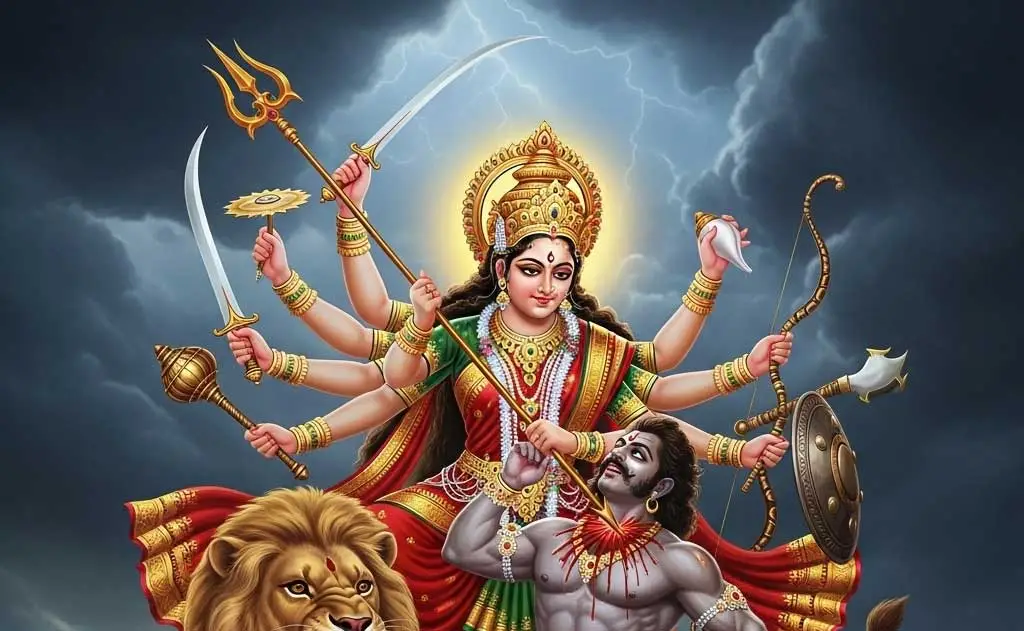
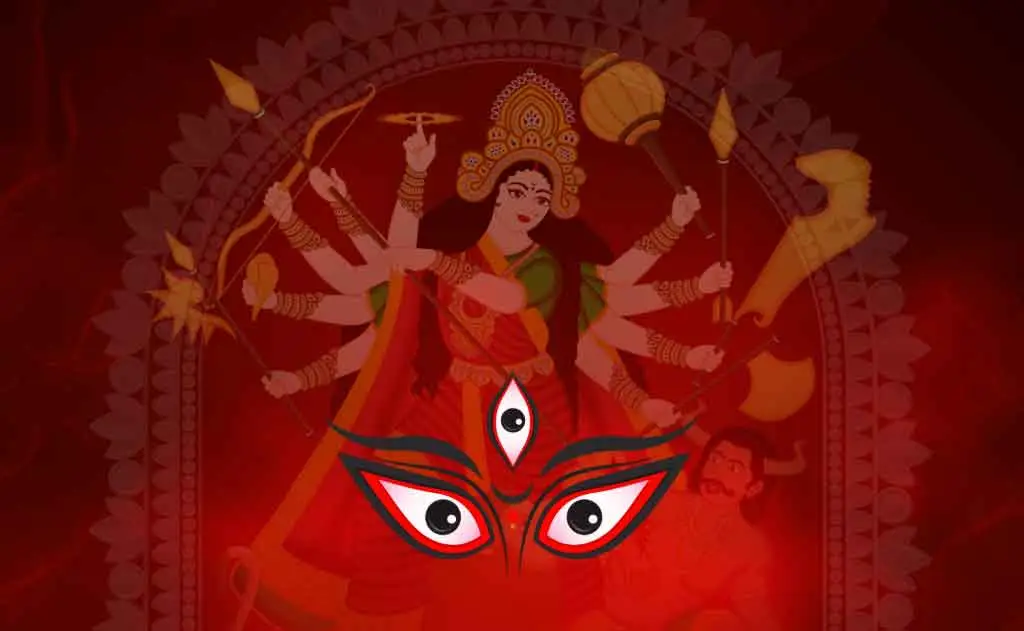
Every year, as the nine sacred nights of Navaratri come to a close and Vijayadashami arrives, we celebrate the victory of light over darkness, of good over evil, and of dharma over adharma. We rejoice in the triumph of Goddess Durga over Mahishasura and in Lord Rama's victory over Ravana.
But the real invitation of Navaratri is not only to celebrate for nine nights. The true call is to create a way of living in which every day can be Vijayadashami.
What does it mean to live every day as Vijayadashami?
Vijayadashami is not just a date on the calendar. It is a state of consciousness. It is the day when we consciously choose:
- Awareness over ignorance
- Gratitude over complaints
- Resilience over despair
When we begin to see life in this way, something profound shifts within us. We stop asking, "When will light come into my life?" and start realising, "The light is already here. I only need to remove what hides it."
The darkness we fear is often not outside us. It lives in the form of doubt, anger, comparison, fear and forgetfulness of our own divine nature. Navaratri and Vijayadashami gently remind us to remove these inner veils, one by one.
The Upanishadic prayer says it in four words: *tamaso ma jyotir gamaya*, "lead me from darkness to light" (Brihadaranyaka Upanishad 1.3.28). Vijayadashami is the day we celebrate that journey, and the rest of the year is where we walk it.
The inner meaning of the nine nights
Many teachers explain the nine nights of Navaratri as three stages of inner work:
- The first three nights belong to Durga, the power that destroys what must go: our laziness, anger and old habits. Just as she fought Mahishasura, the buffalo demon of dullness and ego, we first face what holds us back.
- The next three nights belong to Lakshmi, who brings in what is good: patience, generosity, discipline and a clean, cheerful home and mind.
- The last three nights belong to Saraswati, the giver of wisdom. This is why so many families begin learning on Vijayadashami, through Vidyarambham and Saraswati puja.
The tenth day, *Vijaya Dashami*, is the result: victory, not over someone else, but over the darkness within. Seen this way, the festival is a complete method of sadhana, and it can be repeated in small ways every day.
Ravana's ten heads and our daily battles
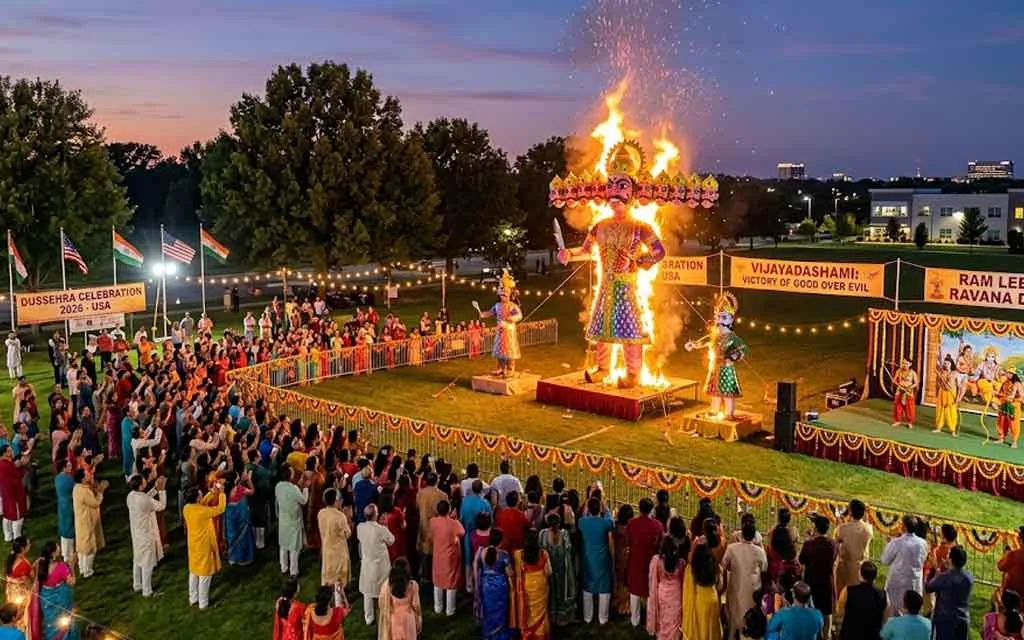
Many teachers read Ravana's ten heads as ten inner tendencies, among them kama (desire), krodha (anger), lobha (greed), moha (delusion), mada (pride), matsarya (jealousy) and ahankara (ego). Burning the effigy of Ravana on Dussehra is meaningful, but the effigy that matters most is the one we carry inside. Read more in our guide to the meaning of Ravana's ten heads.
Each day gives us a small battle with one of these heads. A moment of anger held back, a jealous thought replaced with a blessing, a proud word left unsaid: each is a quiet Vijayadashami.
The deeper call of this sacred season
As we step into this season of celebration, let us look beyond the surface. Let us use this occasion not only for rituals, sweets and greetings, but to pause, reflect and ask:
- What darkness within me needs to be removed?
- Where am I still choosing ignorance over awareness?
- In which areas of my life am I complaining instead of offering gratitude?
- Where do I need to cultivate resilience instead of sinking into despair?
These are not ordinary questions. They are the real sadhana of Vijayadashami.
When we sincerely ask them and act on the answers, every ordinary day begins to shine with the light of victory. Every challenge becomes an opportunity for inner triumph. Every moment becomes a quiet Vijayadashami.
What the rituals of Vijayadashami teach
The customs of the day carry the same message:
- Shami (Jammi) puja: the Pandavas hid their weapons in a Shami tree during their year of exile and took them back on Vijayadashami. Exchanging Shami leaves as "gold" (*bangaram*) reminds us that the real wealth is goodwill shared with others. See our Vijayadashami mantras and Shami puja vidhi.
- Aparajita puja: Aparajita means "the unconquered". We pray to the Goddess not to defeat others, but to remain unconquered by fear and weakness ourselves.
- Ayudha puja: honouring tools, books and vehicles teaches gratitude for the instruments of our daily work.
- Vidyarambham: a child's first letters are written on this day, a reminder that learning is lifelong.
Living the spirit of Vijayadashami daily
You do not need to wait for next year's Navaratri to experience this victory. You can begin today:
- Choose awareness when the mind wants to drift into negativity.
- Choose gratitude even when things are imperfect.
- Choose resilience when life feels heavy.
In doing so, you invite the energy of Goddess Durga and the grace of Lord Rama into your everyday life.
A simple five-minute daily practice
1. Morning: light a lamp before your deity or simply sit quietly. Choose one quality for the day, for example patience. 2. Name one gratitude: before you check your phone, name one thing you are thankful for. 3. One victory: during the day, notice one moment where you chose awareness over reaction. 4. Evening: before sleep, offer the day to the Divine Mother. Let go of what went wrong, and remember what went right.
Families in India and abroad can do this together. Children understand it easily: "Today, which bad habit did you defeat?" makes Durga and Rama part of everyday life, not just a story heard once a year. Our Dussehra story for kids is a good place to begin.
The outer celebration of Vijayadashami is beautiful. The inner celebration is transformative.
A prayer for all
May the light of awareness grow brighter within each of us. May gratitude fill our hearts. May resilience become our natural strength. And may every day of our lives become a true Vijayadashami, a day of quiet, powerful victory over the darkness within.
Happy Vijayadashami to one and all! May the blessings of the Divine Mother and Lord Rama guide us always.
Jai Mata Di | Jai Shri Ram
Frequently asked questions
When is Vijayadashami 2026?
Vijayadashami (Dussehra) 2026 is on Tuesday 20 October in India. In Bengal, Bijoya Dashami is observed on Wednesday 21 October. Dates abroad can differ; see our Dussehra 2026 date guide.
What is the spiritual meaning of Vijayadashami?
Vijayadashami celebrates Durga's victory over Mahishasura and Rama's victory over Ravana. Spiritually, it is the victory of awareness over ignorance and of our higher nature over inner tendencies such as anger, greed and ego.
What does 'every day Vijayadashami' mean?
It means carrying the festival's message into daily life: choosing awareness over ignorance, gratitude over complaints and resilience over despair, so that each day becomes a small victory over the darkness within.
Why are the nine nights divided between Durga, Lakshmi and Saraswati?
Many teachers explain the nine nights as three stages: Durga removes negative tendencies, Lakshmi brings in good qualities, and Saraswati grants wisdom. The tenth day, Vijayadashami, is the victory that follows.
What can I do daily to keep the spirit of Vijayadashami?
Light a lamp and choose one quality for the day, name one thing you are grateful for, notice one moment of choosing awareness over reaction, and offer the day to the Divine Mother before sleep.
Editor's note
Editor's note (20 October 2026): This reflection was shared by a HinduTone reader and lightly edited, with added sections on the inner meaning of the nine nights, Ravana's ten heads and the Vijayadashami rituals. Interpretations of the festival's symbolism vary between teachers and traditions.
Related guides
You might also like
Must-Perform Rituals on Vijayadashami 2026: Complete State-Wise Guide for Devotees Across India
How to Wish Happy Vijayadashami 2026 on WhatsApp, Instagram, Facebook and Telegram: A Complete Guide for NRIs in the USA, UK, Australia and New Zealand
Why Is Ayudha Puja Done During Navaratri? Stories, Traditions and Meaning