Must-Perform Rituals on Vijayadashami 2026: Complete State-Wise Guide for Devotees Across India
Aparajita Puja, Shami Puja, Ayudha and Vahana Puja, Seemollanghan and Vidyarambham explained step by step, with a state-wise guide to how Vijayadashami (Dussehra) is observed across India on 20 and 21 October 2026.
Aparajita Puja, Shami Puja, Ayudha and Vahana Puja, Seemollanghan and Vidyarambham explained step by step, with a state-wise guide to how Vijayadashami (Dussehra) is observed across India on 20 and 21 October 2026.
Quick answer: Vijayadashami (Dussehra) 2026 is on Tuesday 20 October across most of India; Dashami tithi begins about 12:50 PM IST and the Vijay Muhurat in New Delhi is about 1:59 to 2:45 PM. The core rituals are Aparajita Puja, Shami Puja, Ayudha and Vahana Puja, Seemollanghan and Vidyarambham. Bengal's Bijoya Dashami, Mysuru's Jamboo Savari and Kerala's Vidyarambham fall on Wednesday 21 October.
Last updated: 19 October 2026
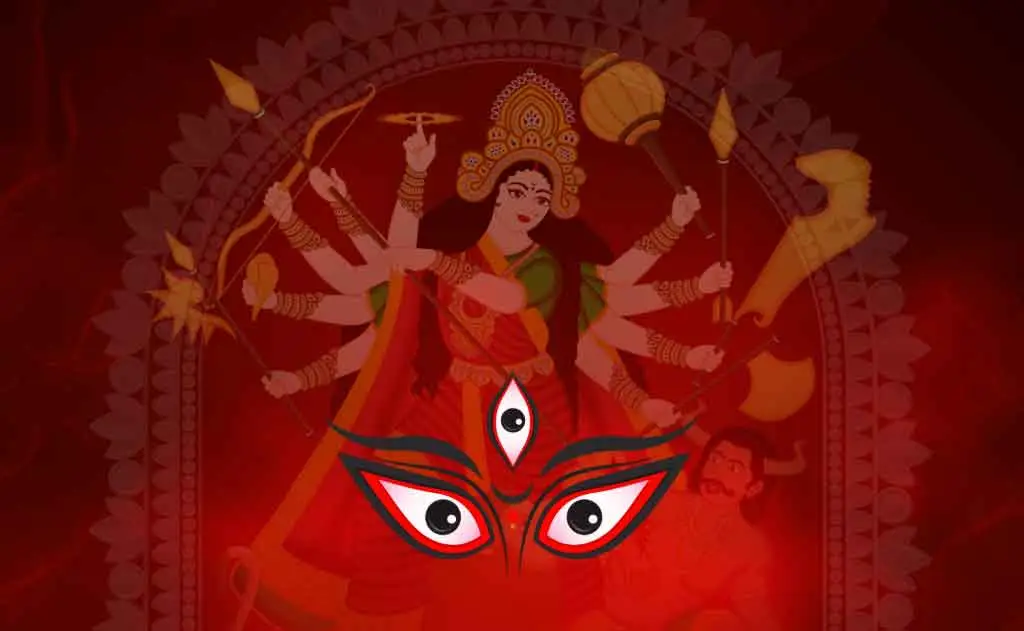
Vijayadashami, also known as Dussehra or Dasara, falls on Tuesday, 20 October 2026 across most of India. This sacred day marks the conclusion of Sharad Navratri and celebrates the victory of dharma over adharma: Lord Rama's victory over Ravana and Goddess Durga's conquest of Mahishasura.
While public celebrations vary from region to region, certain core rituals are considered essential or highly meritorious on this day. Devotees perform them to pray for the removal of obstacles, success in righteous endeavours, prosperity and divine protection for the year ahead.
This guide covers the must-perform rituals on Vijayadashami, explained step by step, followed by a state-wise breakdown of how they are observed across India. These practices can be adapted to your home, temple or community setting.
Why rituals matter on Vijayadashami
Vijayadashami is one of the most auspicious days in the Hindu calendar for new beginnings. Classical texts and regional traditions recommend specific rites during the Aparahna (afternoon) period, especially within the Vijay Muhurat. In 2026 the Vijay Muhurat in New Delhi is about 1:59 PM to 2:45 PM, within the broader Aparahna window of about 1:14 PM to 3:30 PM. Dashami tithi begins at about 12:50 PM IST on 20 October. Timings vary by city: Mumbai 2:19 to 3:06 PM, Hyderabad 1:57 to 2:44 PM, Bengaluru 2:02 to 2:49 PM. See Dussehra 2026 date and Vijay Muhurat for more cities, and always confirm with a local panchang.
The primary rituals devotees are encouraged to perform include:
- Aparajita Puja: worship of the Undefeated Goddess
- Shami (Jammi / Banni) Puja: worship of the sacred Shami tree, and in Maharashtra the exchange of Apta leaves
- Ayudha Puja / Shastra Puja / Vahana Puja: worship of tools, weapons, vehicles and instruments
- Seemollanghan: the symbolic crossing of the boundary
- Vidyarambham / Aksharabhyasam: initiation into learning, especially in South India
- Regional customs such as Sindoor Khela, Ravana Dahan, and temple processions
Performing even a simple version of these rituals with sincerity is considered fruitful.
Universal must-perform rituals on Vijayadashami
1. Aparajita Puja: invoking the Unconquered Goddess
Aparajita means "the one who cannot be defeated". This form of the Goddess is worshipped for victory in all righteous endeavours.
Simple vidhi at home:
- Choose a clean spot in the north-east of your home or courtyard during the Aparahna period.
- Draw an eight-petalled lotus (ashtadal) with rice flour, kumkum or sandal paste.
- Place a small image of the Goddess in the centre, or invoke her mentally.
- Offer water, kumkum, turmeric, unbroken rice (akshata), flowers (blue Aparajita flowers if available), incense and a lamp.
- Chant ॐ अपराजितायै नमः (Om Aparajitayai Namah) 11, 21 or 108 times, followed by the Devi Mahatmyam verse "Ya Devi Sarvabhuteshu Shakti Rupena Samsthita".
- Offer sweets or fruits as naivedya and perform a short aarti.
- Pray for success, protection and the removal of obstacles.
Many families do this before starting new work, journeys or important projects. Full mantras are in Vijayadashami 2026 mantras: Aparajita and Shami Puja vidhi.
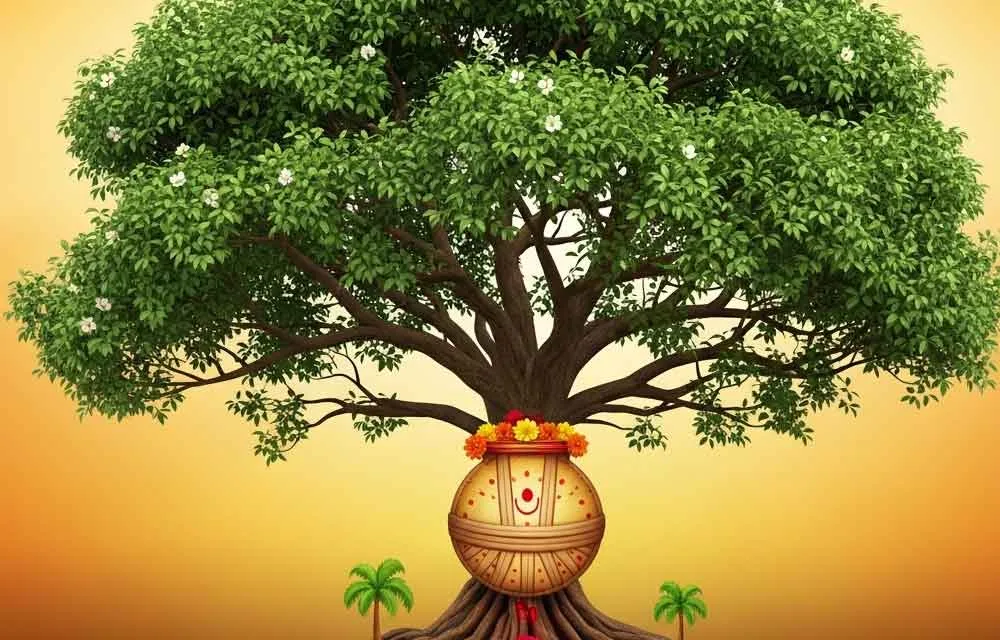
2. Shami Puja: the tree of victory
The Shami tree (Jammi in Telugu, Banni in Kannada, Vanni in Tamil) holds deep significance. According to the Mahabharata, the Pandavas hid their weapons in a Shami tree during their year in disguise and took them back at its end; tradition links this to Vijayadashami. Lord Rama is also associated with Shami worship before his campaign.
Vidhi:
- Go to a Shami tree, or use a potted plant if none is nearby.
- Offer water, kumkum, turmeric, flowers and akshata.
- Walk around the tree three or seven times.
- Recite the well-known shloka: शमी शमयते पापं शमी शत्रुविनाशिनी। अर्जुनस्य धनुर्धारी रामस्य प्रियदर्शिनी॥ (Shami shamayate papam shami shatru-vinashini, Arjunasya dhanurdhari Ramasya priyadarshini.)
- Collect a few leaves to exchange with family and friends as symbolic "gold", a wish for prosperity and goodwill.
- Many people keep one leaf in their purse, cash box or account books through the year.
In Maharashtra the leaves exchanged as "gold" (sone) are usually those of the Apta tree (Bauhinia racemosa), a different tree from Shami; many families worship both.
3. Ayudha Puja, Shastra Puja and Vahana Puja
This is one of the most practical and widely observed rituals. It honours the tools of our livelihood as channels of divine energy.
What to worship:
- Students: books, notebooks, pens, laptops, musical instruments
- Professionals: computers, tools, machines, sewing machines, medical instruments
- Households: kitchen utensils, and vehicles such as cars, bikes and scooters
- Farmers and artisans: farm implements and craft tools
Simple steps:
- Clean all items thoroughly the previous day or early in the morning.
- Arrange them on a clean cloth or in the puja area.
- Apply turmeric, kumkum and sandal paste, and decorate with flowers and garlands. For electronics, place the mark on a slip of paper beside the device instead of applying wet paste.
- Light a lamp and incense, and offer fruits, sweets or traditional naivedya such as sundal in the South.
- Chant prayers to Goddess Durga, Saraswati or your Ishta Devata.
- Perform aarti and pray for success and safety.
- Many families keep the items unused for the rest of the day and take them up again with a short prayer.
In many South Indian homes Ayudha Puja is performed on Maha Navami (Monday 19 October 2026); others do it on Vijayadashami itself. For the full vidhi, see Ayudha Puja 2026: tools, vehicles, books and laptops, the Ayudha Puja sankalpam and the Vahana Puja sankalpam.
4. Seemollanghan (crossing the boundary)
In traditional practice, especially in Maharashtra and parts of Karnataka, the head of the family, or the family together, goes in the afternoon towards the boundary of the village or neighbourhood, usually in the north-east direction, offers a short prayer, often at a Shami or Apta tree, and returns. This symbolises readiness for new journeys and undertakings. In cities, a short walk around the housing society or to a nearby temple serves the same purpose.
5. Other meritorious acts
- Recite the Sundara Kanda or other Ramayana passages.
- Visit a temple of Lord Rama or Goddess Durga.
- Give in charity, especially food, clothes or educational materials.
- Begin a new skill, course or project during the Vijay Muhurat.
- Exchange Vijayadashami greetings such as "Dussehra ki hardik shubhkamnayein" with loved ones; see Dussehra 2026 wishes and messages.
State-wise guide to Vijayadashami rituals
North India: Delhi, Uttar Pradesh, Haryana, Punjab, Bihar, Madhya Pradesh, Rajasthan
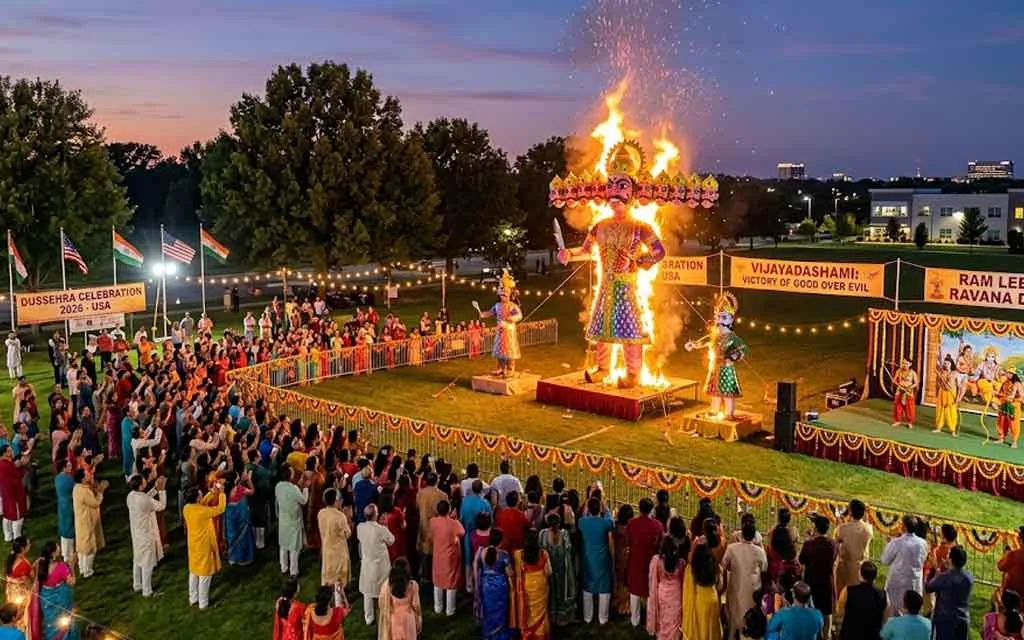
The dominant theme is Lord Rama's victory. Ramlila performances run for several days and end with the burning of giant effigies of Ravana, Kumbhakarna and Meghnad at dusk (Ravana Dahan). Timings by city are in Ravan Dahan 2026: date and time city-wise.
Rituals for devotees:
- Attend or watch a Ramlila if possible, such as the Delhi Ramlilas at Red Fort and Ramlila Maidan or the Ramnagar Ramlila in Varanasi.
- Perform Shami Puja and Aparajita Puja at home in the afternoon.
- Many families also do a simple Ayudha or Shastra Puja.
- Kanya Pujan (honouring young girls) is usually completed on Ashtami or Navami, but the spirit of reverence continues.
In Rajasthan, the Kota Dussehra Mela adds a royal flavour. State pages: Delhi, Uttar Pradesh, Punjab, Haryana, Bihar, Madhya Pradesh, Rajasthan.
West Bengal, Odisha, Assam and Tripura (eastern India)
Here Vijayadashami is the emotional end of Durga Puja. In 2026, Bengal-tradition calendars observe Bijoya Dashami on Wednesday 21 October.
Core rituals:
- Sindoor Khela: married women offer vermilion to the Goddess and then apply it to one another, praying for family happiness and prosperity.
- A tearful farewell to the Goddess, followed by Visarjan (immersion) of the idols amid processions, music and the cry "Asche bochhor abar hobe" (it will happen again next year).
- Bijoya visits: families exchange sweets, embrace and seek the blessings of elders.
- Special aartis and bhog distribution at temples and pandals.
Timings are in Durga Visarjan 2026 and Sindoor Khela. State pages: West Bengal, Odisha, Assam, Tripura.
Maharashtra and Goa
Maharashtra has some of the most distinctive home rituals.
- Apta and Shami Puja, and the exchange of Apta leaves as "gold" (sone).
- Seemollanghan, the symbolic boundary crossing.
- Ayudha or Shastra Puja is widely observed.
- Families greet one another with "Dasaryachya hardik shubhechha" while exchanging leaves.
- Many homes follow the afternoon pujas with a visit to a temple.
State pages: Maharashtra, Goa.
Gujarat
After nine nights of Garba and Dandiya Raas, Vijayadashami brings a calmer, auspicious tone.
- A morning breakfast of fafda and jalebi is a much-loved custom.
- Shami Puja and Shastra Puja are observed in many communities.
- New purchases and beginnings are considered highly favourable.
- Some cities hold Ravana Dahan, while others focus on temple visits and family gatherings.
Karnataka
Mysuru Dasara is world-famous. Its highlight, the Jamboo Savari elephant procession carrying the idol of Goddess Chamundeshwari, is scheduled for Wednesday 21 October 2026, the day after the all-India Vijayadashami, with the torchlight parade the same evening.
- Ayudha Puja, often on Maha Navami or Vijayadashami.
- Banni (Shami) Puja and the exchange of leaves.
- Temple visits, especially to the Chamundeshwari Temple on Chamundi Hill.
- Cultural programmes across Mysuru during the festival.
See the Mysore Dasara 2026 guide and Dussehra 2026 in Karnataka.
Andhra Pradesh and Telangana
These states blend Durga worship, Bathukamma in Telangana, and strong Jammi traditions.
- Jammi (Shami) Puja and the exchange of Jammi leaves as gold.
- Ayudha Puja and Vahana Puja.
- Special alankarams and processions at major temples such as Kanaka Durga at Indrakeeladri, Vijayawada.
- In Telangana, the festive spirit of Saddula Bathukamma (Sunday 18 October) flows naturally into Dasara.
- Spotting the Palapitta (Indian roller bird) on Dasara is considered highly auspicious.
- "Alai Balai" gatherings, with greetings and warm embraces.
See Dussehra 2026 in Telangana, Andhra Pradesh and how Telangana celebrates Bathukamma and Dussehra.
Tamil Nadu
Golu (Bommai Kolu) doll displays remain in homes until Vijayadashami.
- Saraswati Puja and Ayudha Puja on Monday 19 October 2026, with Vijayadashami on Tuesday 20 October.
- Vidyarambham / Aksharabhyasam: initiating children into writing their first letters, often in a plate of rice.
- Closing the Golu with the distribution of tamboolam and gifts.
- Temple visits and special abhishekams.
See Dussehra 2026 in Tamil Nadu.
Kerala
Vidyarambham is the central highlight. Children are initiated into learning at temples or at home, writing their first letters in a plate of rice under the guidance of a teacher or elder. Saraswati Puja (Puja Vaipu) and Ayudha Puja are also important. In Kerala, Vijayadasami and Vidyarambham fall on Wednesday 21 October 2026, following the Kerala calendar. See Vidyarambham 2026 in Kerala.
Himachal Pradesh (Kullu)
The International Kullu Dussehra is expected from 21 to 27 October 2026 at Dhalpur Maidan, according to news reports of the Dussehra Utsav Committee's plans. Hundreds of village deities are brought in palanquins to honour Lord Raghunath, whose rath yatra opens the festival. There is no Ravana effigy burning; the focus is on the deity processions, cultural programmes and community gatherings. See the Kullu Dussehra 2026 guide.
Chhattisgarh (Bastar)
Bastar Dussehra lasts about 75 days in its full traditional form. It centres on Goddess Danteshwari and local tribal customs rather than the Ramayana story, with chariot processions and rituals in Jagdalpur around the Navratri and Dussehra period. See Bastar Dussehra 2026.
How to perform a complete home ritual on Vijayadashami 2026
- Wake early, bathe and wear clean traditional clothes.
- Clean the puja area and light a lamp.
- If the Navratri kalash is still in place, offer a short final puja of thanksgiving.
- During the Aparahna period and Vijay Muhurat, perform the Aparajita Puja, the Shami Puja (or use available leaves) and the Ayudha or Vahana Puja.
- Exchange Shami, Jammi or Apta leaves with family members with a prayer for prosperity.
- If young children are present, perform a simple Vidyarambham.
- Visit a temple if possible, or recite the Ramayana or Devi stotras at home.
- Share prasad and festive food with family and neighbours.
- In the evening, if it is the custom in your region, attend or watch Ravana Dahan, remembering that it represents the burning of our inner faults.
Carry the spirit of victory through the year
The rituals of Vijayadashami are not mere formalities. They are living reminders that each of us can overcome the inner Ravanas of ego, anger, greed and ignorance through devotion, discipline and righteous action.
Whether you watch an effigy burn on a public ground, bid farewell to Goddess Durga at an immersion, exchange Jammi leaves with a smile, or simply sit quietly and offer a heartfelt prayer, the essence is the same: truth alone triumphs.
This Vijayadashami, may Goddess Aparajita and Lord Rama bless you with courage, clarity and lasting success in all your righteous endeavours. Jai Shri Ram. Jai Mata Di.
Frequently asked questions
Is it compulsory to perform all these rituals?
No. Sincerity matters more than completeness. Even lighting a lamp, offering a simple prayer and exchanging good wishes is considered meritorious.
What if I cannot find a Shami tree?
Use dried Shami leaves if available, or perform the puja symbolically with another sacred plant such as tulsi while reciting the Shami shloka with devotion.
Can women perform these rituals?
Yes. In most households today the whole family takes part. Customs vary by region and family, so follow your own tradition.
Is Vijayadashami a good day to start new work?
Yes. It is traditionally considered one of the best days of the year for new beginnings, education, business ventures and journeys, especially during the afternoon Vijay Muhurat.
What is the difference between Dussehra and Vijayadashami?
They are the same day. "Dussehra" (from Dasha-hara) is more common in North and West India, "Dasara" in the South, and "Vijayadashami", the victorious tenth day, is used across the country.
Why do Bengal, Mysuru and Kerala celebrate on 21 October 2026?
Dashami tithi runs from about 12:50 PM IST on 20 October to 2:11 PM IST on 21 October. Most of India keeps Vijayadashami on 20 October, when Dashami covers the afternoon, while Bengal's Bijoya Dashami, Mysuru's Jamboo Savari and Kerala's Vidyarambham follow their own calendars and fall on Wednesday 21 October.
Editor's note (19 October 2026)
Owner-supplied article, checked against HinduTone's Dussehra date pages. Dates and Vijay Muhurat follow Drik Panchang for India; the Mysuru date follows the official Mysuru Dasara programme, Bengal's the West Bengal holiday list, Kerala's Vidyarambham the Kerala calendar, and the Kullu dates news reports of the Dussehra Utsav Committee's plans (ETV Bharat, 2 October 2026). We corrected the draft where it called Apta another name for Shami (they are different trees) and gave firm 2026 dates for Mysuru, Kullu, Kerala and Tamil Nadu. Timings differ by city, so confirm locally.
Related guides
- Dussehra 2026 date and Vijay Muhurat
- Vijayadashami 2026 mantras: Aparajita and Shami Puja vidhi
- Ayudha Puja 2026: tools, vehicles, books and laptops
- How Hindu temples celebrate Dussehra 2026
- Ravan Dahan 2026: date and time city-wise
- Dussehra 2026 bank holidays state-wise
- Dussehra and Vijayadashami 2026 guide
You might also like

Vijayadashami Pooja 2026: Step-by-Step Guide
How to Wish Happy Vijayadashami 2026 on WhatsApp, Instagram, Facebook and Telegram: A Complete Guide for NRIs in the USA, UK, Australia and New Zealand

Dussehra 2026 (Vijayadashami) in New York, USA f