Divya Darshan of 108-ft Lord Hanuman Ji in Karol Bagh, New Delhi
Location: Karol Bagh, Near Jhandewalan Metro Station, New DelhiAttraction: 108 Feet Tall Murti of Lord HanumanCategory: Hindu Devotional Site, Spiritual…
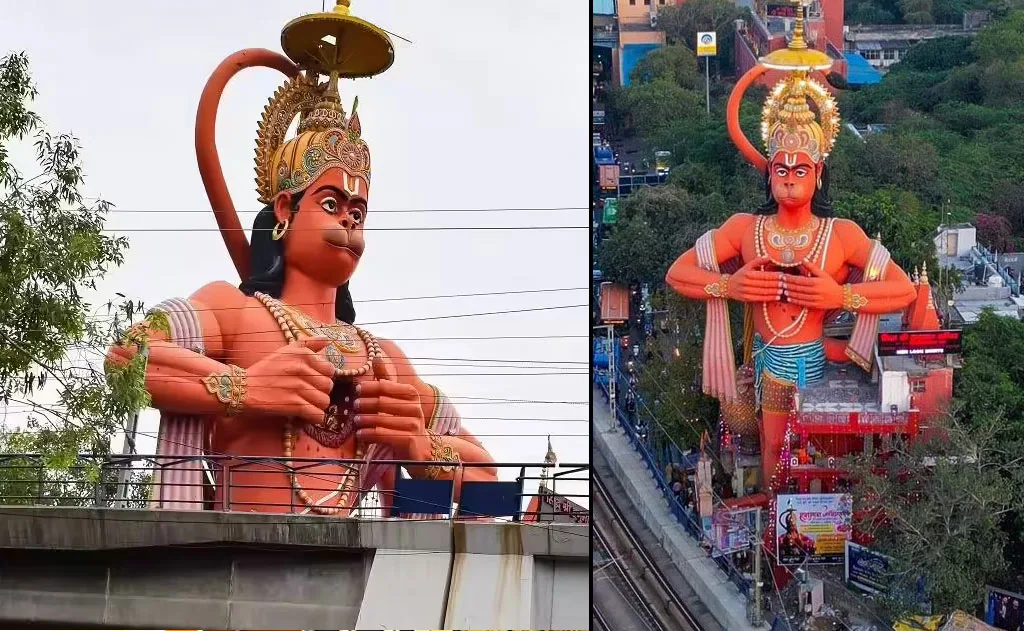
Location: Karol Bagh, Near Jhandewalan Metro Station, New Delhi
Attraction: 108 Feet Tall Murti of Lord Hanuman
Category: Hindu Devotional Site, Spiritual Landmark
Open to Public: Yes, 7 days a week
A Towering Symbol of Devotion
Rising magnificently above the bustling lanes of Karol Bagh is one of Delhi’s most revered spiritual landmarks — the 108-ft tall statue of Lord Hanuman Ji. Visible from a distance, especially to those commuting through the Jhandewalan Metro Station (Blue Line), this divine idol is a beacon of strength, devotion, and faith.
This awe-inspiring murti stands as a powerful reminder of Sanatana Dharma’s eternal presence in modern India’s heart. With his blessing hand (Abhaya Mudra) raised high and gada (mace) held firmly, the divine murti inspires millions to stay courageous and spiritually grounded.
Architectural Wonder with Spiritual Significance
Constructed by Bharat Sevashram Sangha, this massive structure isn’t just about height — it’s a deeply symbolic representation of Hanuman Ji’s boundless strength and divine grace. The intricately carved idol portrays Hanuman Ji tearing open his chest, revealing Lord Rama and Goddess Sita within — a scene that epitomizes the essence of bhakti (devotion).
Every inch of the structure reflects fine craftsmanship and devotion, making it not just a religious center, but a tourist attraction and an architectural marvel.
Easily Accessible Location
Located near the Jhandewalan Metro Station, this site is easily reachable by Delhi Metro, buses, autos, and private vehicles. It’s a spiritual haven amid the chaos of Delhi, where one can meditate, offer prayers, or simply soak in the divine vibrations.
Daily Poojas and Hanuman Aarti
The temple hosts daily poojas, Hanuman Chalisa chanting, and evening aarti attended by hundreds of devotees. Tuesdays and Saturdays witness large gatherings, as these days are considered especially sacred for Lord Hanuman.
Many devotees light diya lamps, offer boondi laddoos, and recite the Sankat Mochan Hanuman Ashtak seeking protection from fears, health issues, and obstacles in life.
A Must-Visit for Every Hindu Devotee
Whether you're a spiritual seeker, a tourist, or someone simply looking for peace, the 108-ft Hanuman Ji murti in Karol Bagh is a must-visit. It is a place where spiritual energy meets cultural grandeur, reminding us of the timeless power of bhakti and divine intervention.
Devotee Tip
Don’t forget to take darshan during sunset hours when the statue glows in the golden hue of dusk and the sound of bhajans and bells fills the air. The spiritual aura is unmatched.
Conclusion
In a city racing towards modernity, this divine murti of Lord Hanuman Ji stands tall — literally and metaphorically — as a reminder of our roots, beliefs, and the protective power of Bajrangbali. As thousands bow down before him every day, it continues to echo the eternal chant:
“Jai Bajrang Bali! Jai Hanuman Ji Maharaj Ki!”
Hashtags for Social Media Promotion:
#Hanuman108 #KarolBaghHanuman #JhandewalanMandir #LordHanuman #DelhiTemples #DivyaDarshan #SanatanDharma #HinduTone #SpiritualDelhi #Bajrangbali #HanumanBhakt
Why is 108 Feet the Chosen Height, and What Does the Number 108 Signify in Sanatana Dharma?
The choice of 108 feet is far from arbitrary. In Sanatana Dharma, the number 108 is considered supremely sacred — the Mukta Mukavali Upanishad and several Tantric texts enumerate 108 Upanishads, while the Rigveda itself is organised around multiples of this number. There are traditionally 108 names (Ashtottara Shatanamavali) for each principal deity, including Lord Hanuman, and devotees recite these 108 names as a complete act of worship.
Astronomically, ancient Vedic sages calculated that the distance between the Earth and the Sun is approximately 108 times the Sun's diameter, and similarly the Earth-Moon distance is roughly 108 times the Moon's diameter — a correlation that deepened the number's cosmological reverence. By raising Lord Hanuman's murti to exactly 108 feet, the constructors of Bharat Sevashram Sangha embedded this cosmic symbolism into stone and mortar, making every glance at the idol an act of remembrance of the universe's divine order.
The Iconography of the Murti — What Each Detail Reveals About Lord Hanuman's Divinity
The Abhaya Mudra — the open right hand raised in blessing — is one of the oldest gestures in Hindu iconography, appearing in Vedic yajnas and later codified in the Agama Shastras as a symbol of protection and fearlessness bestowed upon the devotee. When Lord Hanuman displays this mudra at a height visible across Karol Bagh, the tradition holds that his divine gaze (drishti) and protective energy extend over the entire surrounding area, making the site a Raksha Kshetra — a protected spiritual zone.
The scene of Hanuman tearing open his chest to reveal Lord Rama and Goddess Sita seated within his heart originates in the Ananda Ramayana and is among the most celebrated expressions of para-bhakti — the highest form of devotion that transcends ritual and transforms the devotee's very body into a temple. The gada (mace) held in the left hand references Hanuman's role as Rudravatara, an avatar of Lord Shiva, connecting his warrior aspect to the cosmic power of destruction of adharma described in the Shiva Purana.
The murti depicts Hanuman in a standing posture known as Sthanaka, associated with active divine presence and readiness to serve — contrasting with the seated Sukhasana posture of contemplation. This choice of posture reinforces the theological understanding of Hanuman as the eternal sevaka (servant) who is always alert, always present, and ever ready to aid his devotees.
Bharat Sevashram Sangha — The Spiritual Organisation Behind This Sacred Monument
Bharat Sevashram Sangha is a monastic organisation rooted in the Shakta-Vaishnava tradition, founded in Bengal in the early twentieth century with a mandate to serve the nation through spiritual education, disaster relief, and the establishment of sacred sites. The Sangha's philosophy is grounded in the principle that seva (selfless service) is itself a form of worship — a teaching drawn directly from the Bhagavata Purana's concept of navavidha bhakti, the nine forms of devotion.
The Sangha has established temples, ashrams, and large-scale murtis at several locations across India, each designed to function simultaneously as a devotional centre, a community gathering space, and a statement of Hindu cultural pride. The Jhandewalan temple complex in New Delhi is among their most prominent urban projects, reflecting the Sangha's vision of bringing monumental sacred art into the daily visual landscape of contemporary Indian cities, so that even a commuter on the Delhi Metro can receive an unsolicited darshan — an unplanned but auspicious sight of the divine.
The Scriptural Basis of Hanuman's Unmatched Strength and Why Devotees Seek His Protection
The Valmiki Ramayana (Sundara Kanda) presents the most expansive portrait of Hanuman's power: he leaps across the ocean to Lanka, lifts the Dronagiri mountain bearing the Sanjeevani herb, and single-handedly sets Lanka ablaze — all acts that establish him as Mahavira, the supremely heroic one. The Tulsidas-composed Hanuman Chalisa, recited daily at this very temple, distils these attributes into forty verses of Awadhi poetry that have become perhaps the most widely memorised devotional text in North India.
The Parasara Samhita and several Shakta Tantras classify Hanuman as a Chiranjeevi — one of the seven immortals who remain present on Earth across all yugas to protect dharma. This belief makes worship of Hanuman uniquely immediate: unlike deities who reside in distant celestial realms, Hanuman is understood to be physically present wherever the Ramayana is recited or his name is sincerely chanted, a doctrine that gives Tuesdays and Saturdays their special resonance as days when this presence is considered most accessible.
Hanuman's role as a graha-shanti (planetary pacification) deity for those afflicted by Shani (Saturn) is elaborated in the Skanda Purana and is the reason Saturday worship draws particularly large crowds. The theological logic is that Shani himself acknowledged Hanuman's supremacy after being rescued by him during the Lanka episode, and thus devotees believe sincere Hanuman worship can mitigate the challenging effects of Shani's transit periods in their astrological charts.
How to Make the Most of a Visit — Darshan Etiquette, Prasad, and Nearby Sacred Sites
Visitors planning a darshan should ideally arrive before sunrise for the Mangala Aarti or in the early evening for the Sandhya Aarti, when the illuminated murti rising against the Delhi skyline creates a particularly powerful visual and spiritual experience. Dress code is traditional — clean clothing that covers shoulders and knees is expected as a mark of respect inside the temple complex managed by Bharat Sevashram Sangha.
The customary offerings for Lord Hanuman include sindoor (vermilion), jasmine oil, betel leaves, and boondi laddoos — each with scriptural grounding. Sindoor is linked to the story in the Uttara Kanda of the Ramayana where Hanuman smeared sindoor all over his body upon learning that Sita applied it to ensure Lord Rama's long life; from that moment, sindoor became his most beloved offering.
The Jhandewalan area itself carries additional religious significance: the Jhandewalan Mandir of Goddess Yogmaya, located within walking distance, is one of Delhi's ancient Shakti peethas, making this neighbourhood a rare confluence of Vaishnava and Shakta sacred geography within a single urban locality. Devotees often complete a combined visit to both shrines, experiencing the complementary energies of Hanuman's protective strength and the Goddess's sovereign power in a single pilgrimage circuit.
Frequently Asked Questions
Where is the 108-ft Hanuman statue in Delhi?
It stands in Karol Bagh, New Delhi, near Jhandewalan Metro Station on the Blue Line. It can be reached by Delhi Metro, buses, autos and private vehicles.
Who built the 108-ft Hanuman murti in Karol Bagh?
It was constructed by Bharat Sevashram Sangha, a monastic organisation founded in Bengal in the early twentieth century. The statue shows Hanuman Ji tearing open his chest to reveal Lord Rama and Goddess Sita.
Why is the Hanuman statue 108 feet tall?
The number 108 is considered supremely sacred in Sanatana Dharma, linked to the 108 Upanishads and the 108 names of each principal deity. Raising the murti to exactly 108 feet embeds that symbolism.
Which days are best to visit the Karol Bagh Hanuman temple?
Tuesdays and Saturdays see large gatherings because they are considered especially sacred for Lord Hanuman. The temple is open to the public seven days a week.
What poojas and aarti happen at the temple?
The temple hosts daily poojas, Hanuman Chalisa chanting and an evening aarti attended by hundreds of devotees. Many devotees light diyas, offer boondi laddoos and recite the Sankat Mochan Hanuman Ashtak.
What is the best time of day for darshan?
Sunset is recommended, when the statue glows in the golden hue of dusk and bhajans and bells fill the air. Visitors can also come before sunrise for Mangala Aarti or in the early evening for Sandhya Aarti.
Share this with family and friends
Send it on WhatsApp, post it, or copy the link.
More from News
- Aurora Hindu Temple Shooting Plot Foiled: Illinois Teen Charged After Rifle Jammed, Police Say
- Hindu Temples Abroad News, October 2026: Neasden's 42-Foot Tapomurti, Maha Annakut, Paris Mandir Hosts UNESCO Diplomats, Abu Dhabi Prayers
- Hindu Temple News, October 2026: Tirumala Navaratri Brahmotsavam, Sabarimala Security, Kashi's New CEO and Puri Updates
- Hindu Festival News, October 2026: Kullu Dussehra, Bastar, Delhi Ramlila, Gujarat Garba, Bathukamma, Chhath and Ayodhya Deepotsav
- Festival Special Trains 2026: Dasara, Diwali and Chhath Specials Announced So Far, Route by Route
You might also like
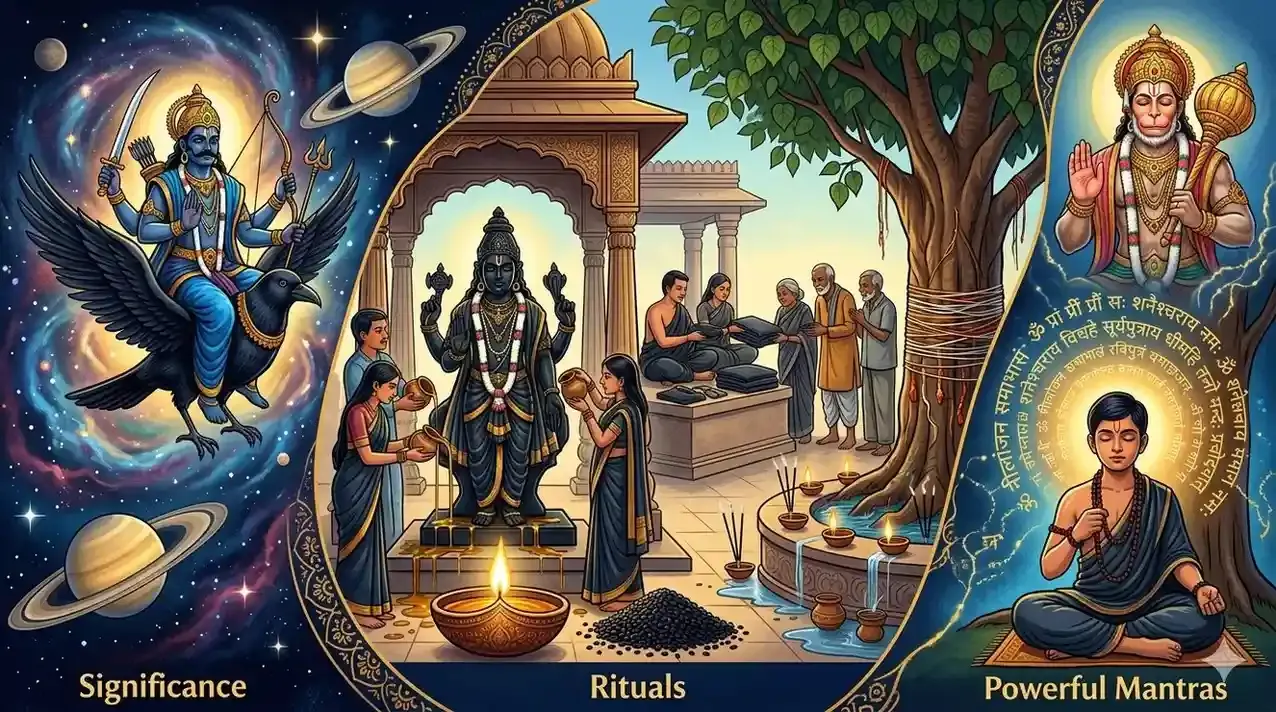
Shani Jayanti 2026: Date, Significance, Rituals & Powerful Mantras

Anti-Conversion Laws in India: Complete State-Wise Guide Every Hindu Must Know and Share in 2026

Sacred Hindu Festivals & Temple News: Divine Week — May 2026