
Koti Deepotsavam: The Festival of a Million Lamps and Infinite Blessings
Introduction In the heart of India's spiritual landscape, where ancient traditions merge with divine devotion, Koti Deepotsavam stands as one of the most…
Introduction In the heart of India's spiritual landscape, where ancient traditions merge with divine devotion, Koti Deepotsavam stands as one of the most…
Introduction
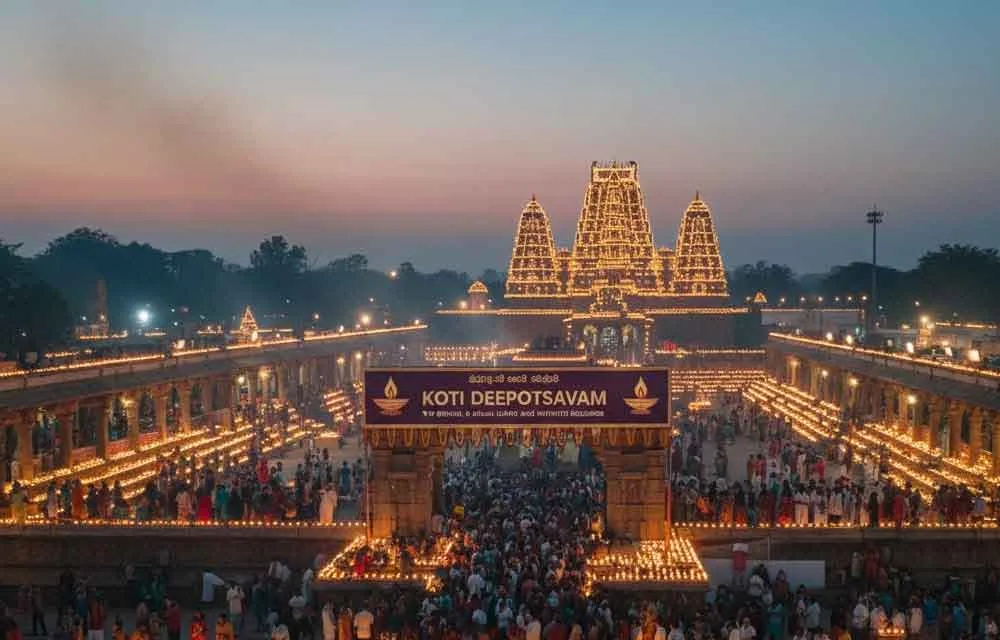
In the heart of India's spiritual landscape, where ancient traditions merge with divine devotion, Koti Deepotsavam stands as one of the most magnificent celebrations of light, faith, and collective worship. The term "Koti Deepotsavam" translates to the "Festival of a Crore (Ten Million) Lamps," representing an awe-inspiring spectacle where millions of diyas (earthen lamps) are lit simultaneously, transforming sacred spaces into ethereal rivers of light.
This grand celebration is not merely a visual spectacle but a profound spiritual practice rooted in Vedic traditions, symbolizing humanity's eternal quest to dispel darkness—both material and spiritual—and invite divine blessings into our lives.
The Spiritual Significance: Victory of Light Over Darkness
The Eternal Battle Between Light and Darkness
At its core, Koti Deepotsavam embodies the timeless Hindu philosophy of "Tamaso Ma Jyotirgamaya" (Lead me from darkness to light). This sacred mantra from the Brihadaranyaka Upanishad encapsulates the essence of the festival—a collective prayer for enlightenment, wisdom, and divine grace.
The lighting of a crore lamps represents:
1. Spiritual Awakening: Each lamp symbolizes an individual soul's journey from ignorance (avidya) to knowledge (vidya), from material bondage to spiritual liberation (moksha).
2. Collective Consciousness: When millions of lamps are lit together, they create a unified field of positive energy, demonstrating the power of collective devotion and communal harmony.
3. Divine Invocation: In Hindu tradition, light is considered the first form of creation. By lighting lamps, devotees invite the divine presence into their lives, welcoming prosperity, health, and spiritual well-being.
4. Removal of Negativity: The brilliance of a crore lamps is believed to dispel negative energies, evil forces, and the darkness of sin, creating a purified spiritual atmosphere.
Historical Origins and Evolution
Ancient Vedic Roots
The tradition of lamp lighting in Hindu worship dates back thousands of years to the Vedic period (1500-500 BCE). The Rigveda, the oldest of the Vedas, contains numerous hymns dedicated to Agni (the fire god), who serves as the messenger between humans and the divine realm.
Rig Veda (1.1.1) begins with: "Agnim ile purohitam yajnasya devam ritvijam | hotaram ratnadhatamam ||" (I praise Agni, the chosen priest, god, minister of sacrifice, the invoker, lavisher of wealth.)
This reverence for fire and light established the foundation for using lamps in religious ceremonies, symbolizing the presence of the divine and the medium through which prayers ascend to heaven.
Temple Traditions and Deepotsavam
The specific practice of Deepotsavam (lamp festival) evolved during the medieval period, particularly gaining prominence in South Indian temple traditions. Major temples dedicated to Lord Vishnu and Lord Shiva began organizing elaborate lamp-lighting ceremonies, especially during auspicious occasions.
Historical records suggest that temples like:
- Tirumala Venkateswara Temple (Andhra Pradesh)
- Varalakshmi Temple (Various locations)
- Arunachaleswara Temple (Tiruvannamalai, Tamil Nadu)
...have been conducting Deepotsavam celebrations for several centuries, with some traditions dating back to the Chola and Pallava dynasties (6th-13th centuries CE).
The Birth of Koti Deepotsavam
The modern concept of Koti Deepotsavam—lighting one crore (10 million) lamps—emerged as a magnificent expansion of traditional Deepotsavam celebrations. This grand scale celebration gained particular prominence in:
1. Tirumala Tirupati Devasthanams (TTD) The Tirumala Venkateswara Temple in Andhra Pradesh is credited with popularizing the Koti Deepotsavam concept on a massive scale. The Tirumala Tirupati Devasthanams, which manages the temple, began organizing this spectacular event to honor Lord Venkateswara (a form of Vishnu).
The festival is particularly significant during Karthika Masam (October-November), considered the most auspicious month for Vishnu worship. According to the Puranas, Lord Vishnu is believed to be in deep meditation (Yoga Nidra) during this period, and the lighting of lamps is meant to awaken and please the deity.
2. Regional Adaptations Following TTD's success, numerous temples across India, particularly in Andhra Pradesh, Telangana, Tamil Nadu, and Karnataka, adopted the Koti Deepotsavam tradition, each adding their unique regional customs and devotional practices.
The Theological Foundation
Puranic References
Several Hindu scriptures provide the theological basis for lamp worship:
Skanda Purana mentions that lighting lamps during Karthika month brings immense merit and washes away sins accumulated over lifetimes.
Padma Purana states: "One who lights a lamp before the Lord during Karthika month attains moksha and is freed from the cycle of birth and death."
Agni Purana describes the sacred fire and lamps as purifying agents that cleanse the environment of negative energies and evil spirits.
The Symbolism of Numbers
The choice of "Koti" (one crore or ten million) is deeply symbolic:
- Completeness: In Hindu numerology, large numbers represent completeness and infinity
- Devotion Magnitude: Lighting a crore lamps demonstrates extraordinary devotion and commitment
- Collective Participation: Achieving this number requires community involvement, fostering unity
- Cosmic Connection: The countless stars in the sky mirror the countless lamps on earth, connecting the terrestrial with the celestial
The Ritual Process and Significance
Preparation Phase
Sanctification: Temples undergo thorough cleansing and decoration weeks before the event. Sacred spaces are adorned with flowers, rangoli (colorful patterns), and traditional decorations.
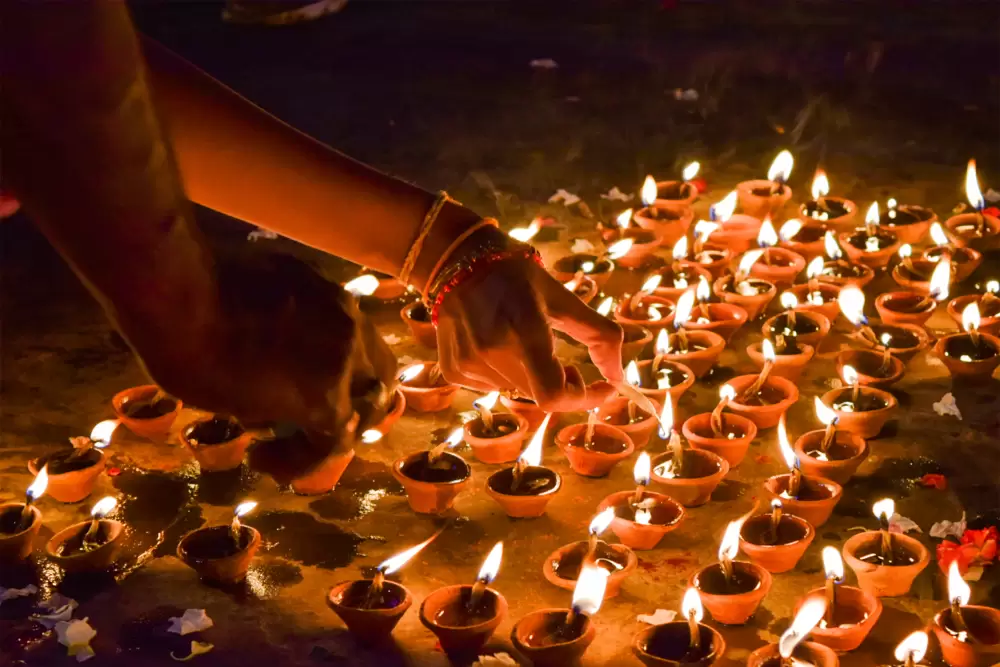
Lamp Preparation: Millions of earthen diyas are prepared by local artisans. The traditional diya is made from clay, filled with ghee (clarified butter) or sesame oil, and fitted with cotton wicks.
Spiritual Preparation: Devotees observe fasts, perform special prayers, and engage in charitable activities to purify themselves before participating.
The Main Ceremony
1. Sankalpam (Sacred Vow): The ceremony begins with priests taking a solemn vow to complete the ritual successfully, invoking divine blessings.
2. Prana Pratishtha: The lamps are consecrated through Vedic mantras, infusing them with divine energy.
3. Lighting Sequence:
- The main lamp (Adi Deepam) is lit first before the deity
- From this primary lamp, thousands of others are lit in a cascading effect
- Devotees participate by lighting individual lamps, creating a collective offering
4. Pradakshina: Devotees circumambulate the temple with lighted lamps, creating spirals of light that symbolize the cosmic dance of creation.
5. Aarti and Bhajans: The ceremony culminates in elaborate aarti (worship with lamps) accompanied by devotional songs praising the deity.
Philosophical Dimensions
The Lamp as Metaphor
In Hindu philosophy, the lamp serves as a powerful metaphor for spiritual truth:
- The Clay Base: Represents the human body, temporary and earthly
- The Oil/Ghee: Symbolizes the accumulated karma and life experiences
- The Wick: Represents the ego (ahamkara) that must be burned
- The Flame: Symbolizes the eternal soul (atman) reaching toward the divine
- The Light: Represents knowledge, wisdom, and divine consciousness
Advaita Vedanta Perspective
From the Advaita (non-dualistic) perspective, the lighting of lamps represents the realization that all individual souls (jivas) are ultimately one with the supreme consciousness (Brahman). Just as many lamps share the same light essence, all beings share the same divine consciousness.
Bhakti Tradition
In Bhakti (devotional) traditions, each lamp represents a devotee's heart filled with love and surrender to God. The act of lighting lamps becomes an expression of pure devotion, without expectation of reward, offered simply from love.
Contemporary Relevance and Global Impact
Social Harmony
Koti Deepotsavam has become a powerful symbol of communal harmony, bringing together people across caste, class, and regional boundaries in a shared spiritual experience. The collective nature of the celebration promotes social cohesion and mutual respect.
Economic Impact
The festival provides livelihood opportunities for:
- Potters and artisans creating millions of diyas
- Oil producers supplying lamp fuel
- Florists and decorators
- Local vendors and small businesses
Environmental Consciousness
Modern celebrations increasingly emphasize eco-friendly practices:
- Using biodegradable clay lamps instead of synthetic materials
- Promoting natural oils over petroleum products
- Organizing waste management during and after the event
- Creating awareness about sustainable celebration practices
Cultural Preservation
In an age of rapid modernization, Koti Deepotsavam serves as a vital link to ancient traditions, preserving and transmitting cultural heritage to younger generations while adapting to contemporary contexts.
The Transformative Power of Participation
Personal Spiritual Benefits
Participants in Koti Deepotsavam report profound spiritual experiences:
1. Inner Peace: The serene atmosphere created by millions of lamps induces deep meditation and mental tranquility.
2. Emotional Healing: The collective positive energy helps release emotional burdens and psychological stress.
3. Faith Renewal: Witnessing the spectacular display strengthens faith and devotion.
4. Community Bonding: Participating alongside thousands of fellow devotees creates a sense of belonging and spiritual kinship.
Collective Consciousness Elevation
Research in consciousness studies suggests that large-scale synchronized devotional activities create measurable effects on collective consciousness. Koti Deepotsavam, with millions participating simultaneously, potentially generates a powerful field of positive intention that extends beyond individual participants.
Regional Variations
Andhra Pradesh and Telangana
In these states, particularly at Tirumala, Koti Deepotsavam is celebrated with extraordinary grandeur during Karthika Masam. The entire temple complex and surrounding hills become illuminated with millions of lamps, creating a breathtaking spectacle visible from great distances.
Tamil Nadu
Tamil temples celebrate Karthigai Deepam, a related festival where lamps are lit on the Karthigai star day. The Arunachaleswara Temple in Tiruvannamalai lights a massive beacon atop Arunachala Hill, visible for miles, accompanied by millions of lamps throughout the town.
Karnataka
Temples in Karnataka observe Deepavali and Karthika Deepotsavam with elaborate rituals, often combining regional customs with classical temple traditions.
Scientific and Psychological Aspects
The Psychology of Light
Modern psychology recognizes the profound impact of light on human psychology:
- Mood Enhancement: Light exposure triggers serotonin production, improving mood
- Circadian Regulation: Evening light rituals can positively influence sleep-wake cycles
- Visual Meditation: Gazing at lamp flames (Trataka) is a recognized meditation technique
The Physics of Collective Energy
Quantum physics and consciousness studies explore how collective focused intention might create measurable energetic effects. Large-scale devotional gatherings like Koti Deepotsavam provide natural laboratories for investigating these phenomena.
Conclusion: A Timeless Beacon of Hope
Koti Deepotsavam transcends its identity as merely a religious festival. It represents humanity's perennial aspiration toward enlightenment, unity, and divine connection. In lighting a crore lamps, participants engage in a sacred act that honors ancient wisdom while addressing contemporary needs for meaning, community, and spiritual nourishment.
As millions of flames pierce the darkness, they illuminate not just the physical space but also the inner landscape of consciousness. Each lamp becomes a prayer, each flame a hope, and collectively, they create a luminous bridge between earth and heaven, between the human and the divine.
In our modern world, often characterized by division, materialism, and spiritual disconnection, Koti Deepotsavam offers a radiant reminder that light always triumphs over darkness, that unity conquers division, and that the eternal flame of devotion continues to burn brightly in the hearts of millions, generation after generation.
May the infinite light of Koti Deepotsavam illuminate your path, dispel your darkness, and guide you toward eternal truth and bliss.
"Deep Jyotih Parabrahma | Deep Sarva Tamopahah | Deepena Saadhyate Sarvam | Sandhya Deepo Namostute"
(I salute the lamp of twilight; the lamp is the supreme Brahman; the lamp removes all darkness; through the lamp, everything is achieved.)
Frequently Asked Questions
What does Koti Deepotsavam mean?
Koti Deepotsavam translates to the Festival of a Crore (Ten Million) Lamps. Millions of diyas are lit together, expressing the prayer "Tamaso Ma Jyotirgamaya" (lead me from darkness to light).
When is Koti Deepotsavam celebrated?
It is particularly significant during Karthika Masam, the October-November month considered most auspicious for Vishnu worship. Exact dates follow the Hindu calendar, so check the local panchang or the organising temple.
How is Koti Deepotsavam performed?
It begins with a sankalpam, then the lamps are consecrated with Vedic mantras. The main lamp (Adi Deepam) is lit first before the deity, other lamps are lit from it, and the ceremony ends with pradakshina, aarti and bhajans.
What is used to make the lamps?
The traditional diya is made of clay, filled with ghee or sesame oil, and fitted with a cotton wick. Modern celebrations increasingly favour biodegradable clay lamps and natural oils over petroleum products.
Which scriptures speak about lighting lamps in Karthika month?
The Skanda Purana says lighting lamps during Karthika month brings great merit. The Padma Purana states that one who lights a lamp before the Lord in Karthika attains moksha.
What do the parts of the lamp symbolise?
The clay base stands for the body, the oil or ghee for accumulated karma, and the wick for the ego (ahamkara) that must be burned. The flame represents the soul (atman) reaching toward the divine.
You might also like
Koti Deepotsavam: The Festival of Lights on Bhakthi TV/ NTV
Live from the Grounds: Bhathi TV Brings the Light of Devotion to Every Home
How to Celebrate Koti Deepotsavam at Home with Family: A Complete Guide to Bringing Sacred Light into Your Living Space
