
Hindu Wedding Rituals
10 articles
A Hindu wedding, or vivaha, is one of the sixteen samskaras, the sacred rites that mark the stages of life. Beyond the celebration, it is a set of vows made before Agni, binding two people and two families in dharma, and its rituals carry meanings that elders often explain to the couple: the giving of the bride, the tying of the mangalsutra or thali, the seven steps around the fire and the blessings that follow.
Customs differ widely between regions and communities. A Telugu wedding with jeelakarra-bellam and talambralu looks quite different from a Punjabi anand karaj-influenced ceremony, a Bengali wedding or a Tamil Iyer wedding, yet they share a common Vedic core. Families abroad often adapt the ceremony to venue rules and shorter timeframes while keeping its essence.
HinduTone articles here explain the meaning of key wedding rituals, regional traditions, how families approach muhurat and horoscope matching, and practical guidance for NRI weddings. Related pages include the 16 Samskaras, Shubh Muhurat, Kundli Matching and Kalyanotsavam.
Latest Articles
Hindu Wedding in Singapore: ROM Registration and the Temple Ceremony
A Hindu vivaha in Singapore can bring together the nalangu, the kanyadaan, the tying of the thali and the seven steps…
Hindu Wedding in the UK: Legal Registration and the Temple Ceremony
A Hindu vivaha in Britain can be a three-day celebration with haldi, mehndi, sangeet, the baraat, the kanyadaan, the…
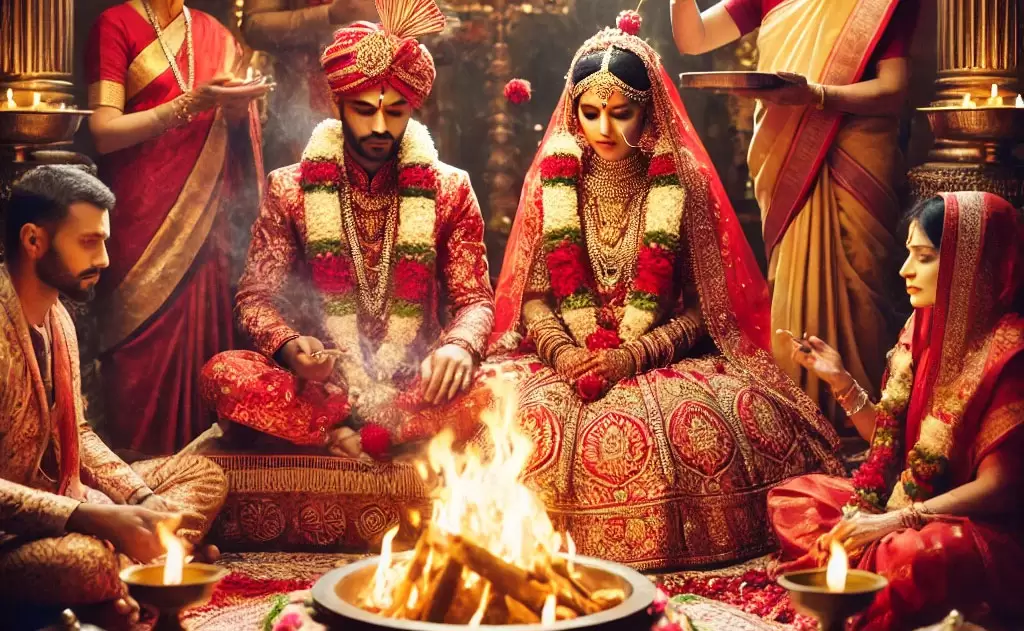
India Wedding Season 2026: 52 Lakh Weddings Expected from 21 November to 15 December, ₹7.5 Lakh Crore Business (CAIT)
With Devuthani Ekadashi on 20 November marking the end of Chaturmas, India's wedding season begins. The Confederation…
Hindu Wedding Traditions Abroad: A Complete Guide for NRI Couples and Families
It is a cold Saturday morning in New Jersey. Inside a hired hall, a mandap of marigolds and banana leaves stands where…
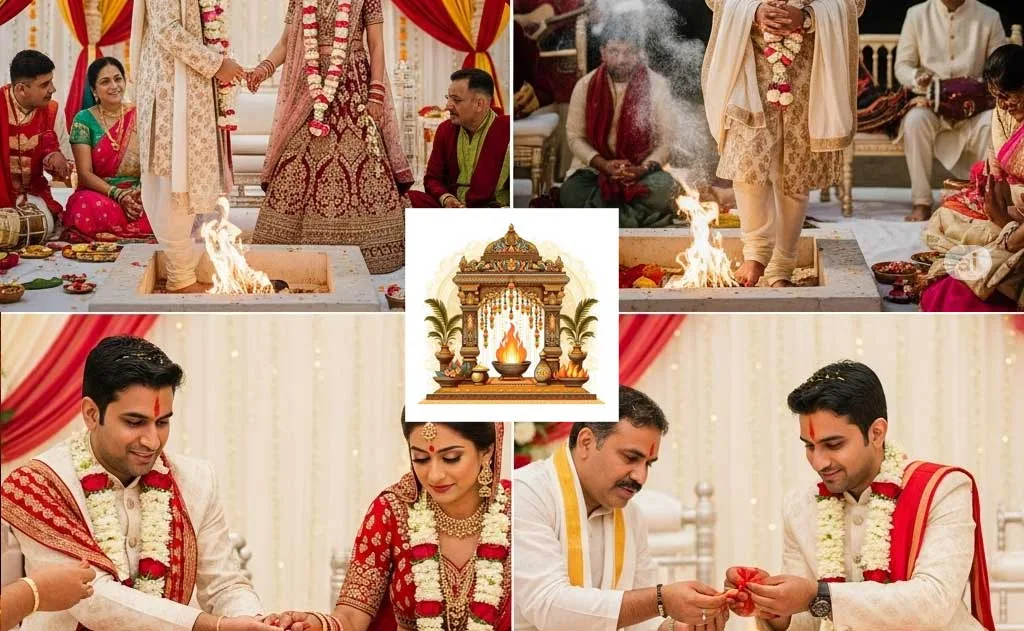
Wedding Rituals Compared: Hindu Vivah, Nikah, Christian, Buddhist, Jain and Sikh Weddings
What actually makes a couple married in each tradition? A respectful guide to the Hindu vivah with kanyadaan and…
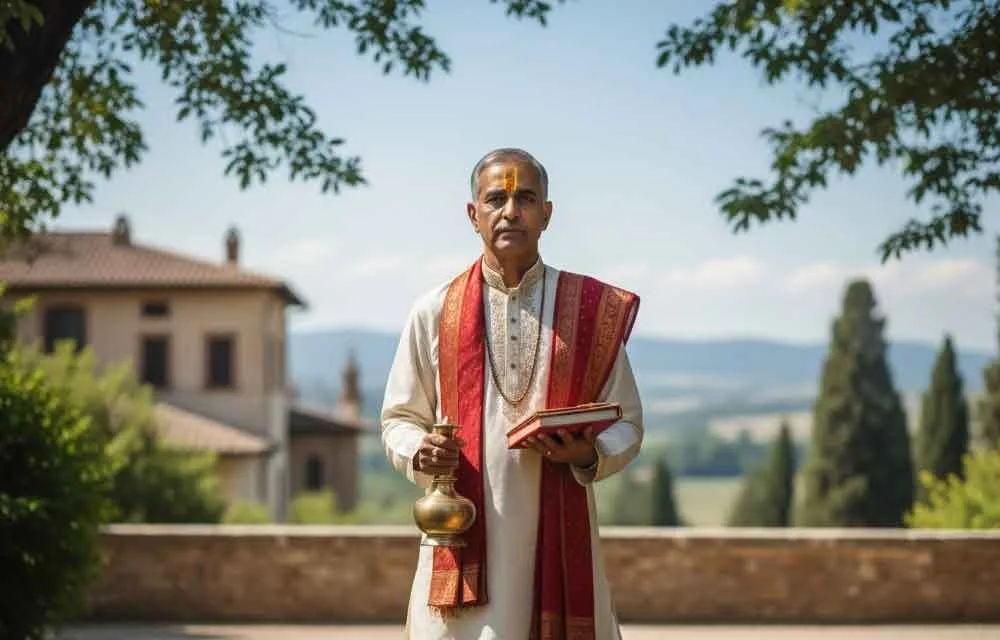
Hindu Wedding Priest Europe: Country-Wise Guide & Checklist 2025
Your complete guide to securing an authentic Hindu pandit for your Vedic wedding across Europe Planning a Hindu…
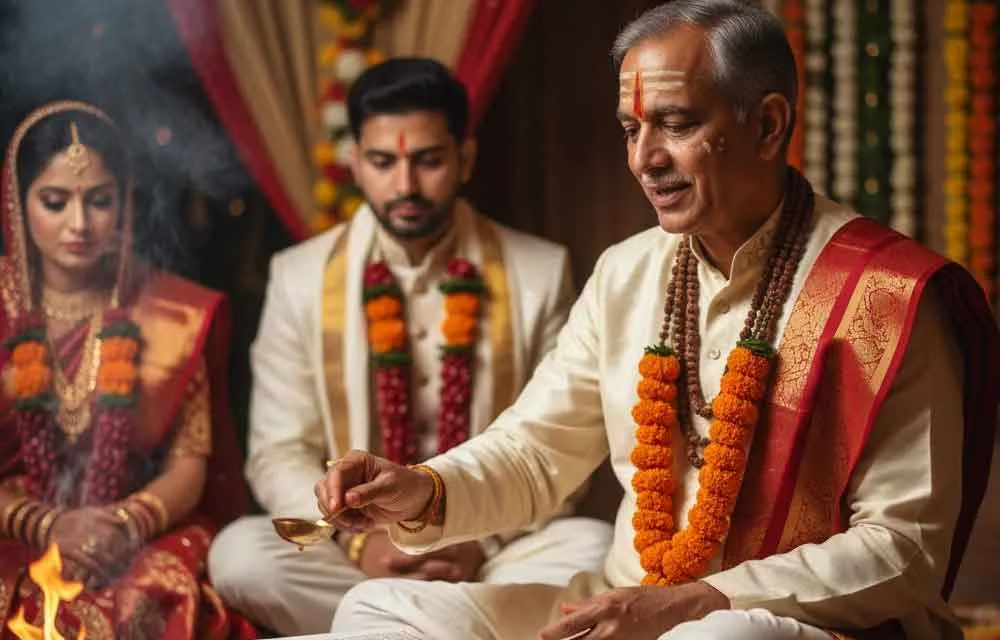
Hindu Wedding Priest Germany: City-Wise Guide & Checklist 2025
Your complete, SEO-optimized guide to hiring an authentic Hindu pandit for your Vedic wedding in Germany — covering…
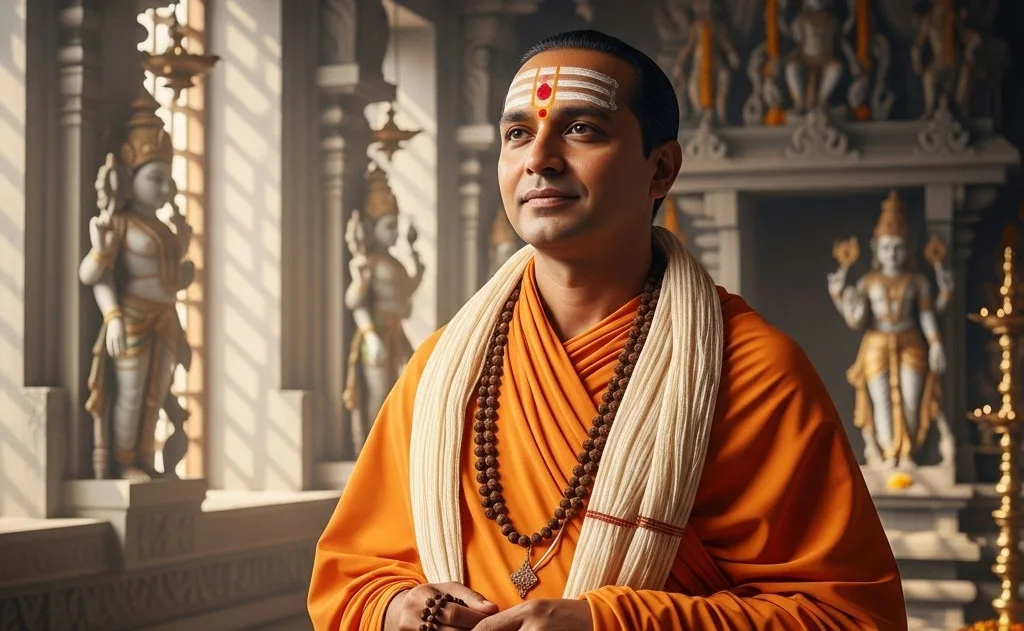
Hindu Wedding Priest in Canada: Booking Guide and Checklist
Your comprehensive guide to securing the perfect pandit for your Vedic marriage ceremony Planning a Hindu wedding in…
A Guest’s Guide to Hindu Wedding Traditions: What to Expect, Wear, and Understand
Attending a Hindu wedding as a non-Hindu guest can be an enriching experience filled with vibrant traditions, colorful…
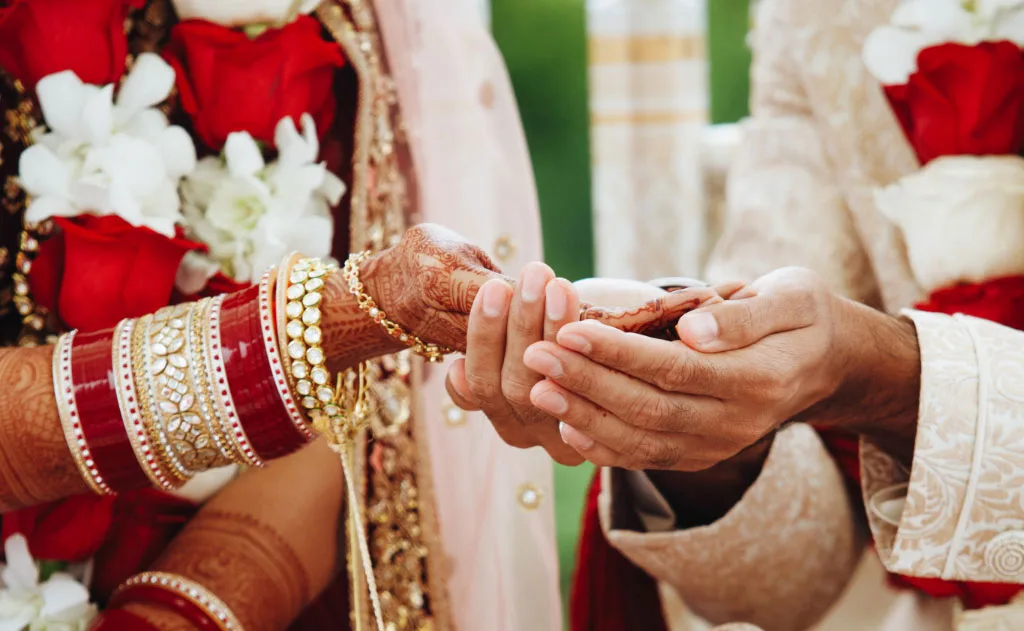
Hindu Wedding Traditions: Rituals, Symbolism, and Regional Diversity
A guide to Hindu wedding rituals and their meaning, from mehendi, haldi and the baraat to the sacred fire, Saptapadi…
FAQs
What are the main rituals of a Hindu wedding?
Rituals vary by community, but common elements include Ganesha puja, kanyadaan where the bride's parents give her hand, tying the mangalsutra, circling the sacred fire, and saptapadi, the seven steps taken together. Each step is accompanied by vows for a shared life.
What is saptapadi in a Hindu wedding?
Saptapadi means seven steps. The bride and groom take seven steps together, often around or near the sacred fire, each linked with a promise such as nourishment, strength, prosperity and lifelong friendship. In many traditions the marriage is considered complete after saptapadi.
How is a wedding muhurtham chosen?
Families usually consult a priest or astrologer, who considers the couple's birth stars, the panchang and auspicious months. Some months, such as Ashadha in many South Indian traditions, are generally avoided. Exact timings are specific to each couple, so they should be fixed with your priest.