7 Lesser-Known Temples Around the World (Excluding India) and the Powerful Legends Behind Them
The world's spiritual heritage extends far beyond India's sacred sites, with hidden temples scattered across continents that echo ancient mysteries through…
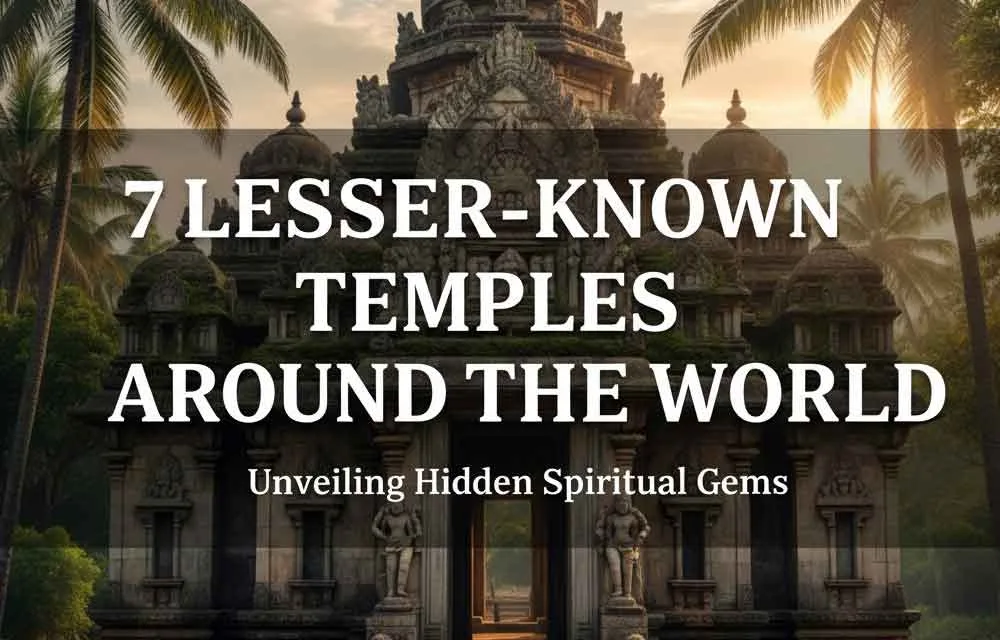
The world's spiritual heritage extends far beyond India's sacred sites, with hidden temples scattered across continents that echo ancient mysteries through…
The world's spiritual heritage extends far beyond India's sacred sites, with hidden temples scattered across continents that echo ancient mysteries through their architecture, rituals, and enduring myths. These off-the-radar wonders, perched on cliffs, nestled in jungles, or etched into mountainsides, invite intrepid explorers to uncover tales of divine intervention, heroic feats, and cosmic forces. From tidal enigmas to eternal flames, each temple weaves history, faith, and the supernatural into a tapestry of global devotion. Here, we explore seven such lesser-known temples, ideal for 2025 travelers seeking profound stories and serene escapes, aligning with searches for "hidden temples around the world" and "lesser-known temples with legends."
1. Pyramid of the Magician, Uxmal, Mexico
Towering 35 meters in the ruined Mayan city of Uxmal in Yucatan, this elliptical step pyramid—also called the House of the Dwarf—blends five construction phases from the 6th to 10th centuries, with ornate facades featuring masks of the rain god Chaac and intricate geometric patterns, set amid lush jungle ruins far from crowded Chichen Itza.
The Legend: According to Mayan folklore, a dwarf hatched from an enchanted egg by a witch built the pyramid overnight using magic to win a challenge from Uxmal's king, proving his worth to rule the city. Variations link the dwarf to the god Itzamna, who erected it in a single night with divine power. This tale symbolizes supernatural ingenuity and the triumph of the underdog, with devotees believing the structure holds mystical energy for fertility and protection against storms.
2. Asamai Temple, Kabul, Afghanistan
Perched on Asamai Mountain in central Kabul, this modest Hindu shrine—rebuilt in 2006—features a perpetual flame and stone idols, including the ascetic 'Punjshir Ka Jogi,' offering a tranquil haven amid rugged peaks, distinct from grander Afghan mosques.
The Legend: Named after Asha, the Goddess of Hope (a form of Durga), the temple houses an Akhand Jyot (eternal flame) burning for over 4,000 years. Lore claims a Hindu ascetic meditating in the Punjshir valley turned to stone after locals disturbed him, becoming a guardian figure. As the abode of Ma Asha, it's said to grant hope and resilience, drawing pilgrims seeking solace in turbulent times, embodying eternal divine presence amid adversity.
3. Wat Tham Suea, Krabi, Thailand
Known as the Tiger Cave Temple, this Buddhist complex in Krabi's tropical forests features a main cave with tiger paw prints, golden Buddha statues, and a grueling 1,237-step climb to a hilltop shrine, surrounded by massive Banyan trees and offering panoramic coastal views, away from Thailand's busier temples.
The Legend: Founded in 1975 by monk Jumnean Seelasettho, who meditated here and witnessed tigers roaming, the temple's name stems from paw prints etched in cave walls—believed to be from a massive tiger that once dwelled there. Archaeological finds of Stone Age tools add layers of ancient mystery, with devotees viewing it as a site of spiritual guardianship, where tiger spirits protect against evil and inspire inner strength.
4. Baalbek Temples, Lebanon
In Lebanon's Bekaa Valley, this vast Roman complex—built over Canaanite foundations—includes the massive Temple of Jupiter with 20-meter columns and the ornate Temple of Bacchus, featuring intricate carvings amid olive groves, overshadowed by more famous sites like Petra.
The Legend: Ancient myths attribute Baalbek's colossal stones—some weighing 1,000 tons—to giants or Nephilim, biblical offspring of divine beings. Linked to the sky god Baal's birthplace, legends claim Cain built it to hide from God or that Solomon enlisted djinns (spirits) for construction. As a "Tower of Babel" remnant, it's seen as a hub of cosmic power, where devotees seek blessings for fertility and protection from chaos.
5. Newgrange, County Meath, Ireland
A 5,200-year-old passage tomb in the Boyne Valley, this massive mound—85 meters wide—features a 19-meter corridor aligned with the winter solstice sunrise, adorned with spiral carvings and surrounded by standing stones, predating Stonehenge and evoking Ireland's prehistoric mysticism.
The Legend: In Celtic mythology, Newgrange (Síd in Broga) was built by the Tuatha Dé Danann god Dagda as his mansion, later claimed by his son Aengus through a clever trick: asking for it "for a day and a night," interpreted as forever. Tales describe it as a portal to the Otherworld, where time stands still—like Dagda halting the sun for Aengus's conception. Pilgrims believe it channels renewal and eternal life, symbolizing cosmic cycles.
6. Preah Vihear Temple, Cambodia
Straddling a 525-meter cliff in the Dângrêk Mountains, this 11th-century Khmer sanctuary dedicated to Shiva features a linear series of pavilions and staircases along an 800-meter axis, with intricate bas-reliefs, offering stunning views over Cambodian plains, less visited than Angkor Wat.
The Legend: Built as a divine abode for Shiva, myths tie it to the Khmer origins: Prince Preah Thong, exiled from India, married Naga princess Neang Neak, birthing the Khmer race. As a Harihara Kshetram blending Shaivite and Vaishnavite worship, it's said to embody cosmic balance, with devotees believing cliffside rituals invoke protection and prosperity, echoing tales of divine mercy and eternal renewal.
7. Temple of Dendur, Egypt (Now in New York)
Originally on the Nile's banks near Aswan, this 15 BCE sandstone shrine—now relocated indoors—honors Isis and deified brothers, with carved reliefs of offerings and a pronaos facade, evoking Nubian resilience amid modern museum settings.
The Legend: Commissioned by Augustus, it's tied to myths of Isis resurrecting Osiris, symbolizing renewal. Local folklore claims touching its "Pregnant Woman" stone grants fertility, while Coptic Christians repurposed it as a church, blending pagan and divine narratives. As a "home for gods," rituals here were believed to sustain the pharaoh's eternal life, drawing seekers of hope and rebirth across eras.
These lesser-known temples around the world aren't just architectural feats; they're living gateways to legends that pulse with timeless power, urging us to step off familiar paths. In 2025, as mindful travel seeks deeper connections, venture to these sites—scale their heights, absorb their stories, and let their myths ignite your spirit. Whether pursuing divine whispers or cultural epiphanies, these hidden gems offer encounters that resonate long after the journey ends.
Frequently Asked Questions
Where is 7 Lesser located?
The world's spiritual heritage extends far beyond India's sacred sites, with hidden temples scattered across continents that echo ancient mysteries through their architecture, rituals, and enduring myths. These off-the-radar wonders, perched on cliffs, nestled in jungles, or etched into mountainsides, invite intrepid explorers to uncover tales of divine inte
Who is the presiding deity of 7 Lesser?
The temple's presiding deity and its significance are described in the guide above.
What are the timings and how do I reach 7 Lesser?
Temples typically open early morning and evening; confirm current darshan timings before visiting. The nearest airport, railway station and road routes are covered in the guide above.
What is the best time to visit 7 Lesser?
Major festival days and the cooler months are popular, though weekday mornings offer a calmer darshan. Plan around the temple's key festivals for the most vibrant experience.
You might also like
Shani Deva Temples Worldwide & Must-Performed Rituals — Complete Devotee's Guide
Shani Jayanti 2026: Date, Significance, Rituals & Powerful Mantras

Sacred Hindu Festivals & Temple News: Divine Week — May 2026