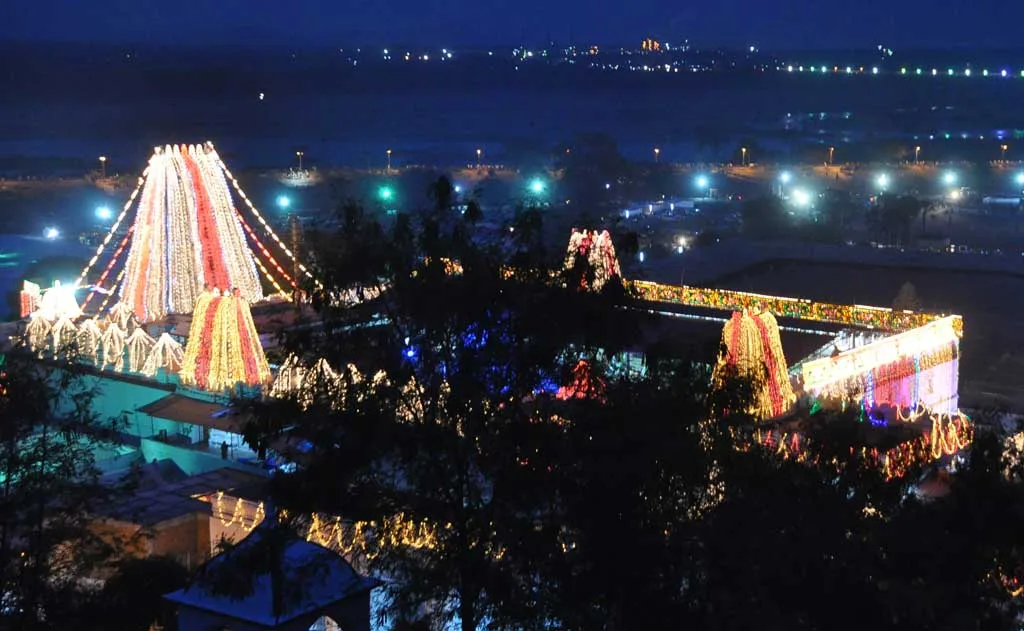
How Vaikuntha Ekadashi Became a Temple Festival: Historical Evolution
How Vaikuntha Ekadashi Became a Temple Festival: Historical Evolution From Household Vrata to Grand Temple Event – The Bhakti Movement’s Sacred Legacy…

Update (October 2026): Vaikuntha Ekadashi 2026 falls on Sunday, 20 December (Saturday, 19 December for Smarta households in the USA and Canada). This article describes an earlier observance — for current dates and guidance, see our Vaikuntha Ekadashi 2026 guide.
How Vaikuntha Ekadashi Became a Temple Festival: Historical Evolution
From Household Vrata to Grand Temple Event – The Bhakti Movement’s Sacred Legacy
Introduction: How Vaikuntha Ekadashi Became a Temple Festival
How Vaikuntha Ekadashi Became a Temple Festival is not just a question of ritual history — it is the story of how personal devotion transformed into collective spiritual celebration. In the final weeks of 2025, as major Vishnu temples across India and the USA announced extended darshan hours and crowd protocols right before Christmas 2025, one truth became unmistakably clear: Vaikuntha Ekadashi today is a temple-centered civilizational event, not merely a private vow.
Yet this was not always the case.
In its earliest form, Vaikuntha Ekadashi was observed primarily as a household vrata, practiced quietly by devoted families seeking Vishnu’s grace. Over centuries, through Bhakti movement influence, temple institutionalization, royal patronage, and mass devotional culture, it evolved into one of Hinduism’s grandest annual temple festivals.
This in-depth article traces how Vaikuntha Ekadashi became a temple festival, blending history, Bhakti philosophy, temple records, and living tradition — curated specifically for Hindutone’s culturally rooted audience.
1. Vaikuntha Ekadashi in Early Hindu Practice: A Household Vrata
1.1 Ekadashi in Vedic & Puranic Foundations
In early Hindu religious life, Ekadashi was primarily a domestic spiritual discipline.
- Families observed fasting at home
- Vishnu was worshipped through mantras, tulasi, and vrata katha
- There were no large congregations or temple processions
Scriptures such as the Padma Purana, Skanda Purana, and Vishnu Purana describe Ekadashi as a personal vow (vrata) focused on:
- Self-control
- Inner purification
- Liberation (moksha)
At this stage, Vaikuntha Ekadashi temple celebrations did not exist as we know them today.
1.2 Why Household Vrata Was Central in Ancient Times
Ancient Hindu society was:
- Village-centered
- Agrarian
- Family-based
Spiritual practices were woven into daily household rhythms rather than public spectacle. Ekadashi fasting aligned perfectly with:
- Lunar cycles
- Digestive rest
- Domestic worship
Thus, for centuries, Vaikuntha Ekadashi remained a sacred but quiet observance, especially among Vaishnava households.
2. The Turning Point: Rise of Temple Culture in Early Medieval India
2.1 Temple as a Social & Spiritual Institution
Between 6th and 12th centuries CE, Hindu temples transformed dramatically.
They became:
- Economic centers
- Cultural hubs
- Spiritual anchors for entire regions
Kings, dynasties, and merchant guilds began sponsoring:
- Daily rituals
- Annual festivals
- Community feeding (annadanam)
This institutional growth laid the groundwork for turning household vratas into temple festivals.
2.2 Early Inscriptions Hinting at Ekadashi Observances
Temple inscriptions from the Pallava, Chola, and Kakatiya periods mention:
- Ekadashi lamp offerings
- Grants for Vishnu worship on specific lunar days
- Night vigils and chanting
Though the term “Vaikuntha Ekadashi festival” was not yet formalized, Ekadashi was clearly entering temple ritual calendars.
This marks the first historical shift in how Vaikuntha Ekadashi became a temple festival.
3. Bhakti Movement Influence: The Greatest Catalyst
3.1 Alwars & the Emotionalization of Vaishnavism
The Bhakti movement, especially in South India, radically transformed Hindu worship.
Vaishnava saints like:
- Nammalwar
- Andal
- Thirumangai Alwar
shifted devotion from ritual correctness to emotional surrender.
Their hymns:
- Were sung publicly
- Celebrated Vishnu’s grace
- Encouraged collective worship
This made temples the natural gathering space for devotion.
3.2 From Private Vrata to Collective Bhakti
Under Bhakti influence:
- Ekadashi fasting became communal
- Singing replaced silent recitation
- Night vigils (jagaran) moved into temple halls
Vaikuntha Ekadashi, associated with moksha, became ideal for:
- Large congregations
- Mass chanting
- Symbolic rituals like opening sacred gates
This period is crucial in understanding how Vaikuntha Ekadashi became a temple festival.
4. The Invention of Sacred Temple Rituals
4.1 Paramapada Vasal & Vaikuntha Dwar
One of the most defining developments was the creation of physical symbols:
- Paramapada Vasal at Srirangam
- Vaikuntha Dwar at Tirumala
These gates:
- Represented entry into Vaikuntha
- Could only be opened within temple architecture
- Required organized crowd participation
Such rituals cannot exist in household worship — they necessitate temples.
4.2 Temple Architecture Enables Festival Scale
Dravidian temple design allowed:
- Processional corridors
- Massive gopurams
- Crowd movement systems
This architectural evolution directly supported Vaikuntha Ekadashi temple celebrations, making them annual highlights.
5. Royal Patronage & State Support
5.1 Chola, Vijayanagara & Nayaka Contributions
Royal dynasties:
- Funded Ekadashi festivals
- Donated lands for temple upkeep
- Institutionalized annual calendars
Inscriptions record:
- Food distribution on Ekadashi
- Lamp lighting through the night
- Music and recitation sponsorships
This formal backing elevated Vaikuntha Ekadashi from religious observance to public event.
5.2 Temple as State-Supported Spiritual Space
By the late medieval period:
- Vaikuntha Ekadashi was no longer optional
- It became a temple identity marker
- Regional prestige was tied to festival grandeur
This sealed its transformation.
6. Vaikuntha Ekadashi in Colonial & Modern Periods
6.1 Colonial Disruption & Revival
During colonial rule:
- Temple funding declined
- Festivals became subdued
However, Bhakti resilience kept Vaikuntha Ekadashi alive.
Post-independence:
- Temple boards revived festivals
- Crowd management systems emerged
- Pilgrimage networks expanded
6.2 Vaikuntha Ekadashi in the Final Weeks of 2025
Just weeks ago, in December 2025:
- Tirumala announced extended Vaikuntha Dwar darshan slots
- Srirangam released detailed crowd advisories
- US temples scheduled overnight vigils
This confirms that Vaikuntha Ekadashi has fully matured into a global temple festival.
7. India State-Wise Vaikuntha Ekadashi Temple Guide
Andhra Pradesh
- Tirumala Tirupati
- Simhachalam
- Srikurmam
Telangana
- Bhadrachalam
- Yadadri
- Chilkur Balaji
(Internal link suggestion: Hindutone – Telangana Temple Heritage Series)
Tamil Nadu
- Srirangam (Paramapada Vasal)
- Kanchipuram Divya Desams
- Srivilliputhur
Karnataka
- Udupi Krishna Matha
- Melkote
Kerala
- Padmanabhaswamy
- Guruvayur
8. USA Vaikuntha Ekadashi Temple Evolution
Vaikuntha Ekadashi in the USA mirrors early India:
- Started as household vrata
- Shifted to temple observance
Major centers now include:
- New Jersey Venkateswara Temple
- Pomona Ranganatha Temple
- Atlanta Hindu Temple
- ISKCON Dallas & California
In late 2025, many announced dress codes and fasting guidelines, signaling maturity of tradition.
9. Why Vaikuntha Ekadashi Had to Become a Temple Festival
Spiritually:
- Moksha is collective aspiration
Psychologically:
- Shared devotion strengthens faith
Culturally:
- Festivals preserve memory
Architecturally:
- Temples enable symbolism
Vaikuntha Ekadashi naturally evolved where community, devotion, and space met.
FAQs: People Also Ask
1. How did Vaikuntha Ekadashi start originally?
As a household fasting vrata focused on Vishnu devotion.
2. When did Vaikuntha Ekadashi become a temple festival?
Between 8th–12th centuries during Bhakti movement expansion.
3. Why is Srirangam important for Vaikuntha Ekadashi?
Because of the Paramapada Vasal tradition.
4. Did Bhakti movement influence temple festivals?
Yes, it transformed private devotion into public worship.
5. Is Vaikuntha Ekadashi observed outside India?
Yes, especially in USA temples since the late 20th century.
6. Are temple rituals mandatory on Vaikuntha Ekadashi?
Not mandatory, but spiritually emphasized.
7. Why are gates opened only once a year?
To symbolize liberation and sacred exclusivity.
8. Was royal patronage important for Ekadashi festivals?
Yes, it institutionalized and expanded them.
Conclusion: From Home to Temple, From Individual to Civilization
How Vaikuntha Ekadashi Became a Temple Festival is ultimately the story of Hinduism itself — adaptive, collective, and deeply spiritual.
What began as a silent vow at home became:
- A mass prayer
- A civilizational rhythm
- A living tradition
As we stand at the end of 2025, witnessing millions walk through Vaikuntha Dwar worldwide, one truth remains:
When devotion grows beyond the heart,
it builds temples.
Hari Om Namo Narayanaya [image: 🙏]
For More Devotional Journey, Follow
- Temples
/temples/ - Tirumala Updates
/tirumala/ - Sabarimala Yatra
/category/sabarimala-yatra/ - Pooja, Slokas & Mantras
/pooja-slokas-and-mantras/ - Hindu Gods
/hindu-gods/
Frequently Asked Questions
Where is How Vaikuntha Ekadashi Became a Temple Festival located?
How Vaikuntha Ekadashi Became a Temple Festival: Historical Evolution From Household Vrata to Grand Temple Event – The Bhakti Movement’s Sacred Legacy Introduction: How Vaikuntha Ekadashi Became a Temple Festival How Vaikuntha Ekadashi Became a Temple Festival is not just a question of ritual history — it is the story of how personal devotion transformed int
Who is the presiding deity of How Vaikuntha Ekadashi Became a Temple Festival?
The temple's presiding deity and its significance are described in the guide above.
What are the timings and how do I reach How Vaikuntha Ekadashi Became a Temple Festival?
Temples typically open early morning and evening; confirm current darshan timings before visiting. The nearest airport, railway station and road routes are covered in the guide above.
What is the best time to visit How Vaikuntha Ekadashi Became a Temple Festival?
Major festival days and the cooler months are popular, though weekday mornings offer a calmer darshan. Plan around the temple's key festivals for the most vibrant experience.
Share this with family and friends
Send it on WhatsApp, post it, or copy the link.
More from Temples
- Famous Temples in Uttarakhand: A Source-Checked Guide to Kedarnath, Badrinath, Tungnath, Haridwar, Almora and More
- Famous Temples in Odisha: A Source-Checked Guide to Puri, Bhubaneswar, Biraja, Tara Tarini and Western Odisha
- Famous Temples in West Bengal: A Source-Checked Guide to Kalighat, Dakshineswar, Tarapith, Bansberia, Bishnupur and More
- Famous Temples in Uttar Pradesh: A Source-Checked Guide to Kashi, Ayodhya, Mathura-Vrindavan, Gorakhpur and Kanpur
- Famous Temples in Gujarat: A Source-Checked Guide to Somnath, Dwarka, Dakor, Ambaji, Modhera and More