Shiva Temple, Bavka
Shiva temple · Bavka, Dahod, Gujarat, India
The Shiva Temple at Bavka is a ruined sandstone temple on a knoll near Hirlav lake, between Bavka and Chandavada villages in Dahod district, Gujarat. The Dahod district website places Bavka about 14 km from Dahod railway station and bus station. Wikipedia calls it a Monument of National Importance (N-GJ-77) listed by the Archaeological Survey of India.
It is sometimes called the 'Khajuraho of Gujarat' because of its richly carved outer walls, which include erotic sculptures alongside deities and apsaras.
Faith & Tradition
Religious Significance of Shiva Temple, Bavka
Wikipedia describes the temple as a fine example of Maru-Gurjara architecture and the best of its period. The Dahod district site notes that the walls and pillars carry striking sculpture, including erotic figures, and that the outer walls and doors are finely carved with images of celestial beings.
The temple is a heritage monument rather than an active centre of worship; the sources consulted do not describe regular worship. Its importance lies in its sculpture and as a surviving piece of Chaulukya-era temple architecture in eastern Gujarat.
Heritage
History of Shiva Temple, Bavka
Wikipedia dates the temple to about the 12th to 13th century and links it to the reign of Bhima II, the last Chaulukya ruler (c. 1178 to 1240 CE), citing M. A. Dhaky. Dhaky placed it after the Nilkantha Mahadeva temple at Miani (Vikrama Samvat 1260, about 1204 CE), and an inscription dated VS 1290 (1234 CE) is also cited.
The dating is not settled across sources. The Dahod district website says the temple dates to roughly the 10th century, which conflicts with Wikipedia's 12th to 13th century range. This page follows the scholarly dating that Wikipedia reports and flags the difference.
A local legend, recorded by Wikipedia, says a temple dancer (devdasi) built the temple in a single night. It is a story, not established history. Wikipedia also notes that the temple was neglected for years and several artefacts were stolen, and says the ASI restored it in 2009, citing a June 2009 Indian Express report on the work.
Architecture and sacred features
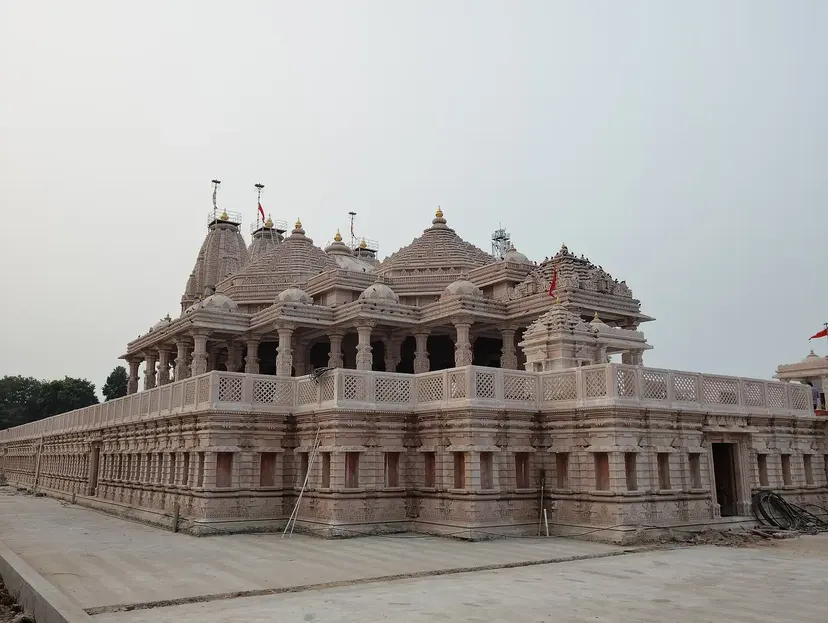
Wikipedia describes an east-facing panchayatana complex: one central temple with four subsidiary shrines in the cardinal directions, built of sandstone on a plinth (jagati). It resembles the temple at Sunak but is larger.
Today the roof is destroyed and the hall (rangamandapa) is ruined, with fragments of the collapsed spire and hall lying nearby. Dhaky's dating draws on comparisons: the lattice (jalaka) work and the curve of the small spire elements resemble Miani. The hall's dwarf pillars are simple.
The outer walls and sanctum doorway are covered with figures of deities and apsaras, most about 64 by 95 by 36 cm according to Wikipedia. The article lists views of the sanctum entrance, the front and rear, the foundation of a former shrine, and elephant sculptures.
Plan Your Visit
Darshan and Visitor Information
This is an ASI-protected ruin: do not climb on or touch the fragile carvings, and follow ASI rules. The sources consulted do not give opening hours or ticket information, so confirm with the ASI Vadodara Circle or the Dahod district office before visiting.
Timings and arrangements change with seasons and festivals. Confirm current details with Archaeological Survey of India before travelling. Last reviewed 1 November 2026.
Location
How to Reach Shiva Temple, Bavka
The temple lies about 14 km from Dahod, which has the nearest railway and bus stations, according to the Dahod district website. The same page gives about 160 km from Vadodara Airport. The sources consulted give no local transport details.
Location: Bavka, Dahod, Gujarat, India
Nearest airport: Vadodara (about 160 km, per Dahod district site)
Nearest railway station: Dahod (about 14 km)
More in Hindu temples in Gujarat · Shiva temples
Questions
Shiva Temple, Bavka: Frequently Asked Questions
Where is the Bavka Shiva Temple?
On a knoll near Hirlav lake at Bavka village, about 14 km from Dahod in Dahod district, Gujarat.
Why is it called the Khajuraho of Gujarat?
Because its outer walls carry rich sculpture including erotic figures, a comparison noted by Wikipedia.
How old is the temple?
Wikipedia dates it to about the 12th to 13th century, in the time of the Chaulukya ruler Bhima II. The Dahod district website says roughly the 10th century, so sources differ.
What architectural style is it?
Maru-Gurjara, laid out as an east-facing panchayatana complex with a central temple and four subsidiary shrines.
Is the temple intact?
No. The roof is destroyed and the hall is ruined, though the ASI restored the site in 2009 according to Wikipedia.
Is the legend of a one-night construction true?
It is a local legend about a temple dancer and is not established history.
Sources and attribution
Further reading: Shiva Temple, Bavka on Wikipedia (CC BY-SA 4.0).
Spotted an error? Write to info@hindutone.com — see our editorial policy.