
Kakanmath Temple, Sihoniya
Shiva temple · Sihoniya (Sihonia/Suhania), Morena, Madhya Pradesh, India
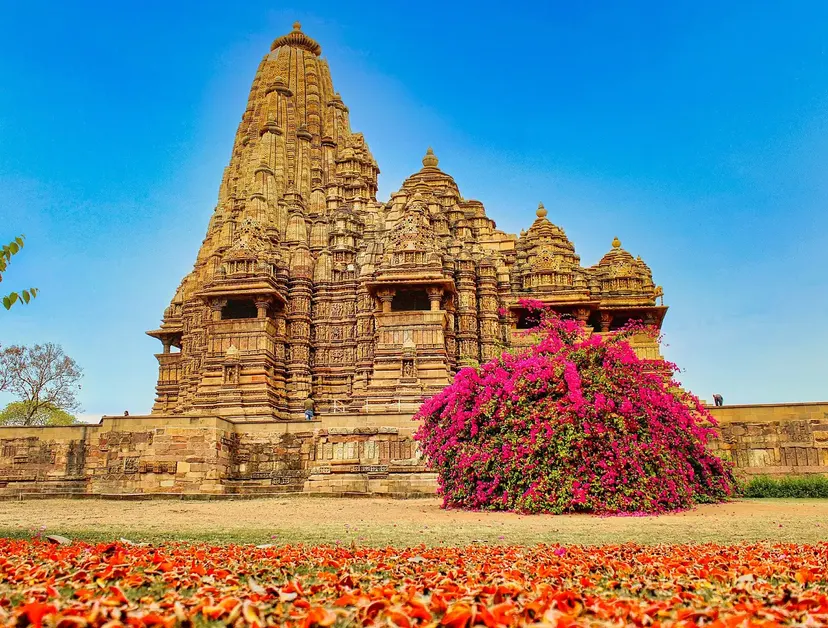
Kakanmath is the ruin of a large Shiva temple at Sihoniya (also spelled Sihonia or Suhania) in Morena district, in the Chambal region of north Madhya Pradesh. It was built in the 11th century by Kirttiraja, a ruler of the Kachchhapaghata dynasty, which governed the Gwalior region at the time.
Only the central shrine of what was once a larger temple complex still stands, and much of its outer wall and spire has fallen. Even so, its surviving tower rises about 30 m. The temple is protected by the Archaeological Survey of India (ASI) as a Monument of National Importance.
Faith & Tradition
Religious Significance of Kakanmath Temple, Sihoniya
Kakanmath was built for Shiva. According to Wikipedia, a Kachchhapaghata inscription at the Sas-Bahu temple in Gwalior states that Kirttiraja built a remarkable temple to the lord of Parvati at Simhapaniya, the old name of Sihoniya, and this is taken to be Kakanmath. MP Tourism calls it one of the few surviving monuments of the Kachchhapaghata dynasty.
The temple is noted for its dry masonry. Madhya Pradesh Tourism and the Chambal Division administration both state that it was built without mortar, its carved stone blocks held together by their own weight and fit. Local tradition, recorded by MP Tourism, tells that the temple was raised in a single night by supernatural beings. This is a legend, not a historical account.
Heritage
History of Kakanmath Temple, Sihoniya
Kirttiraja ruled about 1015–1035 CE, which places the temple in the early 11th century. The origin of the name is uncertain. A folk story connects it with a queen named Kakanavati or Kakanade, and MP Tourism and the Chambal Division page repeat a version in which the king built the temple at his queen's wish. Wikipedia notes that the historicity of this story is doubtful and that the name may instead come from kanak (gold) and math (shrine).
The site was originally a complex of a central temple with four subsidiary shrines at the corners. Only the main temple survives, and it has lost its outer walls, its balconies and part of its spire, damage that Wikipedia suggests was probably caused by an earthquake. Two later inscriptions on its pillars record its continued use. One, dated 1393–94 CE, records a renovation of the Mahadeva temple by one Durgaprasada. The other, of 1440–41 CE, records a pilgrim's visit during the reign of the Tomara ruler Dungara of Gwalior.
Many of the temple's sculptures have been taken to Gwalior for safe keeping. These include the two large lions that once flanked the entrance steps, which now stand at the entrance of the Archaeological Museum, Gwalior.
Architecture and sacred features
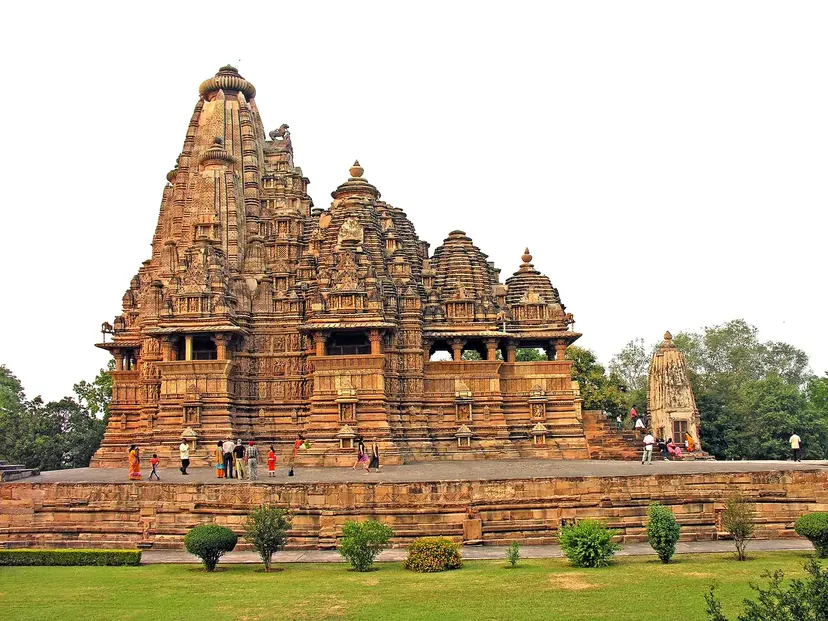
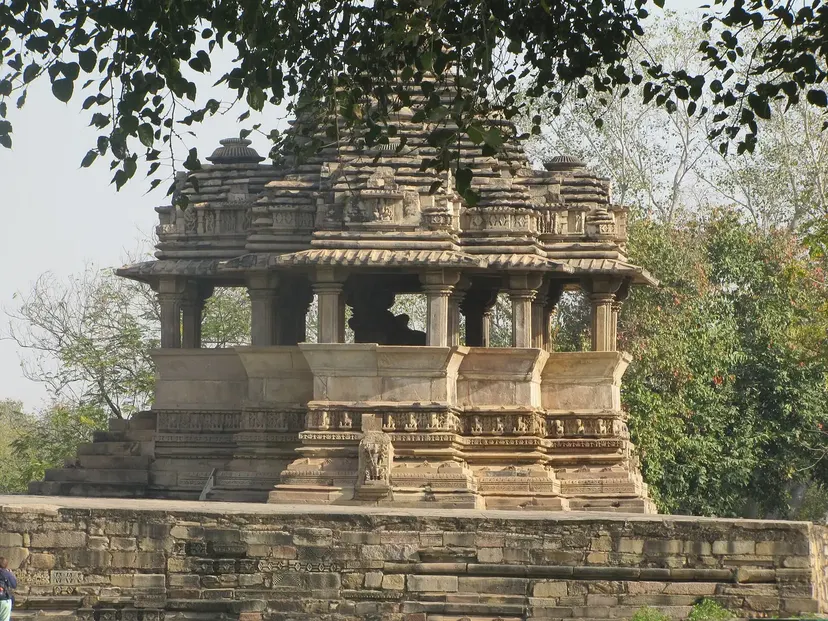
The temple stands on an ornate base (pitha) and faces east. It is laid out as a sanctum with a passage for circumambulation, a vestibule (antarala), a closed hall (gudha-mandapa) and an entrance porch (mukha-mandapa) reached by steps. The closed hall has side transepts and four clusters of four pillars each. The four vestibule pillars line up with them. MP Tourism notes that the sanctum doorway is carved in seven bands with deities and celestial couples.
The spire (shikhara) over the sanctum is described by the Chambal Division page as being in the Khajuraho style. Wikipedia and MP Tourism give its present height as about 30 m, while the Chambal Division page gives 35 m. Much of its original carved surface is now missing, according to MP Tourism.
Plan Your Visit
Darshan and Visitor Information
Kakanmath is a ruined, ASI-protected monument with loose and fallen stones. Stay on paths, do not climb the structure, and keep children close. Carry water and sun protection. Confirm current visiting hours and any entry arrangements with the Archaeological Survey of India before travelling.
Timings and arrangements change with seasons and festivals. Confirm current details with Archaeological Survey of India before travelling. Last reviewed 1 November 2026.
Location
How to Reach Kakanmath Temple, Sihoniya
MP Tourism places the temple at Sihoniya village, about 30 km from Morena and about 70 km from Gwalior. Morena has a railway station; from Gwalior the usual route is along NH44 to Morena and then on the Morena–Sihoniya road.
The Chambal Division page says the temple stands a short distance (about 3 km) from Sihoniya. Taxis can be hired at Morena or Gwalior; confirm local road conditions before travelling.
Location: Sihoniya (Sihonia/Suhania), Morena, Madhya Pradesh, India
Nearest railway station: Morena (about 30 km, per MP Tourism)
More in Hindu temples in Madhya Pradesh · Shiva temples
Questions
Kakanmath Temple, Sihoniya: Frequently Asked Questions
Who built Kakanmath temple?
The Kachchhapaghata ruler Kirttiraja, who reigned about 1015–1035 CE. An inscription at the Sas-Bahu temple in Gwalior records that he built a great Shiva temple at Simhapaniya, the old name of Sihoniya.
Why is it called Kakanmath?
The origin is uncertain. A folk story links it to a queen named Kakanavati, but its historicity is doubted. Another explanation derives it from kanak (gold) and math (shrine).
Was Kakanmath built without mortar?
Yes. MP Tourism and the Chambal Division administration say the stone blocks were fitted together without mortar.
How tall is Kakanmath temple?
Its surviving spire is about 30 m high according to MP Tourism and Wikipedia; the Chambal Division page gives 35 m.
Why is the temple in ruins?
Its outer walls, balconies and part of the spire have fallen, probably in an earthquake. Inscriptions record a renovation in 1393–94 CE.
How far is Kakanmath from Gwalior?
About 70 km by road, according to MP Tourism. It is about 30 km from Morena.
Sources and attribution
- Wikipedia — Kakanmath
- Madhya Pradesh Tourism Board — Kakanmath Temple, Morena
- Chambal Division, Government of Madhya Pradesh — Kakanmath / Sihoniya
- Wikipedia — List of Monuments of National Importance in Madhya Pradesh/West (from the ASI list)
Further reading: Kakanmath Temple, Sihoniya on Wikipedia (CC BY-SA 4.0).
Spotted an error? Write to info@hindutone.com — see our editorial policy.
Pilgrim Circuit