Lalguan Mahadeva Temple
Shiva (as Mahadeva) temple · Khajuraho, Chhatarpur, Madhya Pradesh, India
The Lalguan Mahadeva Temple is a small, ruined Shiva temple in Khajuraho, in Chhatarpur district of Madhya Pradesh. The Archaeological Survey of India (ASI) places it about 603 metres west of the Chausath Yogini Temple, on the bank of an old lake known as Lalguan Sagar, from which the temple takes its name.
The ASI dates the temple to about 900 CE, which makes it one of the earliest surviving buildings at Khajuraho; Wikipedia describes it as the second-oldest surviving temple there, after the Chausath Yogini. It is a protected Monument of National Importance and forms part of the Khajuraho Group of Monuments, which UNESCO inscribed on the World Heritage List in 1986.
Faith & Tradition
Religious Significance of Lalguan Mahadeva Temple
The temple matters mainly for what it shows about how Khajuraho's temple building developed. According to the ASI, it belongs to a transitional phase when sandstone, the stone used for the later and better-known Khajuraho temples, was being introduced but granite had not yet gone out of use. Wikipedia makes the same point, so Lalguan Mahadeva stands at the start of the sandstone tradition for which Khajuraho is famous.
Wikipedia records the temple as a Shaiva shrine dedicated to Shiva. The sources consulted describe the building only as a monument and do not say whether regular worship continues there today; visitors should treat it as a protected archaeological site.
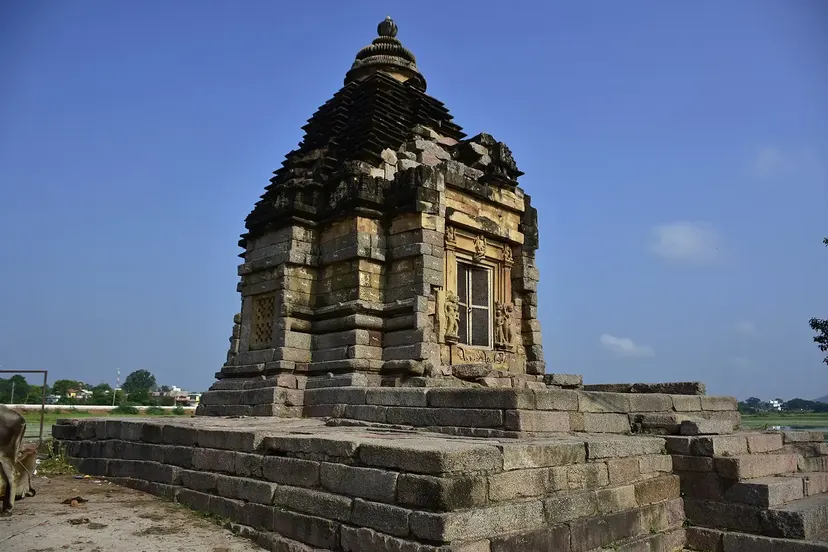
Compared with the later temples of Khajuraho, Lalguan Mahadeva is small and plain, as both the ASI and Wikipedia note. That plainness is itself useful to students of architecture, because it shows the simpler form that Khajuraho temples took before the elaborate sculptural programmes of the later Chandela period.
Heritage
History of Lalguan Mahadeva Temple
The ASI describes the temple as slightly later than the Chausath Yogini Temple and datable to around 900 CE. The scholar Rana P. B. Singh, cited by Wikipedia, gives the same approximate date for its construction. Khajuraho's temples as a whole were built under the Chandela rulers; Wikipedia gives a span of roughly 885 to 1000 CE for most of the surviving temples, and records that of about 85 temples standing by the 12th century, around 25 survive today.
The temple was brought under central protection by government notifications of 1952 and 1953, which the ASI lists on its monument page. It is included in the ASI's list of Monuments of National Importance in Madhya Pradesh and, as part of the Khajuraho Group of Monuments, in the UNESCO World Heritage inscription of 1986.
Architecture and sacred features
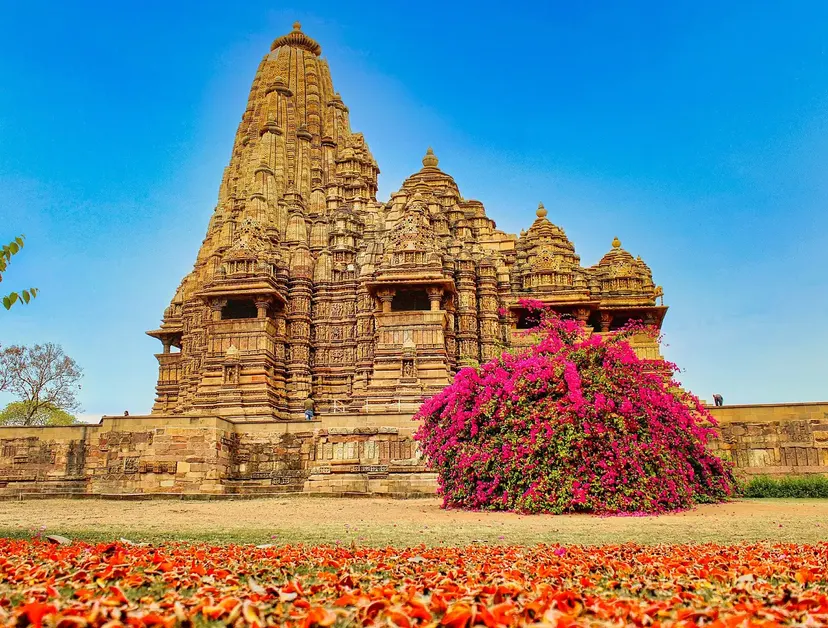
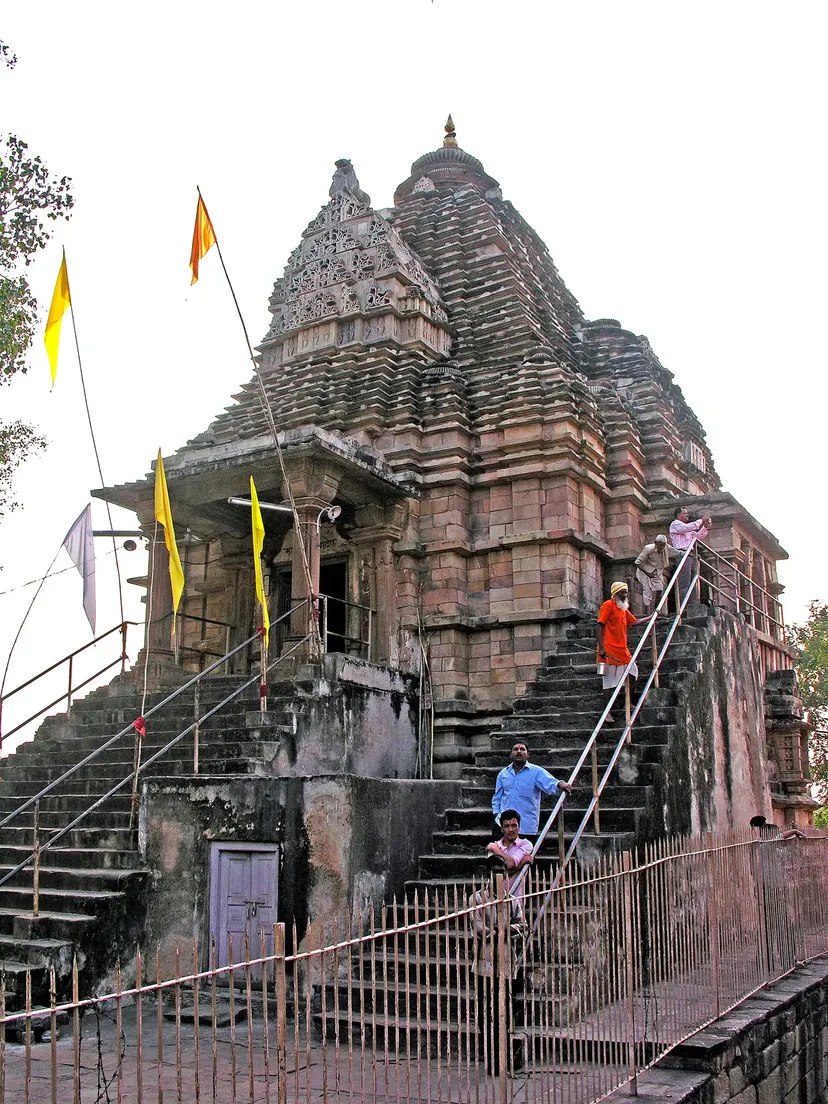
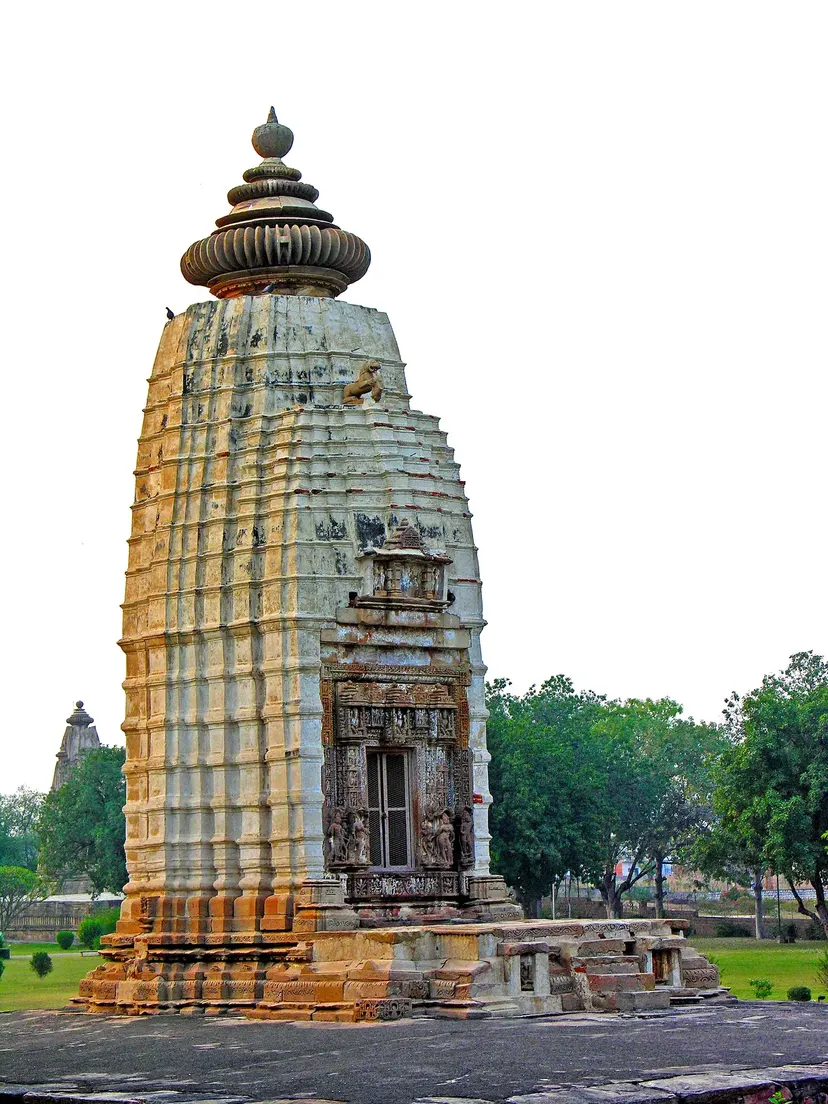
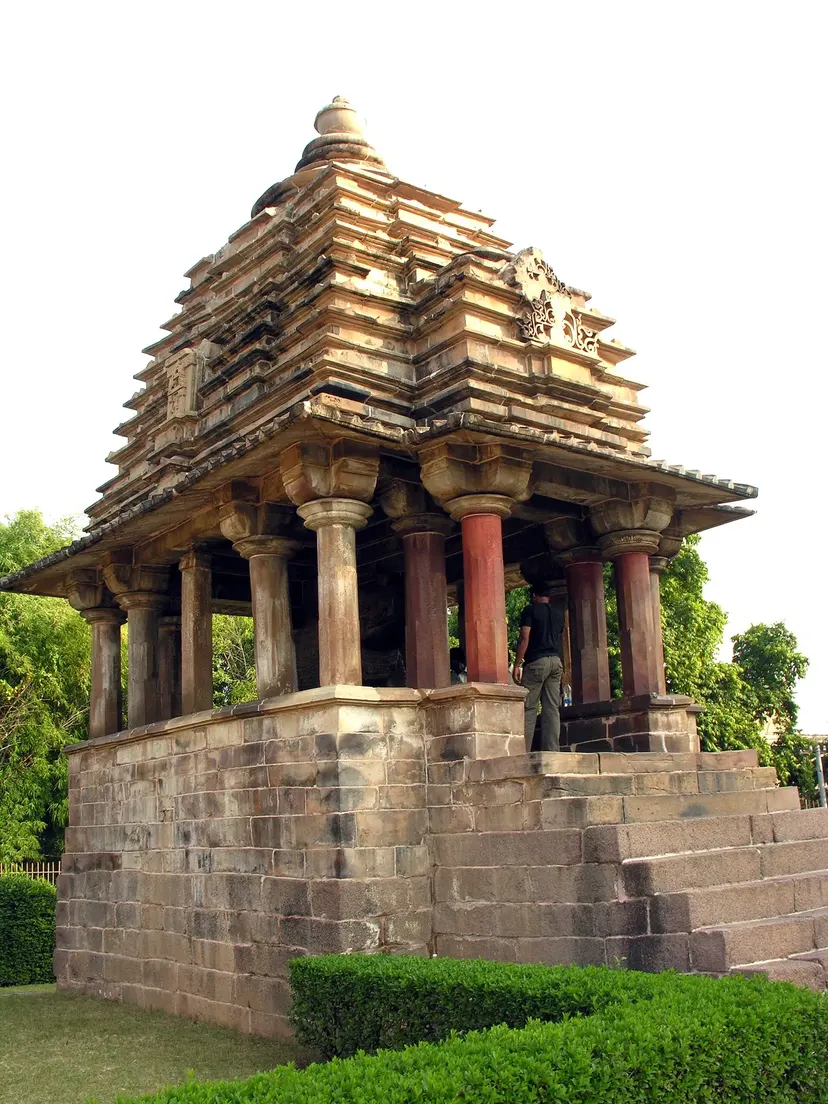
According to the ASI, Lalguan Mahadeva is a structure of modest size and design, roofed by a dilapidated pyramidal superstructure built up of receding tiers (pidhas). Its entrance porch has completely disappeared, and the doorway is plain apart from a diamond motif carved on the door sill. The ASI notes that the temple shares its plan and design with the Brahma Temple at Khajuraho.
Wikipedia adds that the tower over the sanctum has fallen, leaving the building in ruins. Wikipedia describes the main material as granite, with sandstone used alongside it, matching the ASI's account of a temple built when the two stones overlapped.
Plan Your Visit
Darshan and Visitor Information
Lalguan Mahadeva is a centrally protected monument in a ruined state, so do not climb on the structure, remove stones or deface any surface, and follow ASI notices at the site. Confirm current access arrangements with the Archaeological Survey of India before visiting.
Timings and arrangements change with seasons and festivals. Confirm current details with Archaeological Survey of India (protected monument) before travelling. Last reviewed 1 November 2026.
Location
How to Reach Lalguan Mahadeva Temple
The temple lies about 603 metres west of the Chausath Yogini Temple in Khajuraho, according to the ASI, and the ASI gives Khajuraho as the approach by air, bus and train. Wikipedia records that Khajuraho has its own airport (Civil Aerodrome Khajuraho) and that the railway station is about 6 km from the entrance to the monuments.
Because it lies a short distance from the Chausath Yogini Temple, visitors usually see the two together. Ask locally for the path to the temple.
Location: Khajuraho, Chhatarpur, Madhya Pradesh, India
Nearest airport: Khajuraho (Civil Aerodrome Khajuraho)
Nearest railway station: Khajuraho (about 6 km from the monuments' entrance, per Wikipedia)
More in Hindu temples in Madhya Pradesh · Shiva (as Mahadeva) temples · Temples in Khajuraho · Temples in Rajnagar Tehsil · Temples in Chhatarpur District
Questions
Lalguan Mahadeva Temple: Frequently Asked Questions
How old is the Lalguan Mahadeva Temple?
The Archaeological Survey of India dates it to about 900 CE. It is slightly later than the Chausath Yogini Temple and is described as the second-oldest surviving temple at Khajuraho.
Which deity is the Lalguan Mahadeva Temple dedicated to?
It is a Shiva temple, as its name Mahadeva indicates. The sources consulted do not say whether regular worship continues; it is now a protected ruin.
Why is the temple called Lalguan?
It stands on the bank of an old lake known as Lalguan Sagar, according to the ASI, and takes its name from it.
What material is the Lalguan Mahadeva Temple made of?
Mainly granite, with some sandstone. The ASI places it in a transitional phase when sandstone was being introduced at Khajuraho but granite was still in use.
Is the Lalguan Mahadeva Temple part of the UNESCO World Heritage Site?
Yes. It is one of the Khajuraho Group of Monuments, inscribed on the UNESCO World Heritage List in 1986, and is protected by the ASI as a Monument of National Importance.
Where is the Lalguan Mahadeva Temple in Khajuraho?
About 603 metres west of the Chausath Yogini Temple, according to the ASI.
Sources and attribution
- Archaeological Survey of India, Bhopal Circle — Lalguan Mahadeva Temple (monument page, archived)
- Wikipedia — Lalguan Mahadeva Temple
- Wikipedia — Khajuraho Group of Monuments
Further reading: Lalguan Mahadeva Temple on Wikipedia (CC BY-SA 4.0).
Spotted an error? Write to info@hindutone.com — see our editorial policy.