Shri Vaijnath Jyotirlinga Temple, Parli Vaijnath
Shiva (as Vaidyanath / Vaijnath) temple · Parli Vaijnath, Beed, Maharashtra, India
Shri Vaijnath Temple stands in the town of Parli Vaijnath in Beed district, Marathwada, Maharashtra. Shiva is worshipped here as Vaidyanath (Vaijnath), a name usually explained as 'Lord of Physicians'. The temple trust describes the site as lying on the slope of Meru Parvat, also called Nag Narayan hill, at the foot of the Balaghat range, and notes that the town has also been known as Vaijayanti and Jayantikshetra.
Devotees in Maharashtra regard Parli as the home of the Vaidyanath Jyotirlinga, one of the twelve Jyotirlingas of Shiva, while the Baidyanath temple at Deoghar in Jharkhand makes the same claim. The temple is managed by the Shree Vaijnath Devasthan Trust and draws its largest crowds during Mahashivratri and the month of Shravan.
Faith & Tradition
Religious Significance of Shri Vaijnath Jyotirlinga Temple, Parli Vaijnath
The claim to Jyotirlinga status rests largely on tradition and scripture. The Dvadasa Jyotirlinga verse recited by pilgrims names 'Vaidyanatha at Parali', and the temple trust quotes this verse on its home page. Wikipedia's article on the Vaidyanath Jyotirlinga, however, notes that three temples, at Deoghar (Jharkhand), Parli (Maharashtra) and Baijnath (Himachal Pradesh), each claim the title, that the Government of India has not designated any one of them, and that none of the three has given up its claim. Wikipedia's article on the Parli temple groups it with the other Jyotirlinga temples of Maharashtra (Bhimashankar, Trimbakeshwar, Grishneshwar and Aundha Nagnath), while the table in its main Jyotirlinga article places Baidyanath at Deoghar.
According to a legend summarised by Maharashtra Tourism and by Incredible India, the demon king Ravana obtained a Jyotirlinga from Shiva and was carrying it to Lanka when he was tricked into setting it down, after which it could not be moved. Maharashtra Tourism adds that the linga here is of black stone and that, unusually, devotees are allowed to touch it during worship; the trust's daily schedule likewise refers to 'touch darshan' of the main linga.
The temple trust presents Parli as a place where Hari (Vishnu) and Hara (Shiva) meet, and so both Shiva and Krishna festivals are observed. Maharashtra Tourism links this to the practice of offering tulsi leaves to Shiva and bilva leaves to Vishnu. The trust also lists sacred tanks and sites around the town tied to local tradition, including Harihar Tirtha, where Shiva and Vishnu are believed to have embraced; Markandeya Tirtha, connected with the sage Markandeya, who devotees believe received a long life here; and Chakra Tirtha, where Vishnu is said to have regained his Sudarshana discus. Wikipedia's article on the town also records a local belief that Savitri won back the life of her husband Satyavan from Yama near the Narayan hill.
Heritage
History of Shri Vaijnath Jyotirlinga Temple, Parli Vaijnath
The early history of the temple is not well documented in the sources available. Maharashtra Tourism says the temple is believed to date from the Yadava period, around the 12th to 13th century, and that it was later renovated in the 18th century by the Maratha queen Ahilyabai Holkar.
In recent years the Jyotirlinga question has occasionally become a matter of public disagreement. Wikipedia records that when priests from the Parli temple were invited to a gathering of priests from all twelve Jyotirlingas organised with the Mahakaleshwar temple management in Madhya Pradesh, the priests of Deoghar objected and registered a protest. Today the temple is run by the Shree Vaijnath Devasthan Trust, whose site lists facilities such as a pilgrims' lodge (Bhakt Niwas), drinking water, a locker room, parking and free meals for pilgrims.
Architecture and sacred features
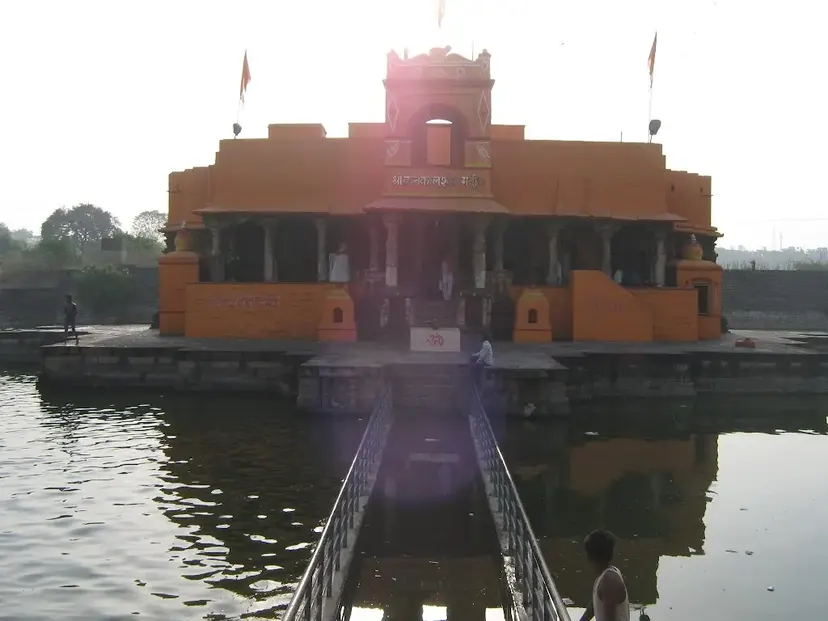
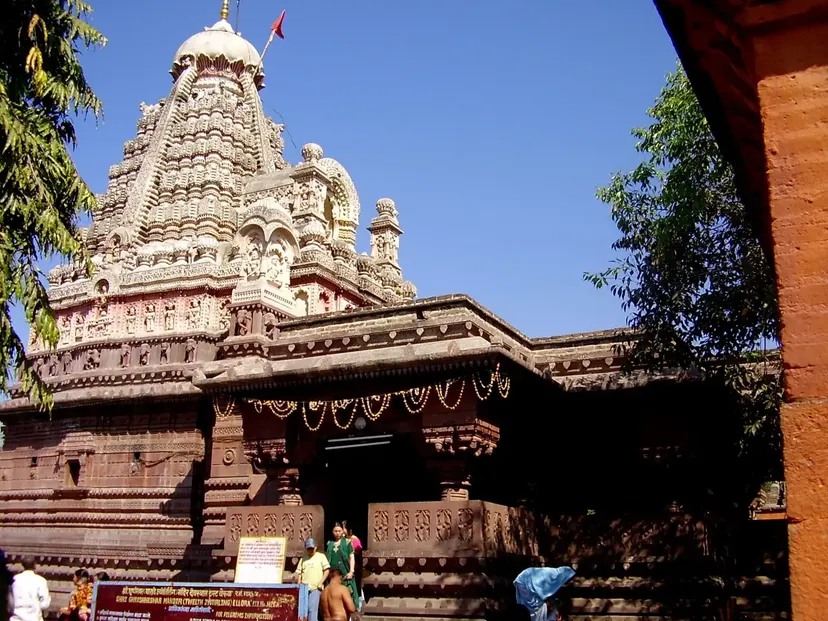
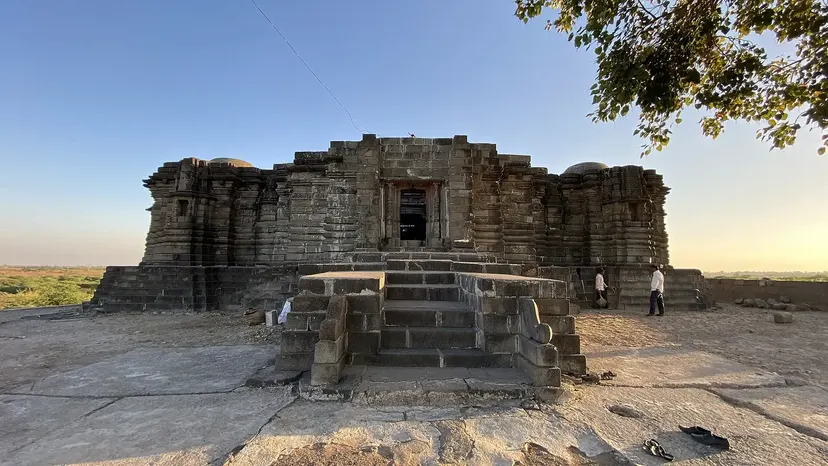
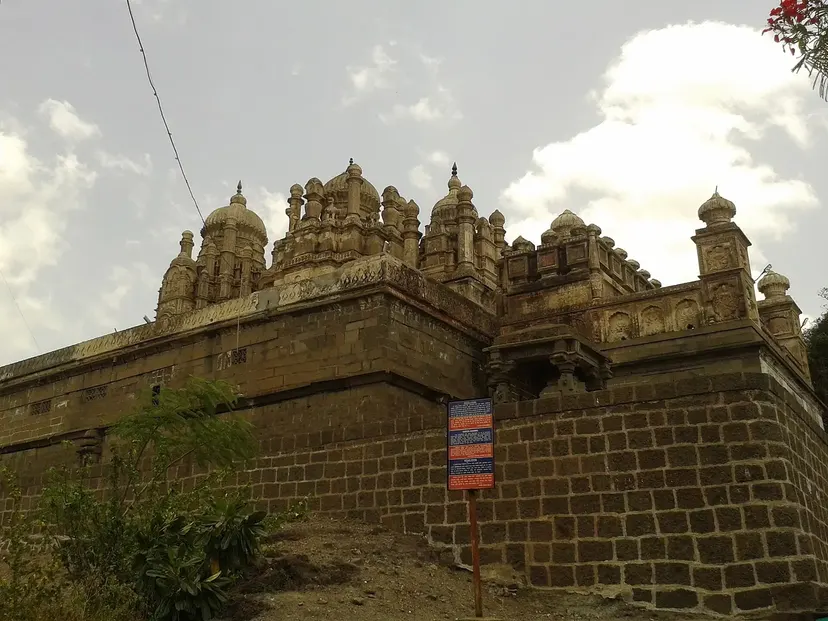
The temple stands on raised ground and is built mainly of stone. Maharashtra Tourism describes a structure rising about 75 to 80 feet, an ornately carved entrance with brass-plated doors, fortified walls and a broad flight of steps leading up to the shrine; Wikipedia also notes that the main entrance is a brass-plated door on the east side. The trust's site identifies further sacred tanks and shrines in and around the town that are visited as part of the Parli pilgrimage.
Plan Your Visit
Darshan and Visitor Information
The temple trust publishes a daily schedule that varies on Mondays, Pradosh and Shivratri, and offers special darshan passes on busy days such as Mahashivratri and Shravan Mondays. Wikipedia notes that men performing abhishekam are expected not to wear clothing above the waist. Crowds are very heavy during Mahashivratri and Shravan. Confirm current darshan and abhishek timings, dress rules and pass arrangements with the Shree Vaijnath Devasthan Trust before travelling.
Timings and arrangements change with seasons and festivals. Confirm current details with Shree Vaijnath Devasthan Trust (official website) before travelling. Last reviewed 1 November 2026.
Sacred Calendar
Festivals at Shri Vaijnath Jyotirlinga Temple, Parli Vaijnath
Mahashivratri
The trust describes a five-day festival with a government puja led by the district collector, a palanquin procession and free services for pilgrims; Incredible India notes a fair of about 15 days at this time.
Shravan month
Heavy crowds for Rudrabhishek and bilva offerings, with Godavari water carried by kavad bearers; Shravan Mondays draw the largest numbers, according to the trust.
Vijayadashami (Dussehra)
Palanquin processions of Vaijnath and Kalaratri Devi, according to the trust.
Kojagiri Purnima to Tripurari Purnima, with Vaikuntha Chaturdashi
A month-long observance; on Vaikuntha Chaturdashi tulsi is offered to Shiva, reflecting the Hari-Hara tradition of the shrine.
Gudi Padwa
The trust records the raising of a gudi and a change of the flag on the temple spire.
Location
How to Reach Shri Vaijnath Jyotirlinga Temple, Parli Vaijnath
Parli Vaijnath is a railway junction on the Parbhani–Hyderabad line, according to the temple trust, and Wikipedia notes rail links from Parli to cities including Mumbai, Hyderabad, Nagpur and Bengaluru. Maharashtra Tourism lists state transport (MSRTC) and private buses and taxis from Aurangabad, Nanded, Latur and Beed.
For air travel, Maharashtra Tourism gives Aurangabad airport as about 200 km away, while Wikipedia gives Nanded airport as about 130 km away. Maharashtra Tourism lists the Yogeshwari Devi temple at Ambajogai (about 25 km) and Aundha Nagnath (about 118 km) among nearby places of pilgrimage.
Location: Parli Vaijnath, Beed, Maharashtra, India
Nearest airport: Aurangabad (about 200 km, per Maharashtra Tourism); Nanded (about 130 km, per Wikipedia)
Nearest railway station: Parli Vaijnath (PRLI), a junction on the Parbhani–Hyderabad line
More in Hindu temples in Maharashtra · Shiva (as Vaidyanath / Vaijnath) temples · Temples in Parli (rural) · Temples in Parli Taluka · Temples in Beed District
Questions
Shri Vaijnath Jyotirlinga Temple, Parli Vaijnath: Frequently Asked Questions
Is Parli Vaijnath one of the twelve Jyotirlingas?
Devotees in Maharashtra regard Parli as the Vaidyanath Jyotirlinga, and the traditional Jyotirlinga verse names Vaidyanatha at Parali. The Baidyanath temple at Deoghar in Jharkhand and the Baijnath temple in Himachal Pradesh also claim the title, and the Government of India has not designated any one of them.
Can devotees touch the linga at Parli Vaijnath?
Yes. Maharashtra Tourism notes that devotees may touch the black-stone linga during worship, and the temple trust's daily schedule refers to touch darshan of the main linga.
Who renovated the Parli Vaijnath temple?
Maharashtra Tourism says the temple is believed to date from the Yadava period (12th–13th century) and was renovated in the 18th century by Ahilyabai Holkar.
Why are tulsi and bilva both offered at Parli Vaijnath?
The temple trust describes Parli as a place where Hari (Vishnu) and Hara (Shiva) meet, so festivals of both deities are observed; tulsi, usually offered to Vishnu, is offered to Shiva on Vaikuntha Chaturdashi.
When is the busiest time to visit Parli Vaijnath?
Mahashivratri (February–March) and the Mondays of Shravan (July–August) bring the largest crowds; the trust issues special darshan passes on these days.
Who manages the Parli Vaijnath temple?
The temple is managed by the Shree Vaijnath Devasthan Trust, Parli Vaijnath, Beed district.
How do I reach Parli Vaijnath?
Parli Vaijnath has its own railway junction on the Parbhani–Hyderabad line. Buses run from Aurangabad, Nanded, Latur and Beed. The nearest airports cited are Nanded (about 130 km, per Wikipedia) and Aurangabad (about 200 km, per Maharashtra Tourism).
Sources and attribution
- Shree Vaijnath Devasthan Trust — Shree Vaijnath Jyotirling, Parali Vaijnath (home page: daily worship, Parali Mahatmya, festivals)
- Shree Vaijnath Devasthan Trust — Parali – history and facilities
- Maharashtra Tourism (Government of Maharashtra) — Parli Vaijnath
- Incredible India (Ministry of Tourism, Government of India) — Parali Vaijnath
- Wikipedia — Shri Vaijnath Temple
- Wikipedia — Vaidyanath Jyotirlinga
- Wikipedia — Parli Vaijnath
Further reading: Shri Vaijnath Jyotirlinga Temple, Parli Vaijnath on Wikipedia (CC BY-SA 4.0).
Spotted an error? Write to info@hindutone.com — see our editorial policy.