
Sahasra Bahu (Sas-Bahu) Temples, Nagda
Vishnu (as Sahasrabahu, 'the thousand-armed'); Wikipedia records the dedication as Virabhadra temple · Nagda, Udaipur, Rajasthan, India
The Sahasra Bahu temples, popularly known as the Sas-Bahu temples, are a pair of medieval Hindu temples at Nagda in Udaipur district, Rajasthan, about 22 km from Udaipur and close to Bagela lake. They stand about 2.7 km from the Eklingji temple, according to Incredible India.
The two temples share a single platform and are protected by the Archaeological Survey of India. Their richly carved interiors, ceilings and porches make them among the best-known early medieval monuments around Udaipur.
Faith & Tradition
Religious Significance of Sahasra Bahu (Sas-Bahu) Temples, Nagda
The name is a local simplification. Incredible India and Wikipedia explain that 'Sahasra Bahu', meaning 'one with a thousand arms', refers to Vishnu, and that the name was shortened in popular speech to 'Sas-Bahu', literally 'mother-in-law and daughter-in-law'. The larger temple is called the Sas temple and the smaller one the Bahu temple.
Sources differ on the dedication. The temples' name and India's official tourism portal point to Vishnu, while the Wikipedia article describes the pair as dedicated to Virabhadra, a fierce form associated with Shiva. The carved figures include Brahma, Shiva and Vishnu, with Rama, Balarama and Parashurama, according to Incredible India.
Nagda itself was once an important city of the Mewar region. Wikipedia records that it may have served as a capital of one of Mewar's rulers, and that it was destroyed by the Delhi sultan Iltutmish in 1226.
Heritage
History of Sahasra Bahu (Sas-Bahu) Temples, Nagda
Incredible India dates the temples to the 10th century and, on the evidence of the carving of one shrine, to the late 10th century. Wikipedia, citing George Michell, also gives the late 10th century, but notes that the ASI's own information board at the site (as of 2018) says early 11th century. The IGNCA documentation sheets prepared for both temples assign them to the 11th century.
The sources consulted do not name the builder of the temples, and this page does not attribute them to a particular king. Today, according to the IGNCA records, both temples are tourist sites in the care of the Archaeological Survey of India.
Architecture and sacred features
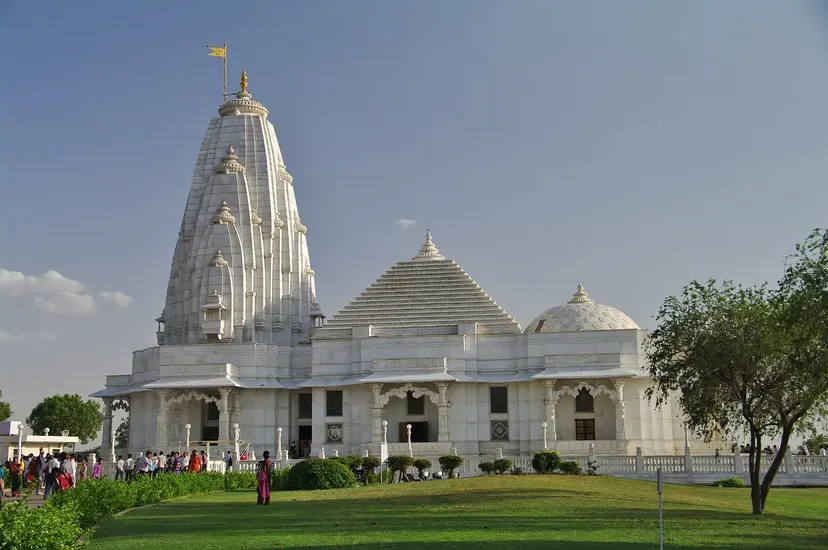
The two temples face a temple tank from a common platform. Wikipedia describes each as having a sanctuary, a hall with side projections and an open porch, with towers built of brick and many small subsidiary turrets; the smaller temple's tower has been largely repaired, while that of the larger temple remains truncated. The larger temple was surrounded by ten subsidiary shrines and the smaller by four, according to Wikipedia (Incredible India says five); only the bases of some survive. Below the platform stands a gateway screen (makara-torana) with four columns and a cusped central arch.
The interiors are lavishly carved. The IGNCA sheets describe circular, highly decorated ceilings, ornamented pillars, a doorway with floral carving and small perforated windows, and identify the larger temple as a Nagara-style building with multiple wall projections. Wikipedia notes that the temples anticipate many features of the later Maru-Gurjara style, though not in their plan or exterior sculpture, and that much of the outer wall surface is plain except around the porches. Incredible India mentions carvings of Ramayana scenes on the walls.
Plan Your Visit
Darshan and Visitor Information
The temples are an ASI-protected monument; visitors should not climb on the platform or touch the carved ceilings and pillars, and should follow site rules on photography. Opening hours published by tourism sites vary, so confirm current timings and any entry charges with the Archaeological Survey of India before visiting.
Timings and arrangements change with seasons and festivals. Confirm current details with Archaeological Survey of India before travelling. Last reviewed 1 November 2026.
Location
How to Reach Sahasra Bahu (Sas-Bahu) Temples, Nagda
Nagda lies about 22-23 km from Udaipur by road; the IGNCA records give 23 km from the Udaipur bus stand and note regular bus services. Incredible India lists Maharana Pratap Airport, Udaipur, and Udaipur City railway station as the nearest airport and station.
The temples are about 2.7 km from Eklingji, so the two are easily visited together.
Location: Nagda, Udaipur, Rajasthan, India
Nearest airport: Maharana Pratap Airport, Udaipur
Nearest railway station: Udaipur City
More in Hindu temples in Rajasthan · Vishnu (as Sahasrabahu, 'the thousand-armed'); Wikipedia records the dedication as Virabhadra temples · Temples in Udaipur District
Questions
Sahasra Bahu (Sas-Bahu) Temples, Nagda: Frequently Asked Questions
Why are they called the Sas-Bahu temples?
'Sas-Bahu' is a popular simplification of 'Sahasra Bahu', meaning 'one with a thousand arms', a name of Vishnu. In everyday Hindi 'sas-bahu' means mother-in-law and daughter-in-law, and the larger and smaller temples are called the Sas and Bahu temples.
Where are the Sas-Bahu temples of Nagda?
At Nagda in Udaipur district, Rajasthan, about 22-23 km from Udaipur, near Bagela lake and about 2.7 km from Eklingji.
How old are the Nagda Sas-Bahu temples?
They date from the late 10th or early 11th century. Michell and Incredible India give the late 10th century, while the ASI board at the site says early 11th century.
Which god are the temples dedicated to?
The name and India's tourism portal point to Vishnu, but Wikipedia describes the pair as dedicated to Virabhadra, so sources disagree.
Who looks after the Sas-Bahu temples?
They are protected by the Archaeological Survey of India.
Sources and attribution
- Wikipedia — Sahasra Bahu Temples
- Incredible India, Ministry of Tourism, Government of India — Sas Bahu Temples
- Indira Gandhi National Centre for the Arts (documentation of ASI monuments) — Sas Mandir, Nagda - documentation sheet RJ/UDP-130
- Indira Gandhi National Centre for the Arts (documentation of ASI monuments) — Bahu Ji Ka Mandir, Nagda - documentation sheet RJ/Udp-258
- Outlook Traveller — Here's Why You Must Visit The Sahasra Bahu Temple Near Udaipur
Further reading: Sahasra Bahu (Sas-Bahu) Temples, Nagda on Wikipedia (CC BY-SA 4.0).
Spotted an error? Write to info@hindutone.com — see our editorial policy.
Pilgrim Circuit