Amrita Sher-Gil: Pioneer of Modern Indian Painting
Amrita Sher-Gil (1913–1941) was a pioneer of modern Indian painting. Born in Budapest to a Sikh father and a Hungarian mother, she trained in Paris and painted Indian life after returning to India in 1934.
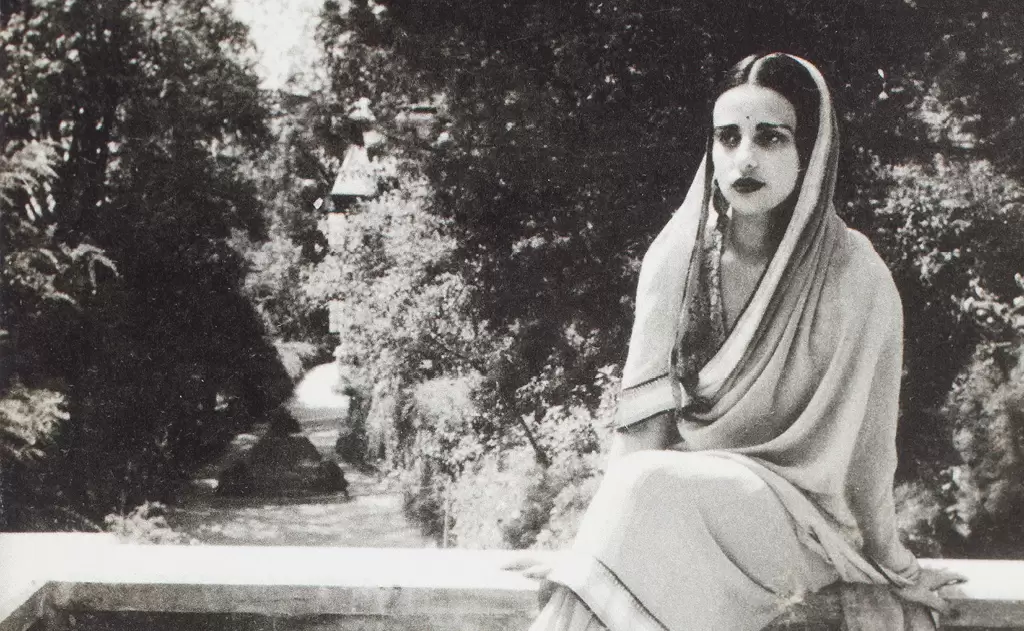
Amrita Sher-Gil (1913–1941) was one of the pioneers of modern Indian painting. She was born in Budapest to a Sikh father from Punjab and a Hungarian mother, trained in Paris, and after returning to India in 1934 painted Indian village life and Indian women. She died in Lahore at 28. She was not a Hindu, and this page does not describe her as one.
Correction (12 November 2026): An earlier version of this page was titled "Amrita Sher-Gil: The Iconic Painter with Deep Hindu Cultural Influences" and called her a Hindu artist. That was wrong: her father was Sikh and her mother Hungarian, and we found no reliable source that she was Hindu or that Hinduism shaped her art. The page has been rewritten from the sources listed below. See our editorial and corrections policy.
| Key facts | |
|---|---|
| Born | 30 January 1913, Budapest, Hungary |
| Died | 5 December 1941, Lahore, aged 28 |
| Parents | Umrao Singh Sher-Gil, a Sikh aristocrat and scholar from Punjab; Marie Antoinette, a Hungarian singer |
| Training | Paris, from 1929, including the École des Beaux-Arts |
| Known for | Paintings of Indian women and village life; the South Indian paintings of 1937 |
| Works include | Young Girls (1932), Three Girls (1935), Bride's Toilet, Brahmacharis and South Indian Villagers Going to Market (all 1937) |
Early life and training
Amrita Sher-Gil was born in Budapest on 30 January 1913. Her father, Umrao Singh Sher-Gil, came from an aristocratic Sikh family of Punjab and was a scholar of Sanskrit and Persian; her mother, Marie Antoinette, was a Hungarian singer. The family moved to Shimla in the early 1920s.
In 1929 she went to Paris to study painting, and she trained there until 1934, including at the École des Beaux-Arts. Her painting Young Girls (1932) won her early recognition in Paris.
Return to India
She returned to India at the end of 1934 and decided to make Indian life the subject of her work. She travelled widely, and the murals of Ajanta and the Indian miniature traditions she saw changed her style. In 1937 she painted a group of works after a journey through South India, among them Bride's Toilet, Brahmacharis and South Indian Villagers Going to Market.
Her subjects were mostly ordinary Indian people, especially women, shown with quiet dignity rather than as picturesque scenery.
Last years and death
In 1938 she married her cousin, the Hungarian doctor Victor Egan, and lived for a time at Saraya near Gorakhpur, where she painted village scenes. In 1941 they moved to Lahore, where she died on 5 December 1941, aged 28, shortly before her first major solo exhibition there.
Legacy
She is counted among the founders of modern Indian art for bringing what she learned in Europe to Indian subjects in her own way. The National Gallery of Modern Art in New Delhi holds a large collection of her work.
Why this page is on HinduTone
HinduTone's Famous Hindus section is for people who were Hindu by their own statement or by uncontested record. Amrita Sher-Gil was not Hindu. We keep this page because readers look for her here, and we present her accurately: an Indian artist admired across faiths and cultures.
Frequently asked questions
Was Amrita Sher-Gil Hindu?
No. Her father was Sikh and her mother Hungarian, and we know of no reliable source that she was Hindu.
Where was Amrita Sher-Gil born?
In Budapest, Hungary, on 30 January 1913.
What are Amrita Sher-Gil's best-known paintings?
Young Girls (1932), Three Girls (1935), and the South Indian paintings of 1937: Bride's Toilet, Brahmacharis and South Indian Villagers Going to Market.
When did Amrita Sher-Gil die?
On 5 December 1941 in Lahore, at the age of 28.
Where can I see Amrita Sher-Gil's paintings?
The National Gallery of Modern Art in New Delhi holds a large collection of her work.
Sources
- Encyclopaedia Britannica, "Amrita Sher-Gil".
- Yashodhara Dalmia, "Amrita Sher-Gil: a life in art", Seminar (india-seminar.com), 2021.
- National Gallery of Modern Art, New Delhi.
Last reviewed: 12 November 2026.
Share this with family and friends
Send it on WhatsApp, post it, or copy the link.
More on Hindu Festivals
- December 2026 Hindu Festivals in Malaysia: Daily Tithi, Kuala Lumpur Sunrise, Margazhi and Vaikunta Ekadasi
- December 2026 Hindu Festivals in the UAE: Daily Tithi, Dubai Sunrise and Festival Dates
- December 2026 Hindu Festivals in Brazil: Daily Tithi, Sunrise and Festival Dates for São Paulo
- November 2026 Hindu Festivals in Europe: Daily Tithi at Amsterdam Sunrise, Diwali Week and Karthika Dates by Region
- November 2026 Hindu Festivals in South Africa: Daily Tithi at Durban Sunrise, Deepavali Week and Karthika Dates
- November 2026 Hindu Festivals in Germany: Daily Tithi at Frankfurt Sunrise, Diwali Week and Karthika Masam Dates
More from Culture
- Why Is the Family System Weakening? 15 Reasons and What We Can Do
- Godavari Pilichindi: Sir Arthur Cotton, the Dowleswaram Anicut and a Telugu Story of Coming Home
- Hindus Worldwide Must Be Safe in Public Places: Temple Security, Festival Safety and Daily Life
- Why We Never See Dead Monkeys: The Belief and the Natural Explanation
- Why Learn Grammar? – A Sanskrit Verse Explaining the Significance of Correct Pronunciation and Its Interpretation
You might also like

Haridwar Makar Sankranti Snan: A Guide to Har Ki Pauri, the Ganga Aarti and the Ardh Kumbh
BAPS Hindu Festivals in Abu Dhabi: Complete Guide to Celebrations, Temple Events, Darshan and Visiting the Mandir
December 2026 Hindu Festivals in South Africa: Daily Tithi, Durban Sunrise and Festival Dates