Sarvepalli Radhakrishnan: Philosopher, Teacher and Second President of India
Sarvepalli Radhakrishnan (1888–1975) was a philosopher who interpreted Indian thought, especially Vedanta, for readers worldwide. He taught at Madras, Mysore, Calcutta and Oxford, led Andhra and Banaras Hindu universities, and served as India's first Vice-President and second President.
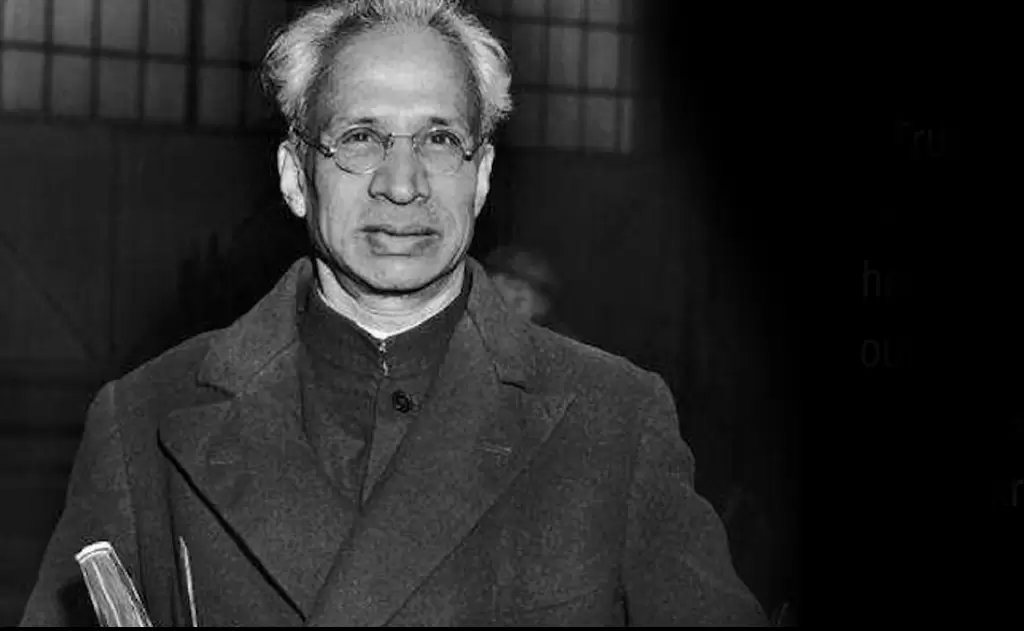
Sarvepalli Radhakrishnan (5 September 1888 – 17 April 1975) was a philosopher who interpreted Indian thought, especially Vedanta, for readers in India and abroad, and India's first Vice-President (1952–1962) and second President (1962–1967). He taught philosophy for more than four decades, at Madras, Mysore, Calcutta and Oxford, and led two universities. India marks his birthday, 5 September, as Teachers' Day.
Quick facts
| Born | 5 September 1888, Tiruttani, Madras Presidency (now Tamil Nadu) |
| Died | 17 April 1975, Madras (Chennai) |
| Family | Father S. Veeraswami (Veerasamiah); wife Sivakamamma |
| Education | Madras Christian College (BA, MA in philosophy) |
| Academic posts | Presidency College, Madras (from 1909); Maharaja's College, Mysore (1918); King George V Professor of Philosophy, Calcutta (from 1921); Spalding Professor of Eastern Religions and Ethics, Oxford (1936–1952) |
| University leadership | Vice-Chancellor, Andhra University (1931–1936); Vice-Chancellor, Banaras Hindu University (1939–1948) |
| Public offices | Ambassador to the USSR (1949–1952); Vice-President of India (13 May 1952 – 12 May 1962); President of India (13 May 1962 – 12 May 1967) |
| Honours | Knighted 1931 (he stopped using the title after independence); Bharat Ratna 1954; honorary Order of Merit 1963 |
Early life and education
Radhakrishnan was born at Tiruttani, a temple town north-west of Madras, into a Telugu-speaking Brahmin family. He went to a Lutheran mission school at Tirupati and the Government High School at Walajapet, and then to Madras Christian College, where he took his BA (1907) and MA in philosophy. His thesis, The Ethics of the Vedanta and its Metaphysical Presuppositions, was published when he was about twenty. It answered the charge that Vedanta left no room for ethics, and it set the direction of his later work.
Teacher and scholar
In 1909 he joined the philosophy department of Presidency College, Madras. He moved to Maharaja's College, Mysore, as professor of philosophy in 1918, and in 1921 to the University of Calcutta as King George V Professor of Mental and Moral Science.
His two-volume Indian Philosophy became a standard survey, and The Hindu View of Life reached a wide readership. An Idealist View of Life (1932) grew out of the Hibbert Lectures he gave at Manchester College, Oxford, in 1929.
In 1936 he became the first holder of the Spalding Professorship of Eastern Religions and Ethics at the University of Oxford, and a Fellow of All Souls College. He kept the chair until 1952, combining it with heavy duties in India. At home he was Vice-Chancellor of Andhra University (1931–1936) and of Banaras Hindu University (1939–1948), the university founded by Madan Mohan Malaviya.
His philosophy
Radhakrishnan wrote within the tradition of Advaita Vedanta, which holds that the self (atman) and ultimate reality (Brahman) are one. He presented it not as a closed doctrine but as a philosophy grounded in religious experience, which he believed was the common core of the world's faiths. In his reading, Hinduism was less a set of fixed dogmas than a way of life open to many paths, and he defended it against the charge that it denied the reality of the world or the importance of ethics.
His translations with commentary made classical texts available to a wide English-reading public, among them The Bhagavadgita, The Dhammapada, The Principal Upanishads and The Brahma Sutra. He also co-edited A Source Book in Indian Philosophy (1957).
Scholars have also criticised his approach. Some argue that he read Indian philosophy too much through Advaita and through Western idealism, and that his picture of a single "Hindu view" smooths over real differences between schools.
Public life
After independence Radhakrishnan chaired the University Education Commission of 1948–49, which reported on the future of Indian universities. He represented India at UNESCO from 1946 to 1952 and sat on its Executive Board. From 1949 to 1952 he was India's ambassador to the Soviet Union.
In 1952 he became the first Vice-President of India and ex officio Chairman of the Rajya Sabha, serving two terms. In May 1962 he succeeded Dr Rajendra Prasad as President, and served until May 1967. His term covered the 1962 war with China, the deaths of Jawaharlal Nehru (1964) and Lal Bahadur Shastri (1966), and the war with Pakistan in 1965.
Teachers' Day
During his presidency, students and friends asked to celebrate his birthday. In the commonly told account, he suggested that 5 September should instead be observed as Teachers' Day, and India has done so since 1962. The story and how the day is kept today are on our page Teachers' Day: why India celebrates Radhakrishnan on 5 September.
Later years and legacy
Radhakrishnan retired to Madras after 1967 and died there on 17 April 1975. A few months before his death he received the 1975 Templeton Prize, which the Templeton Foundation awarded for his work in bridging the understanding between Eastern and Western religions and cultures. His books are still in print, and his translations of the Gita and the Upanishads remain among the most widely read in English.
Correction (12 November 2026): An earlier title called Dr Radhakrishnan "India's First Hindu President". That was wrong: he was India's second President (1962–1967), after Dr Rajendra Prasad (1950–1962). We also corrected where his teaching career began: he studied at Madras Christian College and first taught at Presidency College, Madras. See our editorial and corrections policy.
Frequently asked questions
When and where was Sarvepalli Radhakrishnan born?
On 5 September 1888 at Tiruttani, then in Madras Presidency and now in Tamil Nadu.
What offices did Radhakrishnan hold?
He was India's ambassador to the USSR (1949–1952), the first Vice-President of India (1952–1962) and the second President of India (1962–1967).
What was his position at Oxford?
He was the first Spalding Professor of Eastern Religions and Ethics at the University of Oxford, from 1936 to 1952.
Which books did Radhakrishnan write?
His best-known works include Indian Philosophy, The Hindu View of Life, An Idealist View of Life (1932) and his translations of the Bhagavadgita and the Principal Upanishads.
Why is Teachers' Day on 5 September?
5 September is Radhakrishnan's birthday. He asked that the day be marked in honour of teachers rather than himself, and it has been observed as Teachers' Day since 1962.
Sources
- Vice President of India, "Dr. Sarvepalli Radhakrishnan" (vicepresidentofindia.nic.in): dates of birth, offices, books, Bharat Ratna 1954, death 17 April 1975.
- President's Secretariat, list of former Presidents (presidentofindia.gov.in).
- Templeton Prize, "1975 laureate: Sarvepalli Radhakrishnan" (templetonprize.org).
- Wikipedia, "Sarvepalli Radhakrishnan" and "Spalding Professor of Eastern Religions and Ethics" (education, academic posts, honours).
Last reviewed: 16 November 2026.
Related: Famous Hindus · Teachers' Day and Radhakrishnan · Madan Mohan Malaviya · Swami Vivekananda · Adi Shankaracharya
Share this with family and friends
Send it on WhatsApp, post it, or copy the link.
More from Famous Hindus
- Thiruvalluvar: Author of the Tirukkural, Life and Legacy
- Guru Ravidas: Life, Hymns, Begampura and Legacy
- Sree Narayana Guru: Life, Teachings and Reforms
- Akka Mahadevi: Life, Vachanas and Legacy
- Famous Hindus Born in March: Birthdays by Date
You might also like
Ganapati Atharvashirsha: Full Sanskrit Text with IAST, Meaning and How to Recite
Lord Ganesha: 108 Names, Significance & Mantras — The Complete Spiritual Guide
Cyrus Poonawalla Acquires Raja Ravi Varma’s Divine Masterpiece ‘Yashoda and Krishna’ for ₹167.2 Crore – A Historic Moment for Sanatan Heritage