
Eco-Friendly Janmashtami: How to Celebrate Sustainably
Celebrate Green Janmashtami this year by embracing eco-conscious practices that honor Lord Krishna while protecting the environment.
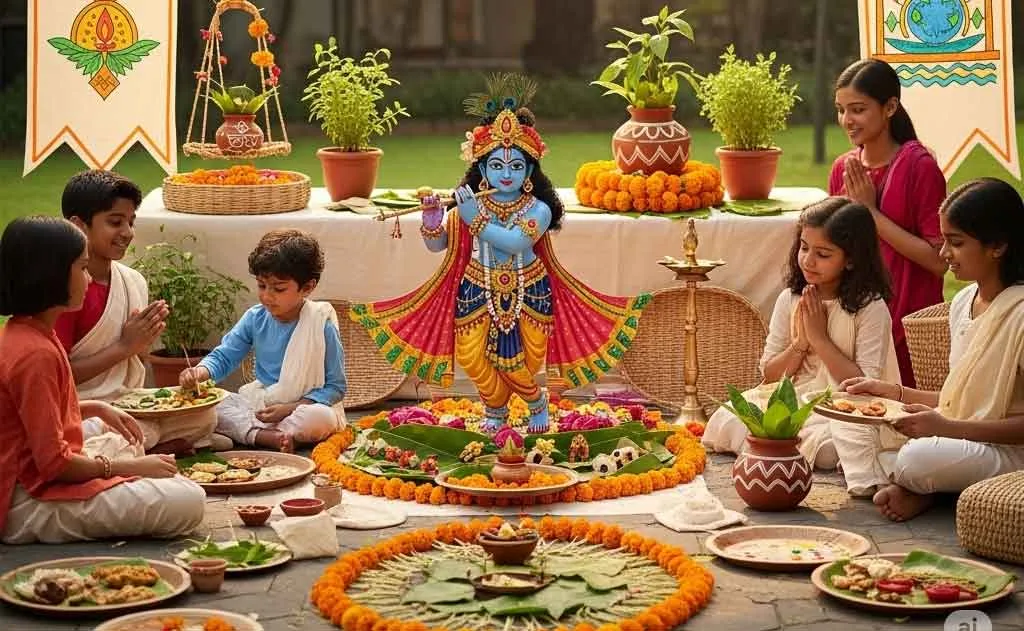
Celebrate Green Janmashtami this year by embracing eco-conscious practices that honor Lord Krishna while protecting the environment.
Celebrate Green Janmashtami this year by embracing eco-conscious practices that honor Lord Krishna while protecting the environment. With rising awareness about sustainability, devotees are adopting plastic-free puja rituals and eco-conscious celebrations to make Janmashtami 2025 a festival of faith and responsibility. Here’s how you can celebrate sustainably with clay idols, natural dyes for Jhanki, and waste-free prasad distribution.
1. Opt for Eco-Friendly Clay Idols
Traditional Janmashtami celebrations often involve immersing idols in water bodies, but non-biodegradable materials like Plaster of Paris (PoP) harm aquatic ecosystems. Choose biodegradable clay idols to ensure an eco-friendly immersion.
- Why Clay Idols? Clay dissolves naturally in water, leaving no toxic residue. It supports local artisans and reduces environmental damage.
- Tips for Selection:
- Purchase from local potters or eco-conscious vendors.
- Ensure idols are free from chemical paints or plastic embellishments.
- Opt for smaller idols to minimize resource use.
- Immersion Practices: Perform immersion at home in a bucket of water and use the dissolved clay to nourish plants, or visit designated eco-friendly immersion sites.
By choosing clay idols, you contribute to a Green Janmashtami that aligns with Krishna’s love for nature.
2. Use Natural Dyes for Jhanki Decorations
Jhankis (tableaux depicting Krishna’s life) are a highlight of Janmashtami. However, synthetic dyes and plastic props can harm the environment. Switch to natural dyes and sustainable materials for vibrant, eco-friendly Jhankis.
- Natural Dye Sources:
- Turmeric: Bright yellow for fabrics or rangoli.
- Beetroot: Deep pink or red hues.
- Spinach or Henna: Green shades for decorative elements.
- Indigo or Blueberries: Blue tones for Krishna’s iconic skin color.
- How to Use:
- Boil natural ingredients to extract dyes for coloring cloth, paper, or rangoli.
- Use these dyes to paint wooden props or create organic rangoli designs.
- Sustainable Props:
- Replace plastic decorations with bamboo, jute, or recycled paper.
- Use fresh flowers, leaves, or clay figurines for an authentic, biodegradable look.
Natural dyes ensure a plastic-free puja while adding an earthy charm to your Jhanki, making your celebration truly eco-conscious.
3. Waste-Free Prasad Distribution
Prasad is central to Janmashtami, but single-use plastics and excess food waste can undermine sustainability. Adopt waste-free prasad distribution practices to keep the festival green.
- Eco-Friendly Packaging:
- Use banana leaves, areca nut plates, or reusable steel containers instead of plastic or Styrofoam.
- Encourage devotees to bring their own containers for prasad.
- Mindful Preparation:
- Prepare prasad in quantities that match the number of attendees to avoid food wastage.
- Offer simple, homemade sweets like laddoos or pedas that require minimal packaging.
- Composting and Donation:
- Compost leftover food scraps or organic waste.
- Donate excess prasad to local shelters or community kitchens to spread Krishna’s blessings.
These steps ensure your eco-conscious celebrations minimize waste while maximizing devotion.
Why Celebrate a Green Janmashtami?
Lord Krishna’s life was deeply connected to nature—his love for cows, rivers, and forests inspires us to protect the environment. By adopting sustainable practices like clay idols, natural dyes, and waste-free prasad, you honor Krishna’s legacy while reducing your ecological footprint. A plastic-free puja not only preserves our planet but also sets an example for future generations.
SEO Tips for Your Green Janmashtami Celebration
To amplify your eco-friendly Janmashtami message, share your sustainable practices on social media with hashtags like #GreenJanmashtami, #PlasticFreePuja, and #EcoConsciousCelebrations. Encourage your community to join the movement by hosting workshops on making natural dyes or clay idols.
Celebrate Janmashtami 2025 with devotion and sustainability. By embracing Green Janmashtami practices, you can create a festival that’s both spiritually fulfilling and environmentally responsible. Visit www.hindutone.com for more tips on eco-conscious Hindu festivals.
Published on July 31, 2025, by Hindutone Editorial Team
Frequently Asked Questions
Why choose clay idols for an eco-friendly Janmashtami?
Clay dissolves naturally in water and leaves no toxic residue, while Plaster of Paris harms aquatic ecosystems. Clay idols also support local artisans, and smaller idols without chemical paints or plastic embellishments are best.
How can I immerse a Krishna idol sustainably at home?
Perform the immersion in a bucket of water at home and use the dissolved clay to nourish plants. Alternatively, visit a designated eco-friendly immersion site.
Which natural dyes can be used for Jhanki decorations?
Turmeric gives yellow, beetroot gives pink or red, spinach or henna give green, and indigo or blueberries give blue for Krishna's skin color. Boil the ingredients to extract the dye for cloth, paper, wooden props or rangoli.
How can prasad distribution be made waste-free?
Serve prasad on banana leaves, areca nut plates or reusable steel containers instead of plastic or Styrofoam, and ask devotees to bring their own containers. Prepare quantities matching attendance and offer simple sweets like laddoos or pedas.
What should be done with leftover prasad and food scraps?
Compost leftover food scraps and organic waste, and donate excess prasad to local shelters or community kitchens. This spreads Krishna's blessings instead of creating waste.
What can replace plastic decorations in a Janmashtami puja?
Use bamboo, jute or recycled paper, along with fresh flowers, leaves or clay figurines for a biodegradable look. These keep the puja plastic-free.
You might also like

Devshayani Ekadashi 2026: Chaturmas Begins — Date & Significance (July 25)

Sri Rama Navami 2026 in AyodhyaThe Divine Celebration at Ram Mandir

Yogini Ekadashi 2026: Date, Vrat Katha, Rules & Benefits (July 10)
