
Karthika Puranam Chapter 15 (Adhyaya 15) in English: Story, Meaning and Lesson | Karthika Masam 2026 Day 15
Karthika Puranam Chapter 15 in English: a mouse relights a lamp in a ruined temple on the Saraswati and is freed into human form. Read on Karthika Pournami, 24 November 2026.
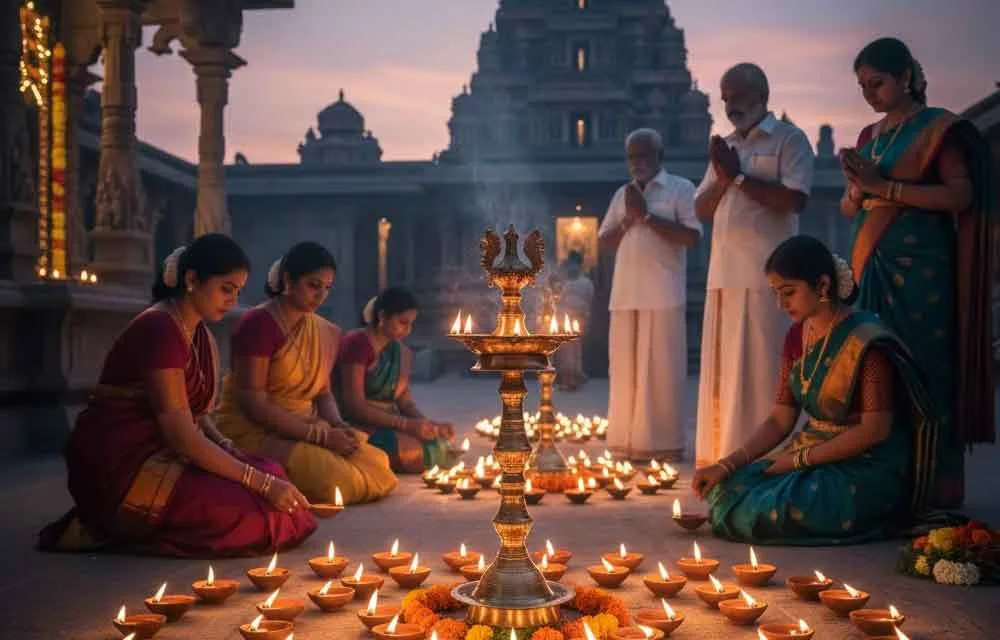
Quick answer: Karthika Puranam Adhyaya 15 is read in India on Tuesday, 24 November 2026 (Purnima, Karthika Pournami), whether you follow the tithi-based table or read one adhyaya a day from 10 November. In the USA, UK and Canada the month began a day earlier (Monday 9 November), so readers there going one a day reach it on Monday, 23 November; check your local panchang. This is the Karthika Pournami chapter: a mouse in a ruined temple on the Saraswati relights a lamp with a ghee-scented wick and is freed into human form. In India this is Karthika Pournami. Many families abroad also read this adhyaya on the full moon itself; check the Pournami date in your local panchang.
The frame
Vasishtha has been answering King Janaka since Chapter 1. After King Shrutakirti and the observances of the vow in Chapter 14, he tells the king that the glory of Karthika can never be fully told, however much one explains it, and offers another story.
What the month asks
Before the story, Vasishtha sets out what the month asks of a devotee, in the Telugu chapter we follow:
- The daily practices. Hearing and singing the names of Hari, lighting lamps before Shiva and Keshava, reading or hearing the Purana, and seeing the deity in the evening. Those who neglect them, the text says, fall into the hell called Kalasutra.
- Karthika Shukla Dwadashi. Worshipping Sri Hari wholeheartedly on that day brings imperishable merit, and worshipping Narayana with sandal paste, flowers and akshata and offering incense, lamp and food brings special fruit. Those who keep this up through the month without a break are said to go to Vaikuntha in a celestial chariot.
- Three days for those who cannot keep the month. Worship with devotion at least on Shukla Trayodashi, Chaturdashi and Pournami, and offer a lamp with cow's ghee.
- Even a short lamp. A lamp kept burning only for as long as it takes to milk a cow is praised.
- Tending another's lamp. Raising the wick of a lamp someone else has lit, or relighting one that has gone out, is said to remove all sins. The story illustrates this.
These are the text's teachings, meant to encourage devotion, not promises.
The yogi in the ruined temple
On the bank of the Saraswati stood a ruined temple. A compassionate yogi, steadfast in his rites, came there meaning to spend the whole of Karthika reading the Purana. He swept the abandoned temple, washed it with water and marked it with auspicious marks, went to the next village for clay lamps, made wicks of cotton, lit twelve lamps, and worshipped the Lord and read the Purana with devotion every day from the start of the month.
The mouse and the wick
One night a mouse came into the temple looking for food. Finding nothing, it picked up in its mouth a wick that had gone out but still smelled of ghee, meaning to eat it, and stopped beside a burning lamp. The tip of the wick caught fire, and the dead wick burned and gave light. Because it was Karthika and an extinguished wick had been relit before the Lord, the chapter says, the mouse's sins were destroyed, and at once it stood there in human form.
Our 30-adhyaya guide calls the shrine a Vishnu temple; the Telugu chapter we follow speaks of a Shiva temple at the moment the wick is relit. Editions differ on details like this; follow your book.
Who the mouse had been
The yogi opened his eyes from meditation and asked the man who he was. The man told him he had been the mouse, and asked why he had been born one. Seeing everything with his inner sight, the yogi told him:
In his last life he had been a Brahmin called Bahlika. He farmed to support his family, but grew greedy, forgot worship and his daily rites, ate forbidden food in bad company and spoke ill of good and worthy people. He made money by selling girls, bought provisions cheap and sold them dear, and neither enjoyed his money nor gave any away: he buried it and lived as a miser. After death he was born a mouse. By relighting a lamp before the Lord he had earned merit and regained his human form.
The yogi told him to go back to his village, dig up the money buried in his backyard, give it away in charity, pray to the Lord and seek liberation. With that advice he sent him on his way.
What this chapter teaches
- No lamp is too small: a wick carried by a hungry mouse is enough, in the story, to change a life.
- Tend the lamps of others: relighting or trimming someone else's lamp is itself praised.
- Hoarded wealth helps no one: Bahlika's cure is to dig up what he buried and give it away.
- Care for neglected shrines: the story begins with a yogi sweeping a ruined temple and lighting twelve lamps.
How to read it today
- Pick one time: after the morning bath, or in the evening after lighting the Karthika lamp. Keep the same time each day if you can.
- Light a small lamp: ghee or sesame oil before your home shrine or tulasi. Never leave a flame unattended; in apartments keep it clear of curtains and smoke detectors.
- Read or listen: say that you are reading adhyaya 15, then read it aloud from a Telugu edition your family trusts (about 15 to 30 minutes). One person can read while the family listens; the text praises listening as much as reading.
- Today's small practice: light your lamps at dusk on Karthika Pournami. If a lamp at home or at the temple has gone out, relight it, or gently raise the wick of a lamp someone else has lit, as the chapter praises.
- Close simply: offer a flower or a little prasadam, bow and say a short prayer.
Printed editions do not always break the chapters at the same place, so a story may begin an adhyaya earlier or later in your book. If your book differs, follow your book. Our summary is a guide to the day's reading, not the text itself.
Today: Karthika Pournami 2026. Lamps through the month: Akasha Deepam in Karthika Masam. Tithi and deepam time: Today in Karthika Masam 2026, Day 15.
Frequently Asked Questions
What is Karthika Puranam Chapter 15 about?
A mouse that enters a ruined temple on the bank of the Saraswati, carries a ghee-scented wick to a lamp and relights it, and is freed into human form. The chapter also praises lamps, worship and the Purana in Karthika.
Who was the mouse in his previous life?
In the Telugu chapter, a Brahmin named Bahlika who farmed for a living, grew greedy, forgot worship and daily rites, made money dishonestly and buried it as a miser. He was born a mouse after death.
What does Chapter 15 say about relighting a lamp?
Vasishtha says that raising the wick of a lamp someone else has lit, or relighting a lamp that has gone out, removes all sins. This is the Puranam's teaching, told to encourage devotion.
If I cannot keep the whole month, which days does Chapter 15 name?
Shukla Trayodashi, Chaturdashi and Pournami: worship with devotion on those three days and offer a lamp with cow's ghee. In India in 2026 those days are 22, 23 and 24 November.
When is Karthika Puranam Chapter 15 read in 2026?
In India on Tuesday, 24 November 2026 (Purnima, Karthika Pournami). In the USA, UK and Canada, readers going one adhyaya a day from 9 November reach it on Monday, 23 November; check your local panchang.
Karthika Puranam chapters and Karthika Masam 2026 guides
Share this with family and friends
Send it on WhatsApp, post it, or copy the link.
More from Festivals
- Why Vishnu Offered His Eye to Shiva: The Thousand-Lotus Story Behind Vaikuntha Chaturdashi
- Why 365 Wicks on Karthika Pournami? The Meaning, the Scriptures and When to Light It in 2026
- Nagula Chavithi 2026: Why Milk Is Offered at the Snake Mound, and Do Snakes Really Drink It?
- 12 Jyotirlingas in Karthika Masam 2026: State-Wise List, Karthika Specialities, Somavaram and Pournami Visits, Darshan and Travel Guide
- First Governor-Hosted Diwali in Idaho: Senator Jim Risch Welcomes Boise's Growing Indian Community
You might also like

Today in Karthika Masam 2026, Day 29 (8 Dec): Tithi and Deepam Time
Today in Karthika Masam 2026, Day 28 (7 Dec): Tithi and Deepam Time
Today in Karthika Masam 2026, Day 27 (6 Dec): Tithi and Deepam Time