Makar Sankranti 2026: Significance, Rituals, and Celebrations of the Sacred Hindu Harvest Festival
Makar Sankranti 2026: Significance, Rituals, and Celebrations of the Sacred Hindu Harvest Festival Dear devotees, as we approach the auspicious occasion of…

Makar Sankranti 2026: Significance, Rituals, and Celebrations of the Sacred Hindu Harvest Festival Dear devotees, as we approach the auspicious occasion of…
Makar Sankranti 2026: Significance, Rituals, and Celebrations of the Sacred Hindu Harvest Festival
Dear devotees, as we approach the auspicious occasion of Makar Sankranti 2026, let us bow our heads in reverence to Lord Surya, the eternal source of light, life, and divine energy.
Om Suryaya Namaha! O Radiant Sun God, who dispels darkness and ignites the soul's inner flame, guide us on this sacred Uttarayan journey toward purity, prosperity, and unwavering bhakti. May your golden rays bless every heart with warmth, wisdom, and the sweetness of devotion. As a humble priest devoted to Sanatana Dharma, I share this sacred wisdom with you, my spiritual family, inviting you to immerse in the grace of this timeless festival that unites Hindus worldwide in gratitude and joy.
Makar Sankranti marks the triumphant entry of Lord Surya into Makara Rashi (Capricorn), heralding the auspicious six-month period of Uttarayan—the northward ascent symbolizing spiritual ascent from ignorance to enlightenment. In 2026, this divine transition falls on Wednesday, January 14, a day brimming with cosmic energy for renewal and harvest thanksgiving.
Mythological Legends Behind Makar Sankranti
Legends from Puranas and Epics
Dear devotees, the stories of Makar Sankranti woven through our sacred Puranas and Itihasas remind us of dharma's eternal victory over adharma.
One profound legend speaks of Bhishma Pitamaha from the Mahabharata. Lying on his bed of arrows, the grand sire of the Kuru dynasty awaited Uttarayan to release his mortal coil. Even in immense pain, he held his life breath until the Sun's northward journey began, knowing this period leads souls to higher realms. As Lord Krishna declares in the Bhagavad Gita (Chapter 8, Verse 24):
अग्निर्ज्योतिरहः शुक्लः षण्मासा उत्तरायणम्। तत्र प्रयाता गच्छन्ति ब्रह्म ब्रह्मविदो जनाः॥
"Those who depart during the bright fortnight, in the flame, in daylight, in the waxing moon, during the six months of Uttarayan—knowers of Brahman attain Brahman."
This shloka reveals why Makar Sankranti is ideal for spiritual practices and why Bhishma chose this day for moksha.
Another tale from the Puranas recounts Goddess Sankranti slaying the demon Sankarasura, symbolizing light's triumph over darkness. In some traditions, Lord Vishnu vanquished demons on this day, ending their tyranny and restoring cosmic balance.
Lord Surya visiting his son Shani (ruler of Makara Rashi) signifies reconciliation and harmony, teaching us to mend familial bonds with forgiveness.
These legends, dear ones, inspire us to shed ego, embrace dharma, and welcome divine light into our lives.
Makar Sankranti Spiritual Significance
Makar Sankranti holds unparalleled spiritual depth in Sanatana Dharma. Unlike lunar-based festivals, it follows the solar calendar, aligning perfectly with nature's rhythms.
This festival signifies:
- The Dawn of Uttarayan: The auspicious half-year when devatas awaken. Scriptures declare deeds performed now yield manifold fruits.
- Victory of Light Over Darkness: Longer days symbolize the soul's journey from tamas (ignorance) to sattva (purity).
- Harvest Gratitude: As a premier Hindu harvest festival, it honors Mother Earth, farmers, and Surya Deva for sustenance.
- Karma Cleansing: Holy dips and charity purify past sins, accumulating punya for liberation.
In the Bhagavad Gita (Chapter 4, Verse 1), Lord Krishna reveals He first imparted divine knowledge to Surya Deva, underscoring the Sun's role as a conduit of eternal wisdom.
Observing Makar Sankranti with sincerity cleanses karma, elevates consciousness, and draws us closer to the Supreme.
Auspicious Timings and Muhurat for Makar Sankranti 2026
For 2026, Makar Sankranti arrives on January 14 (Wednesday).
Key timings (India Standard Time):
- Sankranti Moment: Approximately 3:13 PM
- Punya Kaal Muhurat: 3:13 PM to 5:45 PM (ideal for rituals, baths, and charity)
- Maha Punya Kaal: 3:13 PM to 4:58 PM (most potent for Surya puja and offerings)
Perform rituals during Punya Kaal for maximum blessings. For diaspora Hindus, adjust to local sunrise/sunset while honoring the spirit.
Traditional Makar Sankranti Rituals Step-by-Step
Dear devotees, Makar Sankranti rituals fill the heart with bhakti and home with auspiciousness. Follow these steps reverently:
- Early Morning Holy Bath: Rise at Brahma Muhurta. Bathe in holy rivers (Ganga, Godavari, etc.) or add Ganga jal to home water. This washes sins and invokes purity.
- Surya Darshan and Arghya: Face east at sunrise. Offer water to Lord Surya with folded hands, chanting Gayatri Mantra or "Om Suryaya Namaha."
- Charity (Daan): Give sesame seeds, jaggery, blankets, or food to the needy. Til daan is especially meritorious.
- Kite Flying (in North/West India): Symbolizes reaching toward the divine and shaking off lethargy.
- Bonfires and Community Joy: Light small fires, offer til, and circle them for warmth and purification.
Vrat Rules and Offerings
- Observe partial fast: Consume sattvic foods like fruits, milk, and til-jaggery sweets.
- Avoid tamasic items: Non-veg, onion, garlic.
- Key Offerings: Sesame seeds (til), jaggery (gur), khichdi, rice, seasonal vegetables.
Traditional Recipes with Devotional Meaning
Food on Makar Sankranti is naivedya—offerings infused with devotion. Sesame and jaggery provide winter warmth and symbolize unity (til sticks together in sweets).
Tilgul Ladoo (Maharashtra/Gujarat)
Roast sesame seeds, melt jaggery, mix, and shape into balls. Exchange with "Tilgul ghya, god god bola"—eat sweetness, speak sweetly. Promotes harmony.
Khichdi (North India/Uttar Pradesh)
Rice, moong dal, ghee, and spices. Simple yet nourishing; offered as prasad for humility and gratitude.
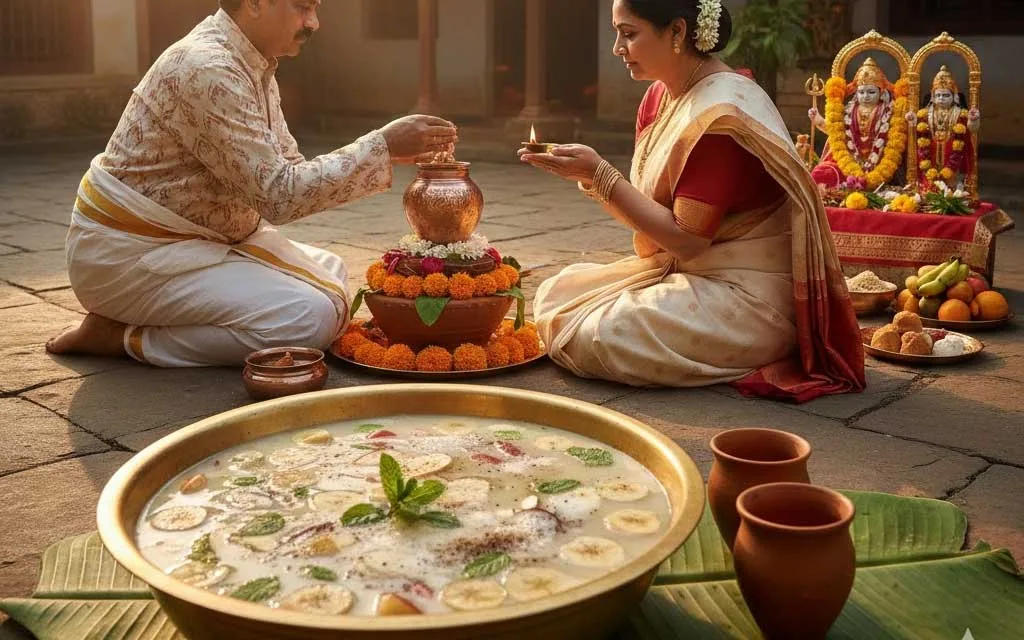
Sakkarai Pongal (Tamil Nadu – Pongal 2026)
The heart of Pongal festival (January 14-17, 2026):
- Bhogi (Jan 13): Discard old for renewal.
- Thai Pongal (Jan 14): Sweet pongal overflows, symbolizing abundance.
- Mattu Pongal (Jan 15): Honor cattle.
- Kaanum Pongal (Jan 16): Family outings.
Cook rice, dal, jaggery, milk, ghee, and cardamom. Shout "Pongalo Pongal!" as it boils over.
Other delights: Gajak, Undhiyu (Gujarat mixed vegetables), Puran Poli.
These recipes nourish body and soul, reminding us of divine bounty.
Modern Celebrations for Global Hindus: USA Celebrations 2026
In our diverse Hindu diaspora, Makar Sankranti fosters unity. In the USA, temples and communities host vibrant events—puja, cultural programs, kite flying, and feasts.
Adapt rituals at home: Morning Surya namaskar, virtual temple darshan, tilgul sharing via mail. Community gatherings in California, New Jersey, Texas feature pongal pots and devotional bhajans.
This festival bridges oceans, reminding us Sanatana Dharma thrives in every heart.
Practical tips for diaspora Hindus:
- Perform home puja with family.
- Join local temple events or online streams.
- Prepare simple recipes and donate to charities.
- Fly kites safely in open spaces.
This global observance embodies "Unity in Diversity"—the voice of Hindus worldwide.
For more inspiration, explore related articles on hindutone.com:
Benefits of Observance: Blessings and Karma Cleansing
Faithful observance brings:
- Spiritual Upliftment: Enhanced punya during Uttarayan.
- Health Benefits: Sesame-jaggery foods boost immunity in winter.
- Karma Cleansing: Charity and rituals dissolve past sins.
- Prosperity and Harmony: Invites abundance and familial peace.
As scriptures affirm, this is a gateway to divine grace.
Puja and Mantra Suggestions
Simple Home Puja:
- Light a diya with sesame oil.
- Offer flowers, fruits, and tilgul to Surya idol.
- Chant:Om Hreem Suryaya Namah (108 times) Gayatri Mantra: Om Bhur Bhuva Swah...
Recite Bhagavad Gita Chapter 4, Verse 1—Lord Krishna taught this knowledge to Surya first.
Dear devotees, as Makar Sankranti 2026 dawns on January 14, let us embrace our sacred traditions with renewed bhakti. May Lord Surya shower His blessings, cleansing our karma and filling our lives with light, prosperity, and unity.
Om Shanti Shanti Shanti
Jai Surya Dev! May we all rise like the Sun—radiant, disciplined, and devoted.
With heartfelt prayers, Your humble priest at hindutone.com The Voice of Hindus Worldwide: Unity in Diversity
🌸 For More Devotional Journey, Follow
- Temples
/temples/ - Tirumala Updates
/tirumala/ - Sabarimala Yatra
/category/sabarimala-yatra/ - Pooja, Slokas & Mantras
/pooja-slokas-and-mantras/ - Hindu Gods
/hindu-gods/
Frequently Asked Questions
When is Makar Sankranti in 2026?
Makar Sankranti falls on Wednesday, January 14, 2026, when Lord Surya enters Makara Rashi (Capricorn). It follows the solar calendar, unlike lunar-based festivals, and begins the six-month Uttarayan period.
What is the Punya Kaal for Makar Sankranti 2026?
The Sankranti moment is approximately 3:13 PM IST, with Punya Kaal from 3:13 PM to 5:45 PM. Maha Punya Kaal, considered the most potent time for Surya puja and offerings, runs from 3:13 PM to 4:58 PM.
What rituals are performed on Makar Sankranti?
Devotees take an early holy bath, offer arghya to Surya facing east at sunrise, and give charity such as sesame seeds, jaggery, blankets or food. Many also light small bonfires, fly kites in North and West India, and keep a partial sattvic fast.
Why are sesame and jaggery eaten on Makar Sankranti?
Sesame and jaggery provide winter warmth and symbolize unity, since til sticks together in sweets. In Maharashtra and Gujarat, tilgul ladoos are exchanged with the words "Tilgul ghya, god god bola", meaning eat sweetness and speak sweetly.
How is Makar Sankranti connected to Pongal?
In Tamil Nadu, Pongal runs January 14-17, 2026. Bhogi is on January 13, Thai Pongal on January 14, Mattu Pongal on January 15 and Kaanum Pongal on January 16, with sweet pongal cooked until it overflows.
How can Hindus in the USA observe Makar Sankranti at home?
Perform a home puja with the family, do Surya namaskar in the morning, and join local temple events or online streams. Prepare simple recipes, share tilgul, donate to charity and adjust the rituals to local sunrise and sunset.
You might also like

Sankranti 2026 Celebrations in USA: Complete Guide to Makar Sankranti Festivities

Makar Sankranti 2026 USA: City-Wise Events & Celebrations
Happy Pongal, Makar Sankranti & Lohri 2026: Wishes for Hindu Americans