Dussehra / Vijayadashami 2026: Complete Guide — Date, Muhurat, Rituals & Meaning
Dussehra (Vijayadashami) 2026 is on Tuesday, 20 October — the tenth day of Sharad Navratri. This complete HinduTone guide covers the date and muhurat, the Rama–Ravana and Durga–Mahishasura legends, Ayudha/Shami/Saraswati Puja, Ravana Dahan, Golu and Mysore Dasara.
Dussehra (Vijayadashami) 2026 is on Tuesday, 20 October — the tenth day of Sharad Navratri. This complete HinduTone guide covers the date and muhurat, the Rama–Ravana and Durga–Mahishasura legends, Ayudha/Shami/Saraswati Puja, Ravana Dahan, Golu and Mysore Dasara.
Dussehra — Vijayadashami — is one of the most significant festivals in Sanatana Dharma, celebrating the triumph of good over evil. In 2026, Dussehra falls on Tuesday, 20 October, marking the tenth day of the Sharad Navratri (11–20 October 2026). It commemorates two great victories: Lord Rama’s triumph over Ravana, and Goddess Durga’s slaying of the demon Mahishasura.
This HinduTone pillar guide is the complete reference for Dussehra / Vijayadashami 2026 — the date and muhurat, the two legends, the rituals (Ayudha Puja, Shami Puja, Vidyarambham), Ravana Dahan, Golu / Bommala Koluvu, the famous Mysore Dasara, and how the festival is celebrated by the Hindu diaspora.
Quick answer: Dussehra (Vijayadashami) 2026 is on Tuesday, 20 October 2026 — the culmination of Sharad Navratri (11–20 October). The aparahna (afternoon) period is traditionally auspicious for Vijayadashami rituals. Confirm exact city-wise timings against a reliable panchang close to the date.
Advertisement
Dussehra 2026 — Date & Key Days at a Glance
- Sharad Navratri: 11–20 October 2026 (nine nights of Devi worship)
- Durga Ashtami / Maha Ashtami: around 18 October 2026
- Maha Navami: around 19 October 2026 (Ayudha Puja, Saraswati Puja)
- Dussehra / Vijayadashami: Tuesday, 20 October 2026
- Auspicious time: the aparahna (afternoon) kaal and Vijaya muhurat on Vijayadashami
The Two Great Legends of Dussehra
Rama’s Victory over Ravana
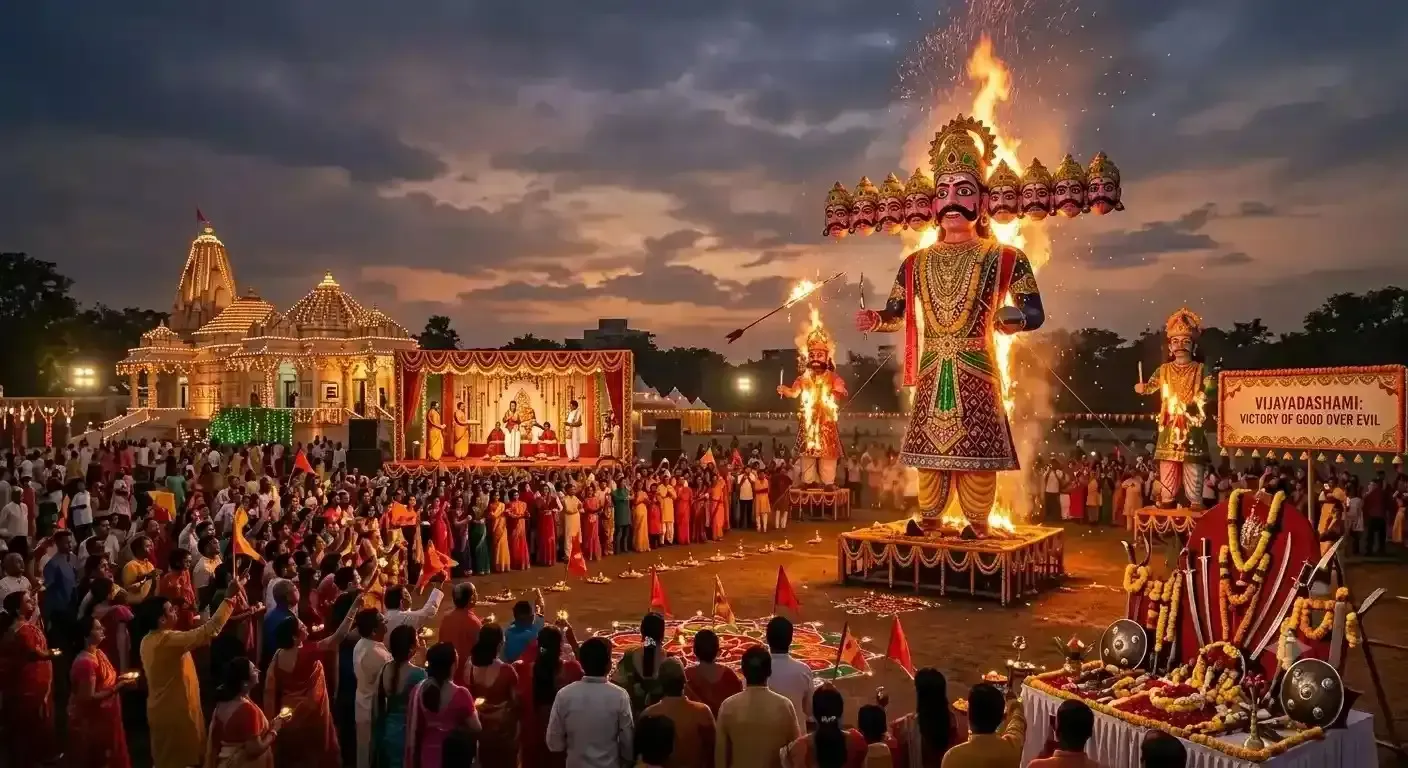
After a fierce battle, Lord Rama vanquished the ten-headed demon king Ravana of Lanka to rescue Sita — the victory of dharma over adharma. This is commemorated across North India with Ramlila performances and the dramatic burning of towering Ravana effigies (Ravana Dahan) on Vijayadashami evening.
Durga’s Victory over Mahishasura
After a nine-day battle, Goddess Durga slew the buffalo-demon Mahishasura on the tenth day, restoring cosmic order. This is the heart of Sharad Navratri and Durga Puja, especially in eastern India, culminating in Vijayadashami and the immersion of Durga idols.
The Rituals of Vijayadashami
Ayudha Puja & Vahana Puja
On Maha Navami / Vijayadashami, tools, instruments, books and vehicles are cleaned and worshipped — honouring the divine in the implements of our work and livelihood. It is especially observed in South India.
Shami Puja & the Jammi Leaf
The Shami (Jammi) tree is worshipped on Vijayadashami, recalling the Pandavas who retrieved their hidden weapons from a Shami tree at the end of their exile. In Telangana and Andhra, exchanging Jammi leaves (as "gold") is a cherished Dussehra custom.
Saraswati Puja & Vidyarambham
Vijayadashami is considered highly auspicious for new beginnings in learning. Children are initiated into education (Vidyarambham / Aksharabhyasam), and Saraswati, goddess of knowledge, is worshipped — a tradition strong across South India.
Ravana Dahan & Ramlila
Across North India, the days of Navratri feature Ramlila — dramatic re-enactments of the Ramayana — culminating on Vijayadashami with the burning of giant effigies of Ravana, Kumbhakarna and Meghnad. The blazing effigies symbolise the destruction of ego, evil and ignorance.
Golu / Bommala Koluvu
In South India, Navratri is marked by Golu (Bommala Koluvu) — an artistic, tiered display of dolls and figurines depicting gods, saints and scenes from daily life. Families visit one another’s Golu, exchange gifts and tamboolam, and celebrate the divine feminine through the nine nights.
Mysore Dasara — A Royal Spectacle
Karnataka’s Mysore Dasara is among the grandest celebrations, with the illuminated Mysore Palace and the famous Jamboo Savari procession featuring caparisoned elephants. It is a 400-year-old tradition and a major draw for devotees and travellers alike.
Dussehra Around the World — The Diaspora
Wherever Hindus live, Vijayadashami is celebrated — Durga Puja pandals, Ramlila, Garba/Dandiya nights and Ravana Dahan events take place across the USA, UK, Canada, Australia and beyond. As this cluster grows, HinduTone will add dedicated guides:
- Sharad Navratri to Dussehra 2026 — the 10-day journey explained
- Ayudha Puja, Vahana Puja & Shami Puja — Vijayadashami vidhi
- Saraswati Puja & Vidyarambham on Vijayadashami
- Bommala Koluvu / Golu 2026 — setup & meaning
Frequently Asked Questions (FAQ)
When is Dussehra in 2026?
Dussehra (Vijayadashami) 2026 is on Tuesday, 20 October — the tenth day of Sharad Navratri (11–20 October 2026).
What does Dussehra celebrate?
Two victories of good over evil — Rama’s triumph over Ravana, and Durga’s slaying of Mahishasura.
What is the significance of Vijayadashami for new beginnings?
It is considered highly auspicious for starting learning (Vidyarambham), worshipping tools and books (Ayudha Puja), and undertaking new ventures.
What is Ravana Dahan?
The burning of giant effigies of Ravana (and Kumbhakarna, Meghnad) on Vijayadashami evening, symbolising the destruction of evil and ego.
Final Word
Dussehra 2026, on 20 October, is a celebration of dharma’s victory — through Rama, through Durga, and within ourselves. Whether you burn the Ravana effigy, arrange a Golu, perform Ayudha Puja, or begin a child’s education, may the festival bring the triumph of good over evil into your life. Shubh Vijayadashami!
May Goddess Durga and Lord Rama bless you with courage and victory over every obstacle. Bookmark this guide — we will keep it updated with final timings closer to the date.
Explore More on HinduTone
- Sharad Navratri 2026 — Nine Nights of Devi Worship
- Vinayaka Chavithi / Ganesh Chaturthi 2026 — Complete Guide
- Soundarya Lahari & Devi Stotras
- Hindu Festivals 2026 — Complete Calendar