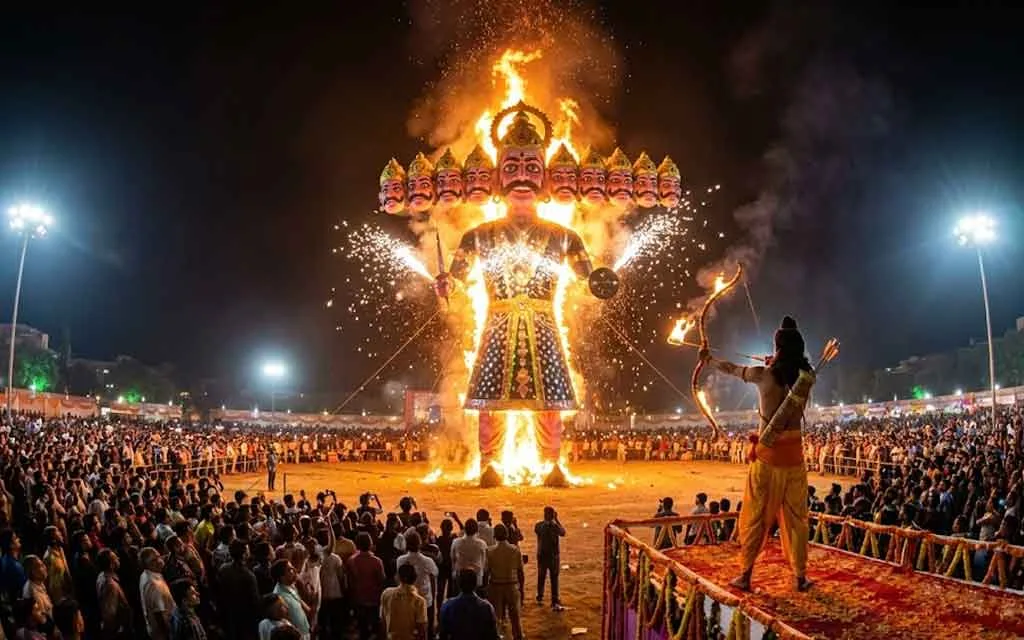
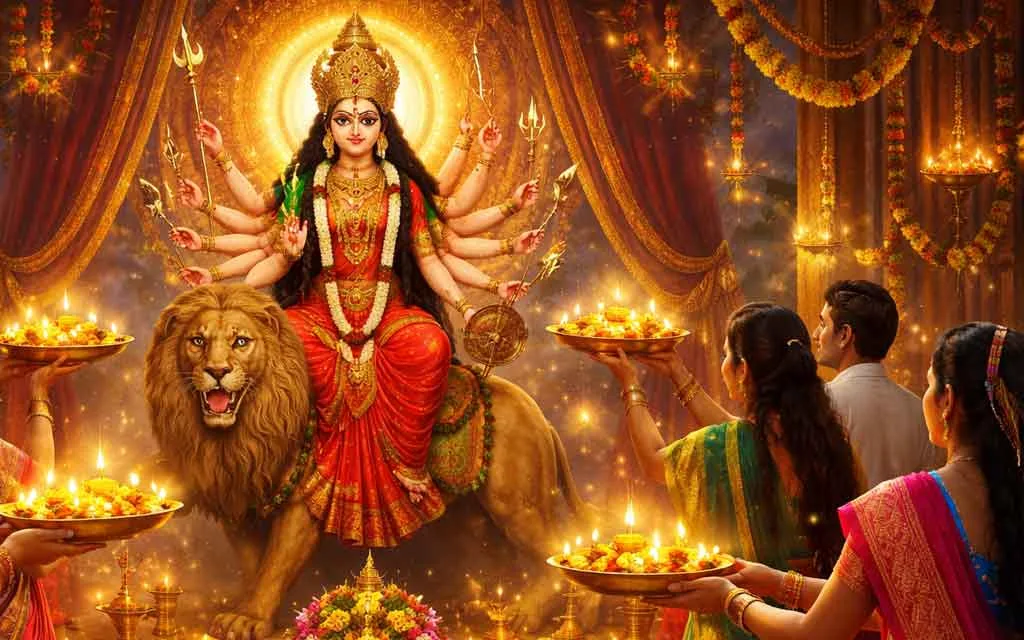
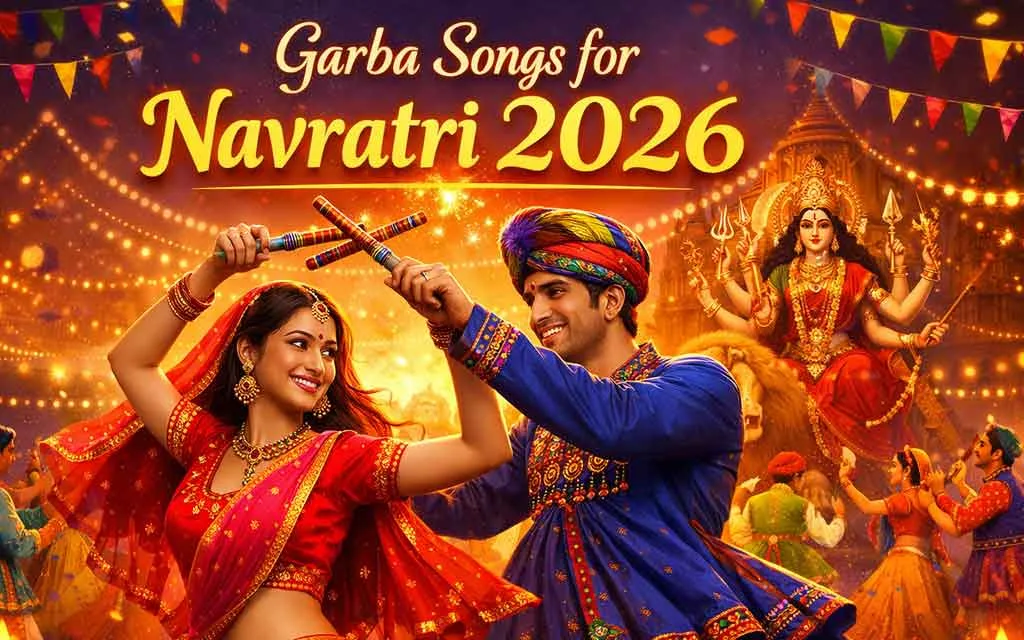
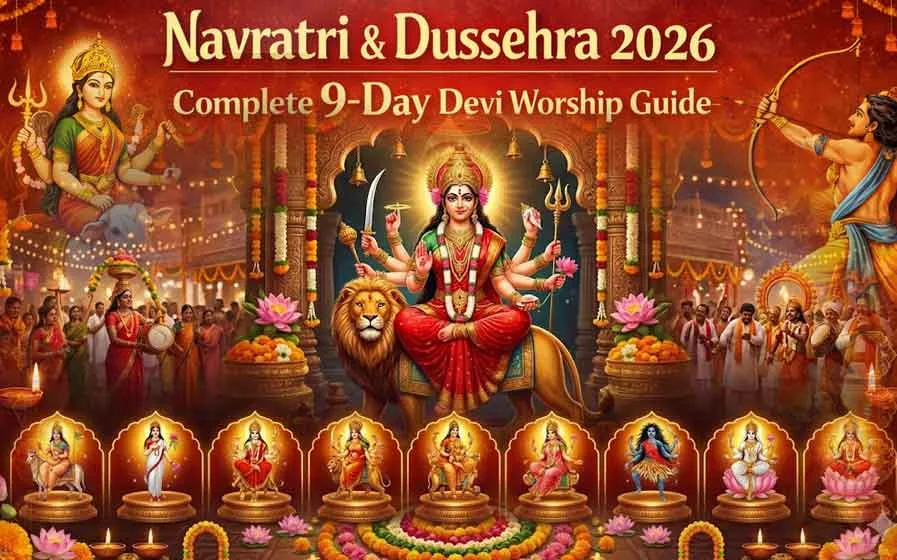
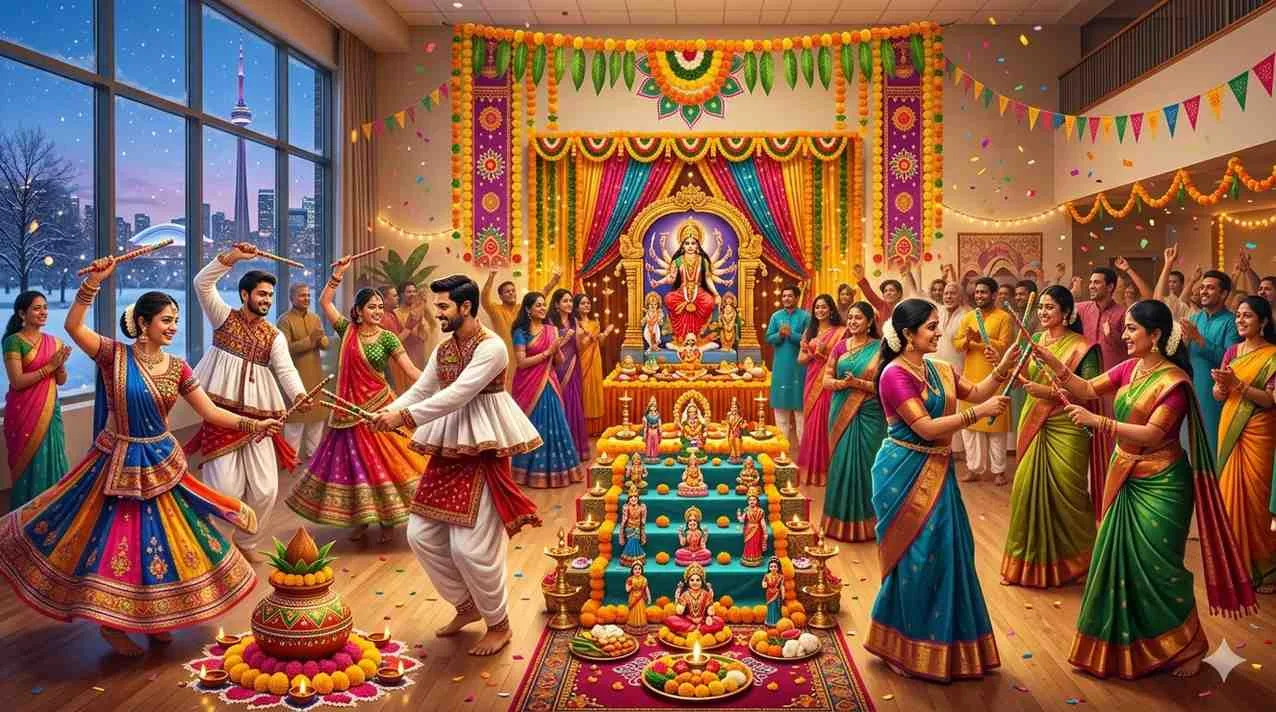
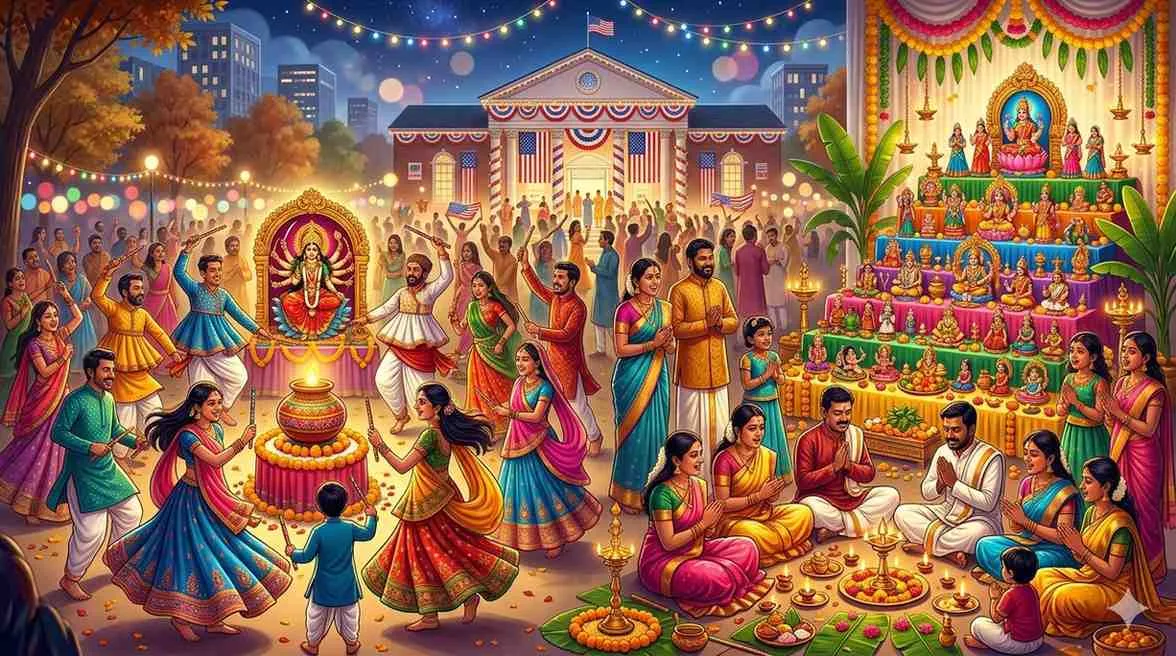
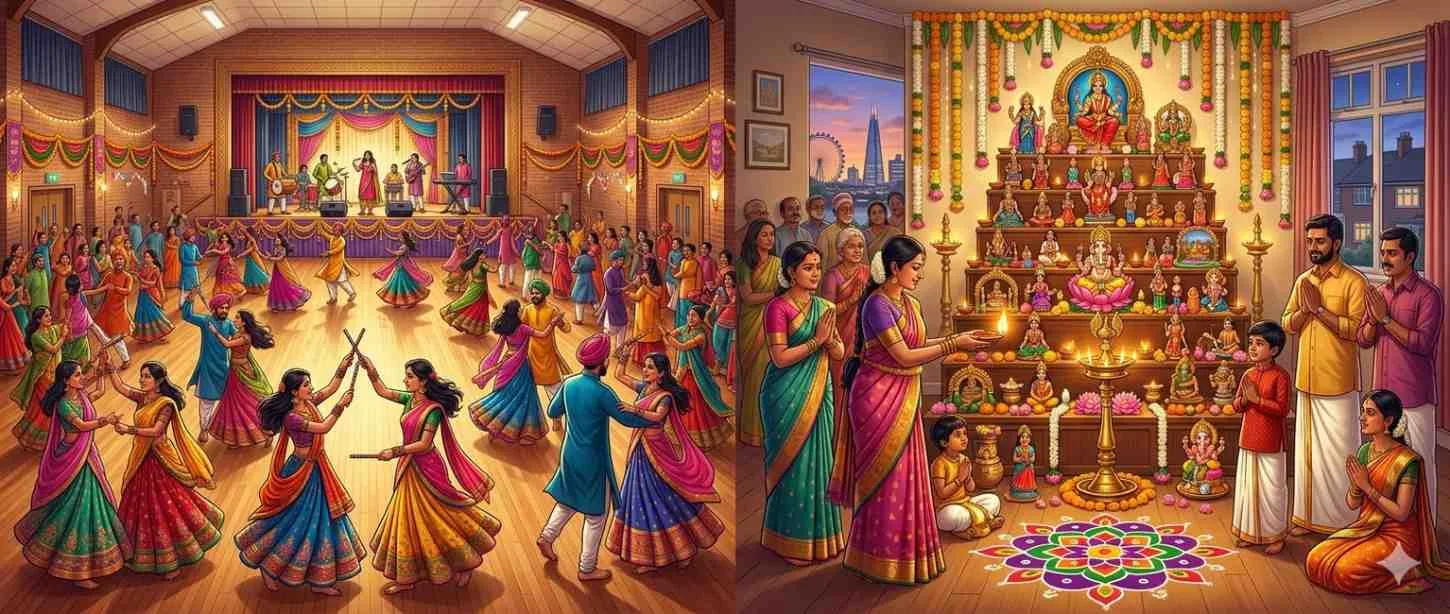
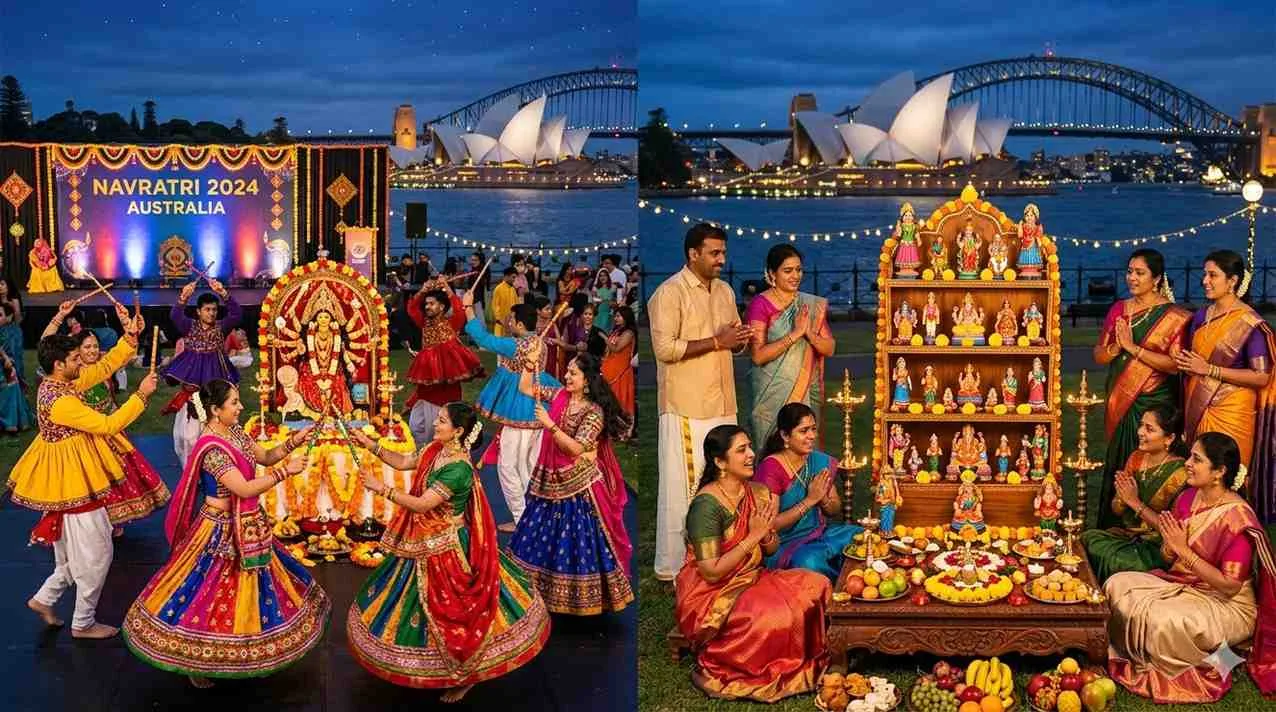
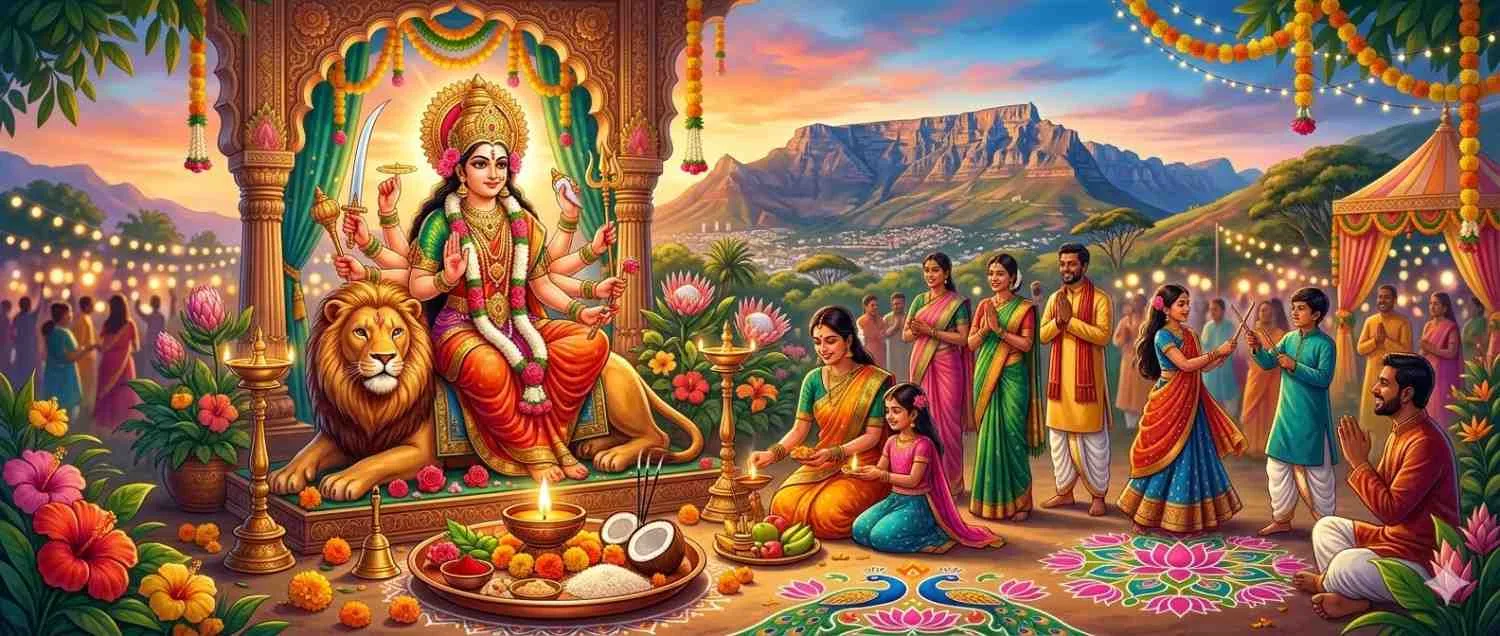
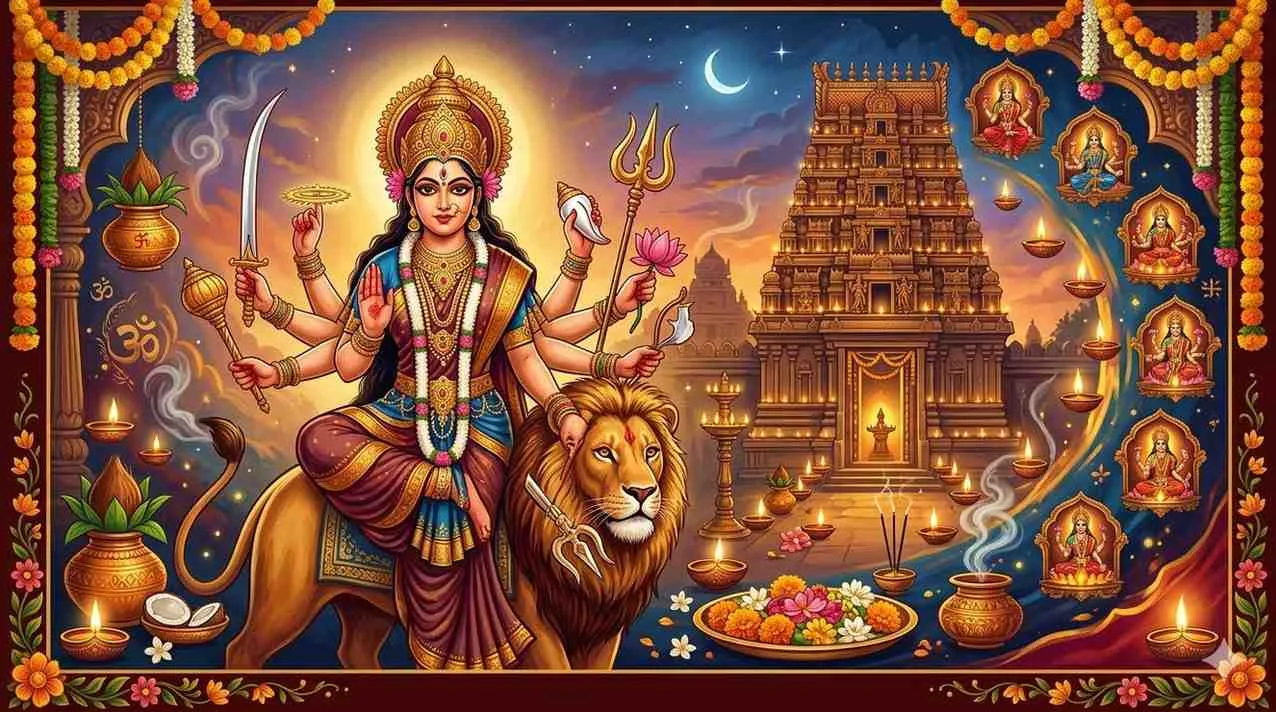
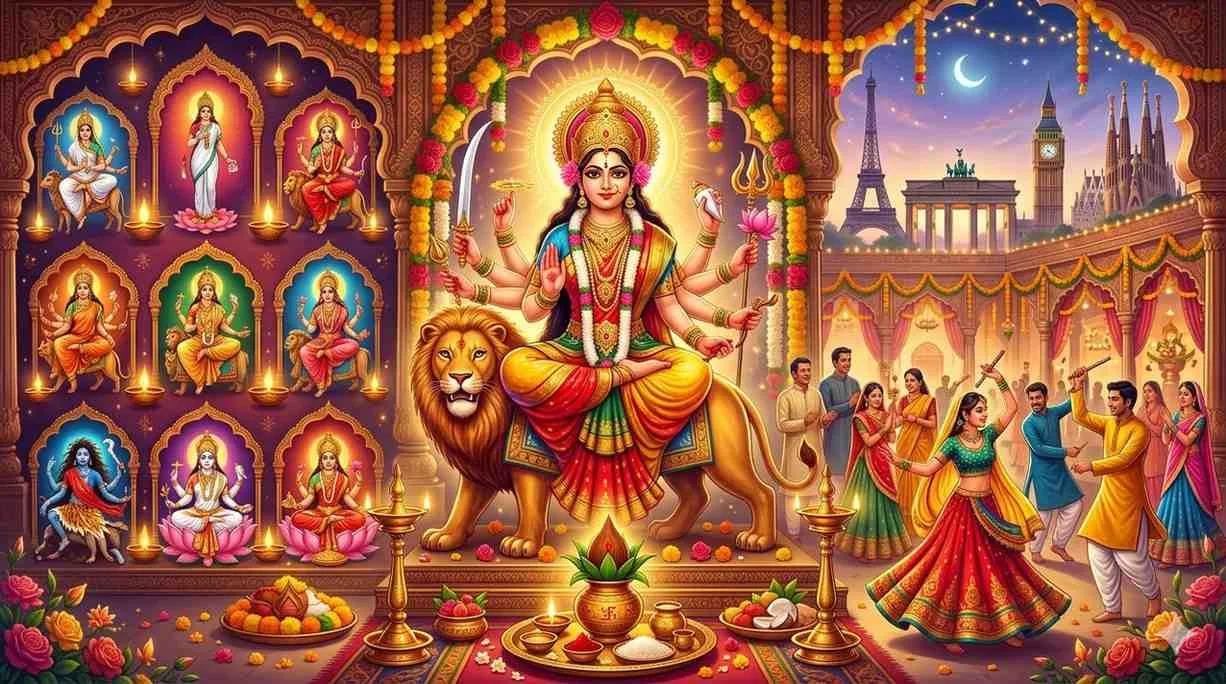
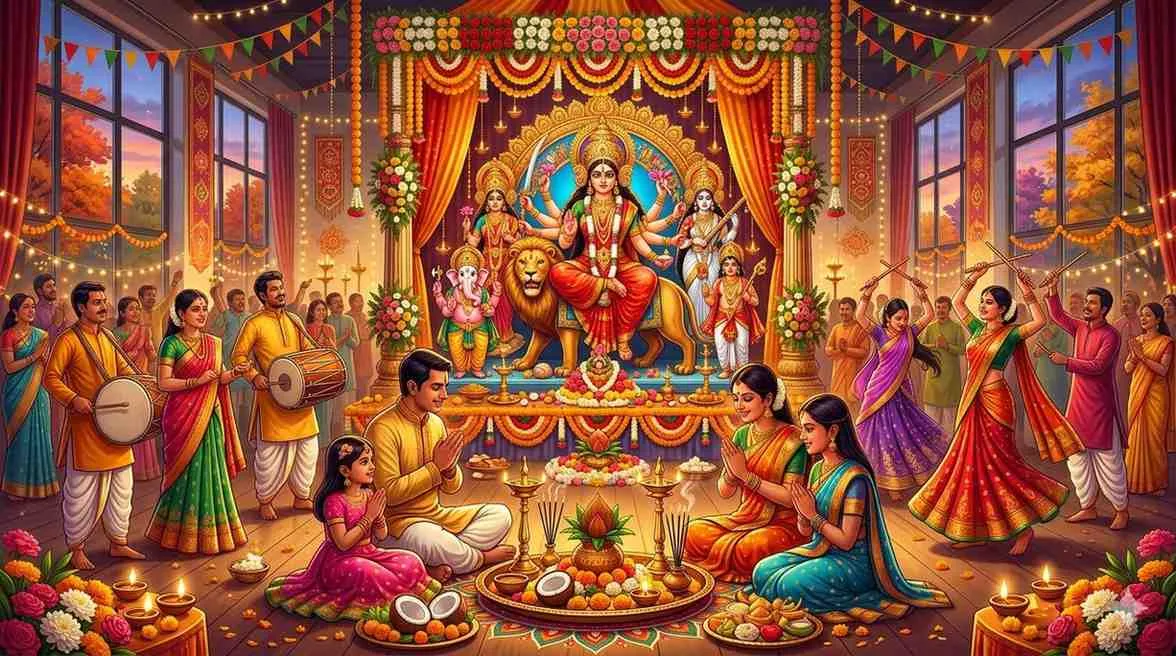
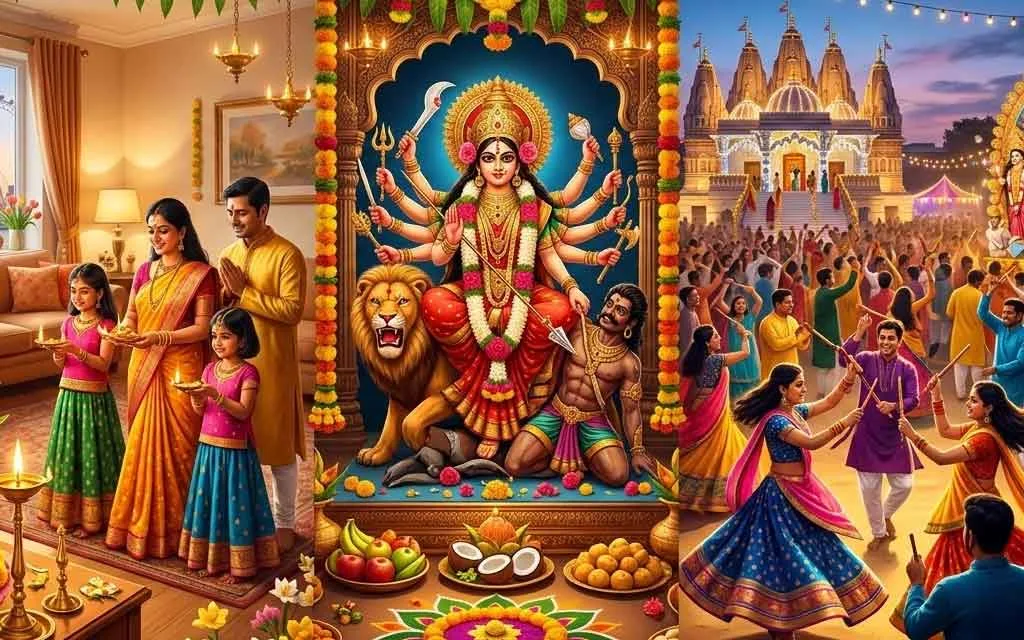
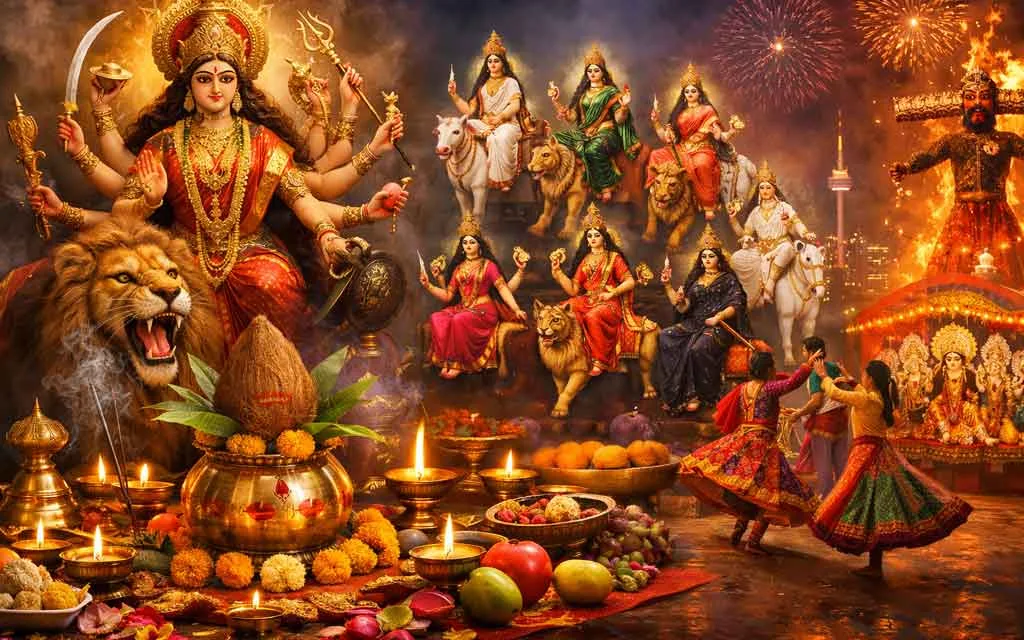
Navratri — 'nine nights' — is the great festival of Devi, the Hindu Goddess in her many forms. Five Navratris fall through the year (Chaitra, Ashada, Sharad, Magha and Pausha — only Chaitra and Sharad are widely observed), with Sharad Navratri in the autumn being the largest. Each of the nine nights is dedicated to one form of the Navadurga: Shailaputri, Brahmacharini, Chandraghanta, Kushmanda, Skandamata, Katyayani, Kalaratri, Mahagauri and Siddhidatri. The festival culminates on the tenth day — Vijayadashami / Dussehra — which celebrates Rama's victory over Ravana and Durga's victory over Mahishasura. Sharad Navratri 2026 falls 10–18 October, with Vijayadashami on Monday, 19 October. HinduTone's Navratri hub covers the full festival cycle: daily Devi puja vidhi for each of the nine forms (with the specific mantra, colour, bhog/offering and story for each day), the Devi Mahatmya's three episodes (the slaying of Madhu-Kaitabha, Mahishasura, and Shumbha-Nishumbha), Ghatasthapana on day 1, the Lalita Panchami / Saraswathi Avahanam tradition, Durgashtami's grand puja, Ayudha Puja on day 9 (when craftsmen worship their tools), and Vijayadashami's three layered celebrations — Rama's victory, Durga's victory and Saraswathi's culmination. We also cover the regional Navratri traditions: Garba and Dandiya nights in Gujarat, Durga Puja pandals in Bengal, Bommai Kolu doll displays in Tamil Nadu, the Mysore Dasara royal procession in Karnataka, and how the diaspora celebrates Navratri in New Jersey, Houston, London, Sydney and beyond.
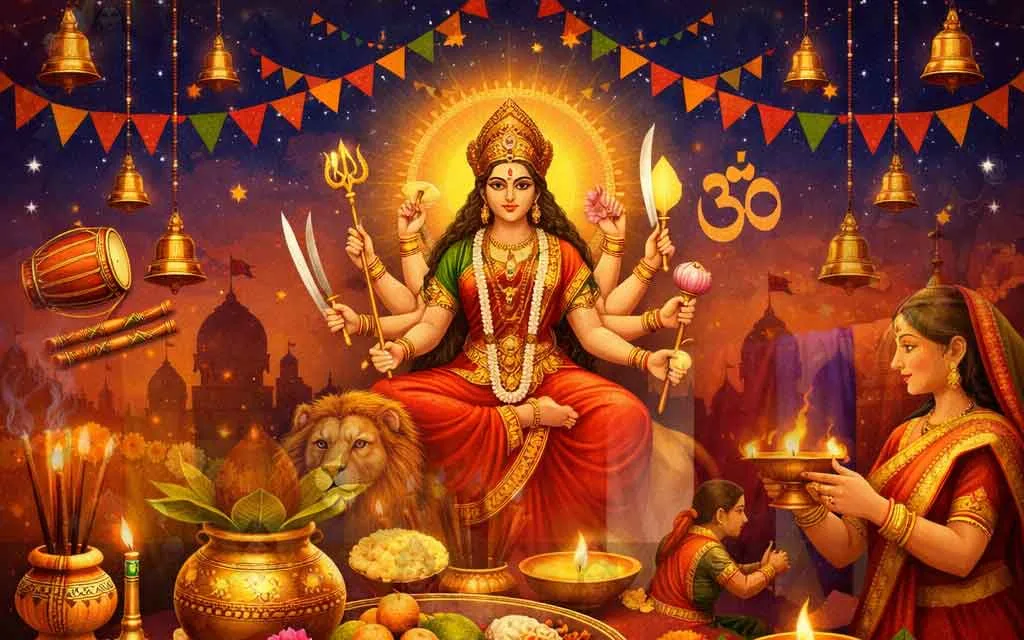
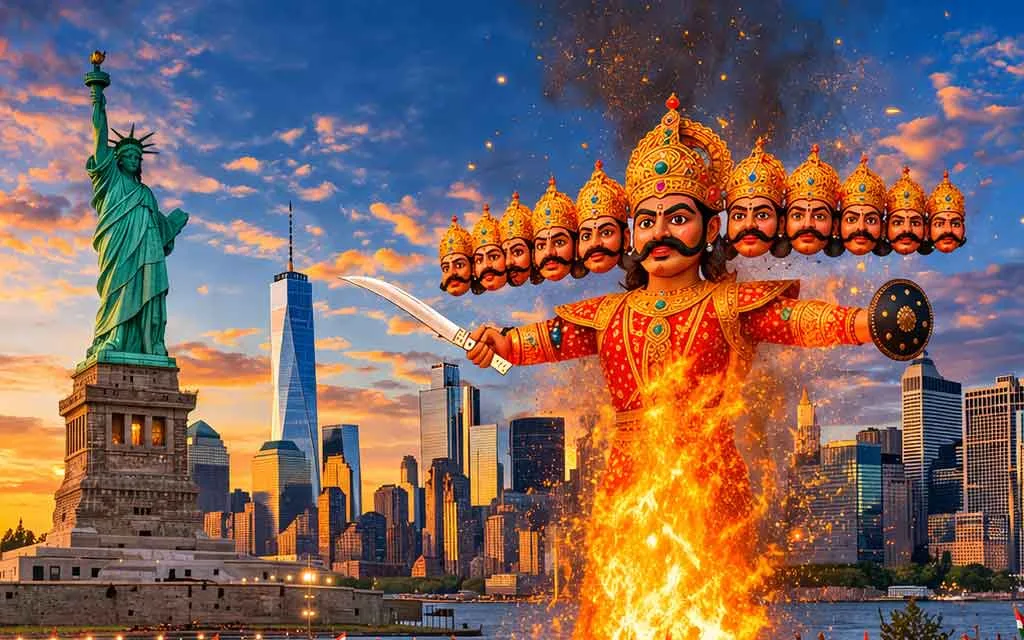
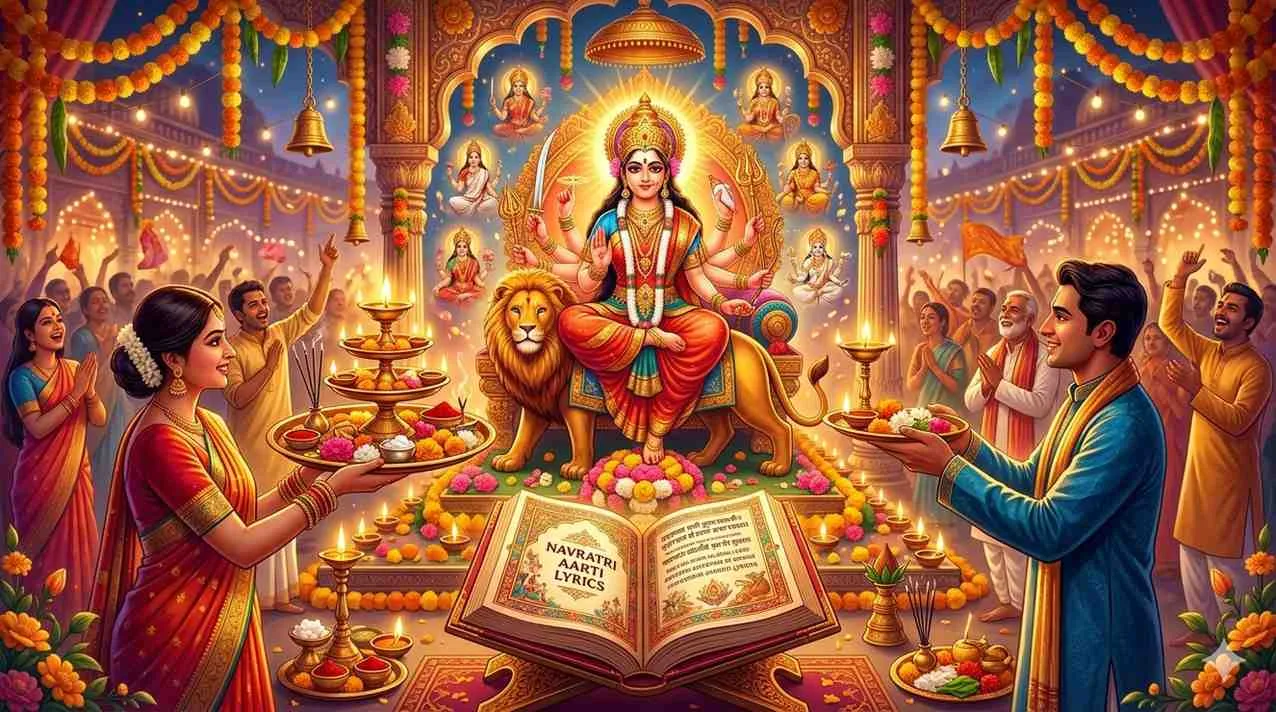
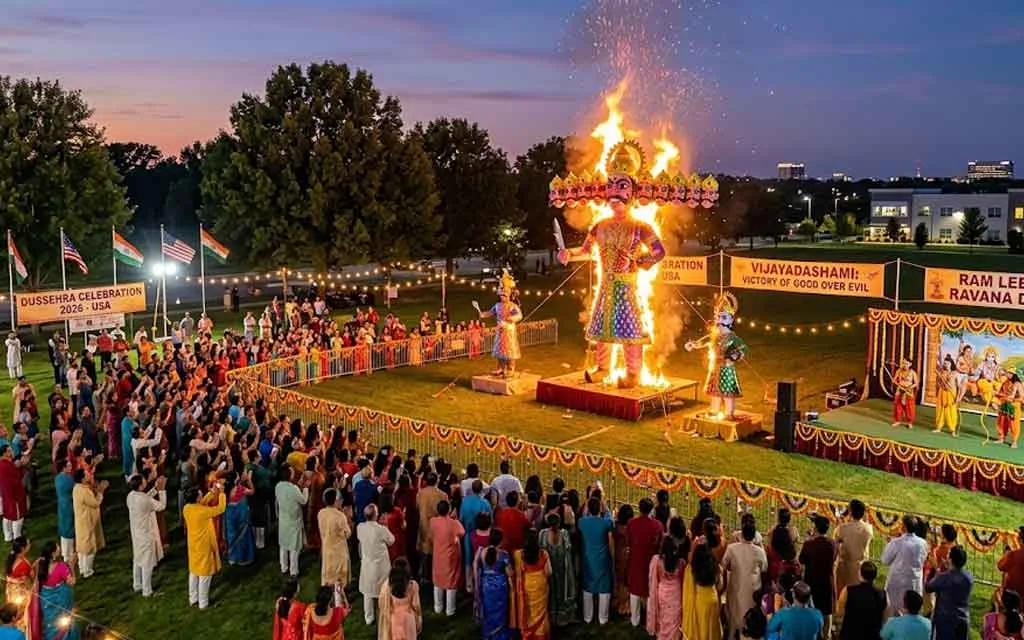
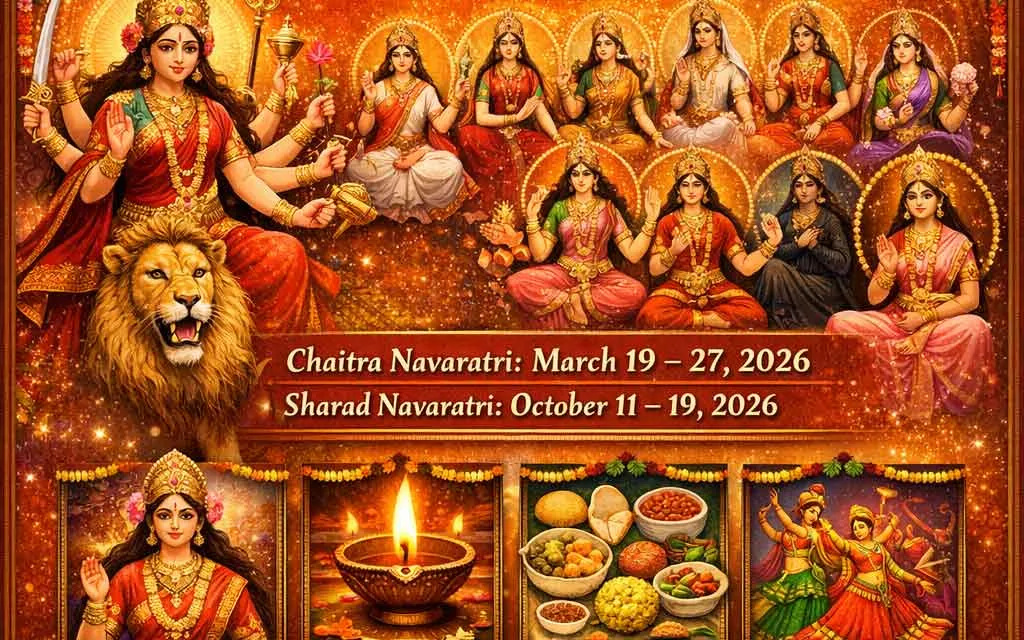

Sharad Navratri 2026 runs from Saturday, 10 October (Ghatasthapana) through Sunday, 18 October (Mahanavami). Vijayadashami / Dussehra falls on Monday, 19 October.
Day 1: Shailaputri (mountain daughter). Day 2: Brahmacharini (the celibate yogini). Day 3: Chandraghanta (with the bell-moon). Day 4: Kushmanda (creator of the cosmic egg). Day 5: Skandamata (Kartikeya's mother). Day 6: Katyayani (warrior form). Day 7: Kalaratri (the dark night). Day 8: Mahagauri (the white-radiant). Day 9: Siddhidatri (giver of siddhis).
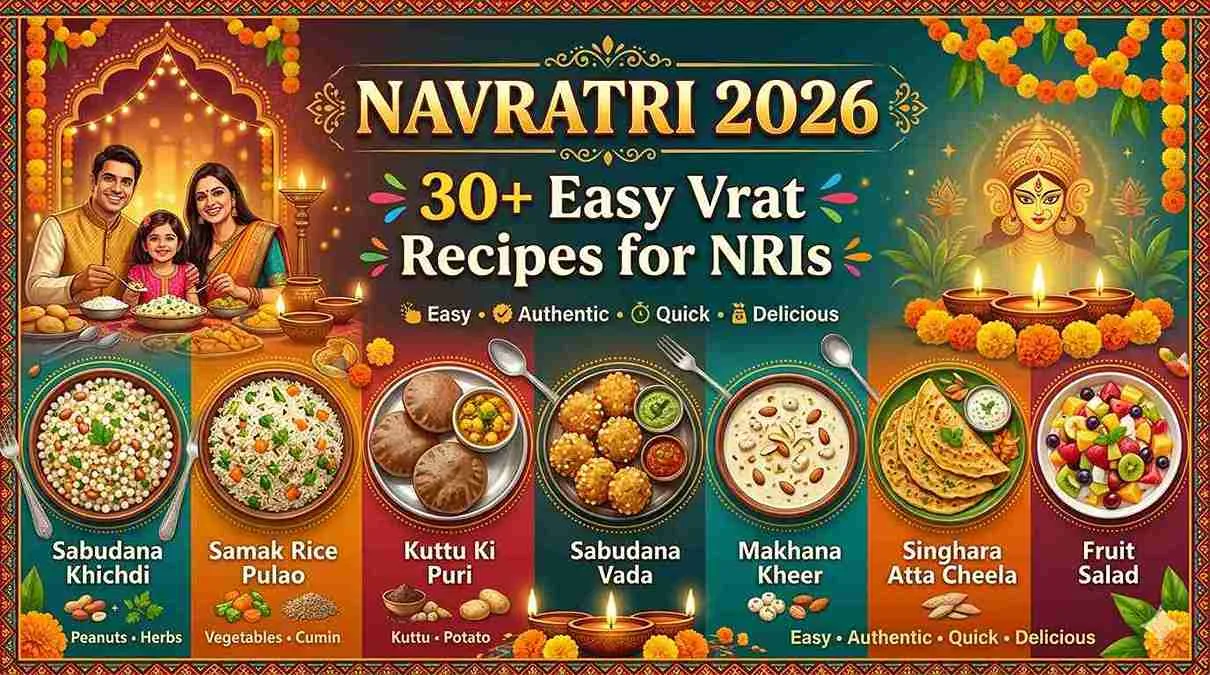
Most devotees do nirjala (waterless) fasts for some days or partial fasts daily. Permitted foods: kuttu (buckwheat) flour, singhada flour, sabudana, fruits, milk, ghee, sendha namak (rock salt), nuts, potatoes, sweet potatoes. Avoided: regular salt, onion, garlic, lentils, regular grains. Devotees consume one or two satvik meals daily.
Durga Puja (Bengal, Odisha, Assam) is the same 9-night Sharad Navratri festival framed around the public-pandal celebration of Devi's victory over Mahishasura, culminating in immersion (visarjan). Navratri elsewhere focuses on home-based Navadurga puja, garba dance, and fasting. Same astronomy, different cultural expression.
Performed on Mahanavami (day 9), Ayudha Puja is the worship of tools, weapons and instruments — sacred to Devi as Saraswathi (knowledge tools) and Durga (battle weapons). Traditionally craftsmen worship their workshop tools, scholars their books, drivers their vehicles, and warriors their weapons. The next day, Vijayadashami, marks resuming work with the goddess's blessing.
