Haridwar Tragedy: Six Lives Lost in Stampede at Mansa Devi Temple
Haridwar Tragedy: Six Lives Lost in Stampede at Mansa Devi Temple Haridwar, Uttarakhand, July 27, 2025 – A heart-wrenching stampede at the Mansa Devi Temple in…
Haridwar Tragedy: Six Lives Lost in Stampede at Mansa Devi Temple
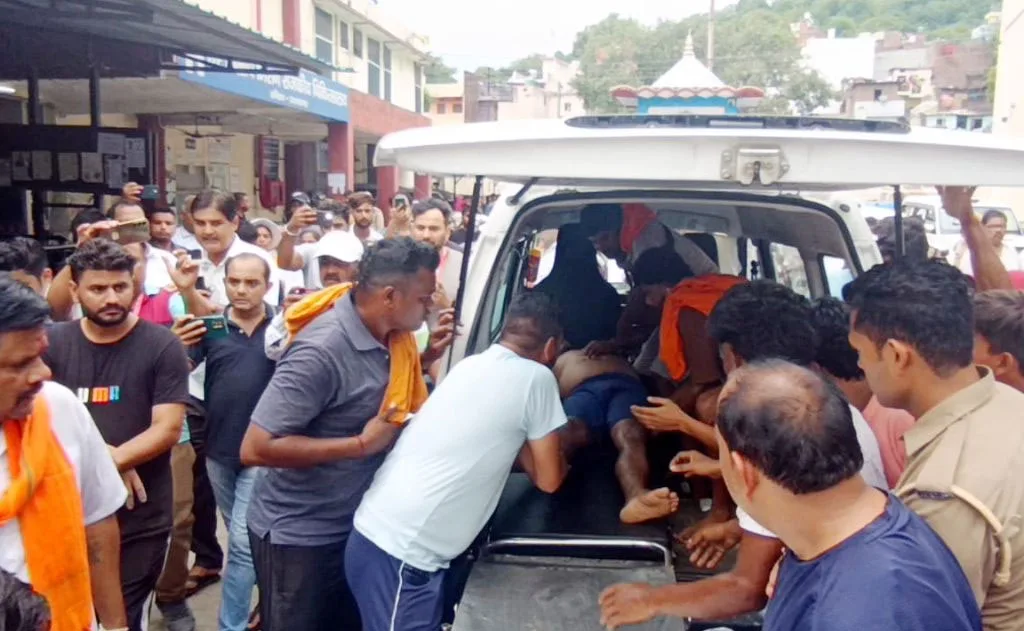
Haridwar, Uttarakhand, July 27, 2025 – A heart-wrenching stampede at the Mansa Devi Temple in Haridwar claimed six lives and injured several others on Sunday morning. The incident occurred at around 10:50 AM IST during the holy month of Shravan, when thousands of devotees had gathered at the revered temple atop the Shivalik Hills to offer prayers to Goddess Mansa Devi.
What Happened?
The stampede reportedly erupted near the temple’s narrow staircase pathway, overwhelmed by a massive influx of pilgrims. Initial reports suggest that a sudden panic, possibly triggered by an electrocution incident, led to the catastrophic surge. Garhwal Division Commissioner Vinay Shankar Pandey stated, “Six devotees lost their lives in a stampede at Mansa Devi Temple due to an unprecedented crowd. We are investigating the matter, and a detailed report is forthcoming.”
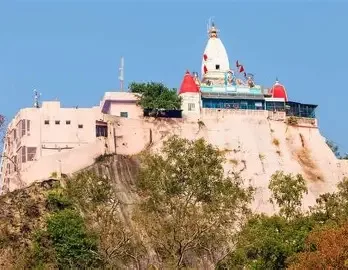
The Mansa Devi Temple, a key pilgrimage site among Haridwar’s panch tirthas, draws countless worshippers, particularly during Shravan. The temple’s elevated location and limited access routes likely exacerbated the situation, leading to the tragic outcome.
Immediate Response
Local police, along with the Uttarakhand State Disaster Response Force (SDRF), acted swiftly to control the situation and initiate rescue operations. The injured were promptly transported to nearby medical facilities, including GD Hospital, where doctors are providing critical care. Authorities are working to ensure the safety of remaining devotees and prevent further chaos.
Chief Minister Pushkar Singh Dhami expressed deep sorrow, saying, “The loss of lives in the Mansa Devi Temple stampede is profoundly tragic. Our teams, including SDRF and local police, are fully engaged in relief efforts to support the victims and their families.”
Ongoing Investigation
While the precise cause of the stampede is still under review, officials are probing potential factors, including crowd management lapses and the reported electrocution. Haridwar SSP assured that a thorough investigation is underway to ascertain the circumstances and prevent future incidents.
This tragedy follows a disturbing pattern of stampedes at religious sites in 2025, including incidents at the Lord Venkateswara Swamy Temple in Tirumala (January 8) and the Maha Kumbh in Sangam (January 29). These events have reignited calls for enhanced safety protocols at India’s sacred sites.
A Need for Reform
The Mansa Devi Temple stampede underscores the urgent need for better crowd management and infrastructure upgrades at religious hotspots. With Haridwar being a spiritual cornerstone, authorities must prioritize robust safety measures, regular inspections, and improved access routes to safeguard devotees.
As the nation grieves, the focus is on supporting the affected families and ensuring such tragedies are not repeated. The administration has promised a detailed report, and relief efforts continue at the site.
Stay updated on this story at www.bharattone.com.
Who Is Mansa Devi and Why Does This Temple Draw Such Enormous Crowds?
Mansa Devi is venerated as a manifestation of Shakti — the divine feminine power — whose name derives from the Sanskrit word 'mansa,' meaning 'wish' or 'desire.' Devotees believe she fulfils heartfelt wishes, particularly those tied to family welfare, health, and prosperity. The Devi Bhagavata Purana identifies her as a daughter of the sage Kashyapa, born from the mind (manas) of Shiva, giving her both a Shaiva and a Shakta lineage that broadens her appeal across traditions.
The Haridwar temple sits atop Bilwa Parvat in the Shivalik Hills and is counted among the celebrated Panch Tirthas of Haridwar — the five sacred crossing-points that include Har Ki Pauri, Kushavarta, Bilwa Teertha, Neel Dhara, and Kankhala. As one of the 51 Shakti Peethas referenced in Tantric tradition, it carries extraordinary theological weight. A ropeway service and a steep staircase pathway are the two main approaches, but on high-traffic days both routes can handle only a fraction of the crowd that descends on the site, creating the bottleneck conditions that proved fatal on Sunday.
Why Is Shravan the Most Dangerous Month for Pilgrimage Crowds at Haridwar?
The Hindu lunar month of Shravan (roughly July–August) is considered supremely auspicious for the worship of Shiva and Shakti. During this month, millions of Kanwariyas — devotees carrying decorated pots of Ganga water — trek to Shiva temples across North India, and a significant portion pass through or halt at Haridwar. The convergence of Kanwaria Yatra pilgrims, regular Mansa Devi devotees, and tourists creates a population density along the ghats and hillside temples that can surge to several hundred thousand people on a single weekend day.
Mondays within Shravan, known as Shravan Somavar, are especially crowded because they are held sacred to Lord Shiva, and many devotees extend their visit to include the nearby Shakti shrines. Sunday, July 27 fell on the eve of a Shravan Somavar, which likely concentrated an unusually large number of pilgrims in the area simultaneously. Temple administrations and district authorities have historically struggled to predict the precise peak-load days because arrival patterns depend on multiple overlapping festivals, weather conditions along pilgrimage routes, and real-time information shared through social media that can rapidly redirect crowds.
A History of Stampede Tragedies at Indian Religious Gatherings — What Patterns Emerge?
India has witnessed several devastating stampedes at religious sites over the past two decades. The 2005 Mandher Devi temple tragedy in Maharashtra claimed over 300 lives, while the 2008 Chamunda Devi stampede in Jodhpur killed more than 200 worshippers. Closer geographically, a 2010 stampede on a bridge near Haridwar during the Kumbh Mela resulted in at least 15 deaths. Each incident has prompted governmental reviews, yet the structural challenges of managing exponentially growing pilgrimage populations at sites with pre-modern access infrastructure remain largely unresolved.
Crowd-crush disasters follow a predictable physical logic: as density exceeds approximately four to five persons per square metre, individuals lose autonomous movement and compressive asphyxiation becomes a risk. Narrow staircase corridors — common in hillside temples built centuries ago — are among the most hazardous chokepoints because crowd pressure can only be released from one direction. The reported trigger of an electrocution incident introducing sudden panic is consistent with the documented phenomenon where even a small localised alarm produces a pressure wave through a dense crowd that amplifies catastrophically within seconds.
What Reforms in Crowd Management Has Uttarakhand Previously Pledged, and Where Do Gaps Remain?
Following the 2021 Char Dham Yatra, which saw hundreds of deaths — many attributed to overcrowding and inadequate medical infrastructure — the Uttarakhand government introduced a mandatory online registration system capping daily visitor numbers at Kedarnath, Badrinath, Gangotri, and Yamunotri. RFID-enabled wristbands and real-time crowd-monitoring dashboards were piloted at Kedarnath during subsequent seasons. However, these measures were primarily designed for the Char Dham circuit and were not uniformly extended to the urban Shakti shrines within Haridwar city limits.
Mansa Devi Temple falls under the administration of the Shri Mata Mansa Devi Shrine Board, a separate body whose crowd-control protocols, security staffing ratios, and infrastructure investment timelines operate independently of the Char Dham management framework. Critics have long pointed out that the ropeway — while helpful — was not designed with emergency evacuation capacity in mind, and that the staircase pathway lacks sufficient width for simultaneous bidirectional foot traffic. A comprehensive safety audit commissioned by the shrine board, mandated after a minor stampede incident in 2017, had reportedly recommended handrail improvements and timed entry slots, but implementation of the full set of recommendations has been inconsistent.
How Can Devotees and Temple Authorities Apply Ancient Principles of Yatra to Safer Modern Pilgrimage?
Classical dharmashastra texts such as the Tirthavivechanakanda within the Skanda Purana include detailed guidance on the conduct expected of pilgrims and the duties of kshetrapala (guardian officials of sacred territories). These prescriptions emphasise orderly movement, avoidance of physical aggression, and the moral responsibility of local administrators to ensure that pilgrims arrive and depart safely — duties that were historically enforced by temple-appointed personnel called dvarapalas and marga-rakshaks.
Contemporary shrine management could draw meaningfully from these principles by instituting timed darshan slots based on real-time occupancy data, deploying trained crowd marshals at every identified chokepoint, and creating clearly marked one-way routes that separate ascending and descending pilgrims. Technology-assisted solutions such as geofenced mobile alerts warning devotees of dangerous crowd density at specific locations are already operationally feasible and have been deployed at selected Kumbh Mela sectors. The tragedy at Mansa Devi underscores that honouring the sanctity of a tirtha (sacred crossing) must now include a commitment to ensuring that every devotee who undertakes the yatra returns home safely.
Grief, Accountability, and the Path Forward for Victims' Families
Under India's Disaster Management Act of 2005, state governments are empowered to provide ex gratia compensation to families of victims in declared disaster incidents, and the Uttarakhand State Disaster Management Authority has in past incidents disbursed amounts ranging from two to four lakh rupees per fatality. Chief Minister Pushkar Singh Dhami's statement acknowledging the tragedy is an important first step, but affected families and civil society groups are likely to demand a transparent magisterial inquiry that establishes individual accountability rather than attributing the deaths solely to an 'unprecedented crowd.'
Legal precedents from the Allahabad High Court, which has exercised supervisory jurisdiction over Kumbh Mela safety, suggest that shrine boards and district administrations can face court-monitored compliance mandates when stampede deaths result from demonstrable administrative negligence. Families of the deceased deserve not only financial relief but also a credible public commitment — backed by enforceable timelines — that the access infrastructure, crowd-management protocols, and emergency response capacity at Mansa Devi Temple will be substantially upgraded before the next major pilgrimage season. The memory of those lost on July 27 should serve as an unyielding imperative for that reform.
Also read: Hindu temple safety tips for devotees and families.
Frequently Asked Questions
Where is Haridwar Tragedy located?
Haridwar Tragedy: Six Lives Lost in Stampede at Mansa Devi Temple Haridwar, Uttarakhand, July 27, 2025 – A heart-wrenching stampede at the Mansa Devi Temple in Haridwar claimed six lives and injured several others on Sunday morning. The incident occurred at around 10:50 AM IST during the holy month of Shravan, when thousands of devotees had gathered at the r
Who is the presiding deity of Haridwar Tragedy?
The presiding deity is Goddess Durga.
What are the timings and how do I reach Haridwar Tragedy?
Temples typically open early morning and evening; confirm current darshan timings before visiting. The nearest airport, railway station and road routes are covered in the guide above.
What is the best time to visit Haridwar Tragedy?
Major festival days and the cooler months are popular, though weekday mornings offer a calmer darshan. Plan around the temple's key festivals for the most vibrant experience.
Share this with family and friends
Send it on WhatsApp, post it, or copy the link.
More from News
- Aurora Hindu Temple Shooting Plot Foiled: Illinois Teen Charged After Rifle Jammed, Police Say
- Hindu Temples Abroad News, October 2026: Neasden's 42-Foot Tapomurti, Maha Annakut, Paris Mandir Hosts UNESCO Diplomats, Abu Dhabi Prayers
- Hindu Temple News, October 2026: Tirumala Navaratri Brahmotsavam, Sabarimala Security, Kashi's New CEO and Puri Updates
- Hindu Festival News, October 2026: Kullu Dussehra, Bastar, Delhi Ramlila, Gujarat Garba, Bathukamma, Chhath and Ayodhya Deepotsav
- Festival Special Trains 2026: Dasara, Diwali and Chhath Specials Announced So Far, Route by Route