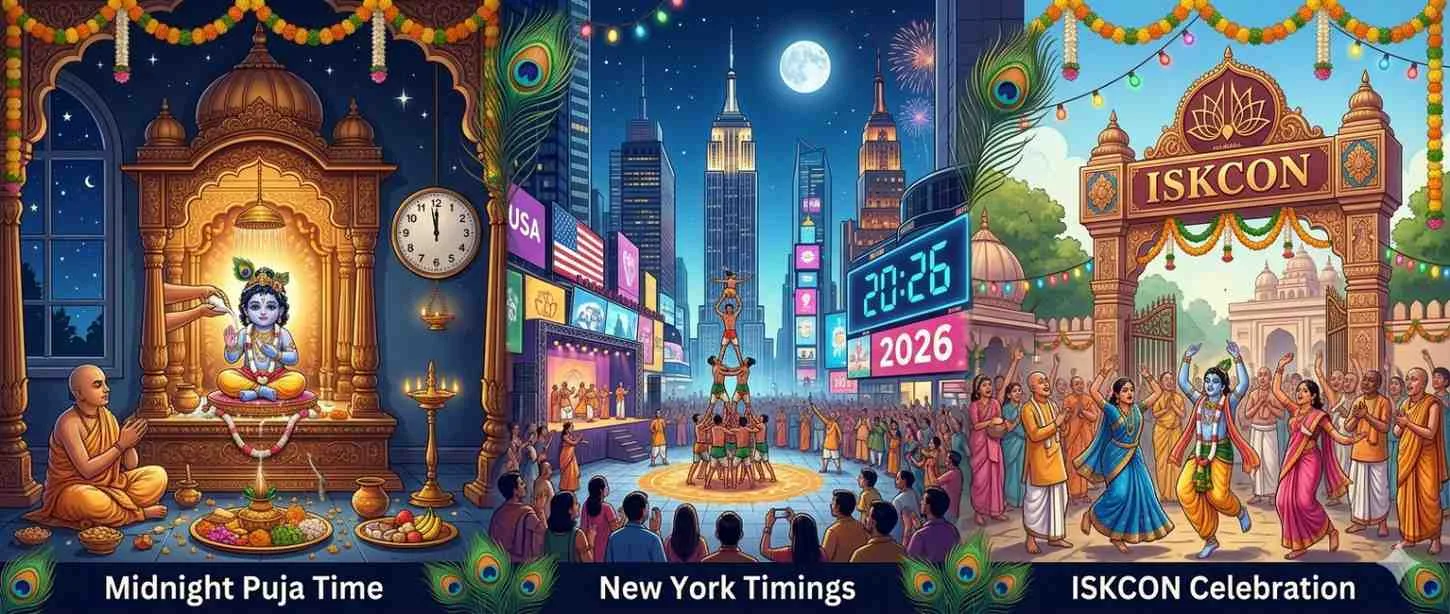
Bhadrapada in Scriptures: Stories of Krishna, Shiva, and Dharma
The Hindu calendar is not just a measure of time but a tapestry of sacred months filled with divine stories and spiritual significance.
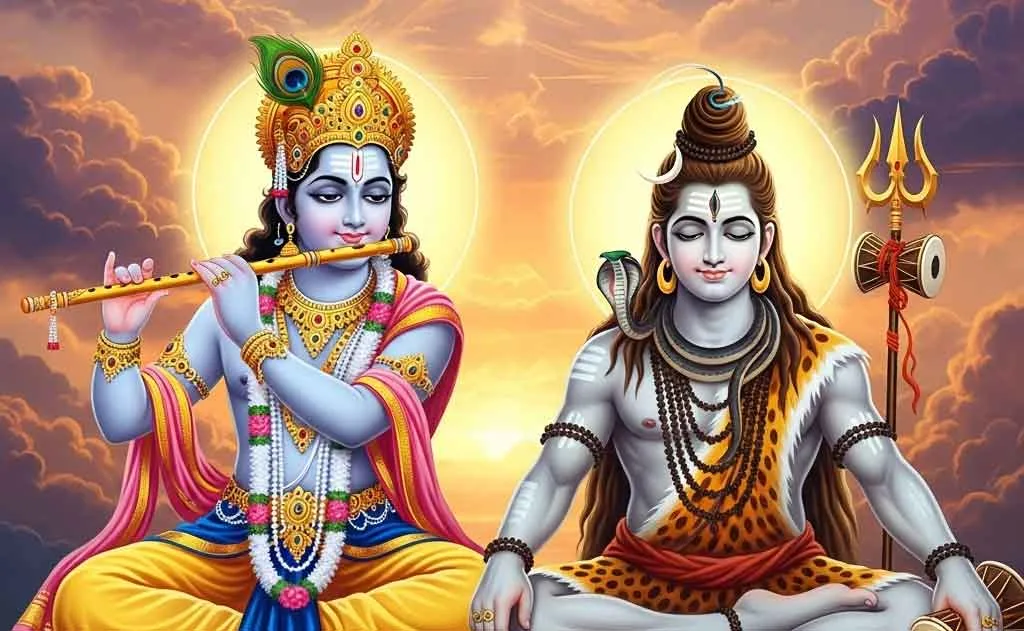
The Hindu calendar is not just a measure of time but a tapestry of sacred months filled with divine stories and spiritual significance.
The Hindu calendar is not just a measure of time but a tapestry of sacred months filled with divine stories and spiritual significance. Among them, Bhadrapada Masam holds a special place as it brings with it two of the most beloved festivals—Janmashtami and Ganesh Chaturthi. Both these occasions are deeply rooted in the Puranas, weaving tales of Lord Krishna, Lord Shiva, and the eternal principles of Dharma.
In this article, let us journey through Bhadrapada’s Hindu stories, exploring excerpts from the Bhagavata Purana and the legends of Shiva and Ganesha, while understanding why this month is celebrated as a time of devotion, worship, and remembrance of eternal truths.
The Birth of Lord Krishna – Janmashtami in Bhadrapada
The Bhagavata Purana describes in detail the divine birth of Lord Krishna, one of the most celebrated events in Bhadrapada. On the eighth day (Ashtami) of Krishna Paksha, the Lord took birth in Mathura to Devaki and Vasudeva. The scriptures narrate how the prison cell lit up with divine brilliance at midnight when Krishna appeared, holding the conch, discus, mace, and lotus in his four hands.
Vasudeva and Devaki prayed with folded hands, recognizing that the Supreme Being had chosen to be born as their child to rid the world of adharma. To protect Him from the tyrant king Kamsa, Vasudeva carried the infant Krishna across the flooding Yamuna River to Gokul, where he left Him under the care of Nanda and Yashoda.
Lessons of Dharma from Krishna’s Birth
- Even in the darkest prison, light emerges when dharma manifests.
- The Yamuna’s waters parting for Vasudeva symbolize nature aiding righteousness.
- Krishna’s playful childhood in Gokul reminds devotees that the Divine is both protector and companion.
Thus, Janmashtami during Bhadrapada is not just a birthday celebration—it is a reminder of the eternal victory of good over evil.
Ganesh Chaturthi – The Story of Shiva as Ganesha’s Father
Another glorious event of Bhadrapada is Ganesh Chaturthi, the festival honoring the remover of obstacles, Lord Ganesha. The Shiva Purana narrates the story of how Lord Shiva became known as the father of Ganesha.
According to the legend, Goddess Parvati once created a boy out of turmeric paste to guard her privacy while she bathed. She instructed him not to allow anyone inside. When Lord Shiva arrived, the boy stopped him at the door. Enraged, Shiva struck off his head in a fit of divine anger.
Seeing Parvati in deep grief, Shiva promised to restore the boy’s life. The gods were sent to fetch the head of the first living creature they found facing north. They returned with the head of an elephant. Lord Shiva placed it on the boy’s body and gave him new life, declaring:
- “You will be called Ganesha, the lord of all beings.”
- “You shall be worshipped first in every ritual.”
Thus, Ganesh Chaturthi in Bhadrapada Shukla Chaturthi became a sacred time for devotees to honor the remover of obstacles before beginning any new venture.
Spiritual Meaning of the Story
- Ganesha’s elephant head represents wisdom and patience.
- The union of Parvati’s creation and Shiva’s blessing symbolizes the balance of Shakti and Shiva in creation.
- The promise of being worshipped first signifies humility before undertaking any task.
Bhadrapada and the Principles of Dharma
Beyond these festivals, Bhadrapada Masam also emphasizes Dharma through the observance of Pitru Paksha—a fortnight dedicated to honoring ancestors. Dharma is not only about worshipping deities but also about remembering the roots from which we come.
The Garuda Purana mentions that those who perform Shraddha and Tarpan during Bhadrapada liberate their forefathers and secure blessings for their descendants. Thus, this month beautifully binds together the devotion to gods like Krishna and Ganesha with the duty towards one’s ancestors.
Puranic Symbolism of Bhadrapada
- Krishna’s Janmashtami – Symbolizes the descent of divine power in human form to protect Dharma.
- Shiva and Ganesha’s Story – Highlights the interplay of creation, destruction, and renewal.
- Pitru Paksha – Teaches gratitude, humility, and responsibility towards family lineage.
Each story underlines the truth that dharma is not static; it flows through divine play (lila), human responsibility, and cosmic balance.
Stories that Inspire Devotion
Imagine the midnight silence of Mathura broken by the cries of a newborn who was destined to slay Kamsa. Picture Vasudeva’s trembling steps across a raging river, carrying the hope of the world in his arms. Visualize Parvati’s sorrow turning into joy as her child, Ganesha, was reborn with a new head, becoming the most beloved deity across Hindu households.
These Bhadrapada Hindu stories are not just tales from the past but living inspirations that guide devotees even today. They remind us that no matter the trials of life, the Divine is always present, restoring balance and blessing humanity.
Conclusion
Bhadrapada is more than a month—it is a spiritual journey. Through the Bhagavata Purana’s tales of Krishna’s birth, the Shiva Purana’s account of Ganesha’s origin, and the observances of Shraddha rituals, this month blends devotion, duty, and dharma into one sacred whole.
As devotees chant, fast, donate, and worship during this time, they are not only celebrating divine stories but also reaffirming the eternal truth—where there is Dharma, there is victory.
Let us embrace Bhadrapada 2025 with the same devotion as Yashoda cradling Krishna, as Parvati blessing Ganesha, and as the sages chanting mantras for their ancestors—uniting the divine, the human, and the eternal.
Frequently Asked Questions
Why is Bhadrapada considered sacred in Hindu tradition?
Bhadrapada Masam brings two beloved festivals, Janmashtami and Ganesh Chaturthi, and also includes Pitru Paksha, a fortnight for honoring ancestors. Together they bind devotion to the gods with duty towards one's forefathers.
How does the Bhagavata Purana describe Krishna's birth?
On the eighth day (Ashtami) of Krishna Paksha, Krishna was born in Mathura to Devaki and Vasudeva. At midnight the prison cell lit up as He appeared holding conch, discus, mace and lotus.
How was Krishna saved from Kamsa?
To protect the infant from the tyrant Kamsa, Vasudeva carried Krishna across the flooding Yamuna River to Gokul. There he left Him in the care of Nanda and Yashoda.
How did Ganesha get his elephant head, as commonly told?
In the Shiva Purana, Parvati created a boy from turmeric paste to guard her while she bathed. When he stopped Shiva at the door, Shiva struck off his head, then restored him with an elephant's head and declared he would be worshipped first in every ritual.
When is Ganesh Chaturthi observed in Bhadrapada?
Ganesh Chaturthi falls on Bhadrapada Shukla Chaturthi. Devotees honor Ganesha, the remover of obstacles, before beginning any new venture.
What is the role of Pitru Paksha in Bhadrapada?
Pitru Paksha is a fortnight dedicated to honoring ancestors. The Garuda Purana mentions that those who perform Shraddha and Tarpan during Bhadrapada liberate their forefathers and secure blessings for their descendants.
You might also like
Raja Ravi Varma’s ‘Yashoda and Krishna’ Sells for Record ₹167.2 Crore – A Defining Moment for Indian Art
How to Pray Lord Radha Krishna in 2026: Mantras, Poojas, Important Dates, Temples & Rituals | HinduTone
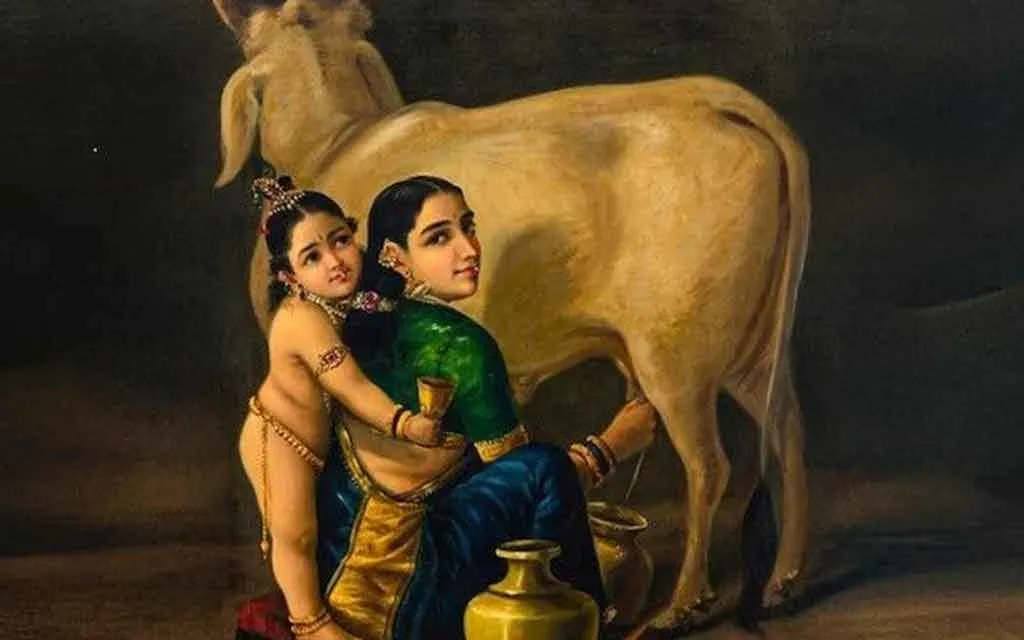
Cyrus Poonawalla Acquires Raja Ravi Varma’s Divine Masterpiece ‘Yashoda and Krishna’ for ₹167.2 Crore – A Historic Moment for Sanatan Heritage