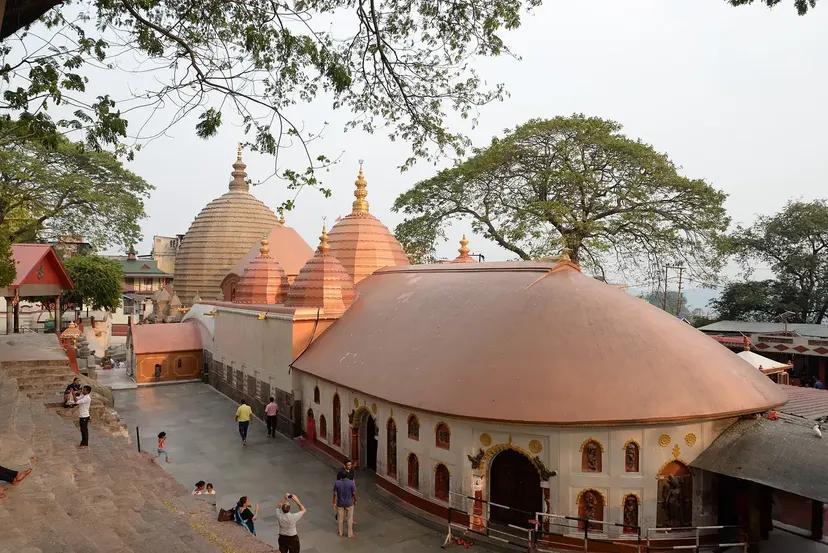
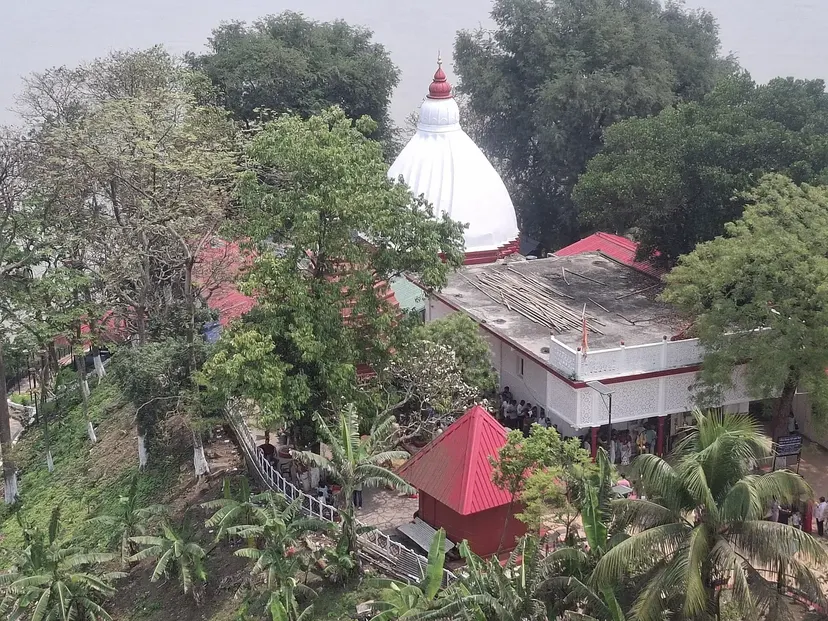
Hayagriva Madhava Temple, Hajo
Vishnu (worshipped as Hayagriva Madhava) temple · Hajo, Kamrup, Assam, India
The Hayagriva Madhava Temple stands on Manikut (Monikut) hill at Hajo in Kamrup district, Assam, on the north bank of the Brahmaputra west of Guwahati. The Archaeological Survey of India (ASI) describes it as a graceful and famous Vaishnava shrine dedicated to Vishnu, popularly known as Hayagriva Madhava.
The temple is a centrally protected monument under the ASI's Guwahati Circle. According to the ASI, the present stone temple was rebuilt in 1583 CE by the Koch king Raghudeva over the foundations of a much older temple of the 10th–11th century. It is also revered by Buddhists, which gives Hajo a place in the religious life of more than one faith.
Faith & Tradition
Religious Significance of Hayagriva Madhava Temple, Hajo
Hayagriva is the horse-headed form of Vishnu. In their study Temples and Legends of Assam, B. K. Barua and H. V. Sreenivasa Murthy note that Vishnu is still specially worshipped under this name at Hajo, and they cite the Kalika Purana's account that Vishnu as Hayagriva killed a fever-demon on the Manikuta hill and stayed there for the good of all beings. According to the same tradition, the sacred place was called Apunarbhava, and devotees believed that bathing there freed one from rebirth.
The hill also has meaning for Buddhists. The Kamrup district administration notes that the temple attracts Buddhist monks from far-flung places, and Assam Tourism calls it a place where different religious traditions meet. Barua and Murthy record that Buddhists from the neighbouring Bhutan hills came down in the cold season to worship the deity as Mahamuni (the Buddha), and that a Tibetan tradition places the Buddha's passing in Kamarupa. These are matters of belief and tradition rather than history, but they explain why Hajo is visited by Hindu and Buddhist pilgrims alike.
Inside the sanctum the image is kept covered with cloth and garlands, as Barua and Murthy describe; worship follows the Vaishnava tradition of Assam.
Heritage
History of Hayagriva Madhava Temple, Hajo
Barua and Murthy state that an inscription in the temple records its rebuilding by King Raghudeva Narayana, son of Sukladhwaja, in Saka 1505 (1583 CE), and that the king endowed the temple with land. The ASI gives the same date and names Raghudeva (reigned 1581–1603) as a Koch king. The Kamrup district page also gives 1583, while noting that some historians credit an earlier Pala-period king with the first temple.
According to the ASI, the plinth, with its friezes of elephants and low-relief geometric designs, survives from the 10th–11th-century temple, and the rebuilt temple follows the projections and recesses of the earlier plan. Barua and Murthy repeat the tradition that the earlier temple was destroyed by Kalapahar, the raider also linked by tradition to damage at Kamakhya. They add that a brick vestibule in front of the stone sanctum was a later addition, perhaps from the reign of the Koch king Naranarayana.
Wikipedia records that during the reign of the Ahom king Kamaleswar Singha, a noblewoman donated a family of temple servants and land for their upkeep to the temple, showing continued royal-era patronage after the Koch period.
Architecture and sacred features
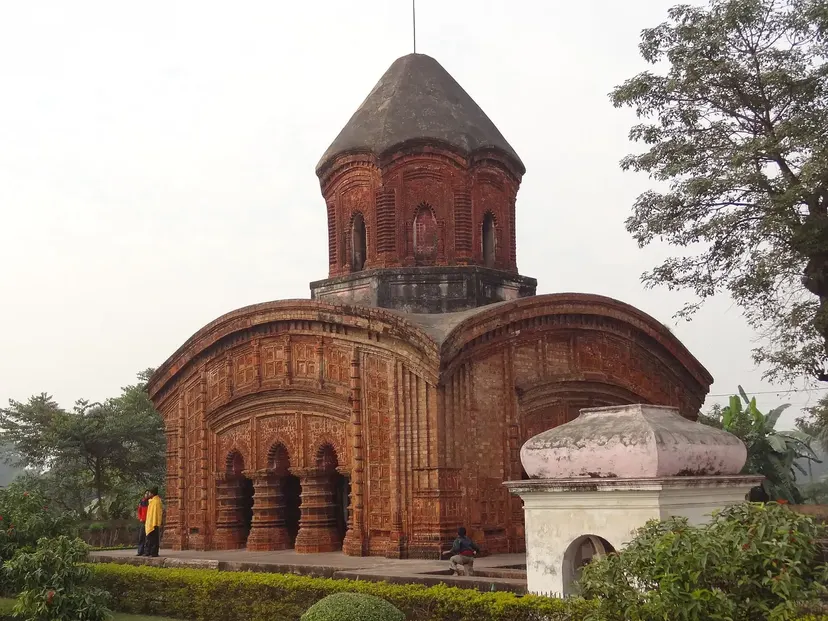
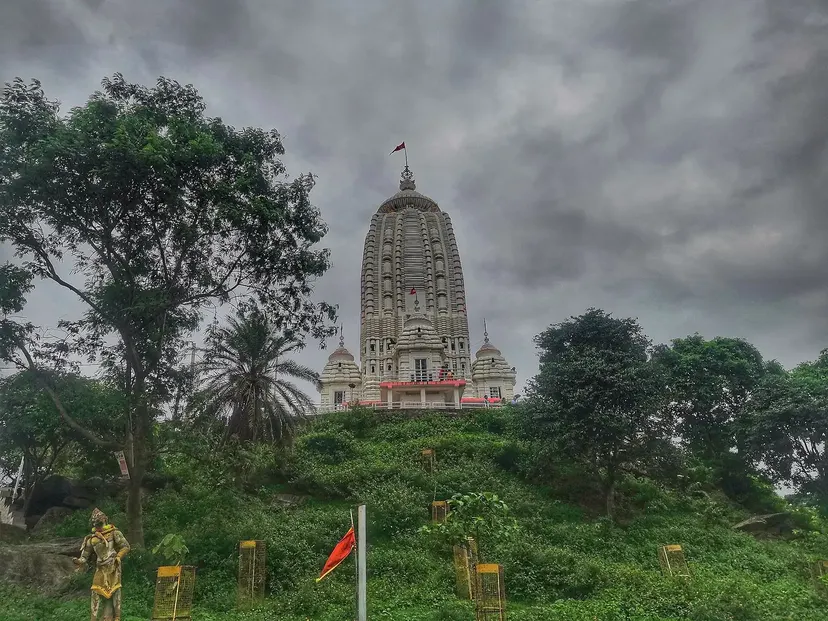
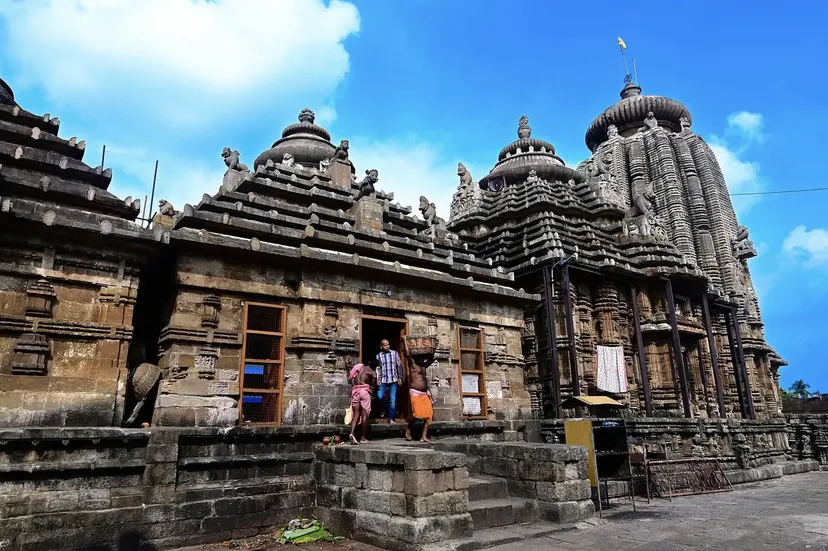
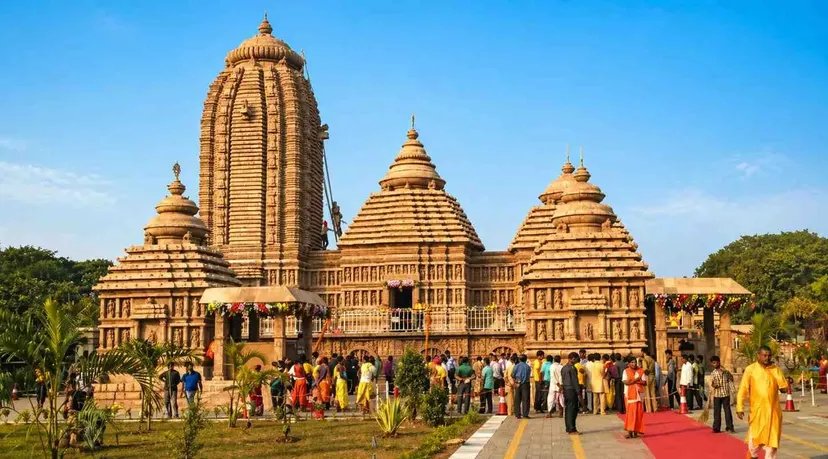
The ASI describes a Nagara shikhara over the sanctum, decorated with sculptures of various Brahmanical deities, and a flat-roofed mandapa joined to the sanctum by an antarala. The mandapa doorway is arched and its roof rests on four massive corner pillars. The most striking feature is the basement moulding: a continuous row of caparisoned elephants in high relief that seems to carry the building, which Barua and Murthy compare to the decorative style of the Kailasa temple at Ellora.
Barua and Murthy describe the sanctum as a sunken chamber reached by a flight of stone steps, with a granite doorframe, and note life-size figures on the upper outer walls, including the ten avatars of Vishnu with the Buddha shown as the ninth. Assam Tourism describes the temple as a blend of Hindu and Buddhist styles. A large tank, Madhab Pukhuri, lies near the temple, according to the Kamrup district administration.
Plan Your Visit
Darshan and Visitor Information
The temple is an active place of worship as well as a protected ASI monument, so visitors should follow the instructions of the temple authorities and the ASI, avoid touching or climbing on carved surfaces, and dress modestly. Crowds are larger during Doul and Janmashtami. Confirm current timings and any photography rules with the temple management or the ASI Guwahati Circle before travelling.
Timings and arrangements change with seasons and festivals. Confirm current details with Temple management; monument protected by the ASI before travelling. Last reviewed 1 November 2026.
Sacred Calendar
Festivals at Hayagriva Madhava Temple, Hajo
Doul Utsav (Holi)
Assam Tourism says Doul is celebrated on a grand scale in the adjacent Doul Griha.
Janmashtami
Celebrated every year at the temple, according to Assam Tourism and the Kamrup district administration.
Bihu
Assam Tourism and the Kamrup district administration list Bihu among the festivals observed at the temple.
Location
How to Reach Hayagriva Madhava Temple, Hajo
Assam Tourism places the temple about 28 km west of Guwahati. The ASI lists the nearest airport as Lokapriya Gopinath Bordoloi International Airport at Guwahati, the nearest railway station as Rangia, and the nearest bus points as Biahata Chariali and Guwahati.
The shrine stands on top of Manikut hill, and Barua and Murthy describe a flight of stone steps leading up to the temple precinct, so visitors should allow for a climb.
Location: Hajo, Kamrup, Assam, India
Nearest airport: Lokapriya Gopinath Bordoloi International Airport, Guwahati (per the ASI)
Nearest railway station: Rangia (per the ASI)
More in Hindu temples in Assam · Vishnu (worshipped as Hayagriva Madhava) temples · Temples in Hajo Circle · Temples in Kamrup District
Questions
Hayagriva Madhava Temple, Hajo: Frequently Asked Questions
Which deity is worshipped at the Hayagriva Madhava Temple?
Vishnu, worshipped as Hayagriva Madhava. Hayagriva is the horse-headed form of Vishnu, which tradition links with the Manikuta hill at Hajo.
Who built the Hayagriva Madhava Temple?
According to the ASI and a temple inscription cited by Barua and Murthy, the present temple was rebuilt in 1583 CE by the Koch king Raghudeva, over the plinth of a 10th–11th-century temple.
Is the Hayagriva Madhava Temple protected by the ASI?
Yes. It is one of the centrally protected monuments in Assam listed by the ASI Guwahati Circle.
Why do Buddhists visit the Hayagriva Madhava Temple?
Some Buddhists regard the deity as the Buddha (Mahamuni), and a Tibetan tradition links Kamarupa with the Buddha's passing. The Kamrup district administration notes that the temple draws Buddhist monks from afar.
What is special about the temple's architecture?
Its plinth carries a continuous row of carved elephants, and the outer walls have figures including the ten avatars of Vishnu. The ASI notes a Nagara shikhara over the sanctum.
How far is Hajo from Guwahati?
Assam Tourism gives the temple as about 28 km west of Guwahati. The nearest railway station listed by the ASI is Rangia.
Sources and attribution
- Archaeological Survey of India, Guwahati Circle — 22. Hayagriva Madhava Temple, Hajo
- Archaeological Survey of India, Guwahati Circle — Assam – centrally protected monuments/sites list
- Assam Tourism Development Corporation — Hayagriva Madhava Temple
- Kamrup District Administration, Government of Assam (Wayback Machine copy, July 2026) — Hayagriva-Madhab Temple
- B. K. Barua and H. V. Sreenivasa Murthy, Temples and Legends of Assam (reproduced by HinduNet; Wayback Machine copy) — Temples in Kamrup District – Hajo (pages 2–11)
- Wikipedia — Hayagriva Madhava Temple
Further reading: Hayagriva Madhava Temple, Hajo on Wikipedia (CC BY-SA 4.0).
Spotted an error? Write to info@hindutone.com — see our editorial policy.