
Shri Radha Damodar Temple, Damodar Kund
Krishna (as four-armed Damodarji) with Radha temple · Junagadh (Girnar foothills), Junagadh, Gujarat, India
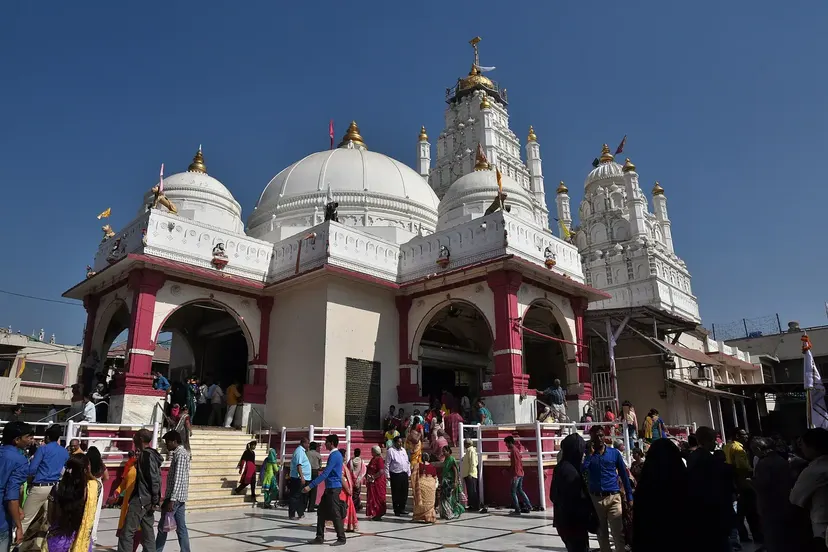
Shri Radha Damodar Temple stands beside Damodar Kund, a sacred tank at the foot of the Girnar hills near Junagadh in Gujarat. The presiding deity is Damodarji, a name of Krishna, shown in a four-armed Vishnu form, with Radha seated beside him. The temple and the kund lie on the road from Junagadh to Girnar Taleti, close to where the steps up Girnar begin.
Wikipedia describes the temple as one of the ancient temples of Gujarat and records traditions that link it to Vajranabha, a grandson of Krishna. For many visitors the temple and Damodar Kund are visited together: pilgrims bathe in the kund, many families perform rites for the dead there, and Damodarji is worshipped as the lord of the Girnar region.
Faith & Tradition
Religious Significance of Shri Radha Damodar Temple, Damodar Kund
Damodar Kund is regarded as holy in Hindu belief. Gujarat Tourism and the Junagadh district administration both note that many Hindus bathe here and immerse the ashes and bones of the dead after cremation, in the belief that the departed may attain moksha, and they compare it with immersion places such as Haridwar and the Triveni Sangam at Prayag. Wikipedia records that large numbers gather on the new-moon day of Bhadrapada for pitru tarpan, offerings to the ancestors.
According to Wikipedia, Vaishnavas regard Damodar as the overseer (adhipati) of the Girnar region. The Gujarati saint-poet Narsinh Mehta, a devotee of Krishna, is remembered as having bathed in the kund daily before worshipping Damodarji, and is said to have composed many of his morning hymns (prabhatiyas) in these surroundings. A temple to Narsinh Mehta stands near the Damodar temple.
The Gujarat First news site, reporting on Janmashtami in 2023, described the temple as one of the large old temples of Saurashtra and the deity as a copper-hued, four-armed form of Thakorji (Krishna).
Heritage
History of Shri Radha Damodar Temple, Damodar Kund
The temple's early history rests on tradition. Wikipedia reports a belief that the temple was built by Vajranabha, Krishna's grandson, and that the Damodar pilgrimage site was renovated in 462 CE in the reign of the Gupta emperor Skandagupta; the article on Damodar Kund also records a tradition crediting a ruler named Chandraketpur. These accounts are cited to the temple's own former website and to travel pages rather than to inscriptions or archaeological studies, and should be read as tradition.
Later history is better documented. Wikipedia records that the temple of Narsinh Mehta near the Damodar temple was built around 1890 under Nawab Muhammad Bahadur Khan III of Junagadh, at the instigation of his diwan Haridas Viharidas Desai. In August 2017, DeshGujarat reported that the Chief Minister of Gujarat dedicated the upgraded Damodar Kund, improved at a cost of Rs 5 crore, and performed aarti at the Damodar Rayji temple there. Wikipedia states that Damodar Kund is a state-protected monument and that the state government provides changing rooms and other basic amenities for pilgrims.
Architecture and sacred features
According to Wikipedia, the temple is built of pink sandstone and has two main parts: the inner Nij Mandir, crowned by a 65-foot shikhara with a flag, and the outer Solaha (sabha) mandapa, with a shikhara of about 30 feet. The structure is carried on about 84 carved pillars and has 32 arches. The central image shows Damodarji holding a conch, discus, mace and lotus, with Radha beside him; a shrine of Balarama and his consort Revati adjoins the main shrine, and a Ganesha shrine lies to the south-west.
Damodar Kund itself measures about 257 feet by 50 feet and is about 5 feet deep, with a well-built ghat around it, according to Gujarat Tourism and the Junagadh district administration. Revati Kund, a deeper tank, is also within the temple premises.
Plan Your Visit
Darshan and Visitor Information
The temple and the kund are active pilgrimage places where funeral and ancestral rites are performed, so dress modestly, keep a respectful distance from families performing rites, and do not photograph them without permission. Revati Kund is deep and bathing there is not considered safe for everyone. Crowds are heavy on Janmashtami, Kartik Purnima and the Bhadrapada new moon. Confirm current darshan timings and arrangements with the temple trust before travelling.
Timings and arrangements change with seasons and festivals. Confirm current details with the temple administration before travelling. Last reviewed 1 November 2026.
Sacred Calendar
Festivals at Shri Radha Damodar Temple, Damodar Kund
Janmashtami
Wikipedia and Gujarat First describe a Vishnu yagna with recitation of the Vishnu Sahasranama, an abhishek with Shaligram, midnight darshan of the Krishna-birth celebration, and a matki-fod in which butter from the broken pot is shared as prasad.
Bhadrapada Amavasya (pitru tarpan)
Large crowds come to Damodar Kund on the new-moon day of Bhadrapada to make offerings to their ancestors, according to Wikipedia.
Radhashtami, Holi and Kartik Purnima
Listed by Wikipedia among the festivals celebrated at the temple.
Location
How to Reach Shri Radha Damodar Temple, Damodar Kund
Damodar Kund is at the foothills of Girnar, on the road from Junagadh city towards Girnar Taleti and Bhavnath. Gujarat Tourism notes that Junagadh is on the Western Railway network and well connected by national and state highways, with State Transport buses from the major cities of Gujarat. The nearest airport named by Gujarat Tourism is Rajkot, about 106 km from Junagadh.
Location: Junagadh (Girnar foothills), Junagadh, Gujarat, India
Nearest airport: Rajkot (about 106 km from Junagadh, per Gujarat Tourism)
Nearest railway station: Junagadh (Western Railway)
More in Hindu temples in Gujarat · Krishna (as four-armed Damodarji) with Radha temples · Temples in Junagadh Taluka · Temples in Junagadh District
Questions
Shri Radha Damodar Temple, Damodar Kund: Frequently Asked Questions
Where is the Radha Damodar Temple in Junagadh?
It stands beside Damodar Kund at the foot of Girnar, on the road from Junagadh city to Girnar Taleti, near where the steps up Girnar begin.
Which deity is worshipped at the Damodar temple?
Damodarji, a name of Krishna, in a four-armed Vishnu form holding conch, discus, mace and lotus, with Radha beside him. Balarama and Revati have an adjoining shrine.
Why do people immerse ashes at Damodar Kund?
Hindus regard the kund as holy and believe that immersing the ashes and bones of the dead here helps the departed attain moksha, as Gujarat Tourism and the Junagadh district administration note.
How old is the Radha Damodar Temple?
Tradition links it to Vajranabha, Krishna's grandson, and to a renovation under Skandagupta in 462 CE, but these accounts are not backed by published archaeological evidence.
What is the connection with Narsinh Mehta?
The poet-saint is remembered as bathing in Damodar Kund daily and composing prabhatiyas here; a temple to him was built near the Damodar temple around 1890.
What are the main festivals at the temple?
Janmashtami is the biggest, with a Vishnu yagna and midnight celebration; Radhashtami, Holi, Kartik Purnima and the Bhadrapada new moon also draw crowds.
Sources and attribution
- Wikipedia — Radha Damodar Temple, Junagadh
- Wikipedia — Damodar Kund
- Gujarat Tourism — Damodar Kund
- District Administration, Junagadh (NIC) — Places of Interest
- DeshGujarat — Restored Majevadi Darwaja, Damodar Kund opened in Junagadh
- Gujarat First — Janmashtami celebrated with pomp at the legendary Sri Radha Damodarji temple on Damodar Kund in Junagadh
Further reading: Shri Radha Damodar Temple, Damodar Kund on Wikipedia (CC BY-SA 4.0).
Spotted an error? Write to info@hindutone.com — see our editorial policy.
Pilgrim Circuit