Ramayana (2026) vs Adipurush (2023): Ranbir Kapoor’s Epic vs Prabhas’ Film – VFX, Cast, Tone and Cultural Impact Compared
How Nitesh Tiwari’s Ramayana Part 1 (2026) differs from Om Raut’s Adipurush (2023) in its portrayal of Rama and Ravana, dialogues, VFX, spiritual tone and cultural responsibility.
Quick answer
Nitesh Tiwari's Ramayana Part 1 (released worldwide on 5 November 2026), with Ranbir Kapoor as Lord Rama, Yash as Ravana and Sai Pallavi as Sita, is a large-scale, two-part cinematic retelling of Valmiki's epic. It arrives three years after Om Raut's Adipurush (2023), which starred Prabhas, Kriti Sanon and Saif Ali Khan.
Both films draw from the same sacred source, but they take very different approaches. Adipurush leaned into a modern, action-heavy and colloquial style that many felt diluted the dignity of the Ramayana. Ramayana Part 1 aims for greater emotional restraint, classical gravity and technical ambition. The comparison is not merely about which film is "better". It is about how cinema treats one of Hinduism's most sacred narratives.
Why this comparison matters to Hindu audiences
The Ramayana is not entertainment first. For millions of Hindus it is a living guide to dharma: the ideal of the perfect son, husband, king and human being. When a film places Lord Rama, Mata Sita and the battle against Ravana on the big screen, it carries a responsibility that goes beyond box-office numbers.
Adipurush (2023) became a painful reminder of what happens when that responsibility is not fully met. Ramayana Part 1 (2026) is being watched closely as a possible course correction. The question many devotees are asking is simple: does this film honour the spirit of Valmiki and Tulsidas, or does it treat the epic only as a commercial spectacle?
Side-by-side snapshot
Aspect | Adipurush (2023) | Ramayana Part 1 (2026) |
|---|---|---|
Director | Om Raut | Nitesh Tiwari |
Lord Rama | Prabhas | Ranbir Kapoor |
Sita | Kriti Sanon | Sai Pallavi |
Ravana | Saif Ali Khan | Yash |
Key supporting cast | Devdatta Nage (Hanuman), Sunny Singh (Lakshmana) | Ravi Dubey (Lakshmana), Arun Govil (Dasharatha), Sunny Deol (Hanuman, special appearance) |
Runtime | About 3 hours | 3 hours 15 minutes |
Core approach | Modern, action-driven, colloquial language | Restrained, emotionally grounded, more traditional tone |
Biggest criticisms | Weak VFX, street-style dialogues, character design | Some early comments on CGI and pacing |
Audience response | Strong opening, then a sharp decline amid protests | Released 5 November; the full verdict is still forming |
Release | 16 June 2023 | 5 November 2026 (worldwide, multiple languages and premium formats) |
1. Portrayal of Lord Rama: warrior or Maryada Purushottama
In Adipurush, Prabhas's Rama was presented primarily as a powerful warrior. The emphasis was on physical strength, battle cries and heroic posturing. That style works for some action films, but many viewers felt it reduced the quiet, dharma-centred essence of Rama.
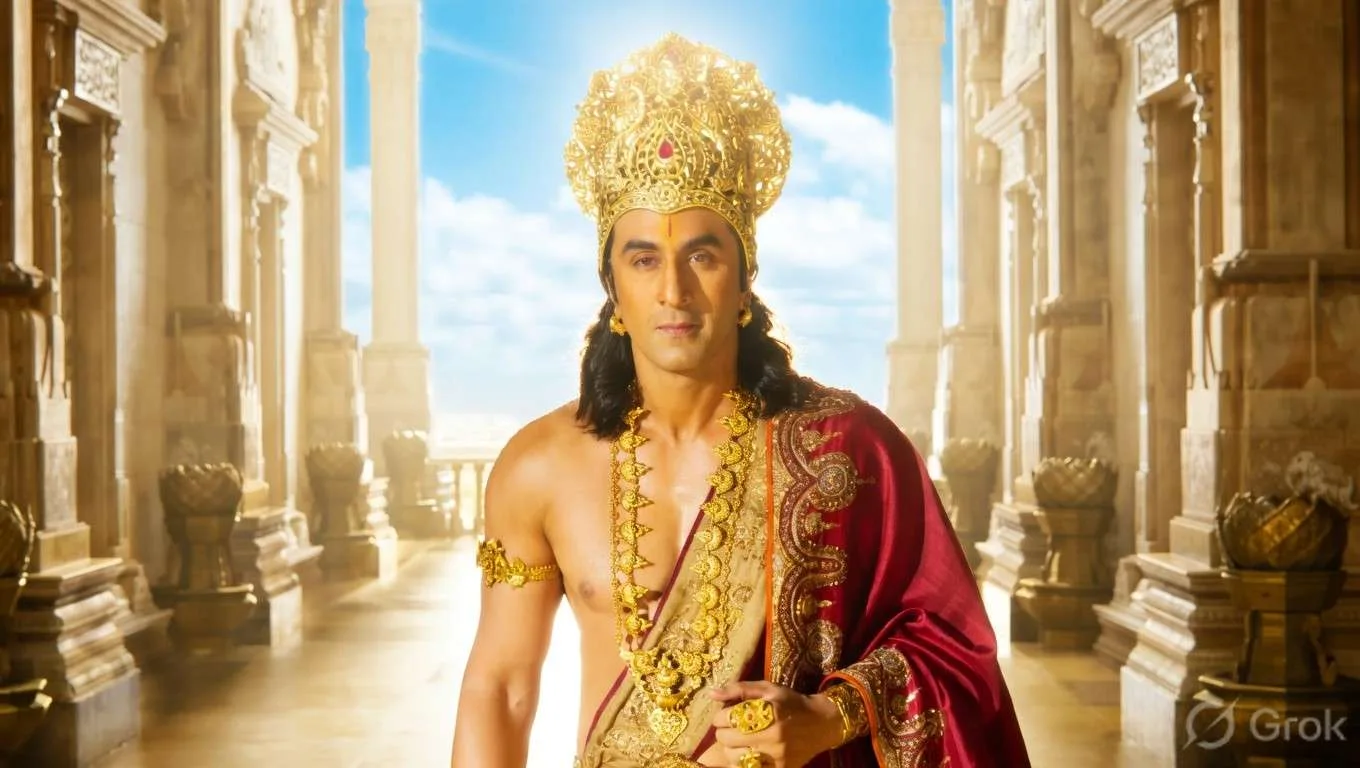
In Ramayana Part 1, Ranbir Kapoor's performance leans towards restraint and emotional control. Early reactions highlight how he conveys duty, sacrifice and inner strength without constant dramatic intensity. This comes closer to the classical ideal of Maryada Purushottama, the one who upholds dharma even at great personal cost.
The difference is philosophical as much as cinematic. One version asks, "How powerful is Rama?" The other asks, "How complete is Rama as a human ideal?"
2. Ravana: stylised villain or complex antagonist
Saif Ali Khan's Lankesh in Adipurush had a heavily modern, almost fantasy-inspired look that many found disconnected from traditional iconography. The character's design became a major talking point for the wrong reasons.
Yash's Ravana has drawn attention for his imposing presence and intensity. Several early reviews note that he dominates significant portions of Ramayana Part 1, particularly the sections on Ravana's rise and power. The film gives the character more space and gravity than Adipurush did.
3. Dialogues: where Adipurush broke
This remains one of the clearest differences between the two films.
Adipurush used modern, colloquial Hindi in key scenes. Hanuman's line ending "jalegi bhi tere baap ki" triggered nationwide backlash. Many felt the language broke the sacred atmosphere of the epic and reduced divine characters to street-level banter. Within days of release the makers replaced several dialogues, and the revised version was re-certified by the CBFC on 19 June 2023.
Ramayana has so far avoided this trap. The dialogues highlighted in early reactions lean towards formal, elevated language that better matches the dignity of the source. That single choice has done a great deal to shape audience perception.
4. Visual effects and scale
Adipurush was heavily criticised for its CGI. Creatures, landscapes and key sequences often looked artificial, undermining the grandeur the story demands.
Ramayana Part 1 arrives with the backing of DNEG, an Oscar-winning visual effects company, and far higher technical ambition. Some early audience comments after the 5 November release still questioned certain CGI sequences, but the production design, world-building and scale are visibly more ambitious. The film is also playing in premium formats including IMAX.
5. Spiritual tone and cultural responsibility
This is the deepest difference.
Adipurush tried to make the Ramayana "accessible" to younger audiences through contemporary styling and language. In the process, many felt the film lost reverence. Ramayana Part 1 appears more conscious of the sacred nature of the material. It is still a big commercial film, but its emotional register and visual language feel closer to traditional storytelling.
For HinduTone readers, this matters more than box-office figures. A film based on the Ramayana is not just content. It becomes part of how the next generation first meets the epic.
What Adipurush taught the industry
Adipurush proved two important truths:
- There is enormous audience hunger for a big-screen Ramayana.
- That hunger comes with high standards. Viewers will not accept weak VFX, disrespectful dialogues or character designs that feel disconnected from the tradition.
This is why Ramayana Part 1 carries both opportunity and pressure. It benefits from the clear lessons of 2023, but it must still deliver on its own terms.
Final perspective for devotees
No film can fully capture the depth of Valmiki's Ramayana or Tulsidas's Ramcharitmanas. Cinema will always be an interpretation. The real test is whether the interpretation respects the core values of dharma, devotion, sacrifice and the ideal of Rama as the perfect man.
Ramayana Part 1 covers Rama's early life, marriage, exile and the abduction of Sita, ending at a point that sets up the war for Part 2. Whether it succeeds in both artistic and spiritual terms will be judged by audiences in the coming weeks and months.
For now, the comparison with Adipurush is a useful reminder: when cinema approaches the Ramayana, technical scale alone is not enough. Reverence, emotional truth and cultural responsibility remain non-negotiable.
Read our full review: Ramayana Part 1 movie review 2026.
Frequently asked questions
When did Ramayana Part 1 release?
Worldwide on 5 November 2026.
Is Ramayana a two-part film?
Yes. Part 1 released in November 2026, and Part 2 is planned for a later release.
Who plays the main roles in the 2026 film?
Ranbir Kapoor (Lord Rama), Sai Pallavi (Sita), Yash (Ravana), Ravi Dubey (Lakshmana), Arun Govil (Dasharatha) and Sunny Deol (Hanuman, special appearance).
Why was Adipurush criticised so strongly?
Mainly for weak visual effects, modern slang-style dialogues that many found disrespectful, and character designs that did not match traditional iconography. The makers revised several dialogues within days of release.
Should we compare the two films?
Comparison is natural because both adapt the same epic. Each must finally be judged on its own merits and on how faithfully it serves the spirit of the Ramayana.
Where can I read the original story?
See HinduTone's complete Valmiki Ramayana story and the Ramayana story in simple English, written for families and children.
Related HinduTone reading
- Ramayana Part 1 movie review 2026
- Valmiki Ramayana: the complete story of Lord Rama
- Rama avatar: lessons of the Ramayana for 2026
- Why the Ramayana survives every retelling
Sources
Share this with family and friends
Send it on WhatsApp, post it, or copy the link.
More from News
- Hindu Temples and Religious Freedom in America – What the New Congress Could Mean
- US Midterm Elections 2026 Results: What Do They Mean for Hindu Americans? Immigration, Religious Freedom, Temples and US–India Relations
- Bigg Boss Malayalam 8: Neha Fathima’s Parents Enter Show After She Proposes to Hindu Contestant Santhosh Raj – Double Standards Debate Erupts
- Nisha Khicher Delhi Police Vehicle Incident: Youth Congress Leader Allegedly Vandalises Police Car – Can Section 425 IPC Apply?
- Defacing Police Vehicles and Public Property in India: What BNS Section 324, the Public Property Act and Delhi's Defacement Law Say
You might also like
Ramayana Part 1 Movie Review 2026: Ranbir Kapoor as Lord Rama, Yash as Ravana – Is Nitesh Tiwari’s Epic Worth Watching This Diwali?
Divine Timing: First Glimpse of Nitesh Tiwari’s ‘Ramayana’ Unveiled on Hanuman Jayanti with Ranbir Kapoor as Lord Rama
H-1B and Green Card Impact After US Midterm Elections 2026 – What Indian Professionals Should Know