Martand Sun Temple
Surya (as Martanda) temple · Mattan, Anantnag, Jammu & Kashmir, India
The Martand Sun Temple stands in ruins on a plateau near Mattan in Anantnag district, in the Kashmir Valley of Jammu and Kashmir. It was built for Surya, the Sun god, who is also called Martanda, and the Archaeological Survey of India (ASI) lists it among the centrally protected monuments of national importance in Jammu and Kashmir.
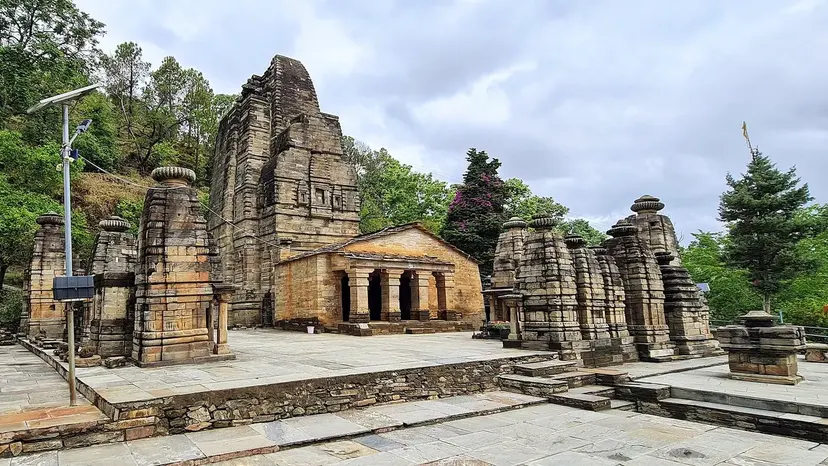
Visitors should know before they go that this is not a working temple. What survives is the roofless stone shell of the main shrine and the remains of a large colonnaded courtyard around it. The Anantnag district administration describes the site as wrecked but still striking, and recommends walking the courtyard to see the carvings that have survived centuries of weather.
Faith & Tradition
Religious Significance of Martand Sun Temple
Martand is one of the best-known monuments of early medieval Kashmir. The Tribune, reporting on the site in 2022 and 2024, notes that it is regarded as the oldest of the Sun temples in India, and Wikipedia describes its courtyard as the largest peristyle (colonnaded enclosure) in Kashmir. Its scale and setting, on a plateau with a view across the valley, made it a landmark of the region.
For many Kashmiri Pandits the ruin remains a place of devotion. According to The Tribune, thousands of pilgrims visit each year and have asked for the temple to be restored. Because it is an ASI-protected monument rather than a functioning place of worship, religious ceremonies there have been contested: in May 2022 the ASI objected after a puja was held at the site in the presence of the Lieutenant Governor, and the Jammu and Kashmir administration replied that the event was allowed under the rules for recognised religious usage. ASI officials quoted by The Tribune said the agency had no plans to open the site for regular worship.
Heritage
History of Martand Sun Temple
According to the 12th-century Kashmiri chronicle of Kalhana, as summarised by Wikipedia, the temple was commissioned by King Lalitaditya Muktapida of the Karkota dynasty in the 8th century CE. Wikipedia also notes that the complex incorporates an earlier and smaller temple, a point repeated by The Tribune.
The temple was destroyed in the late 14th or early 15th century. The chronicler Jonaraja and later writers attribute the demolition to Sultan Sikandar Shah Miri, who ruled Kashmir from 1389 to 1413. Wikipedia records that some modern historians question how far these accounts reflect political motives, so the details of the destruction remain debated. Earthquakes are said to have caused further damage to the ruins.
In the modern period the ASI declared the site a monument of national importance; it appears in the national list as 'Martanda (Sun Temple)'. In March 2024 The Tribune reported that the Jammu and Kashmir Department of Culture had called a meeting, attended by the ASI's Srinagar circle, to discuss the protection, conservation and restoration of ancient shrines in Kashmir, including Martand.
Architecture and sacred features
The complex is a colonnaded courtyard with the main shrine at its centre, surrounded by 84 smaller shrines (cells) set into the enclosure. The Tribune and Wikipedia give the courtyard's size as roughly 220 feet long and 142 feet wide. The central shrine is thought to have had a pyramidal roof, typical of Kashmiri temples, but this has not survived.
Writers on the site describe the architecture as a blend of influences, with Gandharan, Gupta and Chinese forms mentioned by The Tribune and Wikipedia. Carvings that can still be made out in the antechamber of the main shrine include images of Vishnu, of the river goddesses Ganga and Yamuna, and of Surya himself.
Plan Your Visit
Darshan and Visitor Information
Martand is a protected archaeological site, not an active temple, so ASI rules for protected monuments apply: do not climb on or remove stones and carvings, and respect any barriers. Religious ceremonies at the site need permission and have been a matter of dispute. Confirm current access arrangements, opening hours and any entry requirements with the ASI Srinagar circle or the Anantnag district administration before visiting.
Timings and arrangements change with seasons and festivals. Confirm current details with Archaeological Survey of India (Srinagar circle) before travelling. Last reviewed 1 November 2026.
Location
How to Reach Martand Sun Temple
The temple is in the Kehribal area of Mattan, which The Tribune places about 63 km south of Srinagar. The Anantnag district website gives Srinagar International Airport as the nearest airport, roughly 50 km from Anantnag town, and notes that buses and taxis link Anantnag with Srinagar, Jammu and other towns.
The district website names Jammu Tawi as the railway station it recommends for long-distance travellers, with a road journey of several hours onward to Anantnag.
Location: Mattan, Anantnag, Jammu & Kashmir, India
Nearest airport: Srinagar International Airport (about 50 km from Anantnag, per the district administration)
More in Hindu temples in Jammu & Kashmir · Surya (as Martanda) temples · Temples in Anantnag Tehsil · Temples in Anantnag District
Questions
Martand Sun Temple: Frequently Asked Questions
Who built the Martand Sun Temple?
According to Kalhana's chronicle, it was commissioned by King Lalitaditya Muktapida of Kashmir in the 8th century CE.
Is the Martand Sun Temple still a working temple?
No. It is a ruin protected by the Archaeological Survey of India as a monument of national importance. Holding religious ceremonies there has been disputed, and the ASI has said it does not plan to open it for regular worship.
How was the Martand temple destroyed?
Medieval chroniclers attribute its demolition to Sultan Sikandar Shah Miri, who ruled Kashmir from 1389 to 1413, though some historians question these accounts. Earthquakes later damaged the ruins further.
What does the temple complex look like?
It is a courtyard of about 220 by 142 feet, ringed by a colonnade with 84 small shrines, with the roofless main shrine at the centre.
Where is the Martand Sun Temple?
In the Kehribal area of Mattan in Anantnag district, about 63 km south of Srinagar, on a plateau overlooking the Kashmir Valley.
Is the temple being restored?
In 2024 the Jammu and Kashmir Department of Culture held talks with the ASI on the protection, conservation and restoration of ancient shrines including Martand. Check with the ASI for the current status.
Sources and attribution
- District Administration Anantnag, Government of Jammu and Kashmir — Martand Sun Temple
- The Tribune — ASI fuming as Lt Governor Manoj Sinha holds prayers at Martand Sun Temple (9 May 2022)
- The Tribune — Restoration of ancient Martand temple on cards (31 March 2024)
- Wikipedia — Martand Sun Temple
- Wikipedia (from ASI list) — List of Monuments of National Importance in Jammu and Kashmir
Further reading: Martand Sun Temple on Wikipedia (CC BY-SA 4.0).
Spotted an error? Write to info@hindutone.com — see our editorial policy.