
Halasuru Someshwara Temple, Bengaluru
Shiva as Someshwara temple · Bengaluru (Halasuru / Ulsoor), Bengaluru Urban, Karnataka, India
The Someshwara Temple at Halasuru (also spelt Ulsoor) in central Bengaluru is a Shiva temple that INTACH's Bengaluru chapter and Citizen Matters both describe as one of the oldest temples in the city. Shiva is worshipped here as Someshwara.
The temple is a layered building. Its inner core of sanctum, vestibule and pillared hall is dated on stylistic grounds to the Chola period, about a thousand years ago, according to INTACH. A large gateway tower, a great hall and other parts were added in later centuries, especially in the Vijayanagara era. The temple is linked in local tradition with the Kempegowda chieftains who founded Bengaluru.
Faith & Tradition
Religious Significance of Halasuru Someshwara Temple, Bengaluru
Someshwara is one of the best-known Shiva temples of old Bengaluru. Wikipedia records that it is managed by the Muzrai department, the Karnataka government body that oversees temples, and that its main festivals are Maha Shivaratri, the annual Brahmotsavam and the Mondays of Kartika month (Karthika Somavara). Wikipedia also records free meals (anna prasadam) on Mondays and processions in which the deities are carried around the temple on vahanas and a silver chariot.
The temple carries reminders of Bengaluru's founders. Citizen Matters, reporting on an INTACH heritage walk, notes two figures of Kempegowda in the precincts, one inside and one outside, each showing him with a staff and a blanket over his head. The pillars also bear the double-headed bird ganda bherunda, a royal motif that is now the emblem of the Government of Karnataka.
Heritage
History of Halasuru Someshwara Temple, Bengaluru
According to the legend recorded by INTACH and Citizen Matters, the chieftain Kempegowda once rested under a tree here after a hunt, when the area was forest. Someshwara appeared to him in a dream and asked him to build a temple, using treasure buried at the spot. Wikipedia notes that this version goes back to B. L. Rice's Mysore Gazetteer, and that other traditions credit an earlier Yelahanka chief or the Cholas.
No inscription dates the temple, Citizen Matters notes; its age is worked out from its style. INTACH cites S. K. Aruni of the Indian Council of Historical Research, who dates the sanctum, vestibule and navaranga hall to the Chola period. INTACH also reports that a broken sculpture of a goddess found during recent civil works is believed to belong to the Ganga period (5th–10th century). INTACH dates the pillared mandapa to the 1500s or 1600s. Wikipedia credits major additions in the late Vijayanagara period to Hiriya Kempe Gowda II, and Citizen Matters reports the belief that Kempegowda extended the temple with enclosure walls (prakaras).
Wikipedia also cites a 2010 Times of India report that excavation near the temple uncovered a stepped tank (kalyani) thought to be about 1,200 years old.
Architecture and sacred features
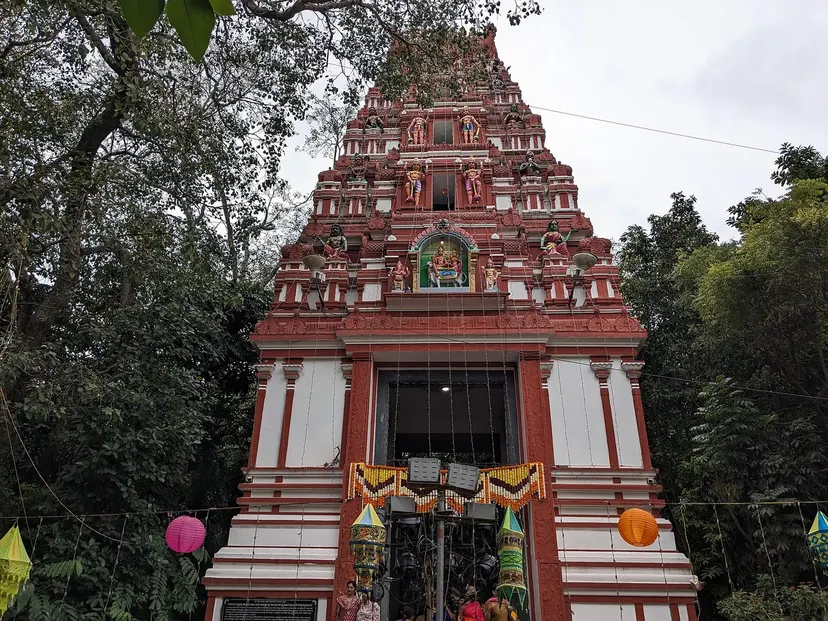
INTACH describes the temple as complex layers of built forms in stone, brick and wood, with dressed stone walls, post-and-lintel construction and Madras terrace roofing. The entrance is dominated by a tall gopura. INTACH notes that gopuras of this kind, with a stone base and a multi-storeyed brick-and-mortar upper part decorated with stucco figures, were added to temples in this region from the 16th century onwards. Wikipedia, citing the historian George Michell, says the plan follows the basic Vijayanagara layout on a smaller scale: a square sanctum, a closed hall and an open hall with projecting bays and pillars carved with yalis.
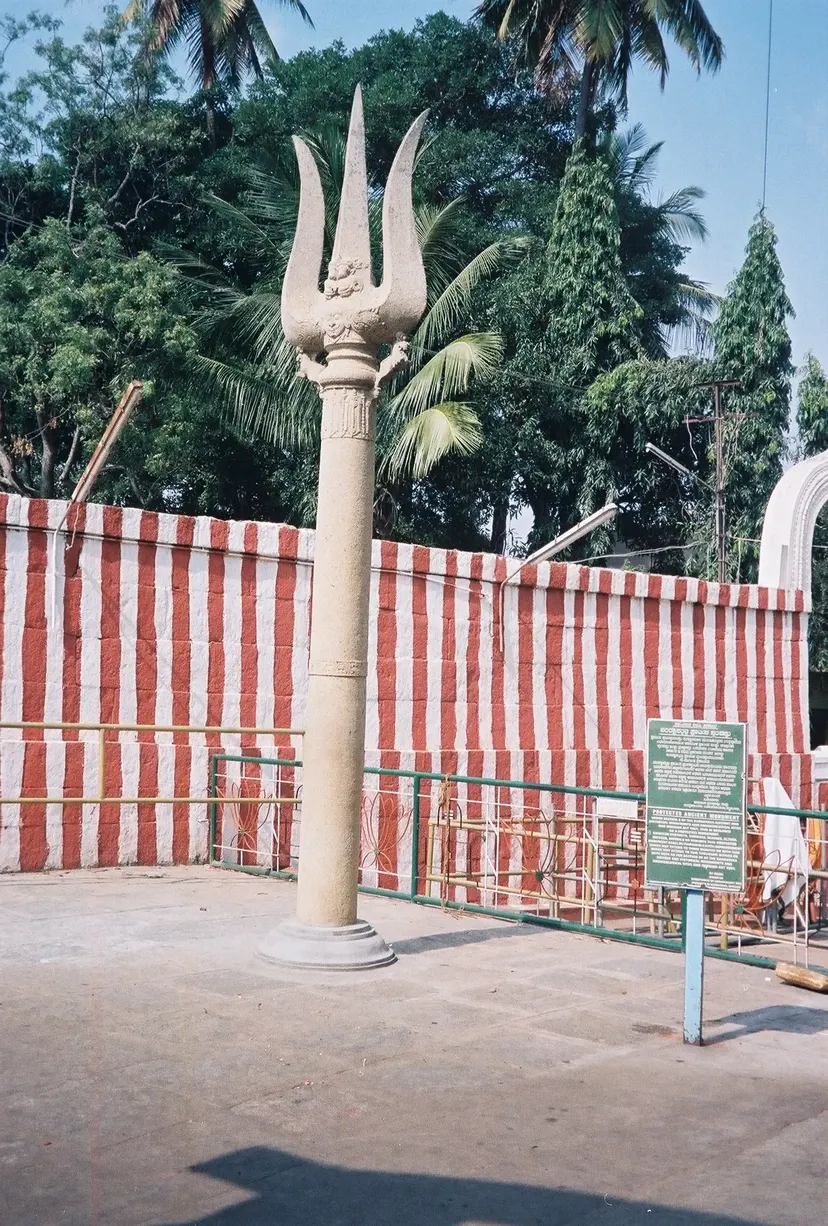
The carvings are a highlight. INTACH's virtual tour notes that the central doorway shows Ravana shaking Mount Kailasa on one side and the goddess Mahishasuramardini on the other, with door guardians on either side. Wikipedia also mentions carvings of the marriage of Shiva and Parvati and the Saptarishis, a tall pillar in front of the temple, and a Navagraha shrine. INTACH places a shrine of Kamakshi Amman to the north of the main shrine.
Plan Your Visit
Darshan and Visitor Information
Someshwara is an active temple managed under the state Muzrai department, and Maha Shivaratri and Kartika Mondays draw large crowds. Visitors should dress and behave as at any working temple and ask before photographing inside the shrines. Confirm current timings and arrangements with the temple office before visiting.
Timings and arrangements change with seasons and festivals. Confirm current details with Muzrai department, Government of Karnataka (per Wikipedia) before travelling. Last reviewed 1 November 2026.
Sacred Calendar
Festivals at Halasuru Someshwara Temple, Bengaluru
Maha Shivaratri
The temple's biggest festival, which Wikipedia says draws more than a lakh visitors.
Brahmotsavam
Listed by Wikipedia among the main festivals, with processions of the deities on vahanas.
Karthika Somavara
Mondays of the month of Kartika, sacred to Shiva, are among the main observances at the temple, per Wikipedia.
Location
How to Reach Halasuru Someshwara Temple, Bengaluru
The temple is in Halasuru (Ulsoor) in central Bengaluru, in the Someshwarpura area off Shivashankar Road, near the Ulsoor neighbourhood that INTACH covers in its heritage walks. It is reached by local road transport within the city.
Location: Bengaluru (Halasuru / Ulsoor), Bengaluru Urban, Karnataka, India
More in Hindu temples in Karnataka · Shiva as Someshwara temples · Temples in Bengaluru North Taluk · Temples in Bengaluru Urban District
Questions
Halasuru Someshwara Temple, Bengaluru: Frequently Asked Questions
How old is the Halasuru Someshwara Temple?
No inscription dates it. INTACH, citing S. K. Aruni of the ICHR, dates the sanctum, vestibule and inner hall to the Chola period on stylistic grounds, with the gopura and pillared halls added in later centuries.
Who built the Someshwara Temple in Ulsoor?
According to legend, Someshwara appeared in a dream to the chieftain Kempegowda and asked him to build a temple with buried treasure. Historians date the core to the earlier Chola period, with Vijayanagara-era additions.
Are there figures of Kempegowda in the temple?
Yes. Citizen Matters reports two figures of Kempegowda in the precincts, each showing him with a staff and a blanket over his head.
What carvings can be seen at the temple?
INTACH notes Ravana shaking Mount Kailasa and Mahishasuramardini at the central doorway. The pillars also carry the ganda bherunda, now the emblem of Karnataka.
What are the main festivals at Someshwara Temple?
Maha Shivaratri, the annual Brahmotsavam and the Mondays of Kartika month, according to Wikipedia.
Who manages the Halasuru Someshwara Temple?
Wikipedia records that it is managed by the Muzrai department of the Government of Karnataka.
Sources and attribution
- INTACH Bengaluru Chapter — Someshwara Temple – Ulsoor
- INTACH Bengaluru Chapter — Someshwara Temple, Ulsoor – Architecture
- Citizen Matters — A walk through the heart of cantonment – Ulsoor
- Wikipedia — Halasuru Someshwara Temple
Further reading: Halasuru Someshwara Temple, Bengaluru on Wikipedia (CC BY-SA 4.0).
Spotted an error? Write to info@hindutone.com — see our editorial policy.
Pilgrim Circuit