Chaturbhuj Temple (Jatkari), Khajuraho
Vishnu (four-armed, Chaturbhuja) temple · Jatkari, Khajuraho, Chhatarpur, Madhya Pradesh, India
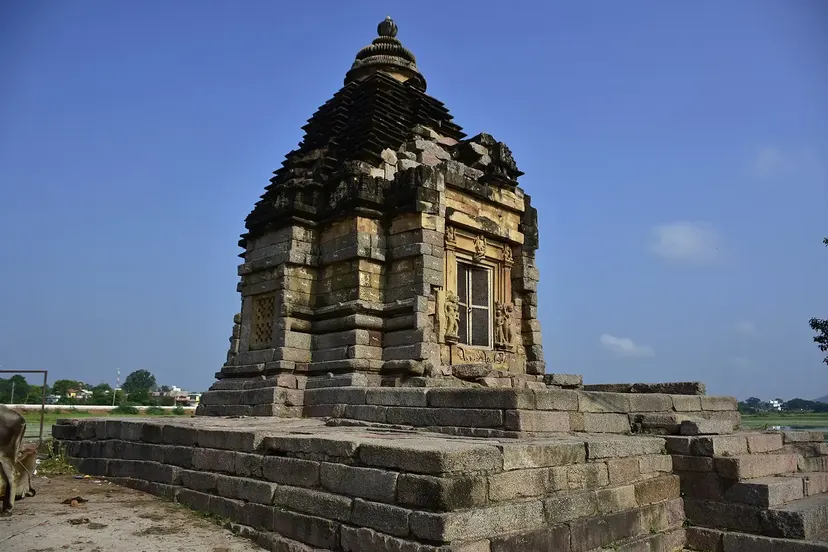
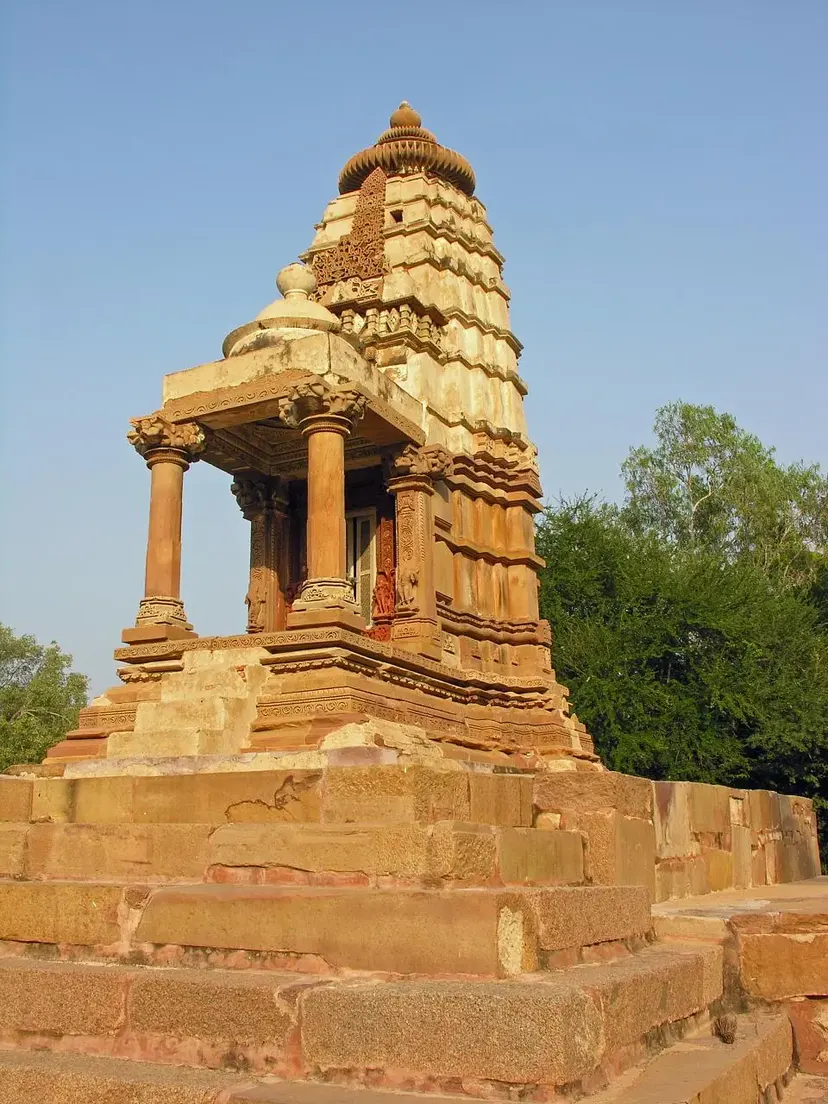
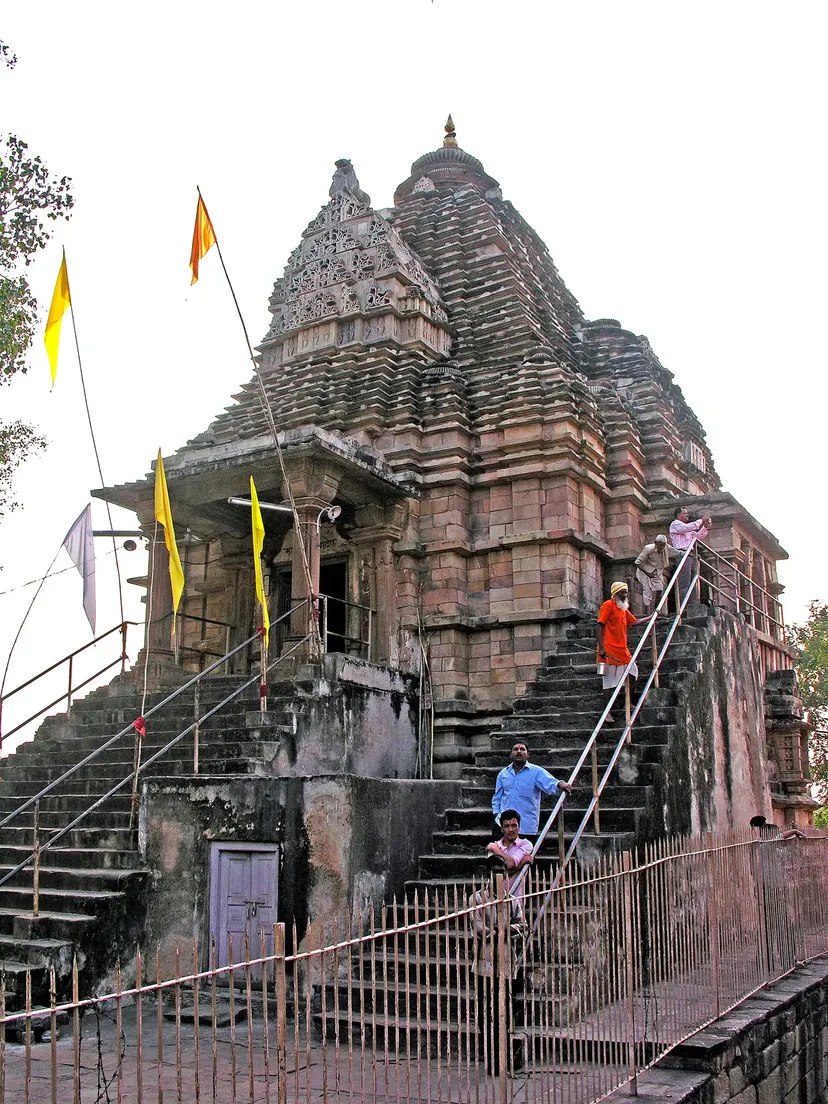
The Chaturbhuj Temple, also called the Jatkari or Jatakari Temple after the village beside it, stands in the Southern Group of the Khajuraho monuments in Chhatarpur district, Madhya Pradesh. 'Chaturbhuja' means 'four-armed', an epithet of Vishnu, and the sanctum holds a tall four-armed standing image that gives the temple its name.
It is one of the last temples built at Khajuraho under the Chandela kings, dated by Wikipedia to about 1100 CE, and it is part of the Khajuraho Group of Monuments, a UNESCO World Heritage Site since 1986. The Archaeological Survey of India lists it as a centrally protected monument under the name 'Jatakari or Chatrubhuj Temple'.
Faith & Tradition
Religious Significance of Chaturbhuj Temple (Jatkari), Khajuraho
The temple is best known for two features. First, it faces west: Wikipedia's article on the Khajuraho Group records that every other temple there faces the sunrise, and an eSamskriti photo-essay notes that the evening light reaches the sanctum through the entrance. Second, according to Wikipedia, it is the only temple at Khajuraho without erotic sculpture; its wall carvings show deities, celestial women and guardian figures instead.
Wikipedia lists the Chaturbhuja temple among the main Vaishnava temples at Khajuraho. The main image is a four-armed figure about 2.7 m tall. Writers have noted that the image combines features of more than one deity: eSamskriti describes it as primarily Vishnu but with matted hair usually associated with Shiva, a mix that has led to differing identifications. The Wikipedia article's opening line calls it a Shiva temple, while the same article and the Khajuraho Group article identify the image as Vishnu; this page follows the majority of sources and the temple's name.
Heritage
History of Chaturbhuj Temple (Jatkari), Khajuraho
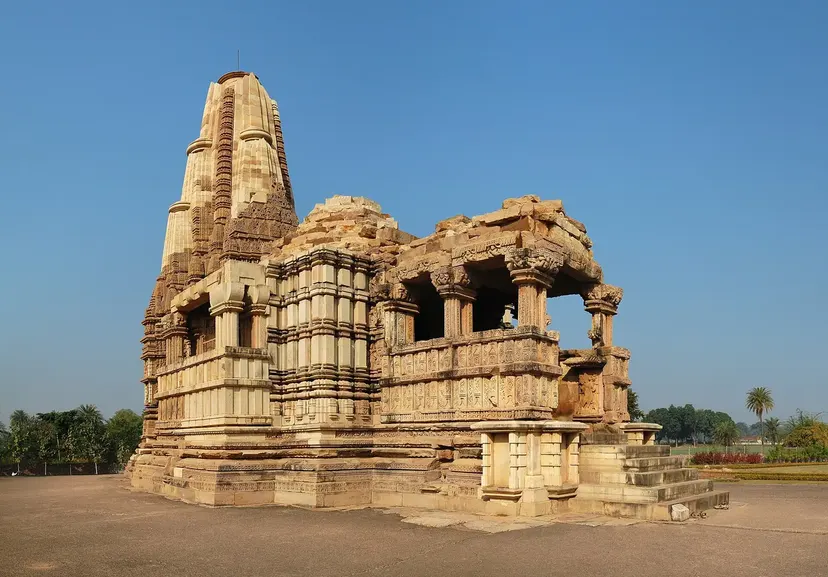
The Khajuraho temples were built under the Chandela dynasty, most of them between the 10th and early 12th centuries. Wikipedia's table of Khajuraho temples places the Chaturbhuja temple at about 1110 CE, among the latest of the surviving group, shortly before the nearby Duladeo temple. Sources disagree on which Chandela ruler built it, so no builder is named here.
After the 13th century the Khajuraho temples fell into neglect and were overgrown until they were brought to wider notice in the 1830s, as Wikipedia records. Alexander Cunningham later grouped the temples into western, eastern and southern groups; the Chaturbhuj temple belongs to the southern group, which Cunningham organised around the Duladeo temple. The temple was inscribed on the UNESCO World Heritage List in 1986 as part of the Khajuraho Group of Monuments, and it is protected by the ASI.
Architecture and sacred features
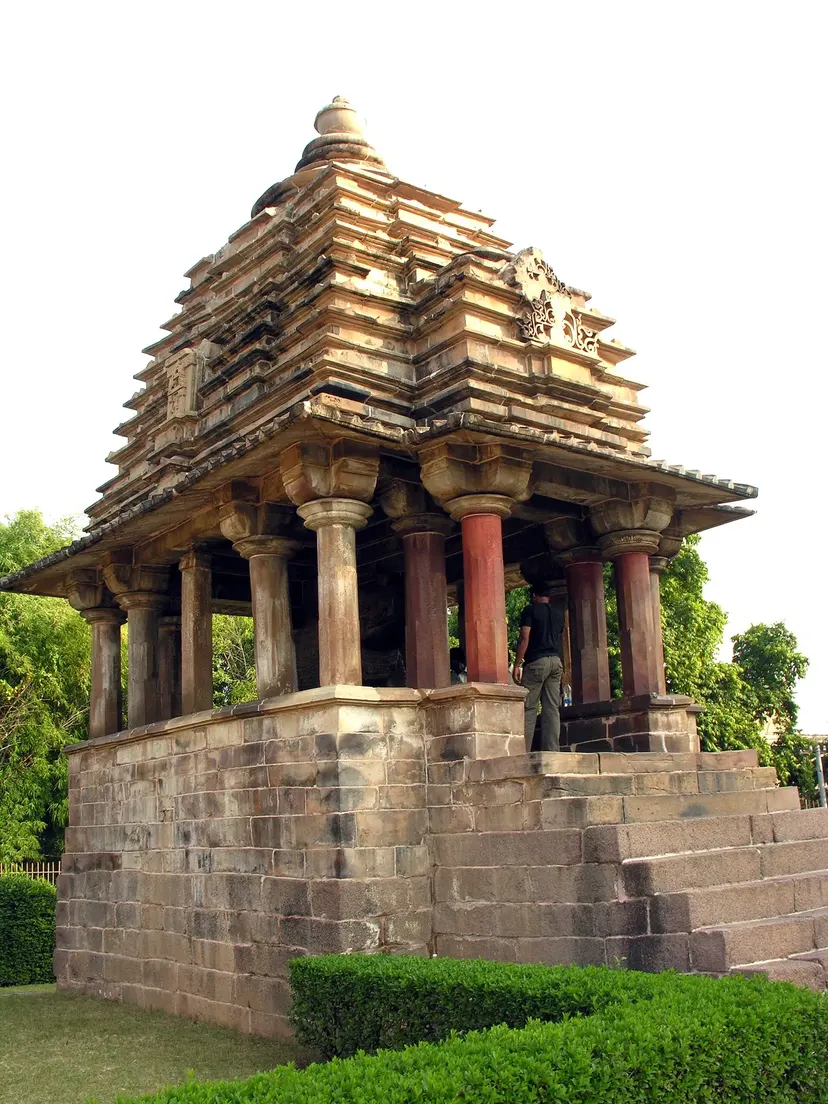
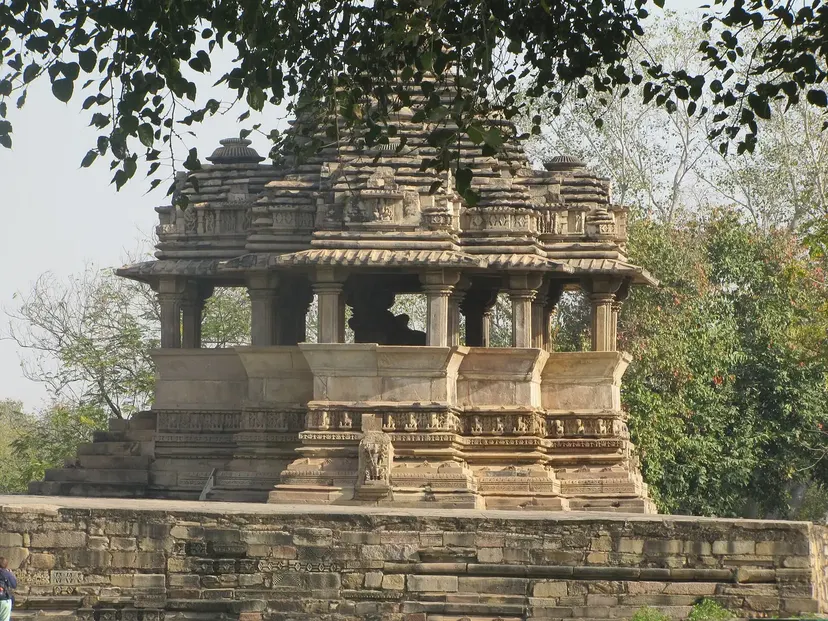
According to Wikipedia, the temple has a sanctum without an inner ambulatory, a vestibule, a hall (mandapa) and an entrance porch, raised on a modest platform. Its outer walls carry three horizontal bands of sculpture, which eSamskriti describes as celestial women (surasundaris), flying figures (vidyadharas) and the guardians of the directions (dikpalas).
The sanctum image, about 2.7 m high according to Wikipedia, is carved from a single block of sandstone and stands in a graceful triple-bent posture, as eSamskriti describes it. Photographs in Wikipedia's article also show carvings of the river goddesses Ganga and Yamuna.
Plan Your Visit
Darshan and Visitor Information
The Chaturbhuj Temple is an ASI-protected monument within the Khajuraho World Heritage property. Visitors should not touch or climb on the sculpture and should follow the ASI's rules for protected sites. The sources consulted do not say whether regular worship takes place. Its west-facing entrance means the sanctum is lit by evening light. Confirm current opening hours and entry arrangements with the Archaeological Survey of India at Khajuraho before visiting.
Timings and arrangements change with seasons and festivals. Confirm current details with Archaeological Survey of India before travelling. Last reviewed 1 November 2026.
Location
How to Reach Chaturbhuj Temple (Jatkari), Khajuraho
eSamskriti places the temple in Jatkari village, about 3.5 km south of Khajuraho village and the Khajuraho bus stand, in the Southern Group with the Duladeo temple.
Wikipedia notes that Khajuraho has an airport (HJR) and that the railway station is about six kilometres from the entrance to the main monuments. Chhatarpur, the district headquarters, is about 46 km from Khajuraho.
Location: Jatkari, Khajuraho, Chhatarpur, Madhya Pradesh, India
Nearest airport: Khajuraho Airport (HJR)
Nearest railway station: Khajuraho
More in Hindu temples in Madhya Pradesh · Vishnu (four-armed, Chaturbhuja) temples · Temples in Jatkara · Temples in Rajnagar Tehsil · Temples in Chhatarpur District
Questions
Chaturbhuj Temple (Jatkari), Khajuraho: Frequently Asked Questions
Which deity is in the Chaturbhuj Temple at Khajuraho?
The sanctum holds a four-armed standing image about 2.7 m tall, generally identified as Vishnu; 'Chaturbhuja' means four-armed. Some writers note that it also has matted hair associated with Shiva.
Why is the Chaturbhuj Temple called Jatkari Temple?
It stands beside Jatkari (Jatakari) village, about 3.5 km south of Khajuraho village, and the ASI lists it as the 'Jatakari or Chatrubhuj Temple'.
Does the Chaturbhuj Temple have erotic sculptures?
No. According to Wikipedia it is the only temple at Khajuraho without erotic sculpture.
Which way does the Chaturbhuj Temple face?
It faces west. All the other temples at Khajuraho face east, towards the sunrise.
When was the Chaturbhuj Temple built?
It is dated to about 1100 CE, in the late Chandela period, making it one of the last temples built at Khajuraho.
Is the Chaturbhuj Temple part of the UNESCO site?
Yes. It belongs to the Southern Group of the Khajuraho Group of Monuments, inscribed on the UNESCO World Heritage List in 1986.
Sources and attribution
- Wikipedia — Chaturbhuj Temple (Khajuraho)
- Wikipedia — Khajuraho Group of Monuments
- Archaeological Survey of India, Temple Survey Project (Northern Region), Bhopal — About The Temple: list of centrally protected temples
- eSamskriti (text and images by Ankur Gupta) — Chaturbhuj Temple, Khajuraho
Further reading: Chaturbhuj Temple (Jatkari), Khajuraho on Wikipedia (CC BY-SA 4.0).
Spotted an error? Write to info@hindutone.com — see our editorial policy.