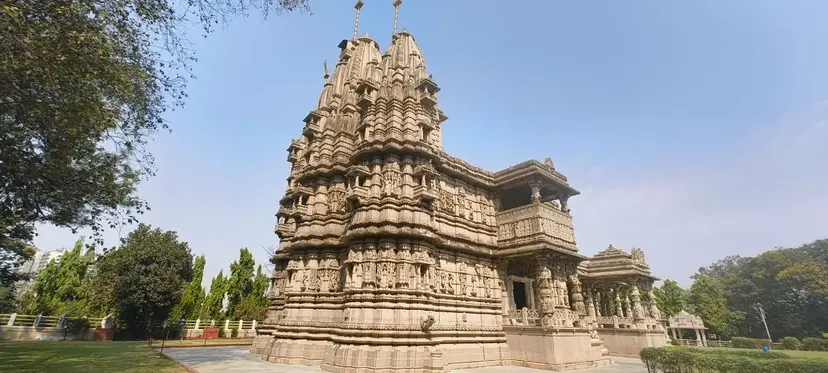
Babulnath Temple, Mumbai
Shiva as Babulnath (a self-manifested lingam) temple · Mumbai, Mumbai City, Maharashtra, India
Babulnath Temple is a Shiva temple on a small hill above Girgaum Chowpatty in south Mumbai. Wikipedia describes it as one of the oldest temples in the city, and the deity is worshipped as Babulnath, which the temple explains as 'Babul's Lord', after the man said to have uncovered the lingam. Devotees reach the shrine by a flight of 108 steps, and a lift has been added for those who cannot climb.
The temple is run by Shree Babulnath Mandir Charities. The Brihanmumbai Municipal Corporation includes it among the heritage sites of D Ward in its Mumbai Legacy Project, which documents how a small hillside shrine of the late 18th century grew into a large stone temple in the 19th century.
Faith & Tradition
Religious Significance of Babulnath Temple, Mumbai
The main object of worship is a Shiva lingam that the temple describes as swayambhu (self-manifested), kept under a protective brass covering, according to the municipal heritage note. Idols of Parvati and Ganesha, which tradition says were dug up at the same spot, stand with it in the sanctum. In front of the shrine are a black stone Nandi with silver-plated horns and a carved tortoise, and the municipal note records an image of Maruti (Hanuman) at the rear wall.
Two stories are told about the name. The temple's own history says a cow called Kapila belonging to a landowner named Pandurang was found pouring her milk on one spot; when the ground was dug, the lingam and the other idols appeared, and the shrine was named after Babul, the cowherd. The municipal heritage note instead records an account in which a carpenter named Babul found a black lingam around 1780, while the Hornby Vellard reclamation was under way, and built a modest shrine for it. Both sources also suggest the babul (Acacia arabica) trees that once grew on the slopes may have inspired the name.
The temple draws its largest crowds on Mahashivratri and on the Mondays of Shravan, according to the municipal note, which also mentions Pithori Amavasya at the end of Bhadrapada as an important day.
Heritage
History of Babulnath Temple, Mumbai
The temple trust traces the site's sanctity to a Shiva temple said to have been built in the 12th century by a king named Bhimdev, which, it says, was later destroyed and its idols buried; it presents the lingam later uncovered here as belonging to that older shrine. This early history is tradition rather than documented record, and the municipal heritage note treats the shrine of around 1780 as the start of the present temple.
Both the temple and the municipal note describe a dispute with the owners of adjoining land, which was taken to the Bombay High Court with the help of Malharrao Gaikwad of Baroda, then living on nearby Walkeshwar Road. The court decided in the temple's favour, and the temple says the judgment is inscribed on its inner walls. A larger stone temple was begun in 1836 with funds from local merchants, and the municipal note says the work was completed around 1840.
According to both sources, the temple was the tallest structure in Mumbai until 1890, when lightning destroyed its spire; a new spire was raised in 1900. The two lamp towers (deepstambhas) were added in 1908, and the municipal note records a restoration of the carvings and murals in 2016, along with the lift and other modern facilities. In 2023 the temple asked IIT Bombay to examine signs of weathering on the lingam, and devotees were for a time allowed to offer only water, The Free Press Journal reported; the trust maintained that the lingam was not damaged.
Architecture and sacred features
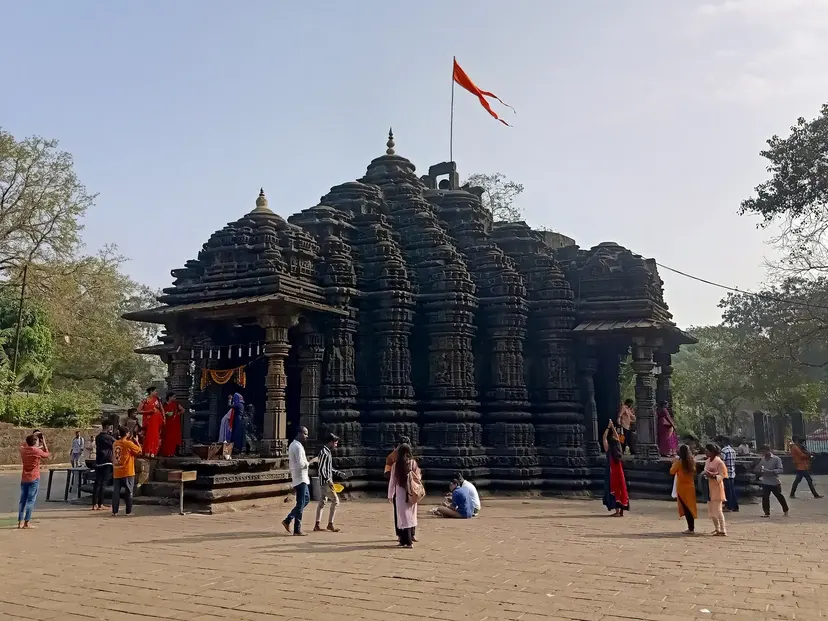
The municipal heritage note describes the temple as being in the Gujarat-Nagara style, with a sanctum (garbhagriha) for the lingam, an assembly hall (sabha mandapa) and an inner hall (gudh mandapa) joined by a vestibule (antarala). The main spire is surrounded by clusters of smaller spires (urushringas) and has projecting balconies (jharokhas) at several levels. The temple says it is built of white limestone and marble from Rajasthan, and the pillars and ceilings carry scenes from Hindu mythology.
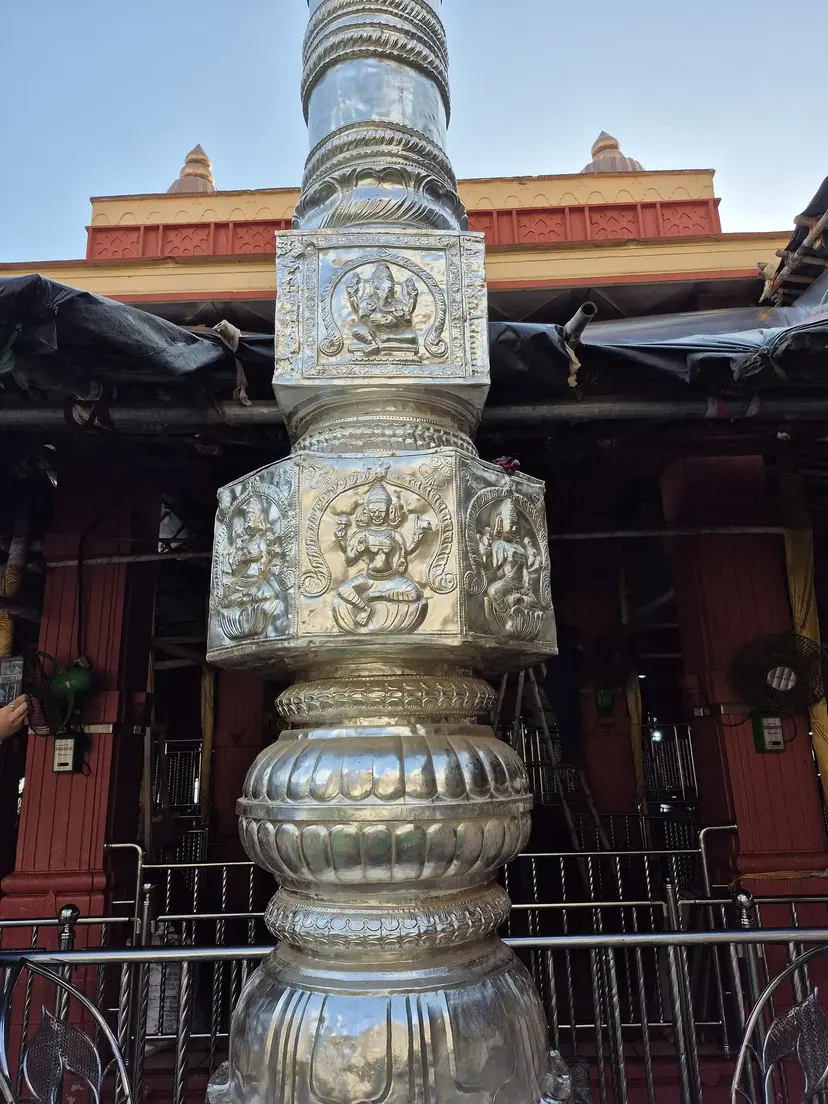
Two peacock figures stand as door guardians. The two deepstambhas, which the municipal note says were built in 1908 by Oza Mulji Asharam of Morvi, are topped with small tulsi planters, an unusual feature. The complex also includes smaller shrines that the temple lists as Lakshmi Narayan, Kashi Vishwanath, Virat Swaroop, Hanuman, Gayatri Mata and Datta.
Plan Your Visit
Darshan and Visitor Information
The temple publishes its darshan and aarti times on its website, and crowds are heaviest on Mahashivratri and Shravan Mondays. Rules on offerings at the lingam have changed in recent years to protect it, so confirm current timings and what may be offered with Shree Babulnath Mandir Charities before visiting.
Timings and arrangements change with seasons and festivals. Confirm current details with Shree Babulnath Mandir Charities (official website) before travelling. Last reviewed 1 November 2026.
Sacred Calendar
Festivals at Babulnath Temple, Mumbai
Mahashivratri
The night of Shiva, when the temple sees its heaviest crowds, according to the BMC heritage note and press reports.
Shravan Mondays (Shravani Somvar)
Mondays of the monsoon month sacred to Shiva, named by the BMC heritage note as a time of large crowds.
Pithori Amavasya
Recorded by the BMC heritage note as another important day at the temple.
Location
How to Reach Babulnath Temple, Mumbai
The temple stands on Babulnath Road on the slope above Girgaum Chowpatty in south Mumbai. The shrine is reached by a stairway of 108 steps from the road, and the temple says a lift is available for those who cannot use the stairs.
Location: Mumbai, Mumbai City, Maharashtra, India
More in Hindu temples in Maharashtra · Shiva as Babulnath (a self-manifested lingam) temples · Temples in Mumbai City District
Questions
Babulnath Temple, Mumbai: Frequently Asked Questions
Why is the temple called Babulnath?
The temple says the lingam was found where a cow kept pouring her milk, and the shrine was named after Babul, the cowherd. The BMC heritage note instead names a carpenter called Babul who found it around 1780. Both also suggest the babul trees on the hill may have inspired the name.
How old is Babulnath Temple?
The BMC heritage note dates the first shrine to about 1780 and the larger stone temple to 1836–1840. The temple trust links the site to an older 12th-century shrine, which is a tradition rather than a documented date.
How many steps lead to Babulnath Temple?
There are 108 steps up to the shrine, and the temple says a lift has been installed for those who cannot climb them.
In what style is Babulnath Temple built?
The BMC heritage note describes it as Gujarat-Nagara style, with a spire surrounded by smaller spires, projecting balconies, and limestone and marble work.
Can devotees offer milk on the lingam?
In 2023 the temple asked IIT Bombay to examine signs of weathering, and devotees were for a time allowed to offer only water. Check current rules with the temple before visiting.
Who manages Babulnath Temple?
The temple is run by Shree Babulnath Mandir Charities.
Sources and attribution
- Shree Babulnath Mandir Charities — Our History
- Shree Babulnath Mandir Charities — Architecture
- Municipal Corporation of Greater Mumbai, Mumbai Legacy Project (D Ward) — Babulnath Temple (Heritage 33)
- The Free Press Journal — Mumbai: Babulnath temple officials approach IIT-B after cracks in Shivling; maintain it is not 'khandit' (27 February 2023)
- Wikipedia — Babulnath Temple
Further reading: Babulnath Temple, Mumbai on Wikipedia (CC BY-SA 4.0).
Spotted an error? Write to info@hindutone.com — see our editorial policy.