
Tulja Bhavani Temple, Tuljapur
Bhavani (Tulja Bhavani, Amba Bhavani) temple · Tuljapur, Dharashiv, Maharashtra, India
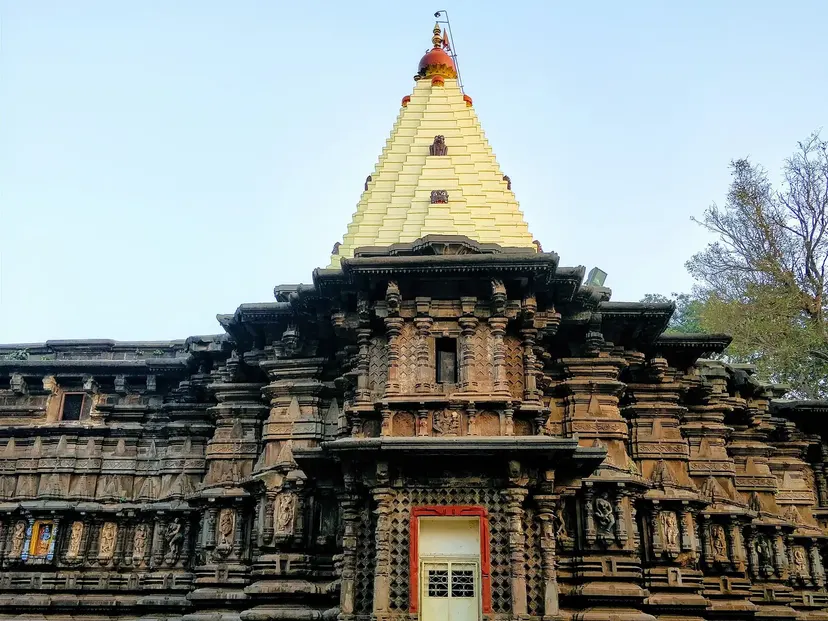
The Tulja Bhavani Temple stands on Yamunachala hill, part of the Balaghat range, in the town of Tuljapur in Dharashiv district, Maharashtra. It is dedicated to the goddess Bhavani, whom Maharashtra Tourism describes as a form of Parvati, and it is among the best-known goddess temples in the state.
The temple is administered by the Shri Tulja Bhavani Temple Trust, registered as a public trust in 1962. Navaratri in the month of Ashwin is its principal festival, and the Free Press Journal, citing estimates from 2025, reports that the shrine draws between one and one-and-a-half crore devotees a year.
Faith & Tradition
Religious Significance of Tulja Bhavani Temple, Tuljapur
According to the temple trust, the Skanda Purana tells of Anubhuti, the widow of the sage Kardam, who did penance on the bank of the Mandakini river. When a demon named Kukur tried to break her penance, she called on the goddess, who appeared, killed the demon and, at Anubhuti's request, made Yamunachala hill her permanent home. The trust also records a tradition that the goddess appeared to Rama during his search for Sita and assured him she would be found.
Maharashtra Tourism counts the temple among the 51 Shakti Peethas, and Wikipedia lists it as one of the four great Shakti Peethas of Maharashtra, with the Mahalakshmi temple at Kolhapur, the Renuka temple at Mahur and Saptashrungi at Vani. The trust's own account describes Bhavani's seat as embodying all three aspects of the goddess.
The goddess is closely associated with Chhatrapati Shivaji. Maharashtra Tourism and Outlook Traveller both record the tradition that the goddess presented him with the sword known as the Bhavani Talwar, and Outlook Traveller describes Bhavani as his chosen deity, whose blessings he sought before battle. These accounts are matters of devotion and tradition rather than documented history.
Heritage
History of Tulja Bhavani Temple, Tuljapur
Maharashtra Tourism dates the temple's origins to the 12th century and attributes its construction to Maradadeva, a Mahamandaleshwara of the Kadamba dynasty; Wikipedia gives the same attribution. Later rulers and devotees expanded and restored the temple over the centuries, and its prominence grew under Shivaji, according to the state tourism department.
Outlook Traveller records a tradition that the image is a chala murti, a movable idol, and that it was taken to safety during Afzal Khan's campaign and later returned. The same source says the two lamp towers (deepmalas) beside the sacrificial fire pit were built by Shivaji to mark his victory over Afzal Khan.
In modern times the temple was registered in 1962 as a public trust under the Bombay Public Trusts Act, 1950. The trust states that its affairs are still conducted partly under the 'Deval-e-Kavayat' rules framed under the Nizam's government. In 2025 the Government of Maharashtra announced a development plan of about ₹1,865 crore covering the temple premises and the town, the Free Press Journal reported.
Architecture and sacred features
Maharashtra Tourism describes the temple as built of black stone in the Hemadpanti style, with carved surfaces, and names the Sardar Nimbalkar Gate as its main entrance. The sanctum holds a black stone image of the goddess about three feet tall with eight arms, one held in the gesture of protection; devotees regard the goddess as swayambhu (self-manifested). Smaller shrines in the complex include those of Narasimha, Khandoba and Chintamani.
The complex has several sacred water sources. Outlook Traveller mentions the Kallol tirth, a stone tank to the left of the entrance, and the Gomukh tirth, where water flows from a carved cow's head, as well as the round Chintamani stone and a shrine of Matangi behind the main temple. The trust describes the Papnash tirth as an ancient tank in Hemadpanti stonework from which water flows continuously.
Plan Your Visit
Darshan and Visitor Information
The temple is busiest during Sharadiya Navaratri and on Dussehra, when very large crowds are expected. The trust publishes daily worship schedules, darshan arrangements and online booking for some pujas on its website. Confirm current timings, darshan arrangements and any dress or entry rules with the Shri Tulja Bhavani Temple Trust before travelling.
Timings and arrangements change with seasons and festivals. Confirm current details with Shri Tulja Bhavani Temple Trust (public trust, registered 1962) (official website) before travelling. Last reviewed 1 November 2026.
Sacred Calendar
Festivals at Tulja Bhavani Temple, Tuljapur
Sharadiya Navaratri
The temple's most important festival; tradition holds that the goddess rested after nine days of battle with Mahishasura.
Dussehra (Vijayadashami) and Seemollanghan
At dawn on Dussehra the goddess performs the ritual crossing of boundaries (seemollanghan); the trust says a palanquin from Burhanpur and a bed from Bhingar are brought for the procession and the goddess's rest.
Shakambhari Navaratri
Repeats the rites of the autumn Navaratri; the trust notes that devotees who cannot attend in Ashwin often come for this festival.
Location
How to Reach Tulja Bhavani Temple, Tuljapur
According to the temple trust, Tuljapur is about 45 km from Solapur, 22 km from Dharashiv and 77 km from Latur. The nearest railway stations are Dharashiv and Solapur, and the trust lists Solapur (about 52 km) and Latur (about 80 km) as the nearest airports.
State transport buses run frequently to Tuljapur from Dharashiv, Solapur, Barshi and Latur, and the trust says the temple is about 500 metres west of the Tuljapur bus stand.
Location: Tuljapur, Dharashiv, Maharashtra, India
Nearest airport: Solapur (about 52 km, per the temple trust)
Nearest railway station: Dharashiv or Solapur
More in Hindu temples in Maharashtra · Bhavani (Tulja Bhavani, Amba Bhavani) temples · Temples in Dharashiv District
Questions
Tulja Bhavani Temple, Tuljapur: Frequently Asked Questions
Where is the Tulja Bhavani Temple?
It is in Tuljapur town in Dharashiv district, Maharashtra, on Yamunachala hill in the Balaghat range, about 45 km from Solapur.
Who built the Tulja Bhavani Temple?
Maharashtra Tourism dates the temple to the 12th century and attributes it to Maradadeva, a Mahamandaleshwara of the Kadamba dynasty. It was expanded and restored by later rulers and devotees.
Is Tulja Bhavani a Shakti Peetha?
Maharashtra Tourism counts it among the 51 Shakti Peethas, and Wikipedia lists it with Kolhapur, Mahur and Vani as one of the four great Shakti Peethas of Maharashtra.
What is the connection between Tulja Bhavani and Shivaji?
Shivaji was a devotee of the goddess. Tradition holds that she gave him the Bhavani Talwar sword, and Outlook Traveller says he built the two lamp towers at the temple after his victory over Afzal Khan.
What is the legend of Tulja Bhavani?
According to the temple trust, the Skanda Purana says the goddess killed the demon Kukur, who tried to disrupt the penance of Anubhuti, and then made Yamunachala hill her permanent home.
When is the main festival at Tuljapur?
Sharadiya Navaratri in Ashwin (September–October) is the main festival, followed by Dussehra and the seemollanghan ritual. Shakambhari Navaratri is held in Pausha.
How do I reach Tuljapur?
The nearest railway stations are Dharashiv and Solapur, and frequent buses run from Solapur, Dharashiv, Barshi and Latur. The temple is about 500 m west of the Tuljapur bus stand.
Sources and attribution
- Shri Tulja Bhavani Temple Trust — Shri Tuljabhavani Temple, Tuljapur – home page (festivals, trust)
- Shri Tulja Bhavani Temple Trust — History
- Shri Tulja Bhavani Temple Trust — How to get to the temple
- Department of Tourism, Government of Maharashtra — Tuljapur
- Outlook Traveller — Tuljapur: Abode of the Goddess (11 July 2017)
- Free Press Journal — Maharashtra minister Pratap Sarnaik announces ₹1,865 crore Tuljapur temple development project (17 June 2025)
- Wikipedia — Tulja Bhavani Temple
Further reading: Tulja Bhavani Temple, Tuljapur on Wikipedia (CC BY-SA 4.0).
Spotted an error? Write to info@hindutone.com — see our editorial policy.
Pilgrim Circuit