Vajreshwari Yogini Devi Temple
Devi (as Vajreshwari, with Renuka and Kalika) temple · Vajreshwari (Vajrabai), Thane, Maharashtra, India
The Vajreshwari Yogini Devi Temple stands on a small hill in the village of Vajreshwari, also called Vajrabai, near the Tansa river in Bhiwandi taluka of Thane district, Maharashtra. It is dedicated to the goddess Vajreshwari, and the sanctum also holds images of the goddesses Renuka and Kalika on either side of her.
The temple is linked to the Maratha capture of the Portuguese fort of Vasai (Bassein) in 1739, after which, as The Tribune and Outlook Traveller report, the Maratha commander Chimaji Appa had it built. The village is also known for the hot springs that rise in and around it, which many pilgrims visit along with the temple.
Faith & Tradition
Religious Significance of Vajreshwari Yogini Devi Temple
The goddess's name joins 'vajra', the thunderbolt weapon of Indra, with 'ishwari', goddess. The Tribune notes that several different legends are told locally to explain it: in one, the goddess swallowed the vajra that Indra had hurled at the sage Vashishtha; in another, she entered the vajra to destroy a demon named Kalikat. A further tradition says the sage Parashurama performed a great sacrifice here and that the area's hills of volcanic ash are its remains, which may explain the worship of Renuka, Parashurama's mother, at the temple. These are matters of belief.
The temple is closely tied to the area's hot springs. The Ministry of Tourism's festival portal records a local belief that the hot water of the springs is the blood of demons slain by the goddess, while noting that researchers attribute the springs to the region's volcanic past. Pilgrims customarily bathe in the springs, which are named after deities such as Surya, Chandra, Agni, Vayu, Rama, Sita and Lakshmana.
Heritage
History of Vajreshwari Yogini Devi Temple
According to The Tribune and Outlook Traveller, Chimaji Appa, the younger brother of Peshwa Bajirao I, led the Maratha campaign that took Vasai fort from the Portuguese in 1739. Outlook Traveller reports that before the campaign he prayed to Vajreshwari and vowed to build her a grand temple if he succeeded, and that he built it after the victory; boards at the temple entrance record this history. Wikipedia gives 1739 as the year of completion and Chimaji Appa as the builder.
Writing in 2003, The Tribune described the temple as 'a relic of Maratha glory'. It noted that the gateway is clearly old, while the covered walkway joining it to the sanctum and the cement spires over the sanctum and forecourt are later additions, so the temple has been substantially altered since the 18th century.
Wikipedia records that the village of Vajreshwari is listed, under the name Vajrabai, in the Imperial Gazetteer of India. The temple is managed today by the Shree Vajreshwari Yogini Devi Temple Trust, which the Ministry of Tourism's festival portal lists as the organiser of the annual fair.
Architecture and sacred features
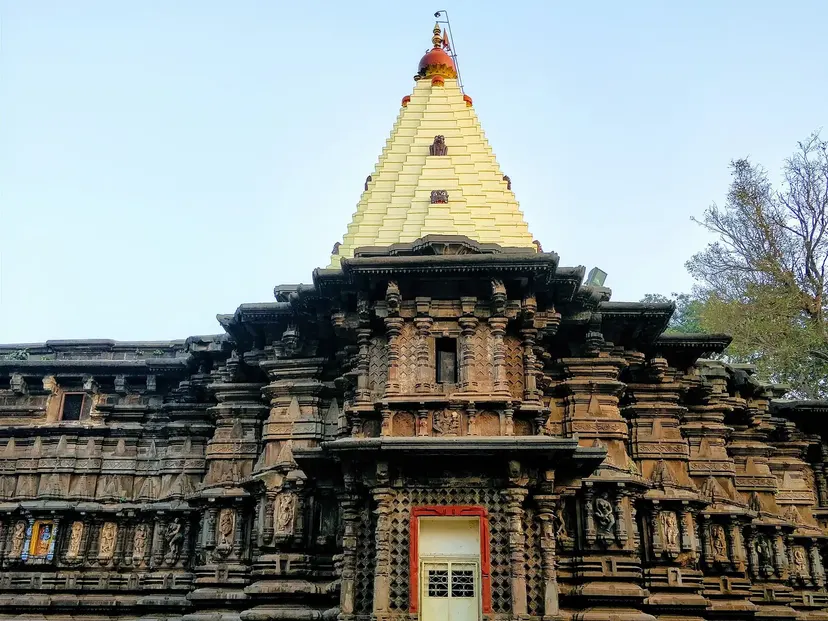
The Tribune describes the temple standing on a hillock beside the road, reached by a flight of 52 steps up to the main gate, with grey stone walls that give it the look of a small fort from a distance. The sanctum and forecourt have concave domed ceilings inside, now capped by cement spires. Smaller images of Ganesha and other deities are carved on the pillars and walls of the forecourt.
Plan Your Visit
Darshan and Visitor Information
Expect a climb of about 52 steps to the main gate. Crowds are heaviest during the annual fair in Chaitra. Some spring tanks are very hot, so test the water before bathing. Confirm current timings and arrangements with the Shree Vajreshwari Yogini Devi Temple Trust before visiting.
Timings and arrangements change with seasons and festivals. Confirm current details with Shree Vajreshwari Yogini Devi Temple Trust before travelling. Last reviewed 1 November 2026.
Sacred Calendar
Festivals at Vajreshwari Yogini Devi Temple
Vajreshwari Mata Yatra (annual fair)
According to the Ministry of Tourism's festival portal, the fair begins with ceremonial worship on the fourteenth day of the waning moon and continues with kirtans, bhajans and performances for four to five days, with mahaprasad for devotees.
Location
How to Reach Vajreshwari Yogini Devi Temple
The Tribune gives Vajreshwari as 31 km from Vasai Road station, with state transport buses running from Vasai Road; Outlook Traveller says buses also run from Thane and Virar.
The Ministry of Tourism's festival portal names Chhatrapati Shivaji Maharaj International Airport, Mumbai, as the nearest airport (about 64 km) and Bhiwandi Road as the nearest convenient railway station (about 25 km).
Location: Vajreshwari (Vajrabai), Thane, Maharashtra, India
Nearest airport: Mumbai (about 64 km, per the Ministry of Tourism festival portal)
Nearest railway station: Bhiwandi Road (about 25 km) or Vasai Road (about 31 km)
More in Hindu temples in Maharashtra · Devi (as Vajreshwari, with Renuka and Kalika) temples · Temples in Vajreshwari · Temples in Bhiwandi Taluka · Temples in Thane District
Questions
Vajreshwari Yogini Devi Temple: Frequently Asked Questions
Who built the Vajreshwari Temple?
The temple is credited to Chimaji Appa, the younger brother of Peshwa Bajirao I, who had it built after the Marathas captured Vasai fort from the Portuguese in 1739.
Why is the goddess called Vajreshwari?
Her name is linked to Indra's thunderbolt (vajra). Local legends say she either swallowed the vajra hurled at the sage Vashishtha or entered it to slay a demon named Kalikat.
Which goddesses are in the Vajreshwari sanctum?
Vajreshwari is in the centre, with Renuka and Kalika on either side.
Are there hot springs at Vajreshwari?
Yes. Around twenty-one hot springs lie within a few kilometres of the temple, including those at Akloli; researchers link them to the region's volcanic past.
When is the Vajreshwari yatra?
The annual fair is held around Chaitra Amavasya, the new moon of Chaitra (March–April), and lasts several days.
How do I reach Vajreshwari Temple?
Vajreshwari is about 31 km by road from Vasai Road station, with buses also running from Thane and Virar. Bhiwandi Road station is about 25 km away.
Sources and attribution
- The Tribune (Spectrum, 2 November 2003) — River, springs and a green carpet welcome in Vajreshwari
- Outlook Traveller (7 March 2017) — Maharashtra: The Hot Springs of Vajreshwari
- Ministry of Tourism, Government of India (Utsav portal) — Vajreshwari Mata Yatra
- Wikipedia — Vajreshwari Temple
- Wikipedia — Vajreshwari (village)
Further reading: Vajreshwari Yogini Devi Temple on Wikipedia (CC BY-SA 4.0).
Spotted an error? Write to info@hindutone.com — see our editorial policy.