
Sundha Mata Temple
Chamunda (worshipped as Sundha Mata; called Aghateshvari in a 1262 CE inscription) temple · Sundha Hill (near Jaswantpura), Jalore, Rajasthan, India
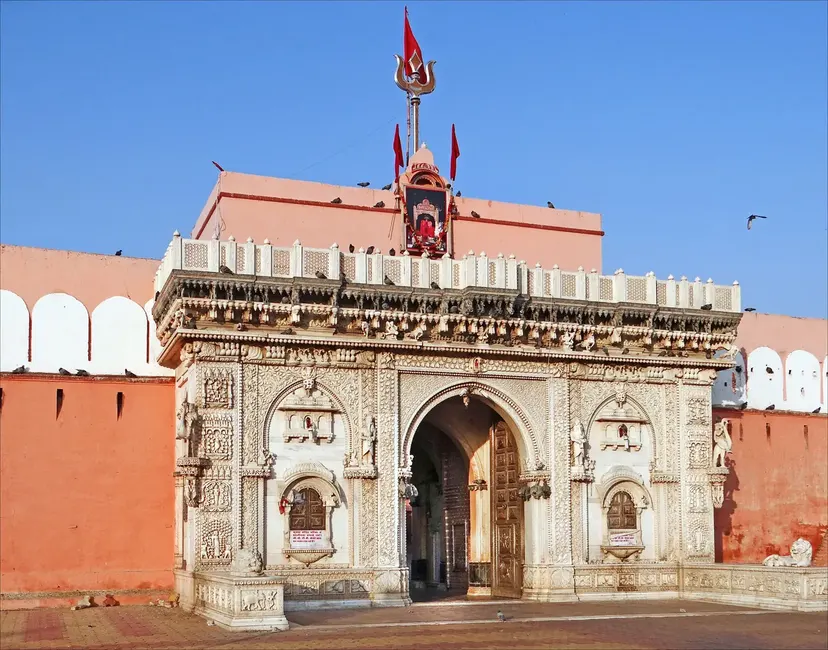
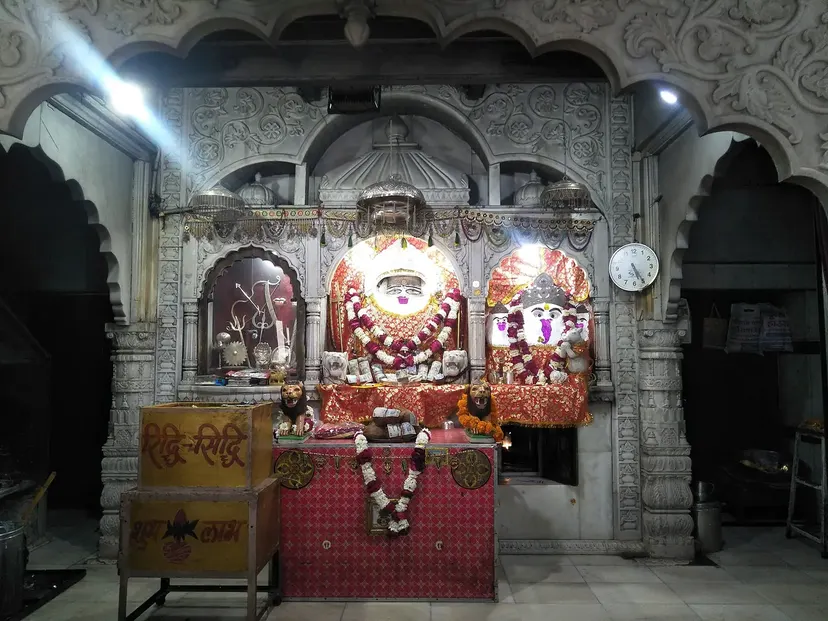
Sundha Mata Temple is a hilltop shrine of the goddess Chamunda on Sundha Hill in Jalore district, in south-western Rajasthan. The goddess is worshipped locally as Sundha Mata, and the temple draws large numbers of devotees, especially during Navratri.
The shrine is notable for its history as much as for its setting. A long Sanskrit inscription found on the hill, dated 1262 CE, records that the Chahamana (Chauhan) king Chachigadeva of Jalore worshipped the goddess here and built a mandapa (pillared hall) at her temple, which makes it one of the better-documented medieval goddess shrines of the region.
Faith & Tradition
Religious Significance of Sundha Mata Temple
In the inscription the hill is called Sugandhadri, 'the mountain Sugandha', and the goddess is Chamunda under the name Aghateshvari. The scholar F. Kielhorn, who edited the text in Epigraphia Indica, identified Sugandhadri with the Sundha Hill on which the stones were found. The record thus links the present-day worship of Sundha Mata directly to a named medieval patron.
Today the temple is described by Zee News as a place where devotees come from far away, with large fairs during festivals such as Navratri. Devotees believe that the goddess fulfils the wishes of those who visit; Zee News presents this as popular belief rather than fact.
Heritage
History of Sundha Mata Temple
The Sundha Hill inscription is on two stones found on the hill, which Epigraphia Indica (Vol. IX, 1907–08) placed about ten miles north of Jaswantpura in what was then Jodhpur State. Edited by Kielhorn from rubbings supplied by the historian Gaurishankar Hirachand Ojha, it is written in Sanskrit in Nagari script, mostly in verse, and was found in a perfect state of preservation. It was written out by Namvasimha, son of the physician Vijayapala, and engraved by Jisaravi, son of the master builder Jisapala.
The text gives a long genealogy of the Chahamanas of Naddula (Nadol) and Javalipura (Jalore) before describing Chachigadeva's own pious works. According to Kielhorn, it states that the king visited Sugandhadri, worshipped Chamunda as Aghateshvari and established a mandapa at her temple, which was consecrated on Akshaya Tritiya, the third day of the bright half of Vaishakha, in Vikrama Samvat 1319 (about 1262 CE). The mandapa therefore dates the temple's enlargement, while the shrine itself is evidently older. Wikipedia adds that the eulogy of the dynasty was composed by a Jain monk, reflecting the king's patronage of several faiths.
Popular sources describe the temple as about 900 years old; that figure is not tied to any inscription and is given here only as a popular estimate.
Plan Your Visit
Darshan and Visitor Information
The temple is on a high hill reached on foot or by ropeway, so allow time and carry water, particularly in summer. Crowds are heaviest during Navratri. Confirm current darshan timings, ropeway hours and any charges with the temple administration before travelling.
Timings and arrangements change with seasons and festivals. Confirm current details with the temple administration before travelling. Last reviewed 1 November 2026.
Sacred Calendar
Festivals at Sundha Mata Temple
Navratri
Zee News reports large fairs at the temple during festivals such as Navratri, when devotees come from far away.
Location
How to Reach Sundha Mata Temple
The temple is on a high hill, and visitors either climb or use the ropeway that Zee News reports is now available to devotees. Epigraphia Indica places Sundha Hill about ten miles north of Jaswantpura; check current road access and ropeway operation locally before travelling.
Location: Sundha Hill (near Jaswantpura), Jalore, Rajasthan, India
More in Hindu temples in Rajasthan · Chamunda (worshipped as Sundha Mata; called Aghateshvari in a 1262 CE inscription) temples · Temples in Jalore District
Questions
Sundha Mata Temple: Frequently Asked Questions
Which goddess is worshipped at Sundha Mata Temple?
The goddess Chamunda, worshipped as Sundha Mata. A 1262 CE inscription calls her Aghateshvari.
What is the Sundha Hill inscription?
A Sanskrit inscription on two stones found on the hill, dated Vikrama Samvat 1319 (about 1262 CE). It gives a genealogy of the Chahamana rulers of Nadol and Jalore and records King Chachigadeva's gifts, including a mandapa at the goddess's temple.
Who built the mandapa at Sundha Mata?
The Chahamana king Chachigadeva of Jalore, according to the inscription edited by F. Kielhorn in Epigraphia Indica Vol. IX. It was consecrated on Akshaya Tritiya in about 1262 CE.
Is there a ropeway to Sundha Mata Temple?
Yes. Zee News reports that a ropeway is now available for devotees, making the climb easier. Check current operating hours locally.
When is Sundha Mata Temple most crowded?
During Navratri, when large fairs are held and devotees come from far away.
Sources and attribution
- Archaeological Survey of India / Internet Archive — Epigraphia Indica, Vol. IX (1907–08), No. 9: 'The Chahamanas of Naddula' by F. Kielhorn, section C: Sundha Hill inscription of Chachigadeva, [Vikrama-]Samvat 1319, pp. 70–74
- Wikipedia — Chachigadeva
- Wikipedia — Sundha Mata Temple
- Zee News (Zee Rajasthan) — Jalore: 900-year-old Sundha Mata temple (web story, 22 July 2025)
Further reading: Sundha Mata Temple on Wikipedia (CC BY-SA 4.0).
Spotted an error? Write to info@hindutone.com — see our editorial policy.
Pilgrim Circuit