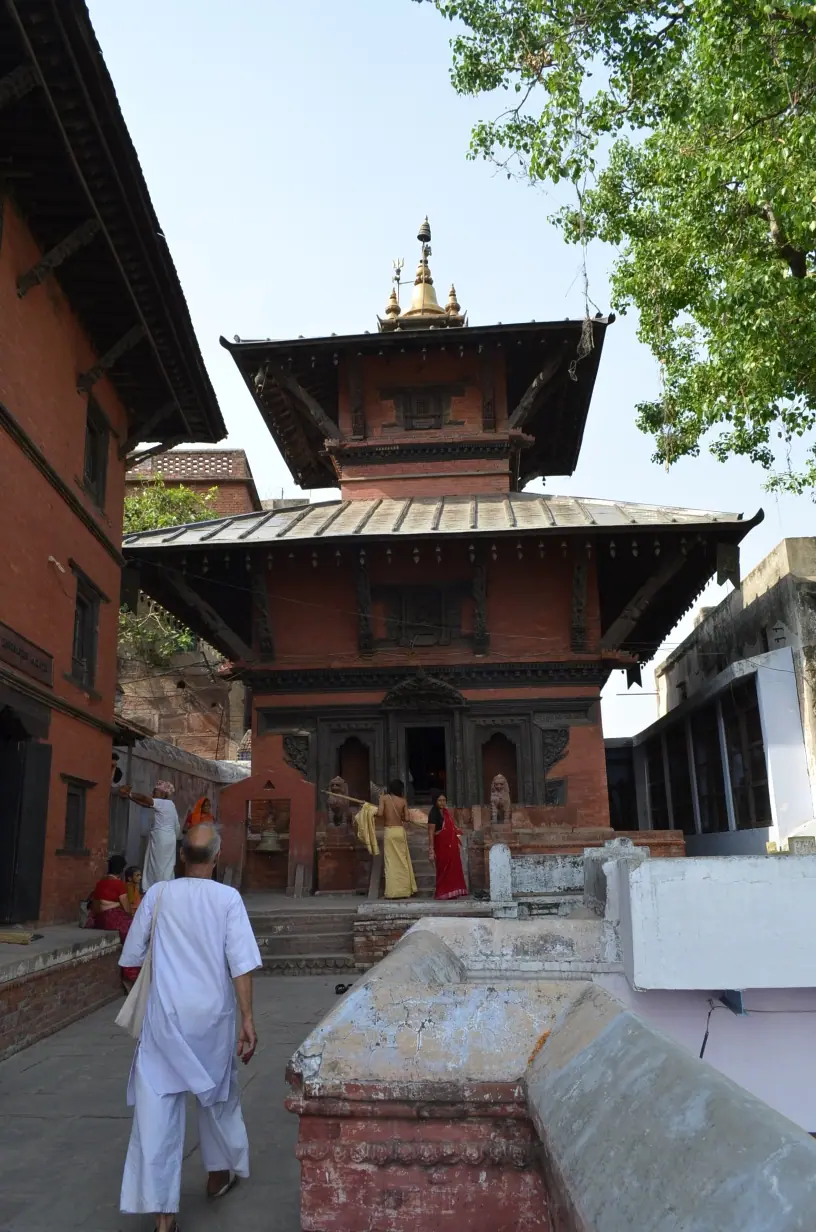
Nepali Mandir (Samrajeshwar Pashupatinath Temple), Lalita Ghat
Shiva (Pashupatinath) temple · Varanasi, Uttar Pradesh, India
Photo: Matt Stabile · CC BY 2.0 · via Wikimedia Commons
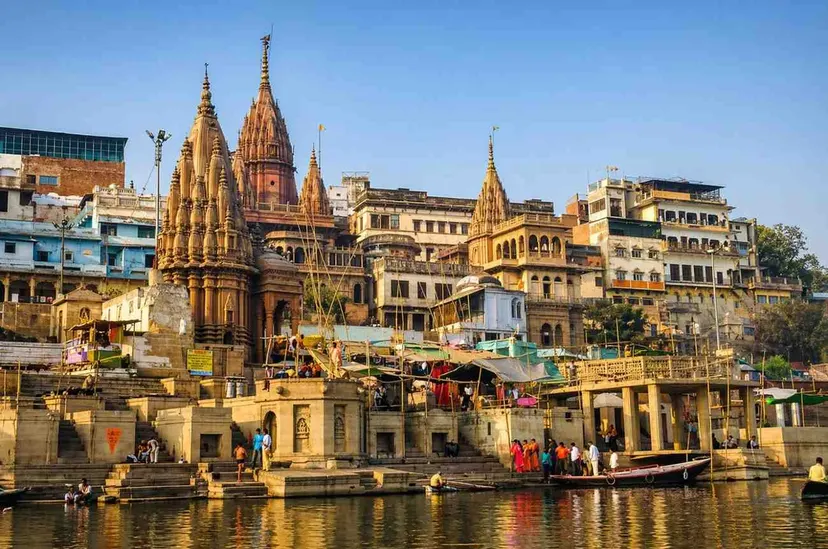
The Nepali Mandir, formally the Shri Samrajeswar Pashupatinath Mahadev Mandir, is a Shiva temple on Lalita Ghat beside the Ganga in Varanasi, Uttar Pradesh (Live History India; Outlook). It was built in the 19th century by members of Nepal's royal family as a copy of the Pashupatinath Temple in Kathmandu (Onlinekhabar; Republica).
Locally it is also called the Nepali Mandir and 'Mini Khajuraho', the second name coming from its carved woodwork (Onlinekhabar; Republica; Live History India). Pilgrims from Nepal visit it regularly, and reports describe it as a symbol of the cultural ties between India and Nepal (Onlinekhabar; Republica).
Faith & Tradition
Religious Significance of Nepali Mandir (Samrajeshwar Pashupatinath Temple), Lalita Ghat
The temple is dedicated to Shiva in his form as Pashupatinath, the deity of the great temple on the Bagmati in Kathmandu (Live History India; Onlinekhabar). Worship is offered every day, and devotees from Nepal say they make a point of visiting because it looks like the Kathmandu shrine (Onlinekhabar; Republica).
News reports in 2022 said the temple was seeing more pilgrims and tourists after the Kashi Vishwanath corridor was developed nearby (Onlinekhabar; Republica; WION). In April 2022 Nepal's Prime Minister Sher Bahadur Deuba offered prayers at the temple during a visit to Varanasi (WION; The Week; Outlook).
Heritage
History of Nepali Mandir (Samrajeshwar Pashupatinath Temple), Lalita Ghat
Rana Bahadur Shah, a king of Nepal who gave up the throne, lived in Kashi as an ascetic under the name Nirgunananda Swami before going back to Kathmandu in 1804 (Onlinekhabar; Live History India). He stayed at Lalita Ghat during this period (Onlinekhabar), and Live History India links the beginnings of the temple to his time in the city (Live History India).
Later, under King Rajendra Bikram Shah, Lalita Ghat was rebuilt as a Nepali heritage site, and the buildings there came to be known as the 'Nepali temple of Kashi' and the 'Pashupati temple' (Onlinekhabar). Accounts differ on who began the temple and when it was finished, so this page gives only the 19th-century date on which the reports agree (Onlinekhabar; Republica).
Architecture and sacred features
The temple follows the Nepali pagoda style, with a two-tiered roof topped by a gilded finial, and it is painted red (Live History India). It is built of wood and terracotta stone, and its carvings, some of them compared with those at Khajuraho, are why it is called 'Mini Khajuraho' (Live History India; Republica; Onlinekhabar). Because so much of it is wood, it is also known as Kanthwala, meaning 'wooden' (Live History India).
Plan Your Visit
Darshan and Visitor Information
Reports from 2022 describe long queues in the afternoons (Onlinekhabar; Republica). Confirm current timings and arrangements locally or with Varanasi district authorities before visiting.
Timings and arrangements change with seasons and festivals. Confirm current details with the temple administration before travelling. Last reviewed 11 October 2026.
Location
How to Reach Nepali Mandir (Samrajeshwar Pashupatinath Temple), Lalita Ghat
The temple stands on Lalita Ghat on the Varanasi riverfront, a short distance from Manikarnika Ghat (Live History India; Outlook). Check current routes and local transport to the ghats with Varanasi district or Uttar Pradesh tourism authorities before travelling.
Location: Varanasi, Uttar Pradesh, India
More in Hindu temples in Uttar Pradesh · Shiva (Pashupatinath) temples
Questions
Nepali Mandir (Samrajeshwar Pashupatinath Temple), Lalita Ghat: Frequently Asked Questions
Where is the Nepali Mandir in Varanasi?
It is on Lalita Ghat by the Ganga, a short distance from Manikarnika Ghat (Live History India; Outlook).
Which deity is worshipped at the Nepali Mandir?
The temple is dedicated to Shiva as Pashupatinath (Onlinekhabar; Live History India).
What is the temple's formal name?
Its formal name is the Shri Samrajeswar Pashupatinath Mahadev Mandir, and it is often called Samrajeshwar Pashupatinath (Live History India; Onlinekhabar; WION).
Who built the Nepali Mandir?
It was built in the 19th century by members of Nepal's royal family (Onlinekhabar; Republica). Accounts differ on which king began it and when it was finished.
Why is it called Mini Khajuraho?
The name comes from its carvings, some of which are compared with those at Khajuraho (Live History India; Republica; Onlinekhabar).
How is the temple linked to Nepal's Pashupatinath Temple?
It was built as a copy of the Pashupatinath Temple in Kathmandu, and pilgrims from Nepal visit it regularly (Onlinekhabar; Republica; Live History India).
Sources and attribution
- © OpenStreetMap contributors — location data © OpenStreetMap contributors (ODbL)
- Wikidata Q24912881 — structured data (CC0)
- Wikipedia — Nepali Mandir — text facts from Wikipedia, licensed CC BY-SA 4.0
- Live History India — Pashupatinath Temple: A Piece of Nepal in Varanasi
- Onlinekhabar — Varanasi's Samrajeshwar Pashupatinath temple, a monument of Nepal-India ties, gets more popular
- Onlinekhabar — Nepal owns many archaeological properties in India. Kathmandu is gradually forgetting them
- Republica (Nagarik Network) — Varanasi's Pashupatinath Mahadev Mandir: A symbol of India-Nepal unity (ANI report)
- WION — Nepal Prime Minister offers prayer at Pashupatinath temple in Varanasi
- The Week — Nepal PM Deuba visits temples in Varanasi
- Outlook — Nepal PM Deuba visits temples in Varanasi
Further reading: Nepali Mandir (Samrajeshwar Pashupatinath Temple), Lalita Ghat on Wikipedia (CC BY-SA 4.0).
Spotted an error? Write to info@hindutone.com — see our editorial policy.