Spiritual Science Behind Tirupati's Balaji Idol: Why the Idol Is Always Moist
The ancient temple of Lord Venkateswara atop the Tirumala hills has captivated millions of devotees for centuries.
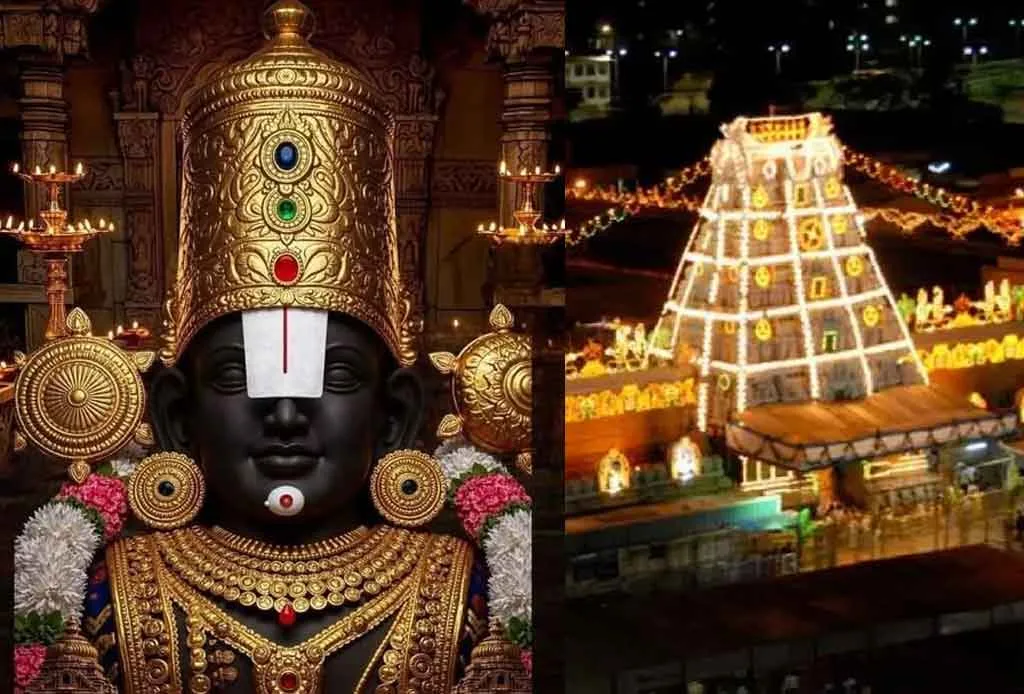
The ancient temple of Lord Venkateswara atop the Tirumala hills has captivated millions of devotees for centuries. Among its many fascinating aspects, one phenomenon continues to intrigue both believers and researchers alike: the perpetual moisture on the sacred idol of Lord Balaji. This mysterious characteristic has sparked numerous theories that beautifully intertwine spiritual beliefs with scientific explanations.
The Divine Moisture: A Sacred Mystery
Devotees who have had the blessed opportunity for close darshan of Lord Venkateswara often notice that the idol appears consistently moist, with tiny beads of what seems like perspiration visible on its surface. This phenomenon occurs regardless of the season, time of day, or weather conditions outside the sanctum sanctorum. For centuries, this has been interpreted as a divine sign of the Lord's living presence within the idol.
According to temple traditions, this moisture represents the Lord's physical manifestation on Earth, symbolizing that He is not merely a stone sculpture but a living deity who breathes, perspires, and exists among His devotees. Ancient texts and temple lore describe how the deity's body temperature fluctuates and how the moisture appears as if the Lord Himself is present in physical form.
Traditional Beliefs and Spiritual Significance
Hindu philosophy has long maintained that properly consecrated idols become vessels for divine consciousness. The concept of "prana pratishtha," the ritual that infuses life force into an idol, is central to this understanding. Devotees believe that Lord Venkateswara's idol underwent such powerful consecration that it transcended the limitations of ordinary matter.
Several spiritual explanations have been offered over the centuries. Some believe the moisture is the Lord's way of showing compassion, as He absorbs the sins and sorrows of His devotees, manifesting as perspiration. Others interpret it as divine nectar, a blessing from the deity to all who seek His darshan. Temple priests and scholars have documented instances where the moisture appears to increase during particularly auspicious occasions or when massive crowds gather for darshan.
The traditional practice of applying camphor and sandalwood paste to the idol is said to be partly because of this perpetual moisture. These substances not only enhance the Lord's appearance but also complement this unique characteristic of the deity.
The Scientific Perspective: Natural Phenomena at Play
While faith provides one lens through which to view this mystery, scientific inquiry offers complementary explanations rooted in the physical properties of the temple and its environment.
Unique Microclimate and Temperature Regulation
The Tirumala temple sits at an elevation of approximately 3,200 feet above sea level, creating a distinct microclimate. The sanctum sanctorum, being the innermost chamber, maintains remarkably stable temperature and humidity levels throughout the year. The thick stone walls, some several feet wide, act as excellent thermal insulators, keeping the inner chamber cooler than the outside environment during hot days.
This temperature differential becomes crucial. When the idol's surface remains cooler than the surrounding air, water vapor in the air condenses on its surface, much like dew forms on grass in the early morning or how a cold glass of water "sweats" on a humid day. The constant flow of devotees, each bringing body heat and moisture into the chamber, creates a humid microenvironment that facilitates this condensation.
Composition and Porosity of the Idol
According to temple records and scholarly studies, the idol of Lord Venkateswara is believed to be made of a particular type of stone or a combination of materials. Some traditions suggest it contains black stone with unique mineral properties, while others mention a special granite found in the region. These materials possess varying degrees of porosity, meaning they contain microscopic pores that can absorb and release moisture.
Porous stones naturally absorb water from the atmosphere when humidity is high and release it when conditions change. In the stable, humid environment of the sanctum, this absorption-release cycle creates a perpetual state of surface moisture. Additionally, if the stone contains certain hygroscopic minerals (minerals that naturally attract and hold water molecules), this effect would be amplified.
Daily Rituals and Applications
The temple priests perform elaborate rituals multiple times daily, including abhishekam (sacred bathing) with water, milk, honey, sandalwood paste, and other substances. Even after the idol is dried, these liquids can seep into the porous surface and gradually emerge over time. The continuous application of oils, ghee, and aromatic substances as part of daily worship creates a layer that interacts with the stone's surface properties.
Furthermore, the camphor burning during aarti and the constant presence of oil lamps generate heat and humidity, contributing to the moisture phenomenon. The smoke and heat from these rituals interact with the cooler stone surface, causing further condensation.
Architectural Brilliance of Ancient Engineers
The temple's architecture itself is a marvel of ancient engineering. The sanctum is designed with specific ventilation patterns that allow air circulation while maintaining the sacred atmosphere. The positioning of openings, the height of the ceiling, and the thickness of walls all contribute to maintaining optimal conditions that promote this phenomenon.
Some researchers have noted that underground water channels or springs might exist beneath the temple complex. The Tirumala hills are known to have water sources, and moisture from these could permeate through the foundation and contribute to the overall humidity within the temple structure.
The Harmonious Blend of Faith and Science
What makes the Tirupati Balaji idol truly remarkable is not choosing between faith and science, but appreciating how both perspectives enrich our understanding. The scientific explanations for the moisture do not diminish the spiritual significance; rather, they demonstrate the profound wisdom of ancient temple builders who understood natural phenomena and incorporated them into sacred architecture.
The fact that devotees have observed and revered this moisture for centuries, long before modern science could explain condensation or humidity, speaks to the keen observational skills of ancient worshippers. They recognized something extraordinary and attributed it to divine presence, a perfectly valid spiritual interpretation of a natural phenomenon.
Similarly, modern scientific understanding helps us appreciate the sophisticated knowledge our ancestors possessed. They chose locations, materials, and architectural designs that would create specific environmental conditions conducive to this phenomenon, suggesting they understood far more about physics, geology, and architecture than often credited.
Other Mysteries of the Tirumala Temple
The perpetual moisture is just one of several intriguing aspects of the Tirupati temple that continue to fascinate visitors:
The idol's crown, adorned with diamonds and precious stones, is said to be always at a particular temperature. The famous "Anga Vastra" (silk cloth) covering the deity is changed regularly, and devotees note that it often appears damp when removed. The temple's main entrance gopuram (tower) creates specific acoustic effects, and the sanctum's air seems to carry a distinct fragrance that many attribute to divine presence but could result from centuries of incense, camphor, and aromatic substances permeating the stone walls.
Experiencing the Divine Mystery
For the millions who climb the Tirumala steps or take the winding road to seek Lord Venkateswara's blessings, the moisture on the idol represents something deeply personal. Whether one attributes it to divine will, natural phenomena, or a beautiful combination of both, the experience of standing before the deity remains profoundly moving.
The idol's perpetual moisture serves as a reminder that mysteries need not have single explanations. In the grand tradition of Indian philosophy, which has always embraced multiple paths to truth, we can appreciate both the scientific wonder of nature's laws and the spiritual truth of divine presence.
Conclusion: Where Science Meets Spirituality
The mystery of Tirupati Balaji's perpetually moist idol beautifully illustrates how scientific understanding and spiritual faith can coexist and complement each other. The natural processes of condensation, porosity, and environmental factors work in harmony within the sacred space created by ancient architects and sustained by devoted priests over centuries.
For believers, the scientific explanations add another layer of appreciation for how the divine works through natural laws. For the scientifically minded, the spiritual interpretations remind us that human experience encompasses more than measurable phenomena. The idol stands as a testament to India's rich heritage, where profound spiritual wisdom and sophisticated scientific knowledge have always walked hand in hand.
Whether you visit Tirumala as a pilgrim seeking divine grace or as a curious traveler exploring ancient mysteries, the sight of Lord Venkateswara's sacred form, glistening with that mysterious moisture, continues to inspire wonder, devotion, and contemplation about the beautiful complexity of our world.
Note: This article presents both traditional beliefs and scientific explanations to offer readers a comprehensive understanding of this fascinating phenomenon. Visitors to Tirumala temple should respect all guidelines and traditions while seeking darshan of Lord Venkateswara.
Frequently Asked Questions
Why is the Tirupati Balaji idol always moist?
Devotees see it as a sign of the Lord's living presence, while scientific explanations point to condensation, the porosity of the stone and the humid, stable sanctum environment. Both views are commonly held side by side.
What does the moisture on Lord Venkateswara's idol mean spiritually?
Temple traditions say the moisture shows the Lord is a living deity who breathes and perspires, not just a stone sculpture. Some believe it is His compassion in absorbing devotees' sorrows, others see it as divine nectar.
How does the Tirumala sanctum's microclimate cause condensation?
Tirumala sits at about 3,200 feet, and the thick stone walls of the sanctum keep the inner chamber cooler than the outside air. When the idol's surface is cooler than the surrounding air, water vapor condenses on it like dew.
Do daily rituals add to the moisture on the idol?
In the scientific view, yes. Abhishekam with water, milk, honey and sandalwood paste can seep into the porous stone and emerge later, and camphor and oil lamps add heat and humidity.
Why are camphor and sandalwood paste applied to the idol?
The practice is said to be partly because of the perpetual moisture. These substances enhance the Lord's appearance and complement this unique characteristic of the deity.
Share this with family and friends
Send it on WhatsApp, post it, or copy the link.
More from Tirumala
- Tirumala Darshan Tickets and Quota Releases 2026: How TTD's Online Booking Works
- Tirumala Salakatla Brahmotsavam 2026 Highlights: Garuda Seva, Dhwajavarohanam and the Numbers
- TTD News October 2026: Tirumala Latest Updates on Darshan, Tickets, Festivals and Rules
- Srivari Pushpa Yagam 2026 at Tirumala: Expected Date, Meaning, Flowers and How to Take Part
- Tirumala Vaikuntha Ekadasi 2026: Vaikuntha Dwara Darshan Dates, Tokens and How to Plan
You might also like

Purushottam Maas 2026: Lord Vishnu's Sacred Gift of Spiritual Multiplication & Divine Grace

Why Lord Venkateswara Is Called the Kaliyuga Daivam