Bhagwan Swaminarayan: Life, Teachings and Temples
Bhagwan Swaminarayan (1781–1830), born Ghanshyam Pande at Chhapaiya near Ayodhya, founded the Swaminarayan Sampradaya, a Vaishnava tradition centred in Gujarat. After a seven-year pilgrimage across India as the boy ascetic Nilkanth Varni, he became the leader of Ramanand Swami's fellowship in 1802.
Bhagwan Swaminarayan (1781–1830), born Ghanshyam Pande at Chhapaiya near Ayodhya, founded the Swaminarayan Sampradaya, a Vaishnava tradition centred in Gujarat. After a seven-year pilgrimage across India as the boy ascetic Nilkanth Varni, he became the leader of Ramanand Swami's fellowship in 1802. His followers worship him as the supreme God; his teachings are collected in the Vachanamrut and the Shikshapatri.
| Key facts | |
|---|---|
| Born | 3 April 1781 (Chaitra Shukla Navami, Rama Navami), Chhapaiya, near Ayodhya, Uttar Pradesh |
| Birth name | Ghanshyam Pande |
| Other names | Nilkanth Varni; Sahajanand Swami; Swaminarayan |
| Guru | Ramanand Swami |
| Died | 1 June 1830, Gadhada, Gujarat |
| Scriptures | Vachanamrut (his discourses); Shikshapatri (1826) |
| Philosophy | Vaishnava Vedanta; the Shikshapatri names Ramanuja's Vishishtadvaita as the doctrine he accepted, and later Swaminarayan schools explain it in their own ways |
Childhood at Chhapaiya and Ayodhya
Ghanshyam was born to Dharmadev and Bhaktimata in the village of Chhapaiya, near Ayodhya. His followers keep his birthday on Rama Navami, the ninth day of the bright half of Chaitra, as Swaminarayan Jayanti, so its Gregorian date moves each year. The family moved to Ayodhya, where he studied the scriptures. Both his parents died while he was still a boy.
Nilkanth Varni's journey
At the age of eleven, in 1792, he left home as a brahmachari ascetic named Nilkanth Varni. Over the next seven years he walked through the Himalayas, Nepal, the east and the south of India, visiting pilgrimage places and learning yoga. His followers count the journey at about 12,000 kilometres. In 1799 he reached the ashram of Ramanand Swami at Loj in Saurashtra.
Sahajanand Swami and Swaminarayan
Ramanand Swami initiated him in 1800 with the names Sahajanand Swami and Narayan Muni, and in 1802, shortly before his own death, named him leader of the fellowship. Sahajanand taught his followers to chant the mantra "Swaminarayan", and the movement, and he himself, came to be known by that name.
What he taught
- Bhakti with dharma. Devotion to God goes together with a disciplined, moral life: no theft, violence, alcohol, meat or adultery.
- Five eternal entities. The Vachanamrut speaks of jiva (self), ishvara, maya, Brahman and Parabrahman. Different Swaminarayan organisations explain the relation of Brahman (Akshar) and Parabrahman (Purushottam) in different ways.
- Social work. He opposed animal sacrifice, female infanticide and sati, organised help in famine years, and taught followers to give part of their income.
- Ascetics and householders. He founded an order of sadhus with strict vows and gave householders their own rules of conduct.
Vachanamrut and Shikshapatri
The Vachanamrut collects 273 discourses he gave between 1819 and 1829, recorded by senior sadhus. The Shikshapatri, written in Sanskrit in 1826, is a short code of conduct of about 212 verses for his followers.
Temples he built
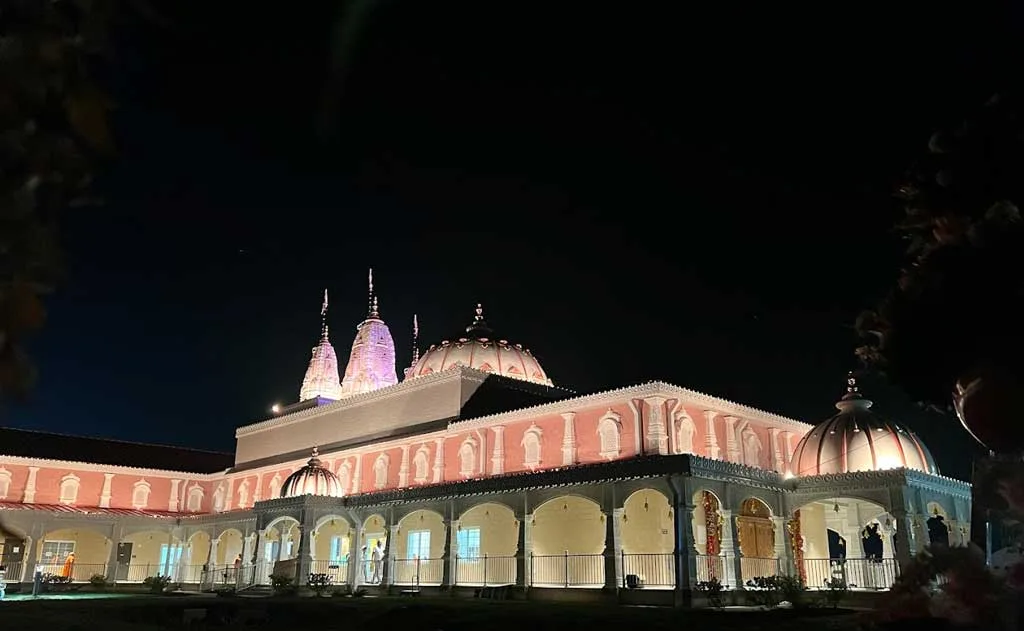
Under his direction six temples were built in Gujarat: Ahmedabad (Kalupur, 1822), Bhuj, Vadtal, Dholera, Junagadh and Gadhada. He set up two dioceses, at Ahmedabad and Vadtal, under acharyas from his family. He died at Gadhada on 1 June 1830.
The Sampradaya today
His followers have since formed several organisations, among them the two original dioceses of Ahmedabad and Vadtal and the Bochasanwasi Akshar Purushottam Swaminarayan Sanstha (BAPS), founded in 1907. Their temples in India and abroad include the Akshardham complexes in Gandhinagar, Delhi and Robbinsville, New Jersey, and mandirs in London, Toronto and many other cities.
Frequently asked questions
Who was Bhagwan Swaminarayan?
The founder of the Swaminarayan Sampradaya, born Ghanshyam Pande at Chhapaiya in 1781, whom his followers worship as the supreme God.
When is Swaminarayan Jayanti?
On Rama Navami, the ninth day of the bright half of Chaitra, so the Gregorian date changes every year.
Who was Nilkanth Varni?
The name of Swaminarayan as a boy ascetic during his seven-year journey across India from 1792 to 1799.
What is the Vachanamrut?
The collection of his discourses, 273 in number, given between 1819 and 1829.
What is the Shikshapatri?
A Sanskrit code of conduct of about 212 verses that he wrote in 1826.
Where did Swaminarayan die?
At Gadhada in Gujarat on 1 June 1830.
Sources
- Raymond Brady Williams, An Introduction to Swaminarayan Hinduism (Cambridge University Press, 3rd edition 2018).
- Shree Swaminarayan Mandir Kalupur (Ahmedabad diocese), "Life of Bhagwan Swaminarayan".
- BAPS Swaminarayan Sanstha, "Bhagwan Swaminarayan" (baps.org).
Last reviewed: 12 November 2026.
Related: Famous Hindus · BAPS Swaminarayan Akshardham temple guide · Madhvacharya · Swami Dayananda Saraswati
Share this with family and friends
Send it on WhatsApp, post it, or copy the link.
More from Famous Hindus
- Famous Hindus Born in April: Birthdays by Date
- Famous Hindus Born in May: Birthdays by Date
- Famous Hindus Born in July: Birthdays by Date
- Famous Hindus Born in August: Birthdays by Date
- Famous Hindus Born in October: Birthdays by Date
You might also like
India Honors 150th Birth Anniversary of Bhagwan Birsa Munda on Janjatiya Gaurav Divas