Bhagwan Shiva and Vasuki: The Divine Bond of Power and Transformation
Introduction: The Lord of Mysteries In the boundless spiritual landscape of Sanatana Dharma, few deities hold the awe-inspiring reverence that Bhagwan Shiva…
Introduction: The Lord of Mysteries
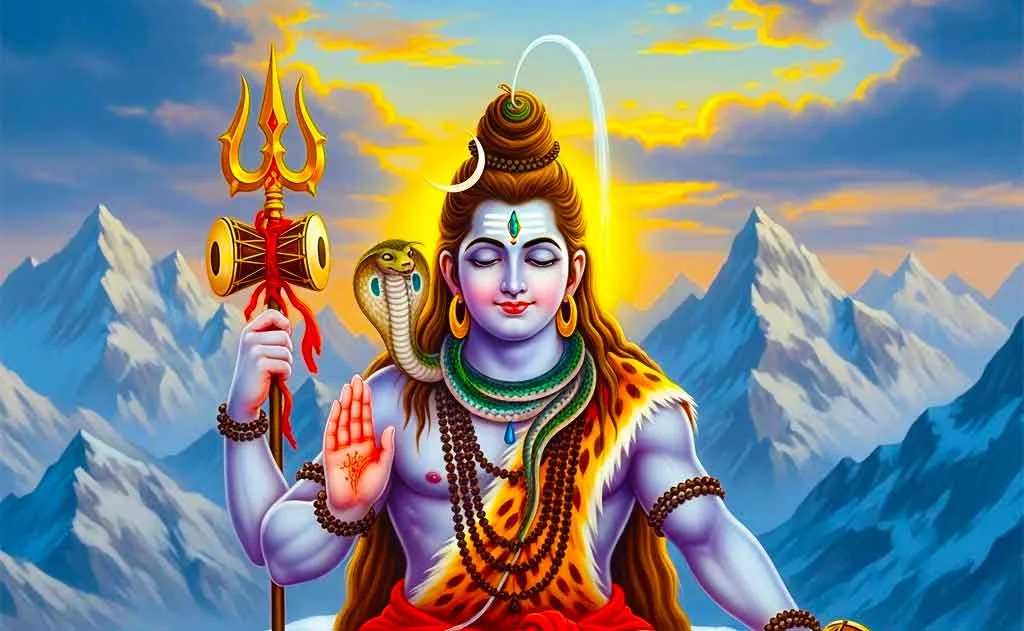
In the boundless spiritual landscape of Sanatana Dharma, few deities hold the awe-inspiring reverence that Bhagwan Shiva commands. Draped in tiger skin, immersed in silent meditation atop Mount Kailash, and adorned with the crescent moon, ash, and a radiant third eye, Shiva is the destroyer of illusion and the ultimate yogi.
But amidst all his mystical attributes, one visual always sparks intrigue—the serpent Vasuki coiled calmly around his neck. This is no mere ornament; it is a living symbol of divine wisdom, a tale of cosmic sacrifice, humility, and the alchemical power of transformation.
Let us step into this sacred myth and understand why Vasuki, the serpent king, rests on the throat of Mahadeva himself.
The Samudra Manthan: Churning of the Ocean
Long ago, in a realm beyond time, the Devas (gods) and Asuras (demons) found themselves united in a rare truce. The cosmos had become imbalanced, and the only remedy lay in retrieving Amrita—the nectar of immortality—hidden in the depths of the Ksheer Sagar, the Ocean of Milk.
To churn this vast cosmic ocean, Mount Mandara was chosen as the churning rod. But what of the rope? None other than Vasuki, the majestic king of Nagas, stepped forward with courage and humility. Wrapping himself around the mountain, he allowed the Devas to pull from one end and the Asuras from the other.
With every pull, the churning intensified—an allegory for life’s struggles. But before the nectar emerged, something terrifying surfaced: Halahala, a poison so deadly that it could obliterate creation itself.
Shiva Drinks the Poison: Becoming Neelkanth
Panic erupted. The gods and demons were powerless before the venom's potency. In desperation, they turned to the only being who could save them—Lord Shiva.
Without hesitation, Shiva took the entire poison in his palm and swallowed it, but held it in his throat through divine control. His beloved consort Goddess Parvati swiftly pressed his neck, preventing the toxin from spreading. The result? His throat turned blue, earning him the sacred title Neelkanth—the Blue-Throated One.
This supreme act of self-sacrifice not only saved the universe but transformed poison into a symbol of transcendence. Shiva’s power wasn’t in avoiding suffering, but in absorbing and neutralizing it.
Vasuki’s Devotion and Shiva’s Embrace
While the gods rejoiced and balance was restored, Vasuki lay exhausted and scorched. His body had borne the strain of the churning, and the poisonous fumes had seeped deep into his being.
Humbled and weary, Vasuki approached Shiva with folded hoods, seeking refuge.
And then came the divine embrace.
Shiva did not shun the serpent. He wrapped Vasuki around his neck—not as a sign of dominance, but as a badge of honor. The Lord of Lords acknowledged Vasuki’s sacrifice and transformed him into a symbol of strength, awareness, and spiritual awakening.
Deeper Symbolism of Vasuki on Shiva
Vasuki around Shiva’s neck is layered with mystical meaning:
The Three Coils of Vasuki symbolize:
- The Three Gunas: Tamas (ignorance), Rajas (passion), and Sattva (purity)
- The Three States of Consciousness: Wakefulness, Dreaming, and Deep Sleep
- The Three Dimensions of Time: Past, Present, and Future
Positioned near the Vishuddha Chakra (throat energy center), Vasuki represents the power of expression, truth, and purification.
In yogic lore, Vasuki is symbolic of Kundalini—the primal energy coiled at the base of the spine. Shiva wearing this energy around his throat signifies his complete mastery over the inner serpent—the awakened spiritual force.
The snake, often feared for its venom, becomes calm and powerful in the presence of divine awareness. Thus, even destructive forces can be tamed and transformed by spiritual insight.
Vasuki: The Serpent King
Born of Sage Kashyapa and Kadru, Vasuki is the sibling of Shesha Naga, the cosmic serpent on whom Lord Vishnu reclines. As a Naga Raja, Vasuki is revered in many scriptures. His role in the Samudra Manthan marked his ascension from a creature of the earth to a symbol of cosmic transformation.
The Vedas declare:
“Namah sarpebhyo ye ke cha prithivyam”—
Salutations to all serpents, those on Earth, in the sky, and in heaven.
The Serpent Within Us
Just as Vasuki resides peacefully on Shiva, each of us holds a serpent within—our dormant spiritual energy. Through meditation, truth, and self-mastery, we awaken this inner power.
When we embrace our own fears, accept our shadows, and sit in silence like Shiva, our challenges transform into ornaments. Life’s poison becomes wisdom, and the serpent of suffering turns into the garland of liberation.
Devotional Mantra: Salutations to Shiva
To honor this divine relationship, we recite the following mantra:
“Nageendrahaaraaya Trilochanaya,
Bhasmaangaraagaaya Maheshwaraaya.
Nityaaya Shuddhaaya Digambaraaya,
Tasmai Nakaaraaya Namah Shivaya.”
(Salutations to the Lord who wears serpents, has three eyes, is adorned with sacred ash, is eternal, pure, and formless.)
Final Reflection: The Eternal Lesson
In an age where people fear what they don’t understand, Shiva teaches us to accept, embrace, and transcend. He didn’t slay Vasuki—he honored him. Just like the serpent sheds its skin, we too must shed ego, illusion, and fear to rise into our divine potential.
On this auspicious day of August 4, 2025, may we all learn to wear our serpents with pride, walk the path of inner awakening, and invoke the fearless spirit of Shiva in every breath.
Har Har Mahadev!
Let Vasuki’s tale remind us that the poison of life, when met with awareness, becomes the nectar of the soul.
Frequently Asked Questions
Why does Shiva wear Vasuki around his neck?
As commonly told, Vasuki was exhausted and scorched after serving as the churning rope in the Samudra Manthan. Shiva embraced him around his neck as a badge of honor, acknowledging his sacrifice.
What role did Vasuki play in the Samudra Manthan?
Vasuki, king of the Nagas, served as the rope wrapped around Mount Mandara. The Devas pulled one end and the Asuras the other to churn the Ocean of Milk for Amrita.
Why is Shiva called Neelkanth?
Shiva swallowed the deadly Halahala poison but held it in his throat, while Parvati pressed his neck to stop it spreading. His throat turned blue, earning the title Neelkanth, the Blue-Throated One.
What do the three coils of Vasuki symbolize?
The three coils stand for the three Gunas (Tamas, Rajas, Sattva), the three states of consciousness (wakefulness, dreaming, deep sleep) and the three dimensions of time (past, present, future).
What is the link between Vasuki and Kundalini?
In yogic lore, Vasuki symbolizes Kundalini, the primal energy coiled at the base of the spine. Near the Vishuddha Chakra at the throat, he signifies Shiva's mastery over this awakened force.
Which mantra honors Shiva as the Lord who wears serpents?
The verse beginning "Nageendrahaaraaya Trilochanaya" ends with Namah Shivaya. It salutes the Lord who wears serpents, has three eyes, is adorned with sacred ash, and is eternal, pure and formless.
Share this with family and friends
Send it on WhatsApp, post it, or copy the link.
More from Famous Hindus
- Hindu Spiritual Leaders and Temple Founders Abroad: The Swamis, Priests and Sabha Leaders Who Built the Diaspora
- Hindu Scientists, Astronauts and Business Leaders Abroad: 14 People Who Carried Their Faith Into Labs, Orbit and Boardrooms
- Sworn In on the Bhagavad Gita: 17 Leaders Outside India Who Took Their Oath on the Gita
- Famous Hindus Living Outside India in 2026: 42 Leaders, Scientists, Artists and Teachers Across the Diaspora
- Famous Hindus in Singapore, Malaysia, Bali and the UAE: Hindu Board Leaders, Kavadi-Carrying Ministers, a Balinese Governor and the Builders of Gulf Temples
You might also like
India Honors 150th Birth Anniversary of Bhagwan Birsa Munda on Janjatiya Gaurav Divas
Rudram Chamakam: The Complete Guide to the Supreme Shiva Hymn
Ashta Lakshmi: The Eight Forms of Goddess Lakshmi, Meaning, Puja and 2026 Dates