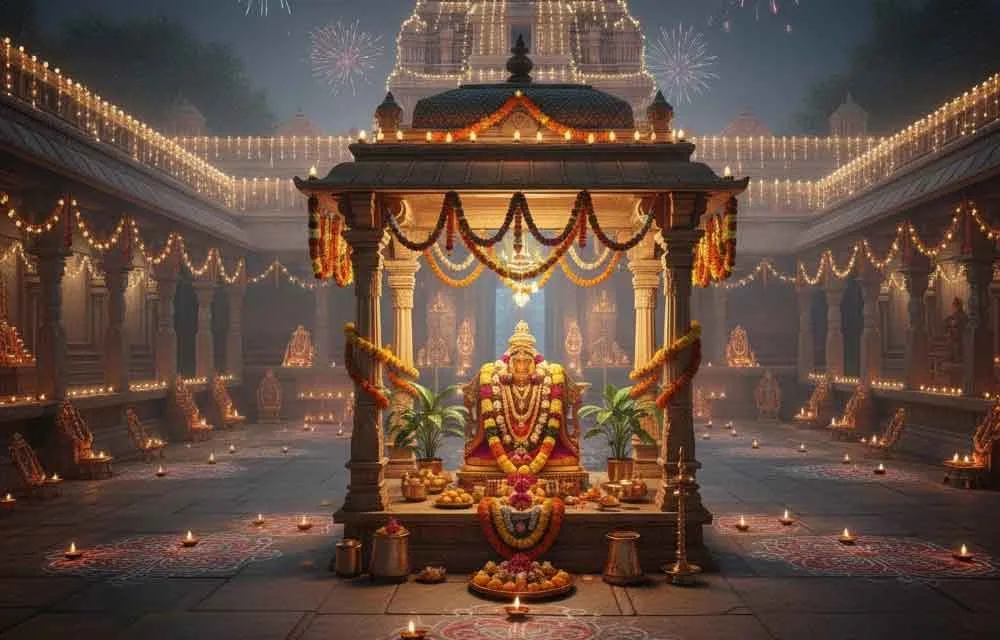
Jaya Ekadashi 2027: Date (Wednesday 17 February), Parana Time by City, Tithi and Vrat Katha
Jaya Ekadashi 2027, also called Bhishma Ekadashi in the Telugu states and Bhaimi Ekadashi in some Vaishnava calendars, is on Wednesday 17 February in India. Drik Panchang gives the tithi from 8:19 PM on 16 February to 5:31 PM on 17 February (IST) and the Delhi parana on Thursday 18 February. In North America Smarta families fast on Tuesday 16 February. Parana for 28 cities, the story of Malyavan and Pushpavati, and rules.

Quick answer: Jaya Ekadashi 2027 is on Wednesday 17 February in India. Drik Panchang gives the Ekadashi tithi from 8:19 PM IST on Tuesday 16 February to 5:31 PM IST on Wednesday 17 February. In Delhi break the fast on Thursday 18 February, 6:57 AM to 9:12 AM. In North America Smarta families fast on Tuesday 16 February and Vaishnava families on Wednesday 17 February.
Last updated: 25 October 2026. Dates and parana windows come from Drik Panchang's Delhi and New York pages and our 28-city calculation. In the Telugu states this day is Bhishma Ekadashi; Bhishma Ashtami falls three days earlier.
Jaya Ekadashi 2027 kab hai: date and tithi (जया एकादशी 2027 कब है)
| Detail | India (Drik Panchang, IST) |
|---|---|
| Jaya Ekadashi fast | Wednesday 17 February 2027 (Smarta and Vaishnava the same day) |
| Ekadashi tithi begins | 8:19 PM, Tuesday 16 February |
| Ekadashi tithi ends | 5:31 PM, Wednesday 17 February |
| Parana, Delhi | Thursday 18 February, 6:57 AM to 9:12 AM |
| Hari Vasara ends | 10:45 PM, Wednesday 17 February (our arithmetic from Drik's tithi times) |
| Dwadashi ends | 2:27 PM, Thursday 18 February |
| Also called | Bhishma Ekadashi (Andhra Pradesh and Telangana); Bhaimi Ekadashi (some Vaishnava calendars) |
| Month | Magha Shukla Ekadashi (the same in amanta and purnimanta calendars) |
In India the Ekadashi begins on Tuesday night, so Wednesday's sunrise falls inside it and the whole country fasts on Wednesday. Dwadashi lasts until Thursday afternoon, and the Hari Vasara is over by Wednesday night, so the parana is a normal Thursday-morning window.
Also read: Rama Ekadashi 2026, Saphala Ekadashi 2027, Pausha Putrada Ekadashi 2027, Shattila Ekadashi 2027, Ekadashi dates and parana by city (all Ekadashis).
Jaya Ekadashi 2027 date and parana time by city (पारण का समय)
New York (Drik Panchang): Smarta fast Tuesday 16 February with parana on Wednesday 17 February, 1:15 PM to 3:24 PM, after the Hari Vasara ends at 12:15 PM; Gauna (Vaishnava) fast Wednesday 17 February with parana on Thursday 18 February, 6:46 AM to 8:56 AM.
| City | Ekadashi fast | Parana (break the fast, local time) | Hari Vasara ends | Dwadashi ends |
|---|---|---|---|---|
| India: Delhi | Wed 17 Feb | Thu 18 Feb, 6:57–9:12 AM | Wed 17 Feb 10:45 PM | Thu 18 Feb 2:27 PM |
| India: Mumbai | Wed 17 Feb | Thu 18 Feb, 7:06–9:24 AM | Wed 17 Feb 10:45 PM | Thu 18 Feb 2:27 PM |
| India: Hyderabad | Wed 17 Feb | Thu 18 Feb, 6:42–9:01 AM | Wed 17 Feb 10:45 PM | Thu 18 Feb 2:27 PM |
| India: Chennai | Wed 17 Feb | Thu 18 Feb, 6:31–8:52 AM | Wed 17 Feb 10:45 PM | Thu 18 Feb 2:27 PM |
| India: Bengaluru | Wed 17 Feb | Thu 18 Feb, 6:41–9:02 AM | Wed 17 Feb 10:45 PM | Thu 18 Feb 2:27 PM |
| India: Kolkata | Wed 17 Feb | Thu 18 Feb, 6:07–8:24 AM | Wed 17 Feb 10:45 PM | Thu 18 Feb 2:27 PM |
| USA: New York | Tue 16 Feb (Smarta); Wed 17 Feb (Vaishnava) | Smarta: Wed 17 Feb, 1:15–3:24 PM (afternoon). Vaishnava: Thu 18 Feb, 6:46–8:56 AM, Dwadashi already over | Wed 17 Feb 12:15 PM | Thu 18 Feb 3:57 AM |
| USA: New Jersey (Edison) | Tue 16 Feb (Smarta); Wed 17 Feb (Vaishnava) | Smarta: Wed 17 Feb, 1:17–3:26 PM (afternoon). Vaishnava: Thu 18 Feb, 6:48–8:57 AM, Dwadashi already over | Wed 17 Feb 12:15 PM | Thu 18 Feb 3:57 AM |
| USA: Chicago | Tue 16 Feb (Smarta); Wed 17 Feb (Vaishnava) | Smarta: Wed 17 Feb, 1:09–3:18 PM (afternoon). Vaishnava: Thu 18 Feb, 6:42–8:51 AM, Dwadashi already over | Wed 17 Feb 11:15 AM | Thu 18 Feb 2:57 AM |
| USA: Houston | Tue 16 Feb (Smarta); Wed 17 Feb (Vaishnava) | Smarta: Wed 17 Feb, 1:43–3:58 PM (afternoon). Vaishnava: Thu 18 Feb, 6:59–9:13 AM, Dwadashi already over | Wed 17 Feb 11:15 AM | Thu 18 Feb 2:57 AM |
| USA: Dallas | Tue 16 Feb (Smarta); Wed 17 Feb (Vaishnava) | Smarta: Wed 17 Feb, 1:48–4:01 PM (afternoon). Vaishnava: Thu 18 Feb, 7:08–9:21 AM, Dwadashi already over | Wed 17 Feb 11:15 AM | Thu 18 Feb 2:57 AM |
| USA: Bay Area (San Jose) | Tue 16 Feb (Smarta); Wed 17 Feb (Vaishnava) | Smarta: Wed 17 Feb, 1:27–3:38 PM (afternoon). Vaishnava: Thu 18 Feb, 6:53–9:05 AM, Dwadashi already over | Wed 17 Feb 9:15 AM | Thu 18 Feb 12:57 AM |
| USA: Los Angeles | Tue 16 Feb (Smarta); Wed 17 Feb (Vaishnava) | Smarta: Wed 17 Feb, 1:14–3:26 PM (afternoon). Vaishnava: Thu 18 Feb, 6:35–8:48 AM, Dwadashi already over | Wed 17 Feb 9:15 AM | Thu 18 Feb 12:57 AM |
| USA: Seattle | Tue 16 Feb (Smarta); Wed 17 Feb (Vaishnava) | Smarta: Wed 17 Feb, 9:15–9:16 AM (very short window; please confirm on Drik for your city). Vaishnava: Thu 18 Feb, 7:10–9:15 AM, Dwadashi already over | Wed 17 Feb 9:15 AM | Thu 18 Feb 12:57 AM |
| Canada: Toronto | Tue 16 Feb (Smarta); Wed 17 Feb (Vaishnava) | Smarta: Wed 17 Feb, 1:36–3:43 PM (afternoon). Vaishnava: Thu 18 Feb, 7:12–9:20 AM, Dwadashi already over | Wed 17 Feb 12:15 PM | Thu 18 Feb 3:57 AM |
| Canada: Vancouver (BC) | Tue 16 Feb (Smarta); Wed 17 Feb (Vaishnava) | Smarta: Wed 17 Feb, 10:15–10:22 AM (very short window; please confirm on Drik for your city). Vaishnava: Thu 18 Feb, 8:16–10:21 AM, Dwadashi already over | Wed 17 Feb 10:15 AM | Thu 18 Feb 1:57 AM |
| Canada: Calgary (AB) | Tue 16 Feb (Smarta); Wed 17 Feb (Vaishnava) | Smarta: Wed 17 Feb, 2:52–4:54 PM (afternoon). Vaishnava: Thu 18 Feb, 8:44–10:46 AM, Dwadashi already over | Wed 17 Feb 11:15 AM | Thu 18 Feb 2:57 AM |
| Canada: Edmonton (AB) | Tue 16 Feb (Smarta); Wed 17 Feb (Vaishnava) | Smarta: Wed 17 Feb, 2:49–4:48 PM (afternoon). Vaishnava: Thu 18 Feb, 8:47–10:47 AM, Dwadashi already over | Wed 17 Feb 11:15 AM | Thu 18 Feb 2:57 AM |
| Canada: Winnipeg (MB) | Tue 16 Feb (Smarta); Wed 17 Feb (Vaishnava) | Smarta: Wed 17 Feb, 2:45–4:48 PM (afternoon). Vaishnava: Thu 18 Feb, 8:34–10:37 AM, Dwadashi already over | Wed 17 Feb 12:15 PM | Thu 18 Feb 3:57 AM |
| UK: London | Wed 17 Feb | Thu 18 Feb, 7:09–8:57 AM | Wed 17 Feb 5:15 PM | Thu 18 Feb 8:57 AM |
| Australia: Sydney | Wed 17 Feb | Thu 18 Feb, 6:33–9:11 AM | Thu 18 Feb 4:15 AM | Thu 18 Feb 7:57 PM |
| Australia: Melbourne | Wed 17 Feb | Thu 18 Feb, 6:52–9:33 AM | Thu 18 Feb 4:15 AM | Thu 18 Feb 7:57 PM |
| New Zealand: Auckland | Wed 17 Feb | Thu 18 Feb, 6:54–9:35 AM | Thu 18 Feb 6:15 AM | Thu 18 Feb 9:57 PM |
| UAE: Dubai | Wed 17 Feb | Thu 18 Feb, 6:52–9:08 AM | Wed 17 Feb 9:15 PM | Thu 18 Feb 12:57 PM |
| Singapore | Wed 17 Feb | Thu 18 Feb, 7:16–9:41 AM | Thu 18 Feb 1:15 AM | Thu 18 Feb 4:57 PM |
| Malaysia: Kuala Lumpur | Wed 17 Feb | Thu 18 Feb, 7:27–9:51 AM | Thu 18 Feb 1:15 AM | Thu 18 Feb 4:57 PM |
| Germany: Frankfurt | Wed 17 Feb | Thu 18 Feb, 7:31–9:35 AM | Wed 17 Feb 6:15 PM | Thu 18 Feb 9:57 AM |
| South Africa: Durban | Wed 17 Feb | Thu 18 Feb, 5:39–8:15 AM | Wed 17 Feb 7:15 PM | Thu 18 Feb 10:57 AM |
All times are local clock times for each city, worked out separately for that city; they are not India's times shifted. Clocks used: US cities and Toronto on standard time (DST ended on 1 November 2026); London on GMT; Sydney, Melbourne and Auckland on summer time; and, under the 2026 provincial changes, British Columbia on UTC−7, Alberta on UTC−6 and Manitoba on UTC−5 all winter. Rows for Delhi, Hyderabad, New York, Vancouver, Seattle and the Bay Area use Drik Panchang's published windows where we checked them; the others come from our calculator, which matches Drik's windows to within one or two minutes. Where a window is very short, check Drik for your exact city.
Why North America has two dates and an afternoon parana
In North America the Ekadashi tithi starts on Tuesday 16 February after sunrise and ends around Wednesday's sunrise. Drik keeps the Smarta fast on Tuesday, the day the Ekadashi begins, and a Gauna (Vaishnava) fast on Wednesday. For the Smarta fast, the Hari Vasara lasts into Wednesday's late morning, so most cities have an afternoon parana on Wednesday. In Seattle and Vancouver the Hari Vasara ends just before the morning parana period closes, leaving a window of only a few minutes; please confirm those on Drik. For the Vaishnava fast, Dwadashi is already over by Thursday's sunrise, so parana is simply after sunrise on Thursday.
Jaya Ekadashi vrat katha: Malyavan and Pushpavati
This is our own retelling. The story is traditionally attributed to the Padma Purana and the Bhavishya-Uttara Purana, told by Krishna to Yudhishthira.
In Indra's heaven, in the Nandana garden, the gandharvas sang and the apsaras danced for the gods. Among them were the singer Malyavan and the dancer Pushpavati. During one performance the two were so taken with each other that Malyavan lost his rhythm and Pushpavati her steps. Indra, insulted, cursed them to fall to earth as pishachas, restless spirits, in the cold Himalayas.
There they suffered from hunger and bitter cold and could not sleep. On Magha Shukla Ekadashi they were so miserable that they ate nothing all day and spent the whole night awake under a peepal tree, holding each other against the cold and regretting what they had done.
Without knowing it, they had kept the Jaya Ekadashi fast and vigil. By Vishnu's grace the curse lifted at dawn and they regained their celestial forms. When they returned to heaven, Indra asked how they had been freed; they said it was the power of Jaya Ekadashi and Vishnu's grace, and Indra honoured them.
Variations: the dancer is named Pushpavati in some books and Pushpavanti in others, and the place of their exile is given as the Himalayas or simply a cold mountain forest. Telugu Ekadashi books tell the same story for Bhishma Ekadashi.
Bhishma Ekadashi in the Telugu states
In Andhra Pradesh and Telangana this Ekadashi is called Bhishma Ekadashi. Tradition remembers Bhishma, lying on his bed of arrows after the Kurukshetra war, teaching the thousand names of Vishnu, the Vishnu Sahasranama, to Yudhishthira. Families and temples chant the Sahasranama on this day, and some offer tarpana for Bhishma, who had no children of his own. Read our Vishnu Sahasranama guide.
Jaya Ekadashi vrat vidhi: a simple home puja
On Dashami, Tuesday 16 February (India)
- Eat one light, sattvic meal; many families avoid grains and beans from sunset.
- Pick tulasi leaves today if you will use them, because many families do not pluck tulasi on Ekadashi.
On Ekadashi, Wednesday 17 February (India)
- Bathe early, clean the puja space and light a ghee or sesame-oil lamp before an image of Vishnu, Krishna or Lakshmi-Narayana.
- Take a short sankalpa (intention) in your own words: that you will keep the vrat with devotion, as far as your health allows.
- Offer tulasi leaves, flowers, fruit and a lamp before Vishnu or Krishna.
- Read the story of Malyavan and Pushpavati, and chant the Vishnu Sahasranama if you can.
- Keep the fast at the level you can manage (see below). In the evening, do aarti; some families keep a night of bhajans (jagaran).
Parana on Dwadashi, Thursday 18 February (India)
- Bathe, do a short puja and offer the food to the Lord first.
- Break the fast inside your local parana window (table above), after the Hari Vasara and before Dwadashi ends. Many begin with tulasi water or fruit, then a simple meal.
- If you can, share food with someone in need before you eat.
A short mantra from our verified list:
ॐ नमो भगवते वासुदेवाय॥
oṃ namo bhagavate vāsudevāya||
Meaning: Salutations to Lord Vasudeva (Krishna, Vishnu).
Jaya Ekadashi 2027: fasting levels and what to eat
| Level | What it means |
|---|---|
| Nirjala | No food or water from sunrise until parana. Only for healthy adults used to fasting. |
| Phalahar | Fruit, milk, curd, nuts and fasting foods; no grains or beans. The most common choice. |
| Ekabhukta | One simple meal without grains or beans, usually at midday. |
| Sattvic day | Ordinary vegetarian food without rice, onion or garlic, with extra prayer. Suits children, elders and anyone with a health condition. |
Commonly allowed: fruit, milk, curd, paneer, nuts, makhana, potatoes, sweet potatoes, sabudana, and flours of kuttu (buckwheat), rajgira (amaranth) and singhara (water chestnut), usually cooked with rock salt (sendha namak). Simple recipes: sabudana khichdi, kuttu puri and rajgira paratha.
Commonly avoided: rice, wheat and other grains, dals and beans, onion, garlic, meat, eggs and alcohol. Rules differ between families and sampradayas, so follow your elders or your temple.
Health note: if you are pregnant or breastfeeding, elderly, diabetic, have low or high blood pressure, take regular medication (especially insulin or other diabetes medicines, or blood-pressure tablets) or are recovering from illness, do not keep a strict or waterless fast without your doctor's advice. Do not skip prescribed medicines for a fast. Drink water and eat if you feel dizzy or unwell. Children do not need to fast. A sattvic meal with sincere prayer honours the day just as well; no vrat should put your health at risk, and no vrat promises a particular result.
Jaya Ekadashi for NRI families
- Tuesday or Wednesday: in North America choose the day your family follows (Smarta Tuesday 16 February, or Vaishnava Wednesday 17 February); both are working days.
- Afternoon parana: if you keep the Tuesday fast, many US and Canadian cities have an afternoon parana window on Wednesday; plan a light lunch break.
- Sahasranama together: families who keep Bhishma Ekadashi often chant the Sahasranama together online or at the temple in the evening.
Ekadashi dates: November 2026 to February 2027
| Ekadashi | India (Delhi, Drik) | New York (Drik) |
|---|---|---|
| Rama Ekadashi | Thu 5 Nov 2026 | Wed 4 Nov 2026 |
| Devutthana (Prabodhini) Ekadashi | Fri 20 Nov (Smarta); Sat 21 Nov (Vaishnava) | Fri 20 Nov |
| Utpanna Ekadashi | Fri 4 Dec 2026 | Fri 4 Dec 2026 |
| Mokshada (Vaikuntha) Ekadashi and Gita Jayanti | Sun 20 Dec 2026 | Sat 19 Dec (Smarta); Sun 20 Dec (Vaishnava) |
| Saphala Ekadashi | Sun 3 Jan 2027 | Sat 2 Jan (Smarta); Sun 3 Jan (Vaishnava) |
| Pausha Putrada Ekadashi | Mon 18 Jan (Smarta); Tue 19 Jan 2027 (Vaishnava) | Mon 18 Jan 2027 |
| Shattila Ekadashi | Tue 2 Feb 2027 | Mon 1 Feb 2027 |
| Jaya Ekadashi (this page) | Wed 17 Feb 2027 | Tue 16 Feb (Smarta); Wed 17 Feb (Vaishnava) |
For every Ekadashi with parana windows in 28 cities on one page, see our Ekadashi dates, parana times and vrat rules guide.
Jaya Ekadashi 2027: frequently asked questions
When is Jaya Ekadashi 2027?
Jaya Ekadashi 2027 is on Wednesday 17 February 2027 in India, per Drik Panchang. In New York Drik gives the Smarta fast on Tuesday 16 February and the Vaishnava (Gauna) fast on Wednesday 17 February. The UK, Europe, the Gulf, Singapore, Malaysia, Australia and New Zealand keep Wednesday 17 February.
What is the Jaya Ekadashi parana time?
In Delhi, break the fast on Thursday 18 February 2027 between 6:57 AM and 9:12 AM (Drik); Dwadashi ends at 2:27 PM IST. In New York, Smarta parana is Wednesday 17 February, 1:15 PM to 3:24 PM; Vaishnava parana is Thursday 18 February, 6:46 AM to 8:56 AM.
Is Jaya Ekadashi the same as Bhishma Ekadashi?
Yes, in Andhra Pradesh and Telangana Magha Shukla Ekadashi is called Bhishma Ekadashi, remembering Bhishma, who taught the Vishnu Sahasranama from his bed of arrows. Many families chant the Sahasranama on this day. Some Vaishnava calendars call it Bhaimi Ekadashi.
What does Jaya mean?
Jaya means 'victory'. The Ekadashi is said to give victory over one's own faults; in the story it frees two celestial beings from a curse.
Why does North America show two dates?
In the eastern and central USA and Canada the Ekadashi begins on Tuesday morning after sunrise and ends before Wednesday's sunrise or just after it. Drik then keeps the Smarta fast on Tuesday and a Gauna (Vaishnava) fast on Wednesday. Our calculation gives the same split across the USA and Canada.
Who should not fast?
People who are pregnant or breastfeeding, elderly, diabetic, unwell or on regular medication should not keep a strict fast without their doctor's advice. A sattvic meal with prayer is a valid way to keep the day.
Editor's note
Editor's note (25 October 2026): The India date, the Ekadashi tithi times and the parana windows for Delhi and New York come from Drik Panchang's Ekadashi pages. The 28-city table comes from our ephemeris calculator, which reproduces Drik's rules (Ekadashi at sunrise, the Dashami-at-arunodaya rule for Vaishnava dates, Hari Vasara, and the afternoon parana when Hari Vasara runs late) and matched every Drik Ekadashi date we checked for Delhi, New York and Sydney, and Drik's parana windows for Delhi, Hyderabad, New York, Vancouver, Seattle and San Jose to within one or two minutes, including the very short windows. The katha is our own retelling; customs vary by family, region and sampradaya. If your temple announces a different day, follow your temple. Nothing here promises any particular result.
Related guides
Share this with family and friends
Send it on WhatsApp, post it, or copy the link.
More from Festivals
- Diwali Fireworks Laws in the UK 2026: England, Scotland, Wales and Northern Ireland
- Holi 2027: Date, Holika Dahan Muhurat City-Wise, Bhadra Timings, Puja Vidhi and Holi Abroad
- Makar Sankranti 2027: Date, Punya Kaal Timings City-Wise, Bhogi, Pongal, Kanuma, Lohri and Uttarayan
- Dev Deepawali 2026 Varanasi: Date, Purnima Time, Ganga Aarti, Story, Puja Vidhi and Deep Daan
- Kartik Purnima 2026: Date, Purnima Time, Snan, Deep Daan, Puja Vidhi and Significance
You might also like

Saphala Ekadashi 2027: Date (Sunday 3 January), Parana Time by City, Tithi and Vrat Katha

Shattila Ekadashi 2027: Date (Tuesday 2 February), Parana Time by City, Six Uses of Sesame and Vrat Katha
Pausha Putrada Ekadashi 2027: Date (18 or 19 January), Parana Time by City, Tithi and Vrat Katha