Chintala Venkataramana Temple, Tadipatri
Venkateswara (as Chintala Venkataramana) temple · Tadipatri, Anantapur (Ananthapuramu), Andhra Pradesh, India
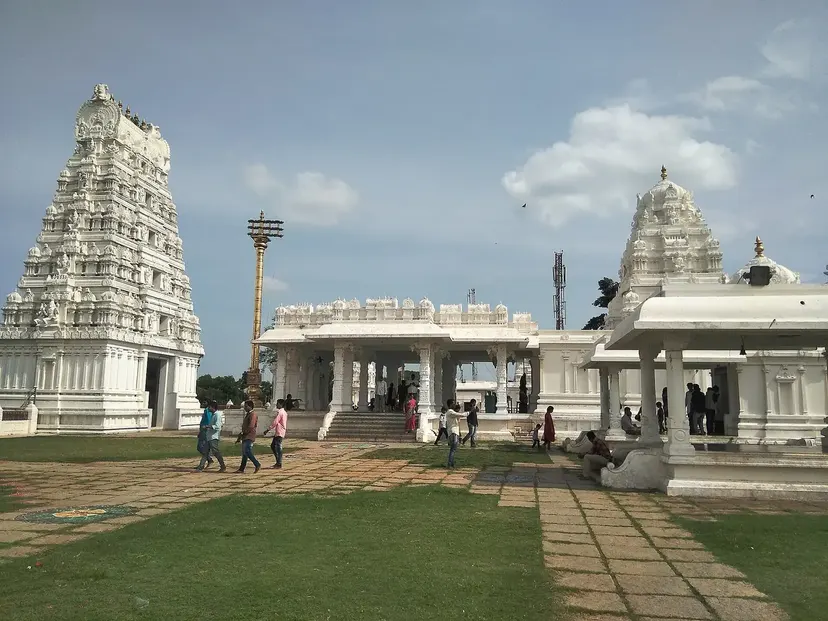
The Chintala Venkataramana Temple, also known as the Chintalarayaswamy Temple, is a Vishnu temple in the town of Tadipatri in Anantapur district, Andhra Pradesh. The presiding deity is Venkateswara, worshipped here as Chintala Venkataramana. The Anantapur district administration describes it as an excellent example of Vijayanagara architecture, known for its intricate carvings and grand structures.
The temple was built in the sixteenth century by Pemmasani Timmanayudu II, a chieftain under the Vijayanagara empire, and is a centrally protected Monument of National Importance under the Archaeological Survey of India (ASI). Its best-known feature is a Garuda mandapa carved as a stone chariot, which Wikipedia compares with the famous stone chariot of the Vitthala temple at Hampi.
Faith & Tradition
Religious Significance of Chintala Venkataramana Temple, Tadipatri
The name comes from a legend recorded by Wikipedia: the image of the deity is said to have been found in a tamarind tree, called chinta in Telugu, and so the Lord came to be called Chintala Venkataramana. Wikipedia also records the tradition that Vishnu appeared to Timmanayudu in a dream and asked him to build a temple at Tadipatri.
The district administration notes that the temple becomes a centre of activity during the major Vaishnava festivals, such as Vaikuntha Ekadashi and the Brahmotsavam, drawing devotees as well as visitors who come to see its architecture. Its listing describes worship as following the Pancharatra tradition.
Together with the nearby Bugga Ramalingeswara Swamy Temple on the bank of the Penna (Pinakini) river, the temple is part of what the Anantapur district administration promotes as the Tadipatri heritage cluster of Vijayanagara monuments.
Heritage
History of Chintala Venkataramana Temple, Tadipatri
According to Wikipedia, the temple was built during the Vijayanagara period by Pemmasani Timmanayudu II of the Pemmasani Nayaks, a contemporary of the emperors Vira Narasimha Raya and Krishnadevaraya. Timmanayudu is recorded as appointing priests for the temple and endowing it with land. The Pemmasani chiefs had made Tadipatri their seat, and Wikipedia's article on the town credits Pemmasani Ramalinga Nayudu I with developing and renaming it.
Sources differ on the exact date. The district's Tadipatri heritage-cluster page assigns the temple to about 1510–1525, in the reign of Krishnadevaraya, while the district's temple page and Wikipedia place it in the mid-sixteenth century. Wikipedia adds that the core structure may belong to the Saluva period and the entrance towers to the Tuluva period.
The temple is listed by the ASI as a Monument of National Importance in Andhra Pradesh (N-AP-22), and the Anantapur district administration describes it as a protected monument of the ASI, Government of India.
Architecture and sacred features
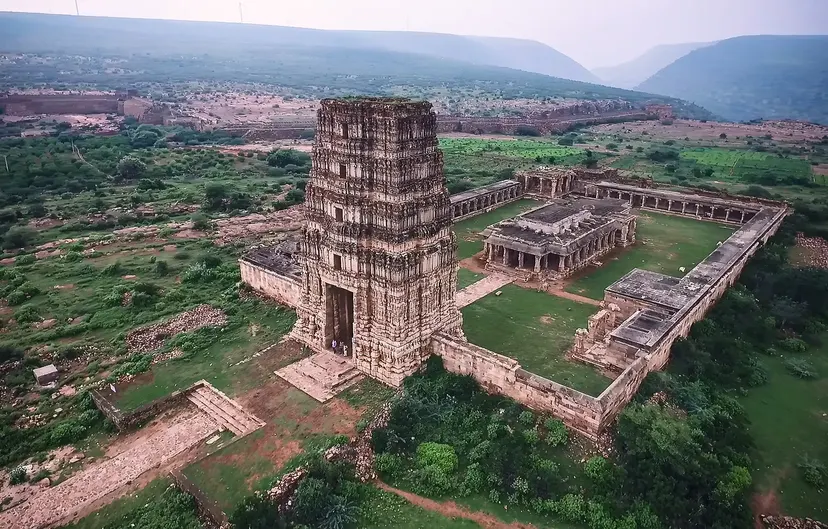
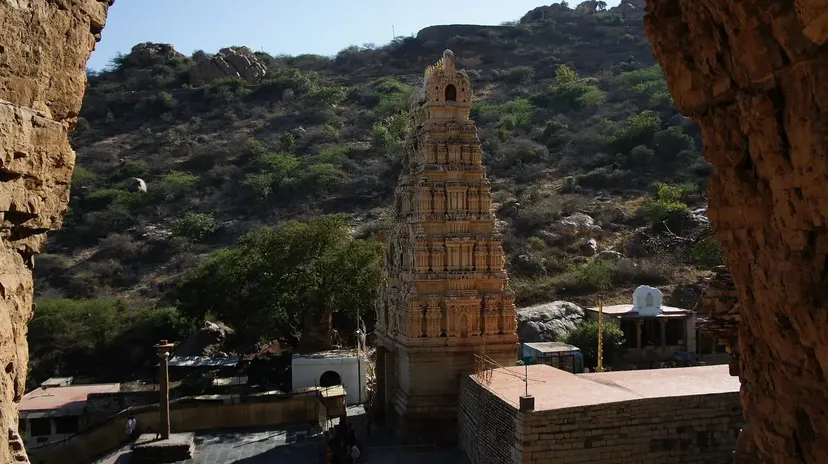
The temple is built in granite in the Dravidian style of the Vijayanagara period. The district administration describes a towering gopuram carved with deities and mythological scenes, and a mandapa richly decorated with carvings and sculpture leading to the sanctum of Venkateswara. Its heritage-cluster listing records 189 red granite pillars, ramparts of about 225 by 135 feet, a rock-cut uyala (swing) mandapa and a gali gopuram. Wikipedia's article on Tadipatri notes that the temple occupies a site of about five acres.
In front of the main shrine stands the Garuda mandapa, built in the form of a chariot with granite wheels that Wikipedia describes as rotating, similar in concept to the stone chariot at Hampi's Vitthala temple.
Plan Your Visit
Darshan and Visitor Information
This is a living temple inside an ASI-protected monument. Dress modestly, remove footwear before entering the shrine, and do not climb on the stone chariot or touch the carvings. Photography rules can differ between the shrine and the outer monument. Confirm current darshan timings and photography rules with the temple management and the ASI before visiting.
Timings and arrangements change with seasons and festivals. Confirm current details with Protected by the Archaeological Survey of India; living temple before travelling. Last reviewed 1 November 2026.
Sacred Calendar
Festivals at Chintala Venkataramana Temple, Tadipatri
Vaikuntha Ekadashi
Named by the Anantapur district administration among the major festivals celebrated at the temple.
Brahmotsavam
The temple's annual festival, named by the district administration among the occasions that draw large numbers of devotees.
Location
How to Reach Chintala Venkataramana Temple, Tadipatri
The Anantapur district administration gives Tadipatri as 56 km from Anantapur, the district headquarters. The temple stands in the town itself, on Tadipatri Main Road.
Location: Tadipatri, Anantapur (Ananthapuramu), Andhra Pradesh, India
More in Hindu temples in Andhra Pradesh · Venkateswara (as Chintala Venkataramana) temples · Temples in Tadpatri Mandal · Temples in Anantapuramu District
Questions
Chintala Venkataramana Temple, Tadipatri: Frequently Asked Questions
Why is the temple called Chintala Venkataramana?
Legend says the image of the deity was found in a tamarind tree, called chinta in Telugu, so the Lord is called Chintala Venkataramana.
Who built the Chintala Venkataramana Temple?
Pemmasani Timmanayudu II, a chieftain under the Vijayanagara empire, built it in the sixteenth century. Tradition says Vishnu asked him in a dream to build a temple at Tadipatri.
What is the stone chariot at Tadipatri?
It is the Garuda mandapa, carved as a chariot with granite wheels, similar in concept to the stone chariot at the Vitthala temple in Hampi.
Is the temple a protected monument?
Yes. It is listed by the Archaeological Survey of India as a Monument of National Importance (N-AP-22).
How far is Tadipatri from Anantapur?
The district administration gives the distance as 56 km.
Which festivals are celebrated at the temple?
Vaikuntha Ekadashi and the annual Brahmotsavam are the main festivals named by the Anantapur district administration.
Sources and attribution
- Ananthapuramu District Administration, Government of Andhra Pradesh — Chintala Venkataramana Swamy Temple
- Ananthapuramu District Administration, Government of Andhra Pradesh — Tadipatri Cluster
- Wikipedia (compiled from the ASI website) — List of Monuments of National Importance in Andhra Pradesh
- Wikipedia — Chintalarayaswami Temple
- Wikipedia — Tadipatri
Further reading: Chintala Venkataramana Temple, Tadipatri on Wikipedia (CC BY-SA 4.0).
Spotted an error? Write to info@hindutone.com — see our editorial policy.