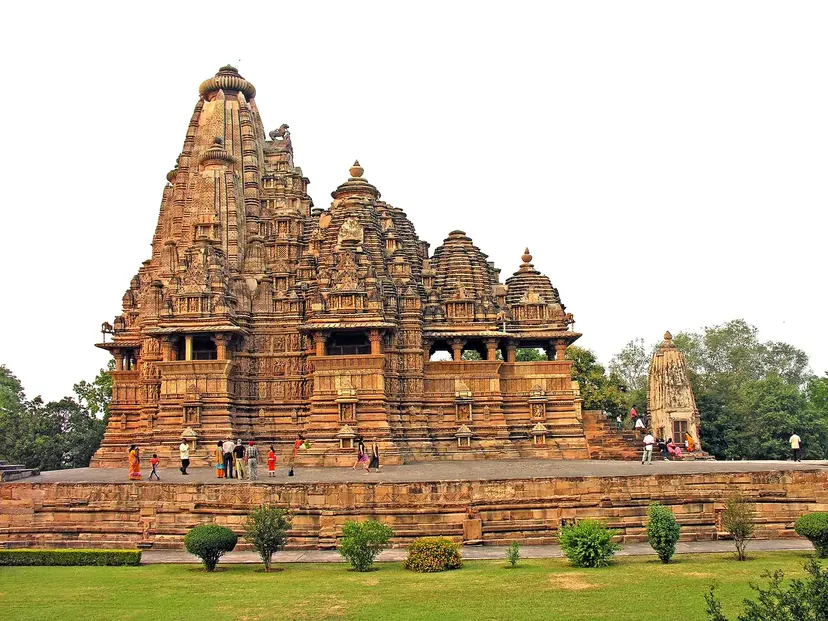
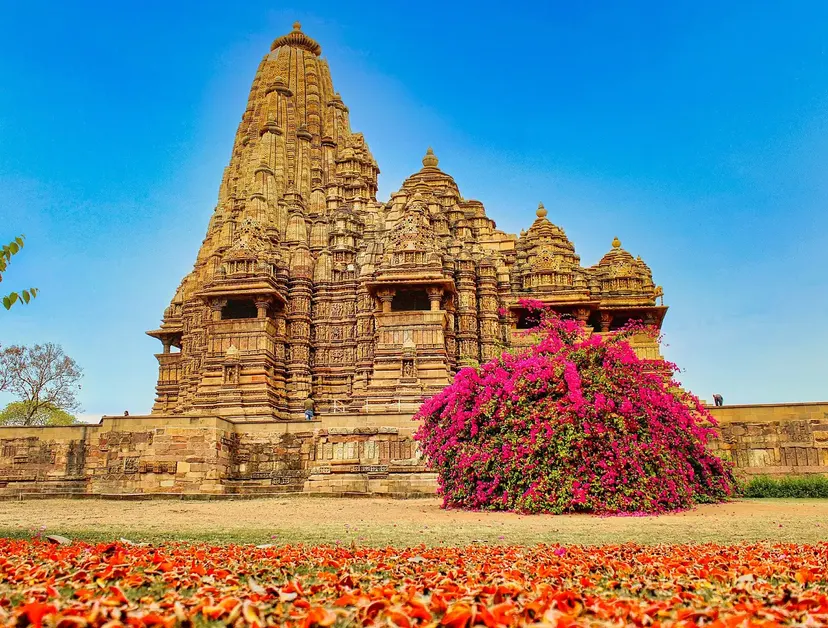
Parvati Temple and Chaumukhnath Temple, Nachna
Shiva (four-faced linga at Chaumukhnath); the older shrine is traditionally called the Parvati temple temple · Nachna (Nachna-Kuthara), Panna, Madhya Pradesh, India
Nachna, also written Nachna-Kuthara, is a village in Panna district of Madhya Pradesh. It holds two of the oldest surviving stone temples in central India. The Parvati temple is generally dated to the Gupta period of the 5th–6th century CE. The nearby Chaumukhnath (Chaturmukh Mahadeva) temple, dedicated to Shiva, is usually placed in the 9th century.
Both temples are protected by the Archaeological Survey of India (ASI) as Monuments of National Importance under its Jabalpur Circle. In 2025 India included the 'Nachna Temple' in a serial nomination of Gupta temples of north India on its UNESCO World Heritage tentative list. Wikipedia notes that the site is also a place of pilgrimage, known locally as Chaumukhnath.
Faith & Tradition
Religious Significance of Parvati Temple and Chaumukhnath Temple, Nachna
The Chaumukhnath temple takes its name from its linga. Its surface is carved with faces looking in the four cardinal directions (a mukhalinga), each with a different expression. Wikipedia records that three faces are calm and meditative, while the fourth, with an open mouth, is linked to the fierce form Bhairava. The five aspects of Shiva traditionally associated with such lingas are Sadyojata, Vamadeva, Aghora, Tatpurusha and Ishana, the fifth being beyond form.
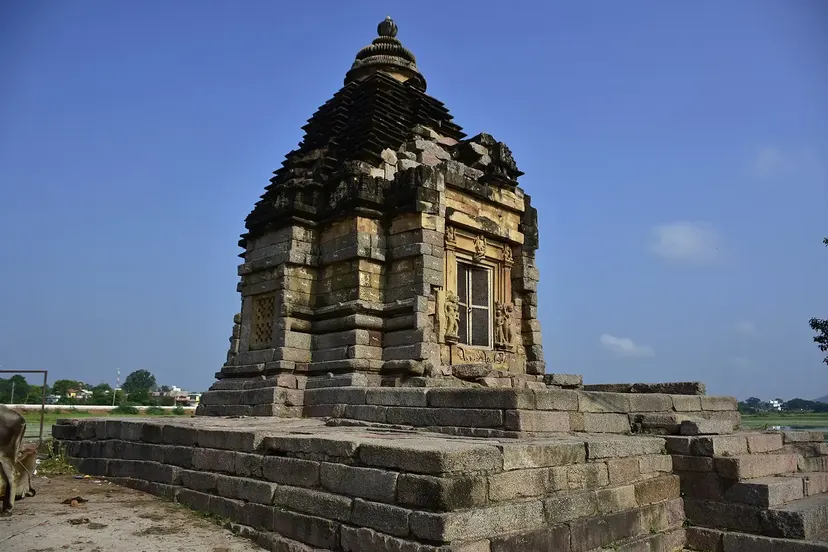
The older shrine is popularly called the Parvati temple. Its name is a matter of tradition, not inscription: the UNESCO tentative-list description says the temple is dedicated to Shiva but popularly known as the Parvati temple. Its sanctum image is missing.
For historians of art the site matters because, according to Wikipedia, the Parvati temple carries some of the earliest known stone friezes narrating scenes from the Ramayana. These include Ravana approaching Sita disguised as a mendicant, and Hanuman with the monkey leaders honouring Rama. UNESCO's tentative-list entry presents Nachna as part of the formative stage of Indian temple design.
Heritage
History of Parvati Temple and Chaumukhnath Temple, Nachna
The site came to scholarly attention through Alexander Cunningham, who described the 'Nachna-Kuthara' temples in volume 21 of the ASI reports, published in 1885. He found the approach strewn with ruins but the two stone temples in good condition. He estimated the Parvati temple at about 400 CE and the Chaumukhnath temple at 600–700 CE. Later scholars, as summarised on Wikipedia, place the Parvati temple in the second half of the 5th century (Michael Meister suggests about 465 CE), while George Michell prefers the 6th century. The Chaumukhnath temple is generally dated to the 9th century.
No foundation inscription has been found at the temples. Two rock inscriptions found nearby at Ganj, dated about 470–490 CE, record a ruler named Vyaghradeva who professed allegiance to the Vakataka king Prithvisena. They show that the area was politically important in the 5th century. Wikipedia records that the Parvati temple's upper storey collapsed after Cunningham's visit and was later rebuilt.
According to the National Monuments Authority list of the ASI Jabalpur Circle, the Parvati temple was notified as a protected monument on 30 April 1953 and the Chaumukh Nath temple on 10 September 1988. Ruins and loose sculpture around the village suggest that several more early temples once stood here.
Architecture and sacred features
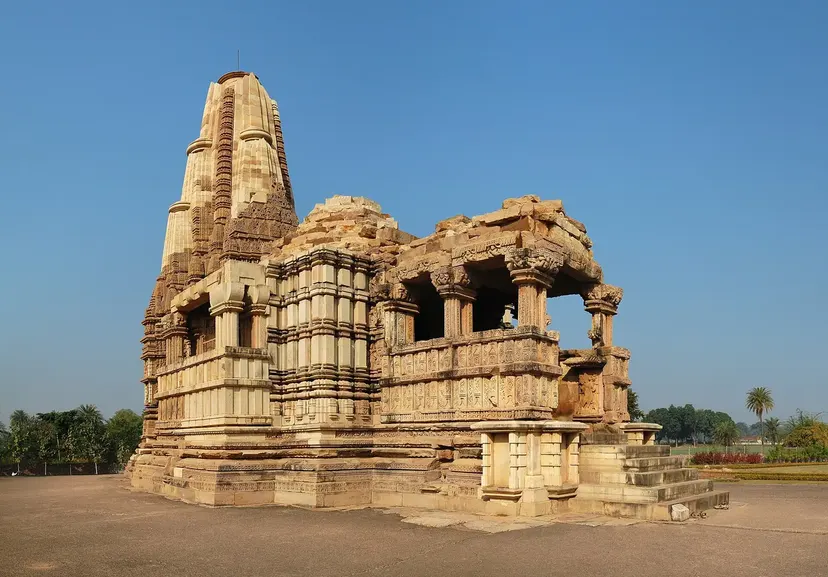
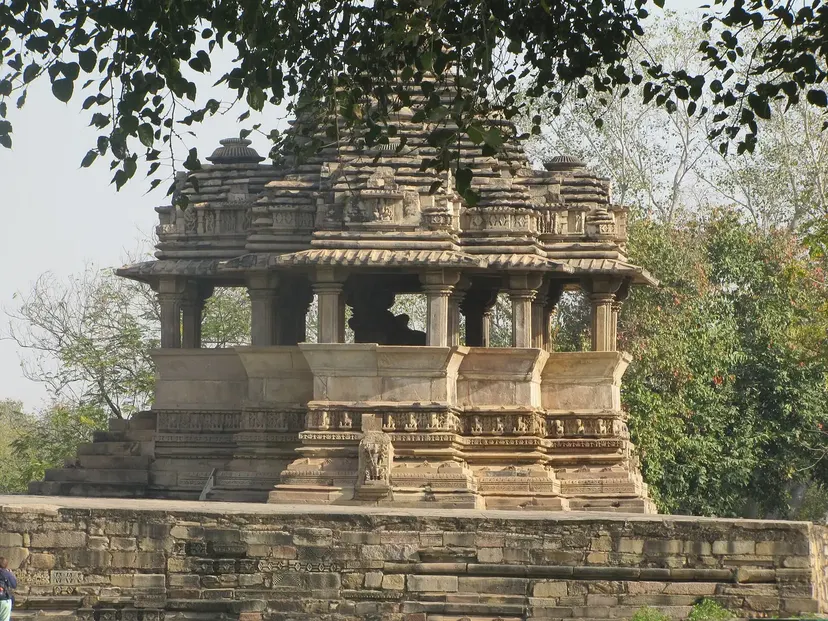
The Parvati temple stands on a raised, moulded platform (jagati) and faces west. Its square sanctum, about 2.4 m inside, is enclosed by a roofed circumambulation passage lit by perforated stone screens (jalis). Above is a plain upper storey, and the temple probably had a flat roof. The sanctum doorway is framed by the river goddesses Ganga, on a crocodile, and Yamuna, on a tortoise. Beside them stand trident-bearing Shaiva door guardians, and bands of floral carving and amorous couples (mithunas) surround the opening.
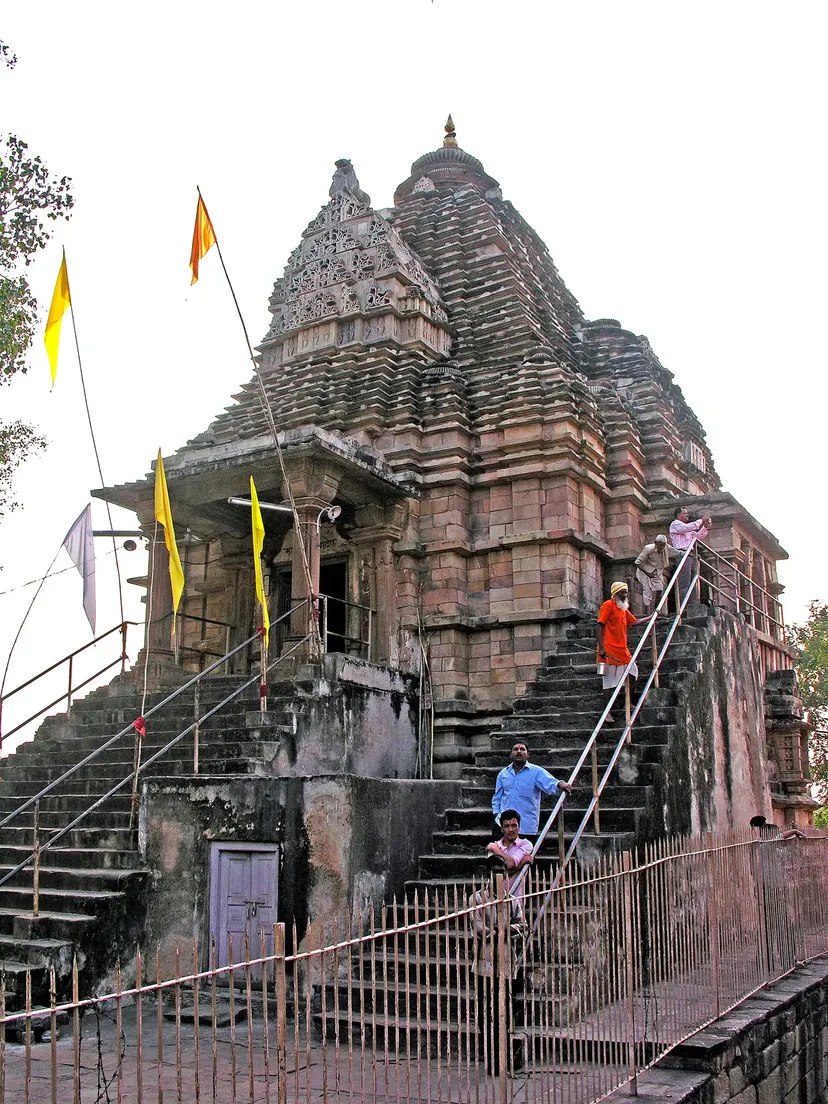
The Chaumukhnath temple, built centuries later, has a square sanctum, about 3.6 m inside, opening to the east, and a slightly curved spire about 12 m tall in the north Indian style. Wikipedia gives the four-faced linga as about 1.4 m high. Its doorway follows the design of the Parvati temple, and jali windows show musicians and the river goddesses.
Plan Your Visit
Darshan and Visitor Information
Nachna is an ASI-protected heritage site. Do not climb on the structures, touch the carvings or remove anything. Confirm current visiting hours and any entry rules with the ASI Jabalpur Circle before travelling, and respect any worship being offered at the Chaumukhnath linga.
Timings and arrangements change with seasons and festivals. Confirm current details with Archaeological Survey of India, Jabalpur Circle before travelling. Last reviewed 1 November 2026.
Location
How to Reach Parvati Temple and Chaumukhnath Temple, Nachna
According to Wikipedia, Nachna lies near Saleha village, about 60 km south-west of Satna and about 100 km south-east of Khajuraho. The nearest railway station is at Satna, and Khajuraho has the nearest airport with daily flights. The site lies on the edge of forested country in the Vindhya hills.
The site is reached by road. Check the route and road conditions locally before setting out, especially in the monsoon.
Location: Nachna (Nachna-Kuthara), Panna, Madhya Pradesh, India
Nearest airport: Khajuraho (about 100 km, per Wikipedia)
Nearest railway station: Satna (about 60 km, per Wikipedia)
More in Hindu temples in Madhya Pradesh · Shiva (four-faced linga at Chaumukhnath); the older shrine is traditionally called the Parvati temple temples · Temples in Nachne · Temples in Gunnor Tehsil
Questions
Parvati Temple and Chaumukhnath Temple, Nachna: Frequently Asked Questions
How old are the Nachna temples?
The Parvati temple is generally dated to the Gupta period of the 5th–6th century CE. The Chaumukhnath Shiva temple is usually placed in the 9th century.
Why is it called the Parvati temple?
The name is a local tradition. The UNESCO tentative-list description says the temple is dedicated to Shiva but popularly known as the Parvati temple, and its sanctum image is missing.
What is special about the Chaumukhnath linga?
It is a mukhalinga carved with four faces looking in the four directions. Three are calm, and the fourth, with an open mouth, is linked to the fierce form Bhairava.
Who protects the Nachna temples?
The Archaeological Survey of India, Jabalpur Circle. The Parvati temple was notified in 1953 and the Chaumukh Nath temple in 1988.
Is Nachna a UNESCO World Heritage Site?
Not yet. In 2025 India placed the Nachna temple on its UNESCO tentative list as part of a serial nomination of Gupta temples in north India.
How do I reach Nachna?
Nachna is about 60 km south-west of Satna, which has the nearest railway station, and about 100 km south-east of Khajuraho, which has an airport.
Sources and attribution
- Wikipedia — Nachna Hindu temples
- UNESCO World Heritage Centre (submitted by the Permanent Delegation of India) — Serial nomination of Gupta Temples in North India (Tentative List ref. 6805, 2025)
- National Monuments Authority / ASI Jabalpur Circle — Monuments of Jabalpur Circle (protected monuments list)
- Wikipedia — List of Monuments of National Importance in Madhya Pradesh/East (from the ASI list)
Further reading: Parvati Temple and Chaumukhnath Temple, Nachna on Wikipedia (CC BY-SA 4.0).
Spotted an error? Write to info@hindutone.com — see our editorial policy.