Neyyadiappar Temple, Thillaisthanam
Shiva (as Neyyadiappar, the Lord bathed in ghee) temple · Thillaisthanam, near Thiruvaiyaru, Thanjavur, Tamil Nadu, India
The Neyyadiappar Temple is a Shiva temple in Thillaisthanam, a village on the north bank of the Kaveri near Thiruvaiyaru in Thanjavur district, Tamil Nadu. The old name of the place, Tiruneithanam, survives in the temple's literature. Shiva is worshipped as Neyyadiappar in the form of a lingam; Wikipedia names his consort Piraisoodi Amman and Balambigai, while the Dinamalar temple guide gives Balambikai and Ilamangai Ammai.
The temple is a Paadal Petra Sthalam, praised in the 7th-century Tevaram hymns, and is the seventh and final temple of the Saptasthanam, the group of seven shrines tied to the Aiyarappar temple at Thiruvaiyaru. Its stone vimana and inscriptions point to the 9th century, according to Wikipedia's summary of a Tamil Nadu State Archaeology Department study.
Faith & Tradition
Religious Significance of Neyyadiappar Temple, Thillaisthanam
The name Neyyadiappar means 'the Lord bathed in ghee' (nei in Tamil). According to the temple legend given by Dinamalar, a cow poured its milk daily on one spot, where sun and rain turned it into ghee; when people dug there, they found a lingam, and the king who heard of it built the temple and began a daily ghee abhishekam. Dinamalar notes that the ghee bath is followed by a bath with hot water, a practice the temple keeps.
Thillaisthanam is the last stop of the Saptasthanam festival of Thiruvaiyaru. The Hindu has reported that the festival deity of Aiyarappar (Panchanadeeswarar), with Nandikeswarar and the goddess, is carried in palanquins through Thirupazhanam, Thiruchotruthurai, Thiruvedhikudi, Thirukandiyur and Thirupoonthurthi before reaching Thillaisthanam at night. After a fireworks display on the Kaveri riverbed at Thillaisthanam, the Neyyadiappar palanquin joins the procession back to Thiruvaiyaru, and the deities of the other six temples then return home. Wikipedia describes the festival as celebrating the wedding of Nandikeswarar.
According to Wikipedia, Tirugnana Sambandar sang ten verses on this temple (First Tirumurai) and Appar another ten (Fifth Tirumurai). Dinamalar counts it as the 52nd Tevaram shrine on the northern bank of the Kaveri and notes that Arunagirinathar praised its Murugan in the Tiruppugazh.
Heritage
History of Neyyadiappar Temple, Thillaisthanam
Wikipedia, drawing on a 1973 study published by the Tamil Nadu State Archaeology Department, records that the temple in its present form is believed to have been built by the Chola king Aditya I in the 9th century. The earliest inscription is dated to AD 862, in the reign of the Pandya king Varaguna II, and records a gift to the deity. Another records a gift of gold for lamps by the Pallava king Nandivarman III.
Later records, as summarised by Wikipedia, include a golden lamp in the 8th regnal year of Parantaka I and gifts from members of the Chola royal family and queens. Some Parantaka-era inscriptions mention a Tiruvisakam festival in the month of Vaikasi. The Amman shrine is dated to the 13th century, and the temple received later additions from Chola rulers and the Nayaks of Thanjavur.
Architecture and sacred features
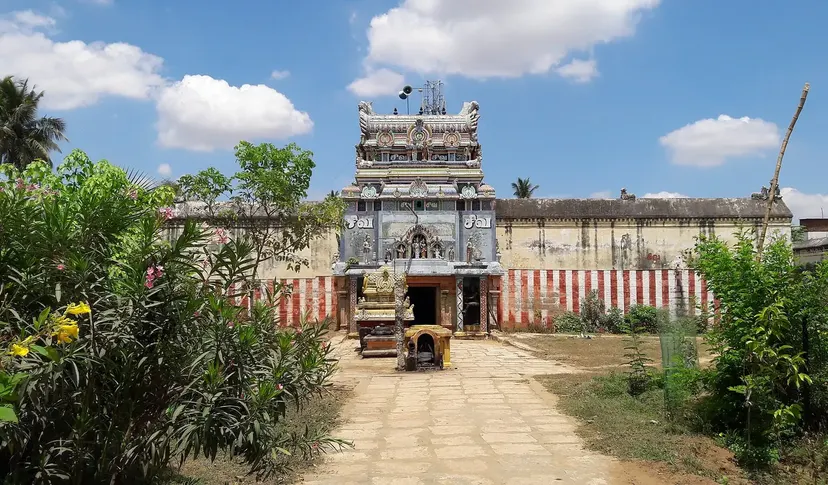
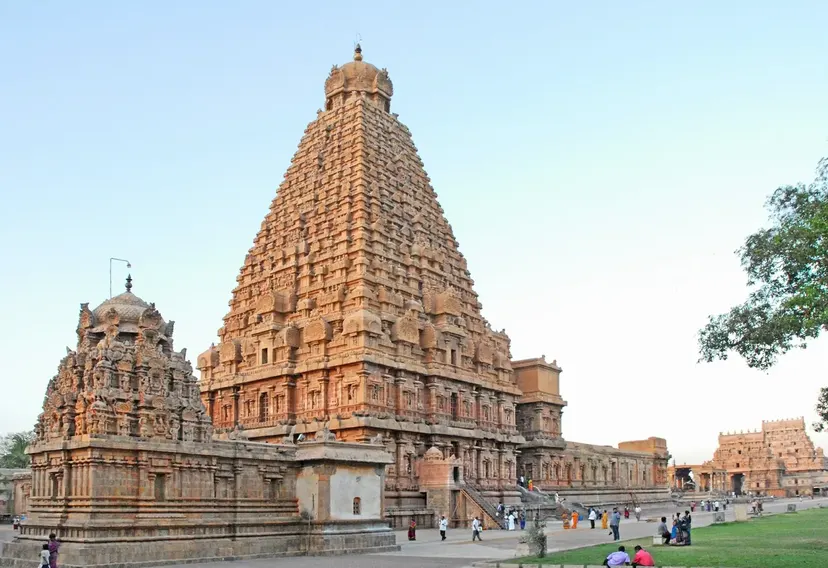
The east-facing main shrine has a square sanctum about 6 m across, topped by a two-storeyed stone vimana (dvitala). Wikipedia notes that its round pilasters, a feature described in the Shilparatna, are rare and found in only a few early temples such as Moovar Koil at Kodumbalur and Vijayalaya Choleeswaram at Narthamalai. The vimana niches hold Dakshinamurthy, a seated Vishnu and a seated Brahma, and the corner niches have kneeling human figures.
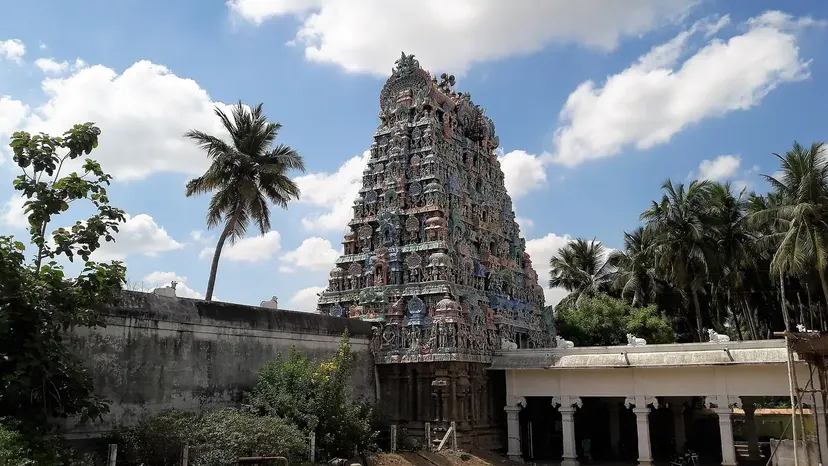
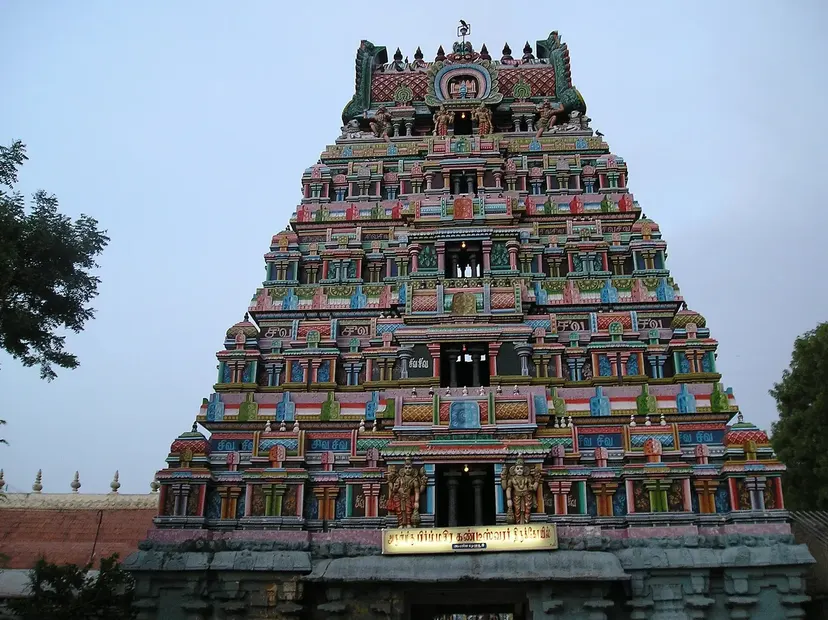
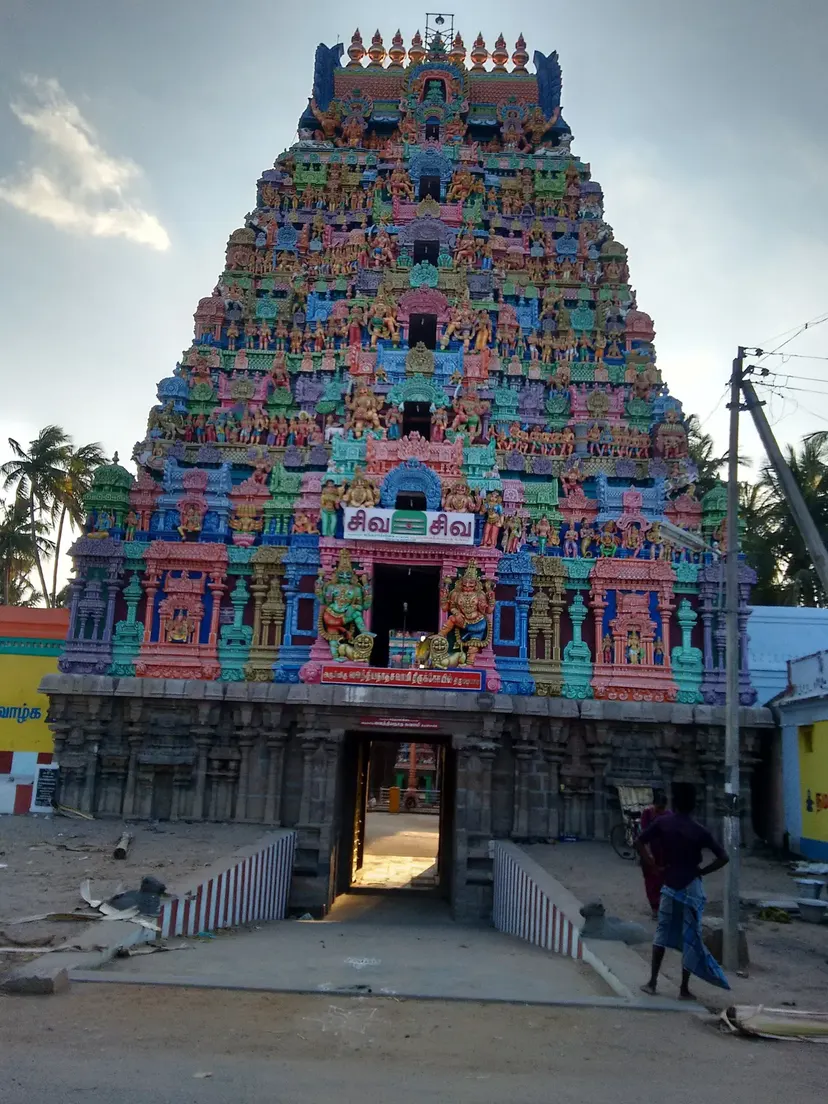
In front of the sanctum is an ardhamandapa with six-foot doorkeeper figures, followed by larger halls; two pillars with fluted shafts and seated lions at the base are an early feature. The goddess Balambigai stands in a south-facing shrine in the second precinct, holding a rosary and a lotus. Dinamalar mentions a standing Dakshinamurthy and a dancing Ganapathy among the sculptures.
Plan Your Visit
Darshan and Visitor Information
This is a working village temple. Dress modestly and follow the priest's instructions. During the Saptasthanam festival the village is very crowded at night. Confirm current timings with the temple priest or the local HR&CE office before you travel.
Timings and arrangements change with seasons and festivals. Confirm current details with the temple administration before travelling. Last reviewed 1 November 2026.
Sacred Calendar
Festivals at Neyyadiappar Temple, Thillaisthanam
Saptasthanam festival
The seven-temple palanquin procession of Aiyarappar reaches Thillaisthanam at night; after fireworks on the Kaveri riverbed, the Neyyadiappar palanquin joins the return to Thiruvaiyaru.
Maha Shivaratri
Listed by Dinamalar as a festival of the temple.
Margazhi Thiruvathirai
Listed by Dinamalar as a festival of the temple.
Location
How to Reach Neyyadiappar Temple, Thillaisthanam
According to Dinamalar, the temple is about 2 km from Thiruvaiyaru on the road to Thirukattupalli. It gives Thanjavur as the nearest railway station and Chennai as the nearest airport.
Location: Thillaisthanam, near Thiruvaiyaru, Thanjavur, Tamil Nadu, India
Nearest airport: Chennai (per Dinamalar)
Nearest railway station: Thanjavur (per Dinamalar)
More in Hindu temples in Tamil Nadu · Shiva (as Neyyadiappar, the Lord bathed in ghee) temples · Temples in Thiruvaiyaru Taluk · Temples in Thanjavur District
Questions
Neyyadiappar Temple, Thillaisthanam: Frequently Asked Questions
Why is the deity called Neyyadiappar?
The name means 'the Lord bathed in ghee'. According to the temple legend, a cow's milk turned to ghee on the spot where the lingam was found, and the deity is still bathed in ghee daily.
What is the Saptasthanam festival?
It is a festival of the Aiyarappar temple at Thiruvaiyaru in which the deity travels by palanquin to seven temples. Thillaisthanam is the seventh and last, where fireworks are held on the Kaveri riverbed before the return.
How old is the Neyyadiappar Temple?
The earliest inscription is dated AD 862, and the present structure is attributed to the Chola king Aditya I in the 9th century, according to Wikipedia's summary of a State Archaeology study.
Is Thillaisthanam a Paadal Petra Sthalam?
Yes. Sambandar and Appar both sang hymns on the temple in the Tevaram.
What is special about the temple's vimana?
It is an early two-storeyed stone vimana with round pilasters, a rare feature found in only a few early temples such as Moovar Koil and Vijayalaya Choleeswaram.
How do I reach Thillaisthanam?
It is about 2 km from Thiruvaiyaru on the road to Thirukattupalli. Thanjavur is the nearest railway station, according to Dinamalar.
Sources and attribution
- The Hindu — 'Sapthasthanam' festival begins (21 April 2019)
- Dinamalar — Sri Neyyadiappar Temple, Thillaisthanam
- Wikipedia — Neyyadiappar Temple, Tillaistanam
- TN Temples Project — Neiyyaadiappar, Thillaisthanam, Thanjavur (used for coordinates only)
Further reading: Neyyadiappar Temple, Thillaisthanam on Wikipedia (CC BY-SA 4.0).
Spotted an error? Write to info@hindutone.com — see our editorial policy.