Diwali 2027 Decoration Ideas – Traditional Indian Home, Rangoli, Diyas and LED Lights
Decorating for Diwali 2027 comes down to four things: a welcoming entrance with a toran and rangoli, rows of diyas lit safely at dusk, fresh marigolds and mango leaves, and a clean, bright puja corner ready for Lakshmi Puja. This guide walks through each area of the home, explains what the tradition
Decorating for Diwali 2027 comes down to four things: a welcoming entrance with a toran and rangoli, rows of diyas lit safely at dusk, fresh marigolds and mango leaves, and a clean, bright puja corner ready for Lakshmi Puja. This guide walks through each area of the home, explains what the traditional elements mean, and shows how to adapt them for apartments, rentals, outdoor spaces and NRI homes where Diwali falls in cool, early-dark autumn evenings.
Important: festival dates and puja timings depend on your local Panchang, which is calculated from your location, sunset time and the Amavasya tithi. Overseas dates are not the same as Indian dates. In India (New Delhi calendar) Lakshmi Puja falls on Friday 29 October 2027, while cities such as New York, London, Toronto and Dubai observe it on Thursday 28 October 2027. Plan your decorations to be finished by your own local Lakshmi Puja evening, and see the full Diwali 2027 planning guide for the wider five-day picture.
When to Start Decorating
Many families begin with a deep clean in the weeks before the festival, because a clean, uncluttered home is traditionally seen as ready to receive Goddess Lakshmi. Decorations usually go up in stages:
- Two to three weeks before: clean, repair, repaint or wipe down the entrance, puja shelf and windows; check that old string lights still work.
- The week before: put up the toran, wall hangings, lanterns and any lights that need hooks or wiring.
- Dhanteras evening: many households light the first diyas at the doorway; in India Dhanteras is Wednesday 27 October 2027.
- Lakshmi Puja day: draw the fresh rangoli, tie fresh flowers and mango leaves, and set out the diyas for the evening.
If you are using a timeline for shopping as well, the Diwali 2027 shopping list has a "buy by" column for every decoration item.
The Entrance: Where Diwali Decoration Begins
The threshold is the most important place to decorate. It is where light is placed to guide prosperity into the home and where guests receive their first impression.
Toran (Bandhanwar)
A toran is a hanging garland tied across the top of the main door. Traditional versions use fresh mango leaves and marigolds strung on cotton thread; many households also keep a fabric, beaded or mirror-work toran that is reused year after year.
- Fresh mango leaves and marigolds look best for a few days and are usually tied on the morning of Lakshmi Puja or a day before.
- Fabric or beaded torans can go up a week ahead.
- In many homes the toran is left up until the end of the five-day festival, and fresh-leaf versions are replaced when they dry.
Lakshmi Footprints (Lakshmi Paduka)
Small footprints drawn or stuck at the entrance, pointing inward towards the home and the puja area, are a widely followed Diwali custom. They symbolise Goddess Lakshmi stepping into the house and bringing prosperity and wellbeing with her. They are usually drawn with rice-flour paste, kumkum or red-and-white rangoli powder, and are often placed in pairs from the doorstep to the puja corner. Ready-made sticker footprints are a practical option for rental homes and polished floors. Because this is a household custom rather than a scriptural rule, the style, colour and placement vary from family to family.
Rangoli or Kolam at the Threshold
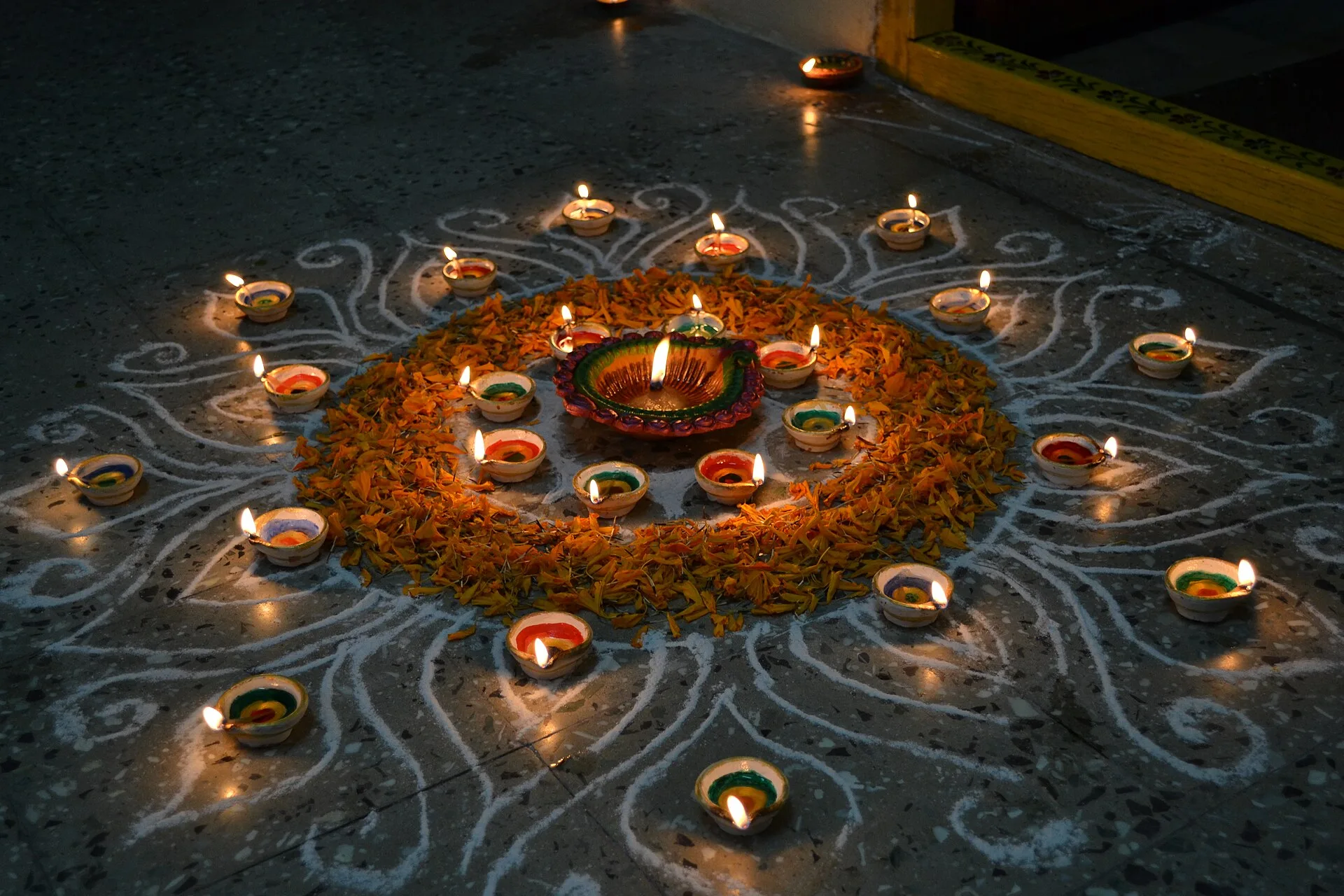
A rangoli or kolam right outside the door is one of the most recognisable signs of Diwali. In many South Indian homes a kolam or muggulu is drawn at the entrance every morning throughout the year, and Diwali simply brings larger and more elaborate designs. In other regions, a rangoli is made specially for the festival. Either way, keep the threshold design small enough that people do not have to step on it, or draw it to the side of the walkway.
Rangoli: Materials, Easy Patterns and Regional Styles
Materials
| Material | Best for | Notes |
|---|---|---|
| Dry rice flour | Kolam and muggulu, outdoor floors | Traditional; feeds ants and birds, so it fades naturally |
| Rangoli powder (coloured) | Bright filled designs | Widely sold before Diwali; test on hard floors as some colours stain |
| Coloured rice or lentils | Indoor designs, children | Less dusty, easy to sweep up and compost |
| Flower petals | Indoor or outdoor centrepieces | Marigold, rose and chrysanthemum petals; lasts about a day |
| Chalk | Patios, driveways, balconies | Washes off with water; good for rentals |
| Reusable rangoli mats or stickers | Apartments, carpets, wooden floors | No mess, can be packed away for next year |
Useful tools include a sieve or tea strainer for even colour, a funnel made from a paper cone, a ruler or thread for straight lines, and a small brush to tidy edges.
Easy Patterns Described in Words
You do not need to be an artist to create a striking rangoli. Here are five beginner patterns:
- Lotus in a circle: draw a circle about the size of a dinner plate. Inside it, draw eight petal shapes radiating from the centre, like a flower seen from above. Fill alternate petals pink and white, and place a diya in the middle.
- Dot-grid kolam: place dots in a square grid, five dots by five. Loop a continuous line around the dots without lifting your hand, curving around each dot. Start with a simple diamond and add loops as you gain confidence.
- Diya outline: draw a large diya shape, a shallow bowl with a pointed spout, with a teardrop flame above it. Fill the bowl in orange and the flame in yellow, and outline everything in white.
- Concentric rings: draw three circles of increasing size around one central point. Fill each ring with a different colour, then add small dots or petals around the outer edge.
- Petal border: for a corridor or narrow balcony, draw a straight line of repeating leaf or petal shapes. It frames the doorway without covering the floor.
Our earlier guide to rangoli designs, Lakshmi footprints and beginner patterns has more pattern ideas that work just as well in 2027.
Regional Styles
Floor art is practised across India under many names, and each is a regional custom with its own conventions:
- Kolam (Tamil Nadu): traditionally made with rice flour, often with dots and continuous looping lines, and drawn at the doorway as part of the daily morning routine in many homes.
- Muggulu (Andhra Pradesh and Telangana): similar in spirit to kolam, built on dot grids and white lines, often with coloured filling for festivals.
- Alpana (Bengal): traditionally painted with a rice paste, using fingers or a cloth, in flowing white designs; often drawn for Lakshmi and Kali puja.
- Mandana (Rajasthan and parts of Madhya Pradesh): drawn on floors and walls with a white chalk or lime paste over a red earth base, with geometric and folk motifs.
- Rangoli (Maharashtra, Gujarat and much of western and northern India): the most widely recognised term, usually made with coloured powders, often with lamps placed within the design.
There is no single "correct" style. Follow your family's tradition, or try a style from another region with respect for where it comes from.
Diyas: Choosing and Lighting Them Safely
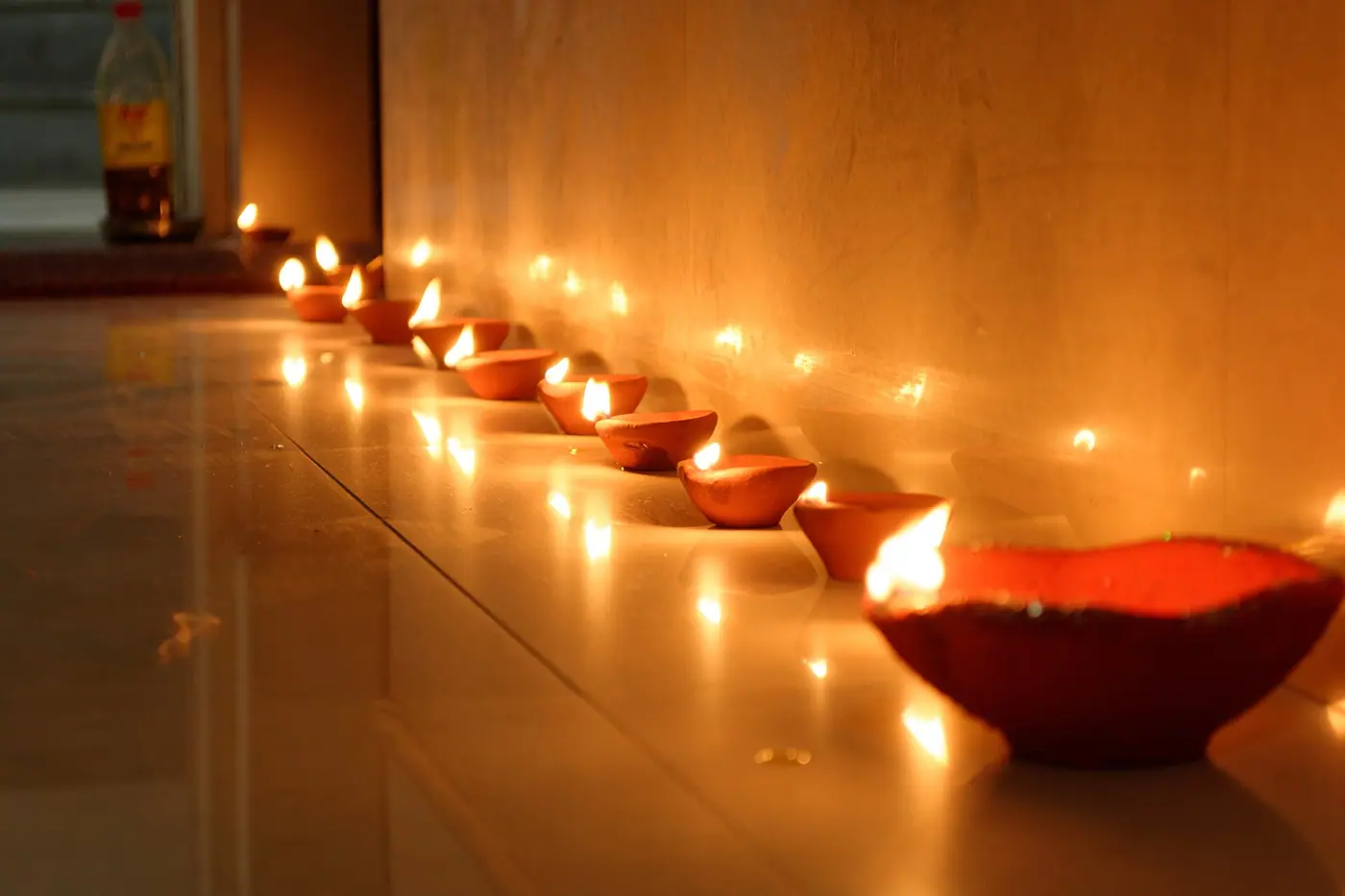
The diya is the heart of Diwali decoration. Lighting lamps at dusk is the central act of the festival, and the number and arrangement of lamps varies widely between families.
Clay vs Brass
| Type | Advantages | Things to know |
|---|---|---|
| Clay (terracotta) | Traditional, inexpensive, biodegradable, supports local potters | Soak new clay diyas in water for a few hours and dry them before use so they absorb less oil |
| Brass | Durable, reusable for years, traditional for the puja altar | Needs polishing; gets hot, so place on a tray or stand |
| Decorated or painted clay | Festive look, good for gifting | Check that paint is on the outside only, away from the flame |
| Battery or LED diyas | No flame, safe for children, pets and rentals | Choose warm-white tones for a softer, traditional look |
Oil vs Ghee
Traditionally, ghee lamps are often used at the puja altar, while sesame (til) oil or mustard oil is common for the rows of diyas around the house; practices differ by region and family. Ghee burns with a soft, steady flame and is usually reserved for the main lamp. Oil is more economical for the many diyas lit at windows, doorways and balconies. Use cotton wicks, either round wicks for oil diyas or long wicks for brass lamps, and trim them short to reduce smoke.
Safe Placement
- Place lit diyas on a fireproof surface such as a metal tray, stone ledge or ceramic tile.
- Keep at least an arm's length between flames and curtains, paper lanterns, flower garlands and dupattas or saris.
- Avoid placing diyas on stairs or walkways where guests could kick them.
- Do not leave open flames burning unattended, and extinguish them before going to sleep.
- Keep children's sleeves and long hair away from lamps, and keep pets in another room while diyas are lit.
- Keep a bucket of sand or water and a fire extinguisher within reach.
For the role of the lamp in the Lakshmi Puja itself, see the Lakshmi Puja vidhi and samagri guide.
Flowers: Marigold and Mango Leaves
Marigolds (genda) are the defining Diwali flower in much of India. Their saffron and yellow colours are considered auspicious, they are hardy, and they hold their shape for a day or two even in garlands. Use them for torans, door frames, the puja corner, floating flower bowls and rangoli centrepieces.
Mango leaves are tied in a string across doorways in many Hindu homes for festivals and auspicious occasions. Fresh leaves are glossy and green; they curl as they dry, which is a natural cue to replace them.
Other good choices include roses, chrysanthemums, jasmine (popular in South Indian homes) and lotus where available, especially for the puja altar. A shallow brass or glass bowl of water with floating petals and a few floating candles makes an easy centrepiece for a coffee table.
The Living Room
The living room is where guests gather, so aim for warmth rather than clutter.
- Lighting: warm-white string lights along window frames, bookshelves or a mantelpiece create a soft glow without overwhelming the room.
- Textiles: swap cushion covers and table runners for festive colours such as maroon, gold and saffron, or block-printed and mirror-work fabrics.
- Lanterns: paper or fabric akash kandil-style lanterns, popular in Maharashtra, suit a window or corner. Use LED bulbs inside paper lanterns, never open flames.
- Centrepiece: a brass urli with floating petals, or a tray of diyas on the coffee table.
The Puja Corner
The puja area should feel clean, calm and well lit for Lakshmi Puja.
- Clean the shelf or mandir thoroughly a few days before, and wash or replace the cloth on which the deities sit; red or yellow cloth is widely used.
- Arrange images or idols of Goddess Lakshmi and Lord Ganesha, following your family tradition for placement.
- Draw a small rangoli or place Lakshmi footprints leading to the puja corner.
- Keep a main ghee lamp on a brass stand and smaller diyas around the area.
- Add fresh flowers, a kalash with mango leaves if your family uses one, and a plate for offerings.
- Leave enough clear space in front for family members to sit and for the aarti plate to be moved safely.
Apartments and Rentals
Many families, both in Indian cities and abroad, live in apartments where open flames, nails and outdoor fixtures are restricted.
- Check your building rules first. Many apartment buildings, student halls and rental agreements prohibit open flames, candles or incense, and some smoke alarms are very sensitive. Where flames are not allowed, do not light them.
- Battery and LED diyas: warm-white flameless diyas and tea lights look surprisingly traditional, especially in groups. Rechargeable versions reduce battery waste.
- Removable hooks and adhesive strips: use damage-free hooks rated for the weight of your toran, lights or lanterns, and test them on a hidden spot first.
- Tension rods and over-the-door hooks: useful for hanging torans without drilling.
- Window decorations: window-safe LED strings and paper cut-outs are visible from outside without touching common areas.
- Shared corridors: ask your building manager before decorating corridors or doors facing shared spaces, and keep fire exits and walkways clear.
- Rangoli: use mats, stickers, chalk on balconies, or a tray rangoli made on a large plate that can be moved.
Outdoor Lighting Safety
Outdoor lights make a home glow for the whole street, but they need care.
- Use outdoor-rated lights only. Look for lights and extension leads marked for outdoor use with a suitable weather-protection rating, and do not use indoor string lights outside.
- Timers: plug-in or smart timers switch lights on at dusk and off at night, which saves energy and avoids leaving them on unattended.
- Avoid overloading sockets. Use a single outdoor-rated power strip with a cut-out rather than chaining extension leads.
- Inspect before use. Discard any strings with cracked wires, loose bulbs or damaged plugs.
- Secure cables so that nobody trips on them, and keep connections off wet ground.
- Ladders: have someone hold the ladder when hanging lights at height.
- Fireworks: where fireworks are legal, keep them well away from decorations, dry leaves and parked cars, and follow local rules on timing and location.
Eco-Friendly Decoration Ideas
Diwali decorations can be beautiful without creating waste:
- Choose plain clay diyas that can be reused or returned to the soil.
- Make rangoli from rice flour, flower petals, turmeric or coloured lentils instead of synthetic powders.
- Reuse fabric torans, brass lamps, lanterns and LED strings every year.
- Use LED lights on timers rather than long-running incandescent strings.
- Compost marigolds and mango leaves after the festival.
- Make lanterns and garlands at home from recycled paper, old saris or fabric scraps.
- Avoid single-use plastic decorations and glitter.
For a fuller set of ideas, read our eco-friendly Diwali 2027 guide.
Decorating NRI Homes: Autumn Weather and Early Sunset
For families in the USA, UK and Canada, Lakshmi Puja on Thursday 28 October 2027 falls on a cool autumn evening, often after a working day. Two things matter: the weather and the early dusk.
Early Sunset on 28 October
Pradosh Kaal begins at sunset, and on 28 October it starts early in many diaspora cities. According to HinduTone's Panchang, Pradosh Kaal begins at about 5:41 PM in London, 5:57 PM in New York, 5:50 PM in Chicago and 6:14 PM in Toronto (local summer time; UK clocks change on Sunday 31 October and US clocks on Sunday 7 November 2027). That leaves little time after work, so:
- Draw the rangoli the evening before or in the morning, and cover it if rain or wind is expected.
- Set out diyas on trays during the day so that lighting them takes only a few minutes.
- Put outdoor lights on a timer so they come on at dusk even if you are still travelling home.
City-by-city timings are listed in the Diwali 2027 date and Lakshmi Puja timings guide.
Autumn Weather
- Wind and rain make outdoor diyas impractical in many places. Light real diyas indoors on a windowsill or in a protected porch, and use LED lanterns outside.
- Fallen leaves are dry and flammable; sweep porches and steps before lighting anything.
- Chalk rangoli on a driveway may wash away in rain, so photograph it early.
- Fresh marigolds may be hard to find or expensive in autumn abroad. Indian grocery stores often stock them close to Diwali, or use a reusable fabric marigold garland.
Southern Hemisphere and Asia
In Sydney, Melbourne, Auckland and Singapore, Lakshmi Puja falls on Friday 29 October 2027. In Australia and New Zealand it is spring, with later sunsets: Pradosh Kaal begins at about 7:19 PM in Sydney and 7:50 PM in Melbourne and Auckland. Outdoor diyas and garden lights are often more practical there, though local fire restrictions and building rules still apply.
Frequently Asked Questions
When should I put up Diwali decorations in 2027?
Many families clean and set up lights and torans in the week before Dhanteras, then add fresh flowers, mango leaves and rangoli on Lakshmi Puja day. In India that is Friday 29 October 2027; in the USA, UK and Canada it is Thursday 28 October 2027, but check your local Panchang.
What do Lakshmi footprints at the door mean?
They symbolise Goddess Lakshmi entering the home and bringing prosperity. They are usually drawn pointing inward, from the doorstep towards the puja area, though style and placement follow family custom.
Are clay or brass diyas better for Diwali?
Both are traditional. Clay diyas are inexpensive and biodegradable, while brass lamps last for years and are commonly used at the puja altar; many homes use a brass lamp for the puja and clay diyas elsewhere.
Can I use LED or battery diyas instead of real ones?
Yes. Where open flames are not allowed, or where children and pets are around, flameless diyas are a sensible choice. Many families light at least one real lamp at the puja altar where it is safe and permitted.
How do I decorate a rented apartment for Diwali without damage?
Use removable adhesive hooks, over-the-door hangers, tension rods, rangoli mats or stickers, and battery diyas. Check your lease and building rules about open flames and shared corridors before you start.
Are outdoor Diwali lights safe in rain?
Only if they and the extension leads are rated for outdoor use and the connections are kept off wet ground. Use a timer and inspect the strings for damage before hanging them.
Conclusion
Beautiful Diwali decorations do not need to be expensive or elaborate. A clean entrance with a toran and Lakshmi footprints, a simple rangoli or kolam in your own regional style, a few well-placed diyas and fresh marigolds create the feeling of the festival in any home, whether it is a large house in India, a Toronto apartment or a London terrace with an early autumn sunset.
Plan your decorating around your local Lakshmi Puja date, prioritise safety with flames and wiring, and reuse what you can year after year. For everything else, from dates and puja to food and gifts, return to the complete Diwali 2027 guide, or use the interactive Diwali 2027 planner and checklist to keep track of your preparations.
Last updated: 9 November 2026.
Share this with family and friends
Send it on WhatsApp, post it, or copy the link.
More from Festivals
- Diwali 2027 Budget Planner – How to Celebrate Beautifully Without Overspending
- Diwali 2027 Party Planning Guide – Themes, Food, Games, Invitations and Decorations
- Diwali 2027 Activities for Kids – Crafts, Rangoli, Stories, Games and Family Traditions
- Eco-Friendly Diwali 2027 – Sustainable Decorations, Clay Diyas and Green Celebration Ideas
- Diwali 2027 Travel Guide – Best Places to Celebrate Diwali in India
You might also like

Diwali 2027 Gift Ideas for Parents, Children, Friends, Couples and NRI Families

Diwali 2027 Celebration in UK – London, Leicester, Birmingham and Manchester
Diwali 2027 Celebration in Canada – Toronto, Brampton, Mississauga and Vancouver